
Intel’s 14A process is progressing ahead of the company’s internal manufacturing targets, according to CFO David Zinsner. The key claim is not that 14A has already reached mature yields, but that its defect density is declining at Intel’s fastest rate since its 22nm generation—a potentially important sign as the company prepares the node for both internal chips and foundry customers. Wccftech reported on Zinsner’s comments from the Deutsche Bank Technology Conference 2026.
Why defect reduction matters for future chips
A lower defect count across a wafer generally improves the odds of producing more usable chips, which is central to the economics of advanced processors for mobile devices, PCs, and other high-performance hardware. Final yield also depends on a chip’s physical size and design complexity, so Intel’s comparison does not establish that 14A has matched the defect density or production yield of its older 22nm process. It describes the speed of improvement while the newer technology is being matured.
For Intel, that manufacturing learning curve matters beyond its own product roadmap. Zinsner said internal teams have started designing products for 14A, while conversations with prospective external customers have increasingly moved from technical data toward questions about available manufacturing capacity. That shift does not amount to announced foundry contracts, but it suggests discussions have advanced beyond early process evaluation.
A major test for Intel Foundry
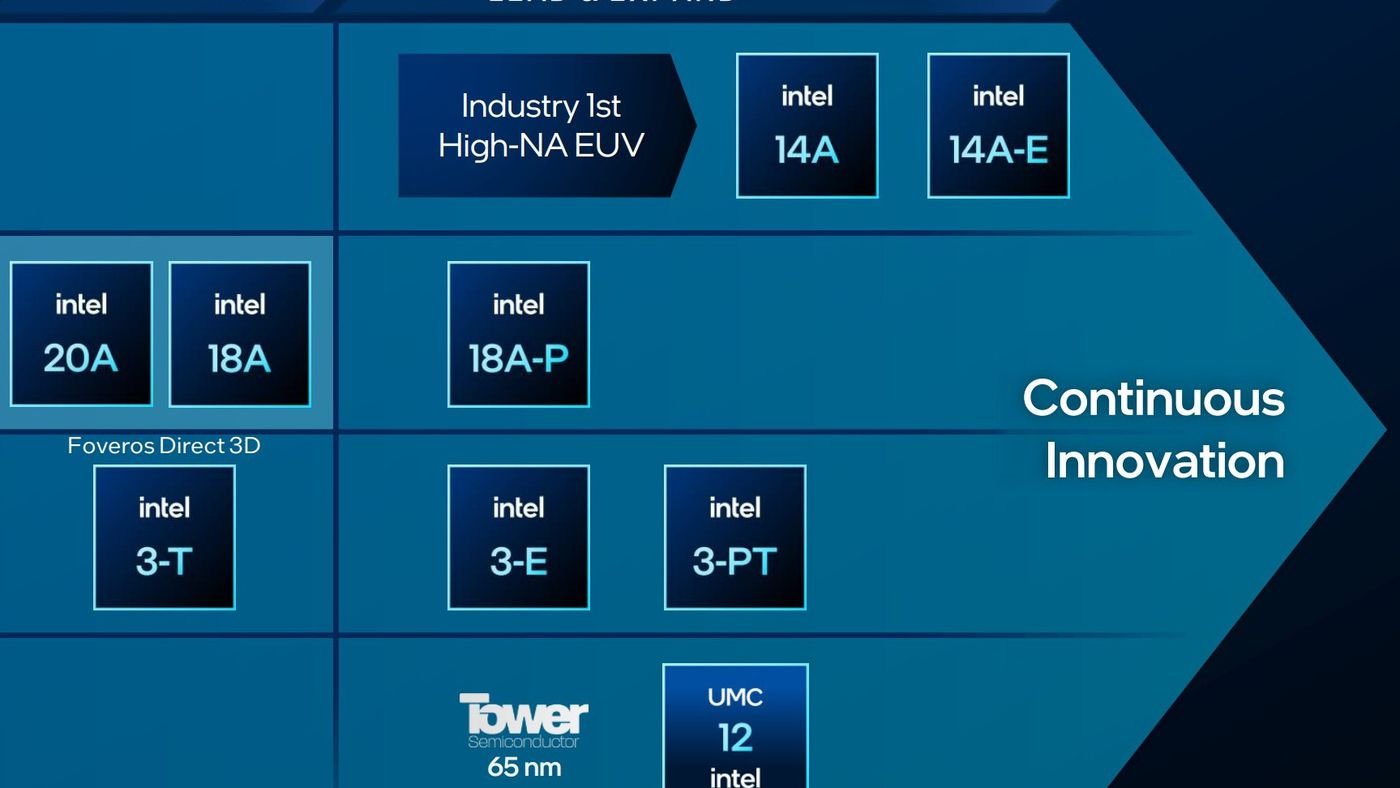
Intel is positioning Foundry as an alternative to TSMC, and 14A will be one of the more consequential tests of that strategy. The company already has Intel 18A in development and has worked with external customers. Google and NVIDIA have also been linked to Intel manufacturing technologies, though the dossier does not establish public 14A agreements with either company.
Intel is targeting 14A risk production in 2027, followed by volume production in 2028. Version 0.9 of the process design kit, the set of tools chip designers use to adapt a design to a manufacturing process, is scheduled for October 2026. Reports have also raised the possibility of Apple using Intel 14A for future iPhone processors, but neither Apple nor Intel has officially confirmed that scenario.
The timeline leaves several major details unresolved, including the first shipping products, committed foundry customers, capacity, and eventual yields. Still, faster defect reduction would be a meaningful early indicator for a node Intel needs to make credible to companies planning the next generation of portable and mobile computing hardware.
Post Footer automatically generated by Add Post Footer Plugin for wordpress.