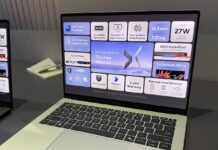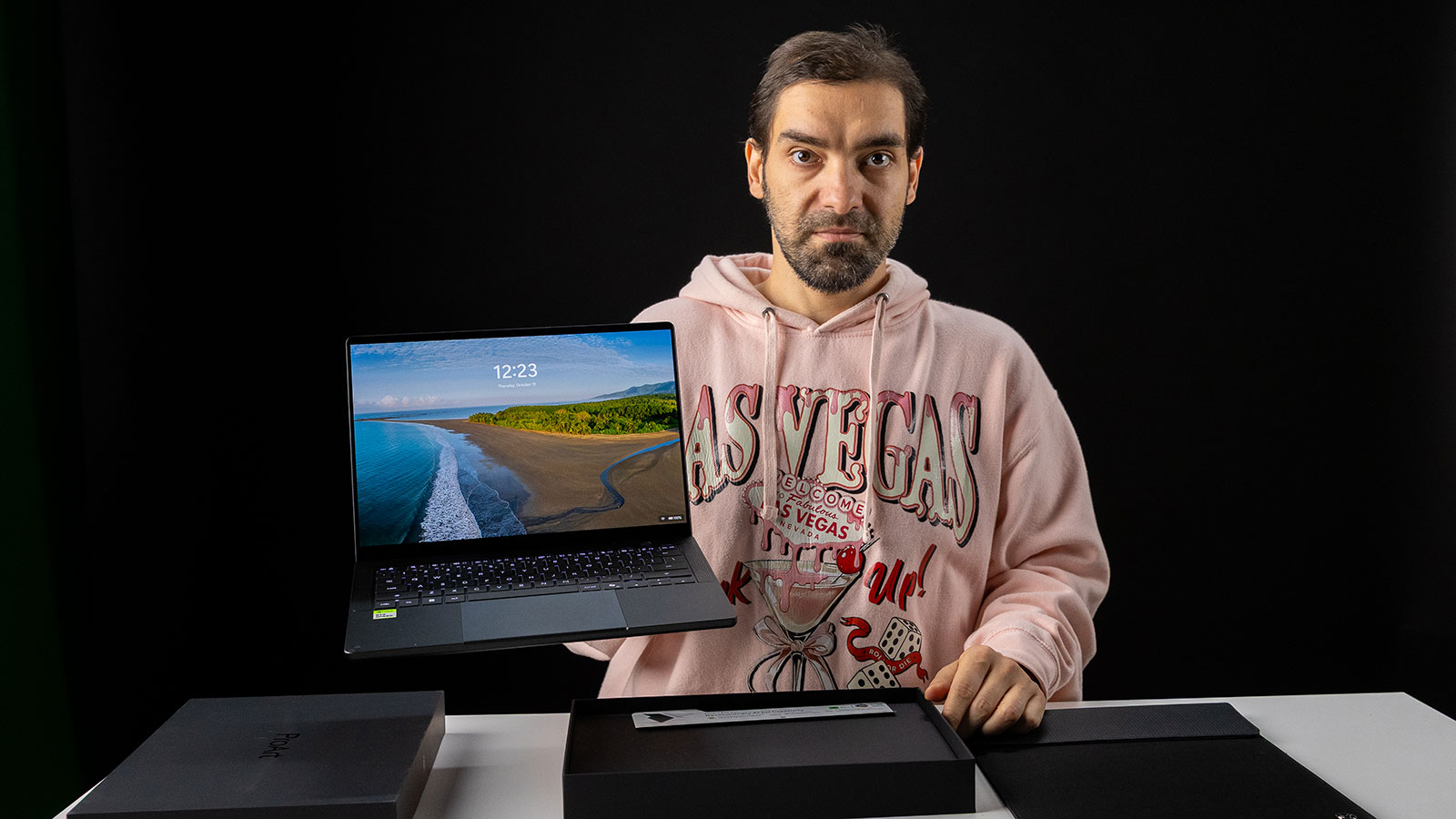
A 14-inch laptop is not where most creators expect to find 128GB of unified memory. ASUS is positioning the ProArt P14 (H7407) as an unusually compact machine for local AI workflows, pairing NVIDIA’s RTX Spark N1X platform with shared LPDDR5X memory that can be used by both the CPU and GPU. At 3.26 pounds and starting at 0.55 inch thick, it is aimed at people who need to move large models or demanding creative projects between locations rather than keep that work tied to a desktop workstation.
The RTX Spark N1X configuration combines an NVIDIA Grace CPU with up to 20 cores and a Blackwell RTX GPU with up to 6,144 CUDA cores. That shared-memory design matters for workloads such as loading larger AI models and handling sizable 3D assets, where a conventional laptop’s separate system and graphics memory pools can be more limiting.
Local generation without a cloud connection
In a hands-on demonstration, the ProArt P14 ran ComfyUI locally to generate imagery and video from a photograph, written prompts, and a supplied script. ComfyUI is an open-source, node-based application in which users assemble workflows for images, text, models, and processing steps. Once the application and required models have been installed, this kind of workflow can run offline and on battery power.
That approach keeps source material and processing on the laptop rather than sending them to a cloud service, and it avoids per-generation cloud credits. It does not eliminate the trial-and-error inherent to generative AI: the demonstration produced artifacts including unnatural-looking fingers and objects placed incorrectly over the laptop display. Revised prompts and repeated attempts improved the results, but the output still illustrated the current limitations of locally generated video.
Built for a creator’s bag, not just an AI demo
The rest of the hardware is geared toward editing, asset management, and on-location work. The 14-inch 16:10 OLED touchscreen has a 2,880 by 1,800 resolution, 120Hz refresh rate, 100% DCI-P3 coverage, an anti-glare finish, and stylus support. ASUS rates compatible display configurations at up to 1,600 nits in HDR. A 90Wh battery and 140W USB-C charging support the laptop’s portable-workstation ambitions.
- Platform: NVIDIA RTX Spark N1X with an NVIDIA Grace CPU of up to 20 cores and a Blackwell RTX GPU with up to 6,144 CUDA cores
- Memory: Up to 128GB of unified LPDDR5X memory
- Display: 14-inch 2,880 by 1,800 OLED touchscreen, 16:10 aspect ratio, 120Hz refresh rate, anti-glare coating, 100% DCI-P3 coverage, and stylus support
- Battery and charging: 90Wh battery and 140W USB-C power delivery
- Ports: Three USB4 Type-C ports, one USB-A 3.2 Gen 2 port, HDMI 2.1 FRL, SD card reader, and 3.5mm audio jack
- Wireless: Wi-Fi 7 and Bluetooth 5.4
- Other hardware: Full HD IR camera for Windows Hello, backlit keyboard, haptic touchpad, 3.26-pound weight, and 0.55- to 0.63-inch thickness
The port selection is notably practical for creators who regularly ingest photos and footage from SD cards or external SSDs. HDMI, USB-A, and three USB4 ports reduce the need to carry adapters, while the touchscreen can provide a more direct way to navigate projects or use drawing tools.
ASUS also includes creator-focused software. ProArt Creator Hub provides system monitoring, performance-profile controls, and color tools, including the ability to derive a color palette from an image. StoryCube is intended for organizing photo and video libraries, while MuseTree supports AI-assisted visual ideation from inputs that can include sketches.
The ProArt P14’s value will depend on sustained performance, battery life under heavy workloads, and the availability of RTX Spark configurations in the United States—details that remain unconfirmed here. On paper, though, it targets a distinct group of mobile creators: users who want to experiment with large local AI workflows and work with media assets away from a desk without carrying a much larger workstation.
Post Footer automatically generated by Add Post Footer Plugin for wordpress.