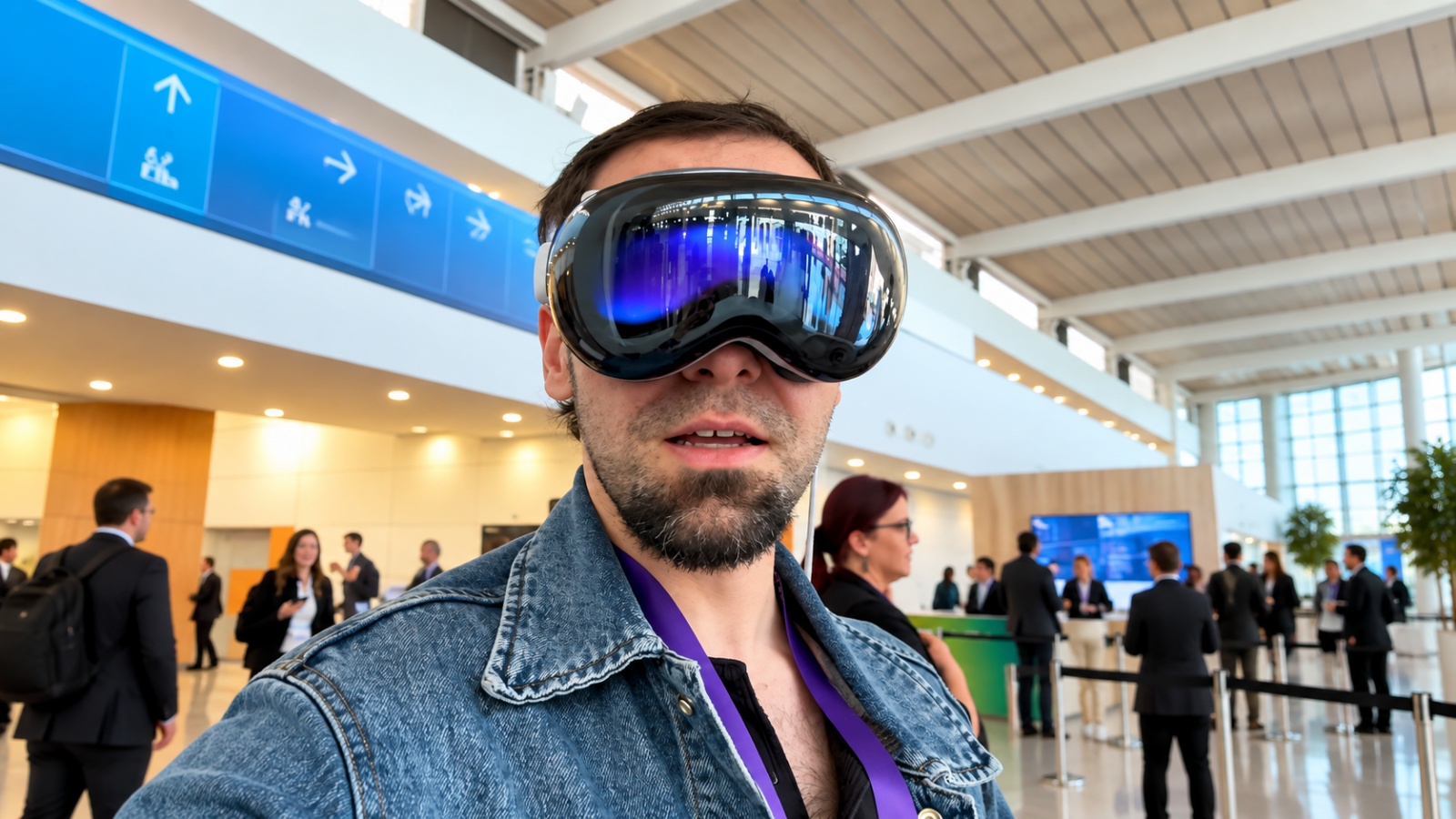
For a headset meant to be a spatial computer, the amount of computer strapped to a user’s face remains one of Vision Pro’s biggest practical compromises. Apple is reportedly exploring ways to reduce that burden with N224, an internally named Vision headset project that could become a successor to the current Vision Pro with M5.
According to Bloomberg’s Power On newsletter, Apple is testing four N224 design directions and lighter chassis materials. One concept would leave the displays and sensors in the headset but move both the processor and battery into an external module. That could substantially reduce the weight carried on the head, though it would also make a cable and pocketable component central to the experience.
A familiar trade-off for portable XR
The approach resembles Meta’s design for its approximately 100-gram VR glasses, which connect by cable to a pocketable processing unit. Vision Pro already uses an external battery, so Apple’s more consequential change would be relocating processing as well.
Apple is testing materials such as plastic, titanium and other metals to reduce weight, and is continuing to explore an external module for processing and battery.
Mark Gurman, Bloomberg
Apple’s current Vision Pro with M5 weighs roughly 750 to 800 grams on the head, with its separate battery weighing about 353 grams. That puts the ergonomic focus of N224 in clear view: even if an external module adds something to carry, reducing front-loaded headset mass could matter more during longer work, entertainment, or immersive-computing sessions.
Not every team at Apple is said to favor the split architecture. Some executives reportedly prefer an approach closer to the existing all-in-one headset design, while Apple also tests plastic, titanium, and other metals for the enclosure. One option may retain Vision Pro’s familiar rounded form while using those materials to lower weight.
N224 appears separate from Apple’s smart-glasses effort
The N224 work should not be confused with the lower-cost “Vision Air” concept previously associated with the shelved N100 project. It is also on a longer timeline than Apple’s reported smart glasses, which are associated with late 2027 and are expected to emphasize cameras, microphones, speakers, and AI rather than an AR display in their first generation.
- Apple smart glasses: reportedly targeted for late 2027, with cameras, microphones, speakers, and AI but no initial AR display.
- N224 Vision headset: a more full-featured XR headset reportedly not expected before late 2028 or early 2029.
- N224 hardware concepts: four designs under evaluation, including one with external processing and battery hardware.
Apple has reportedly shifted some resources from Vision work toward the simpler glasses effort. For users who want a Vision-class device for longer sessions, N224’s most important unanswered questions are whether Apple adopts the external-module design, how much weight it can remove from the headset itself, and whether that mobility trade-off is worth a wired connection.
Post Footer automatically generated by Add Post Footer Plugin for wordpress.