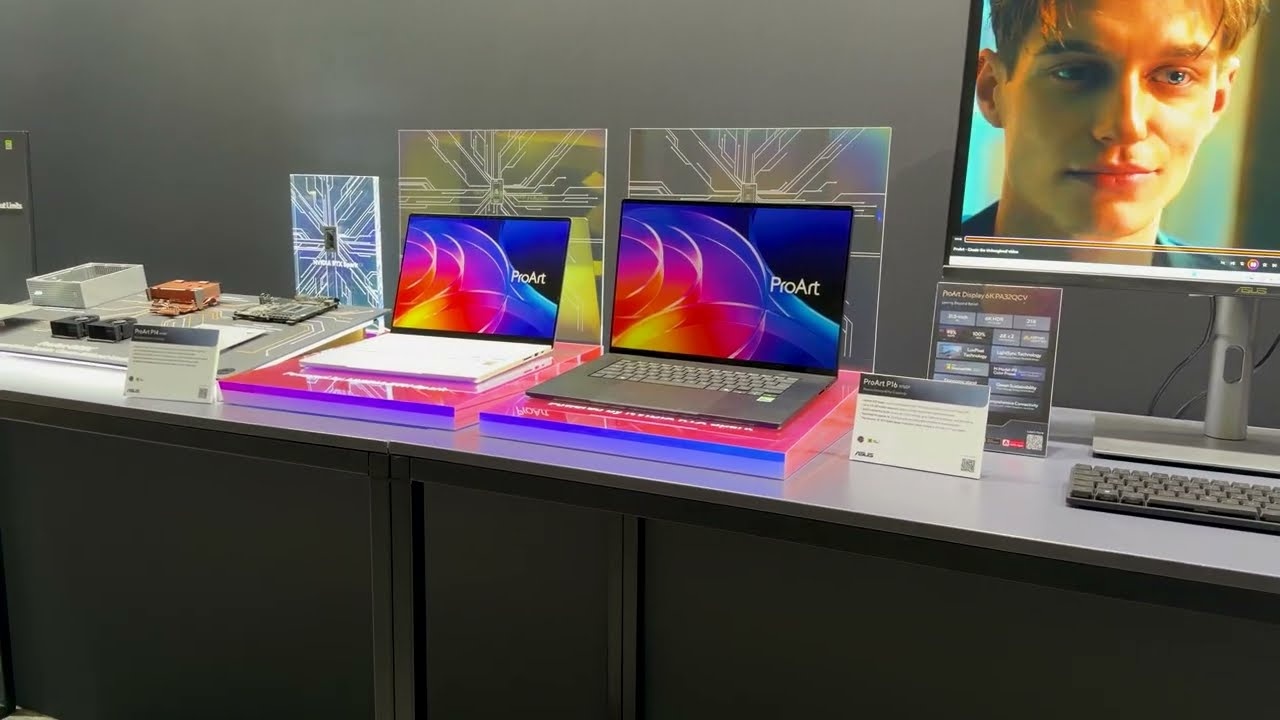
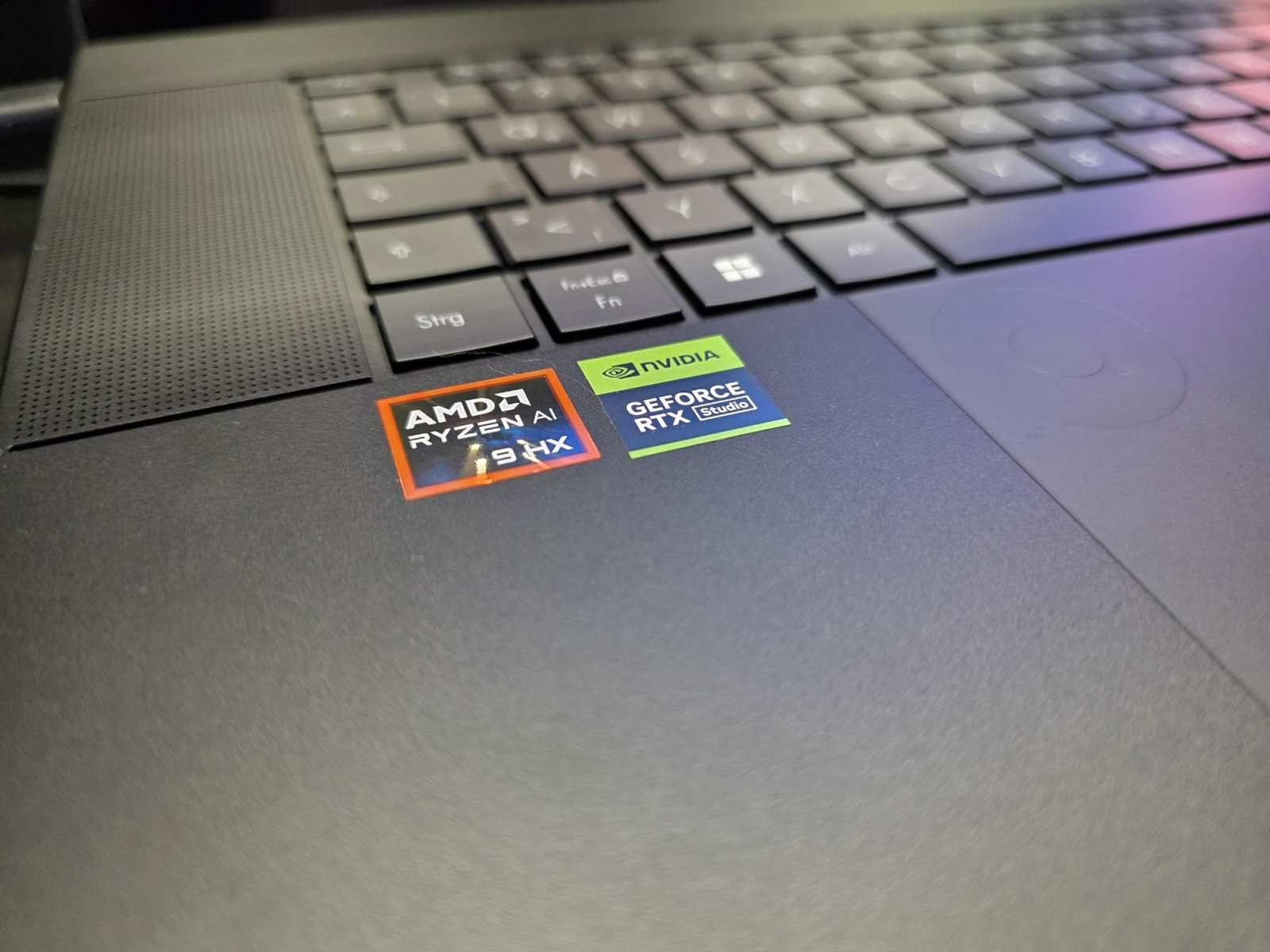
A portable creator PC is usually constrained by memory long before its processor runs out of headline-grabbing performance. ASUS is targeting that limitation with new ProArt P14 and P16 laptops built around NVIDIA’s RTX Spark platform, which combines an NVIDIA Grace CPU and Blackwell GPU architecture with up to 128GB of unified LPDDR5X memory.
The architecture is intended for workloads that can become awkward on a conventional laptop with separate system memory and GPU VRAM: large local language models, complex 3D scenes, AI-assisted video generation, and creative projects built around substantial asset libraries. ASUS says the platform can run local LLMs with up to 120 billion parameters, work with 3D scenes exceeding 90GB, and support 4K AI video generation. Those are platform claims rather than real-world performance guarantees for every application.
Thin machines for demanding local workflows
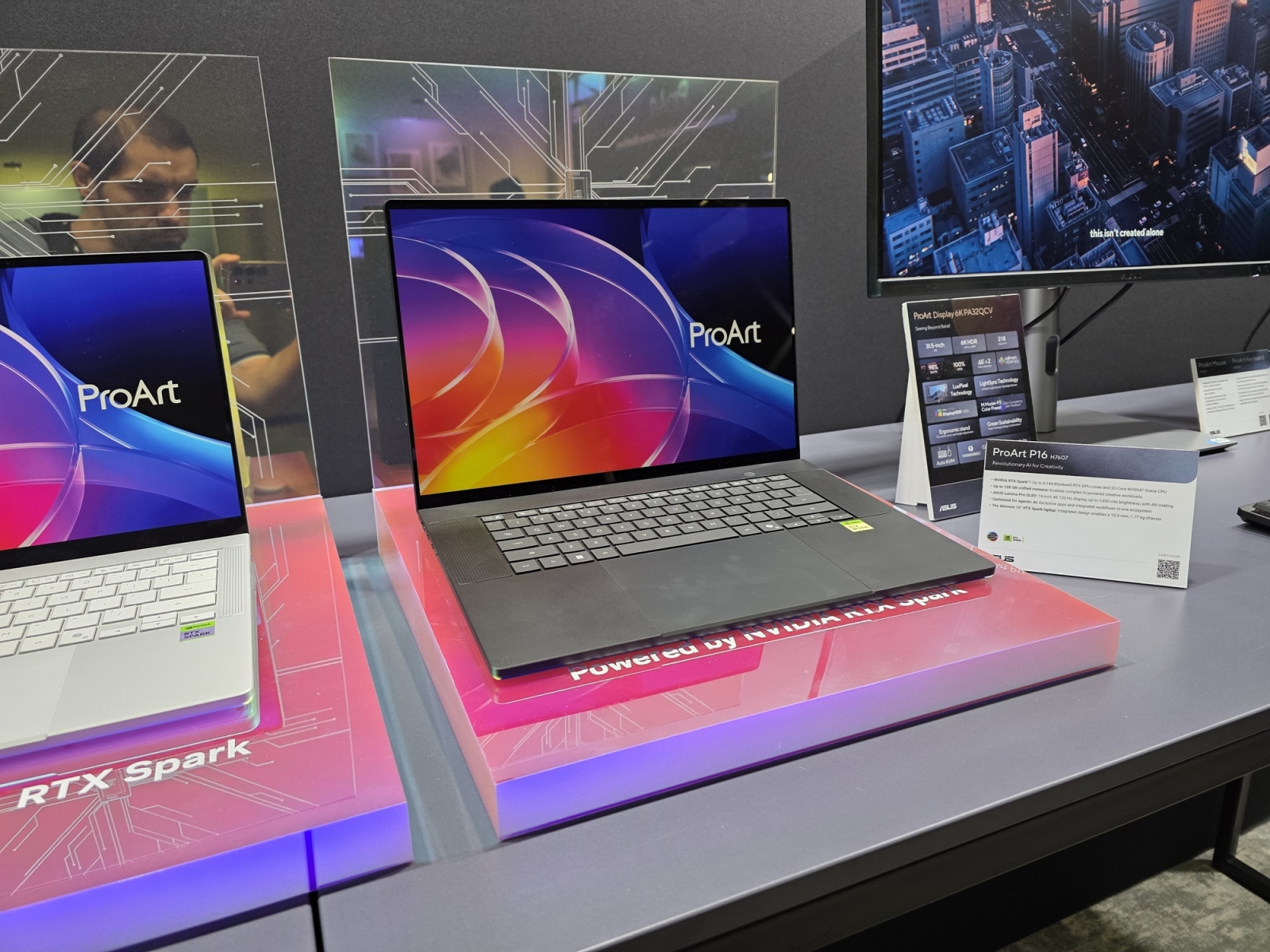
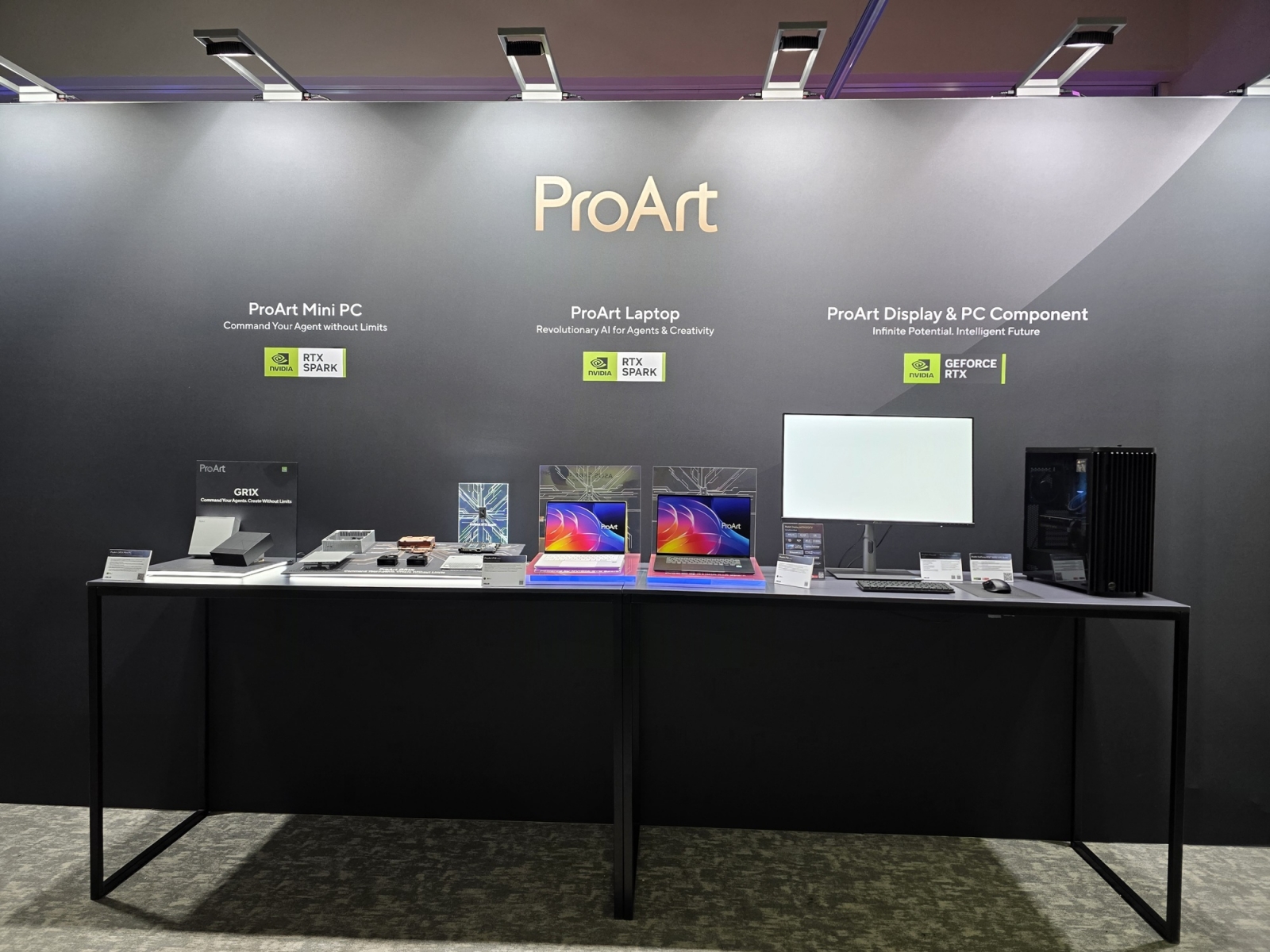
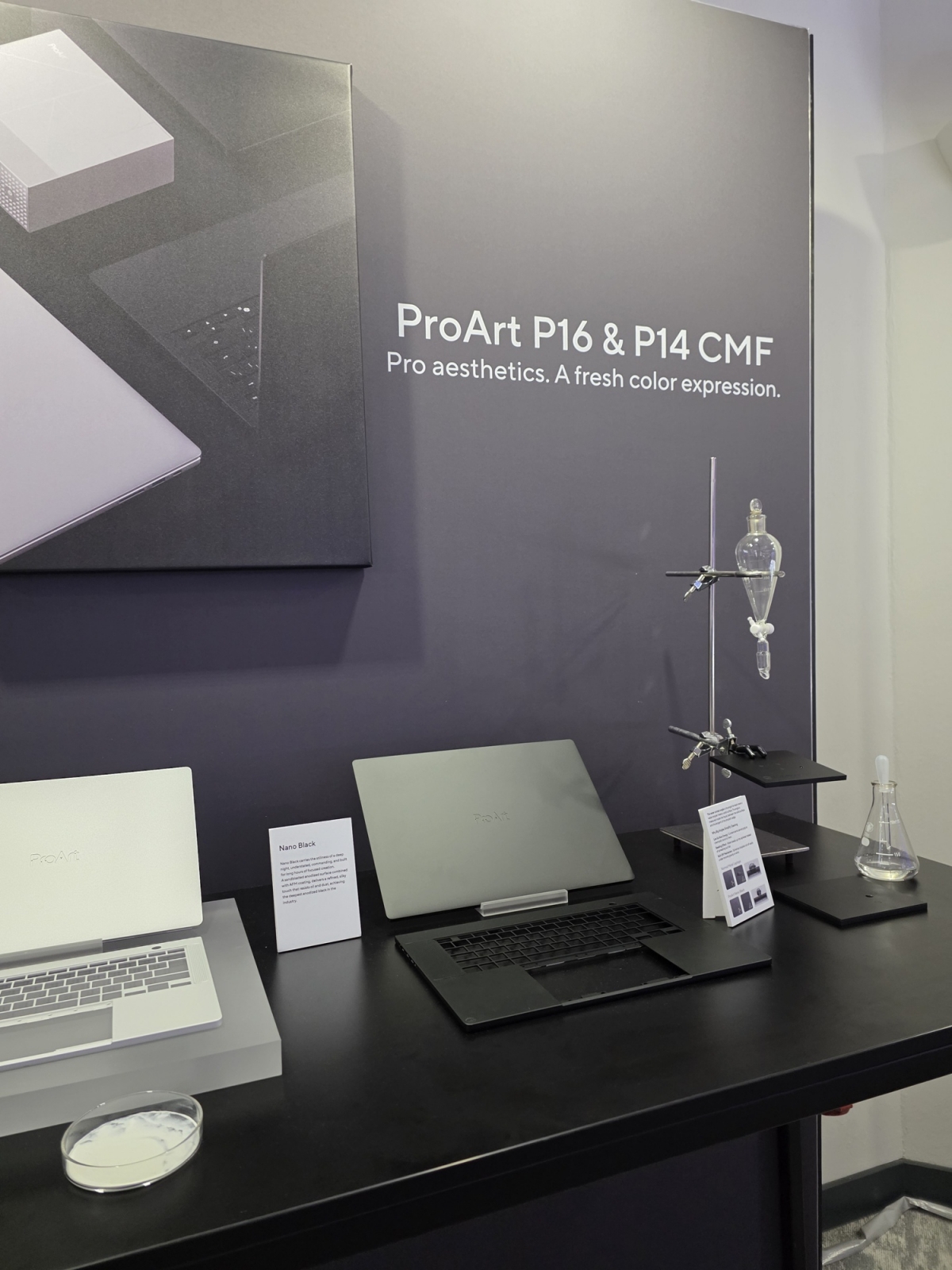
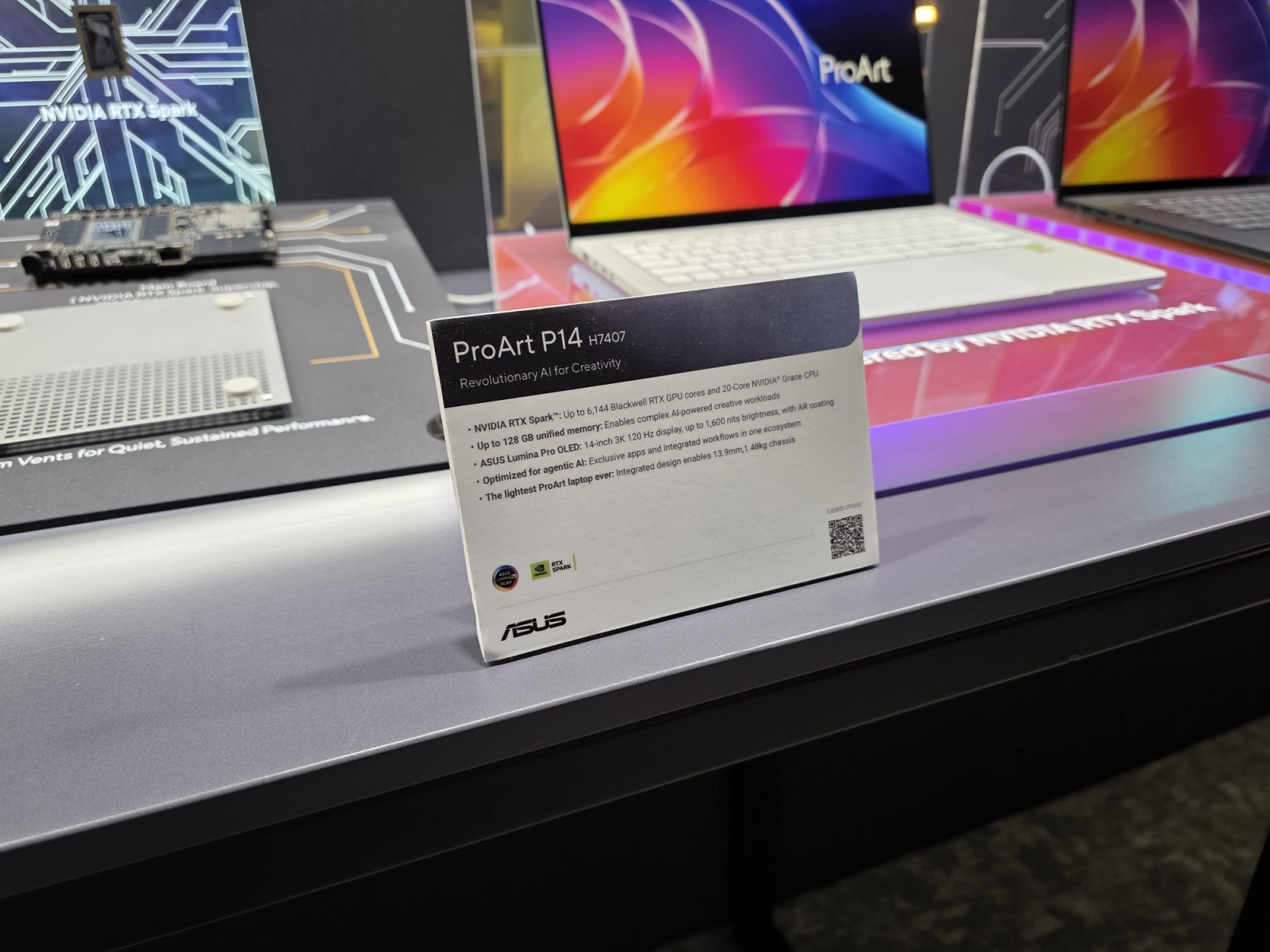
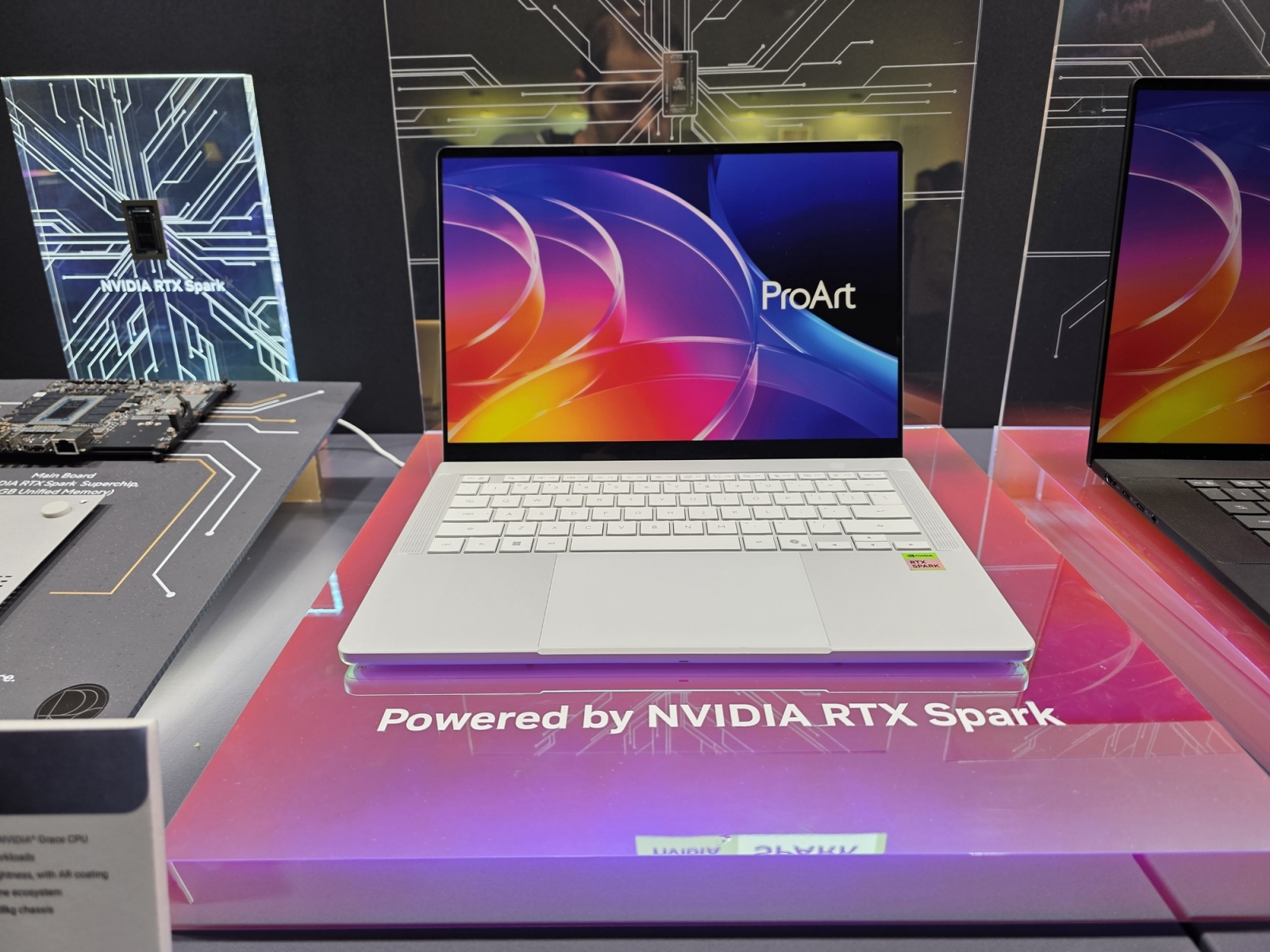
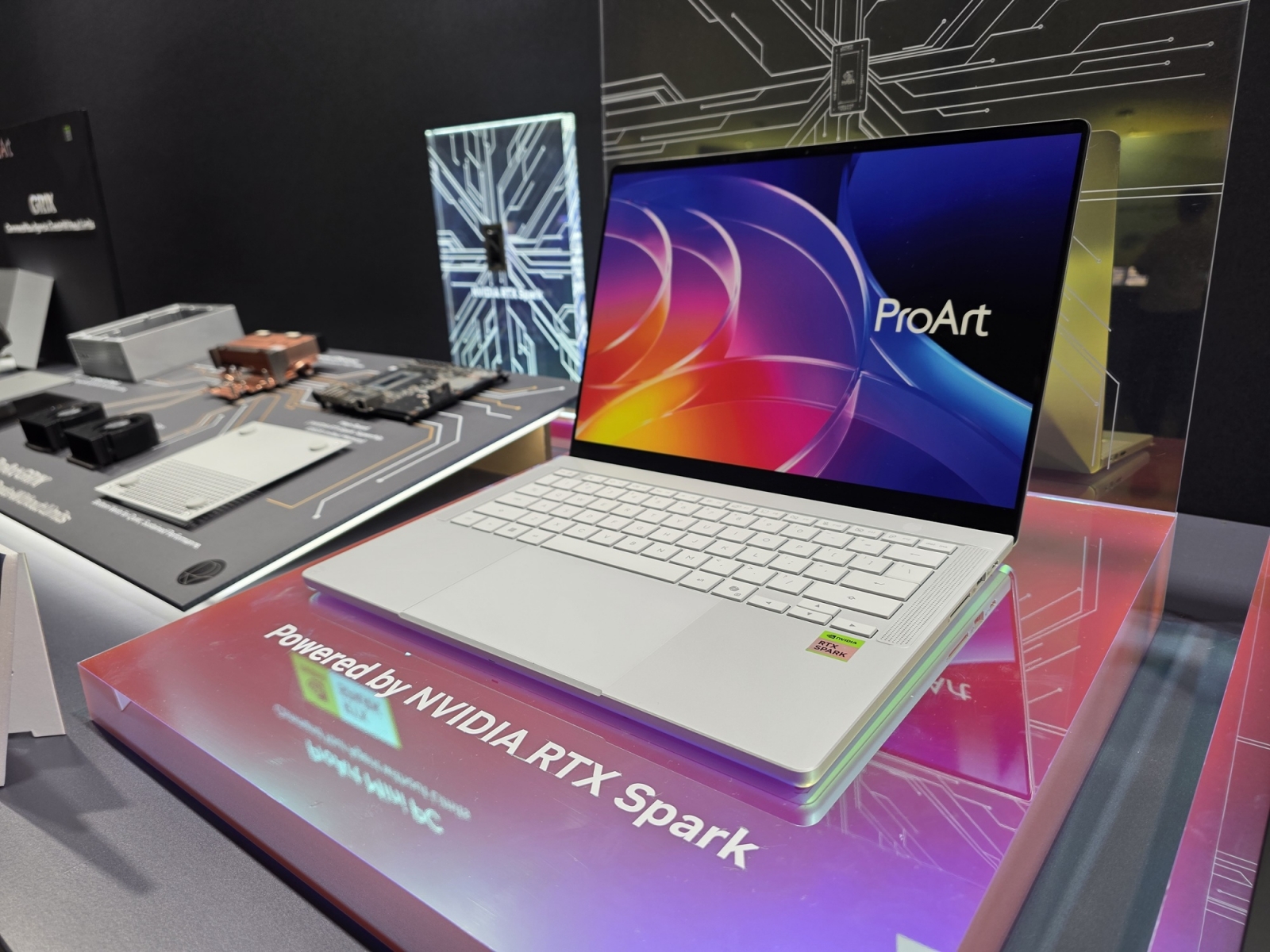
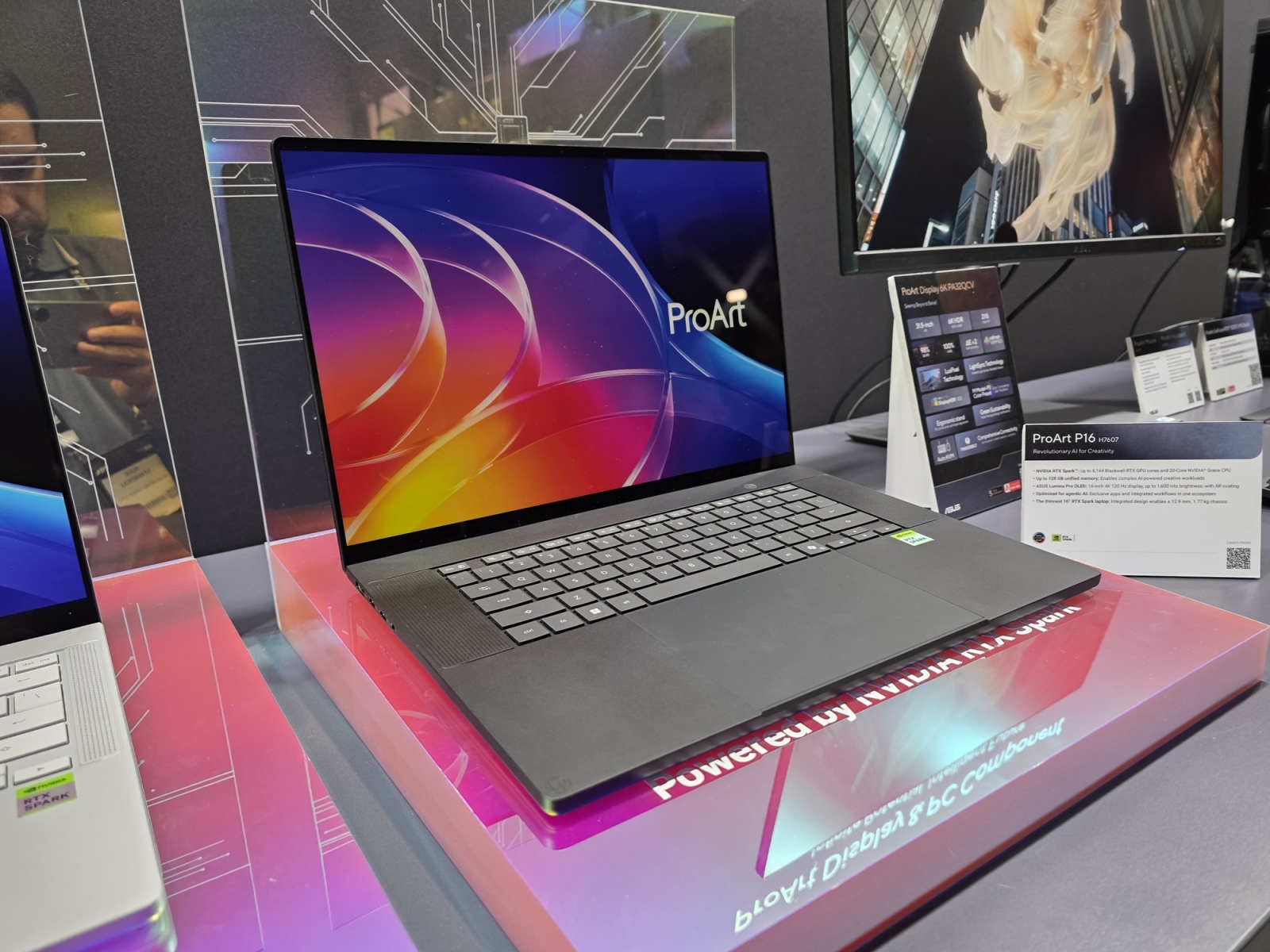

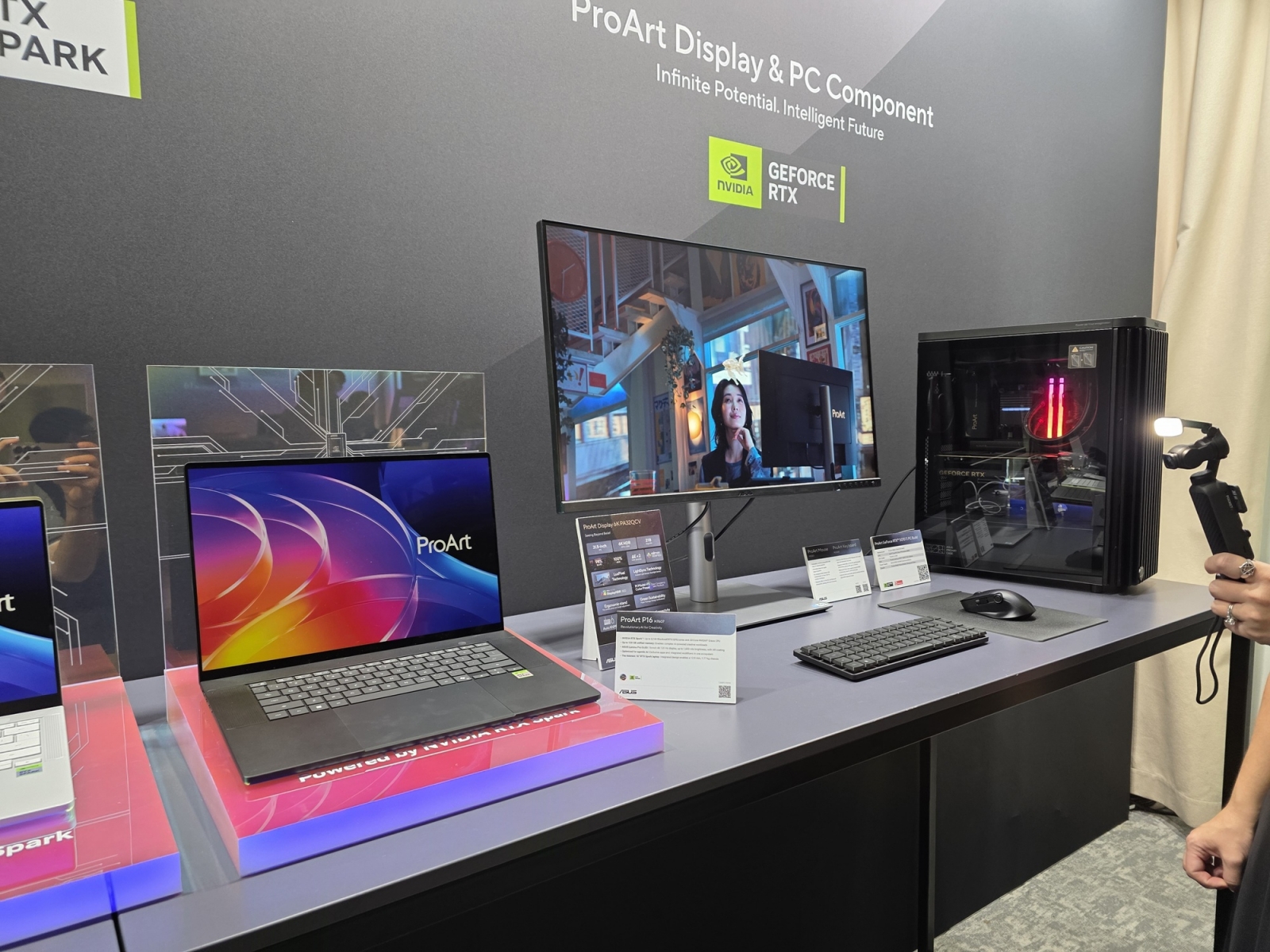
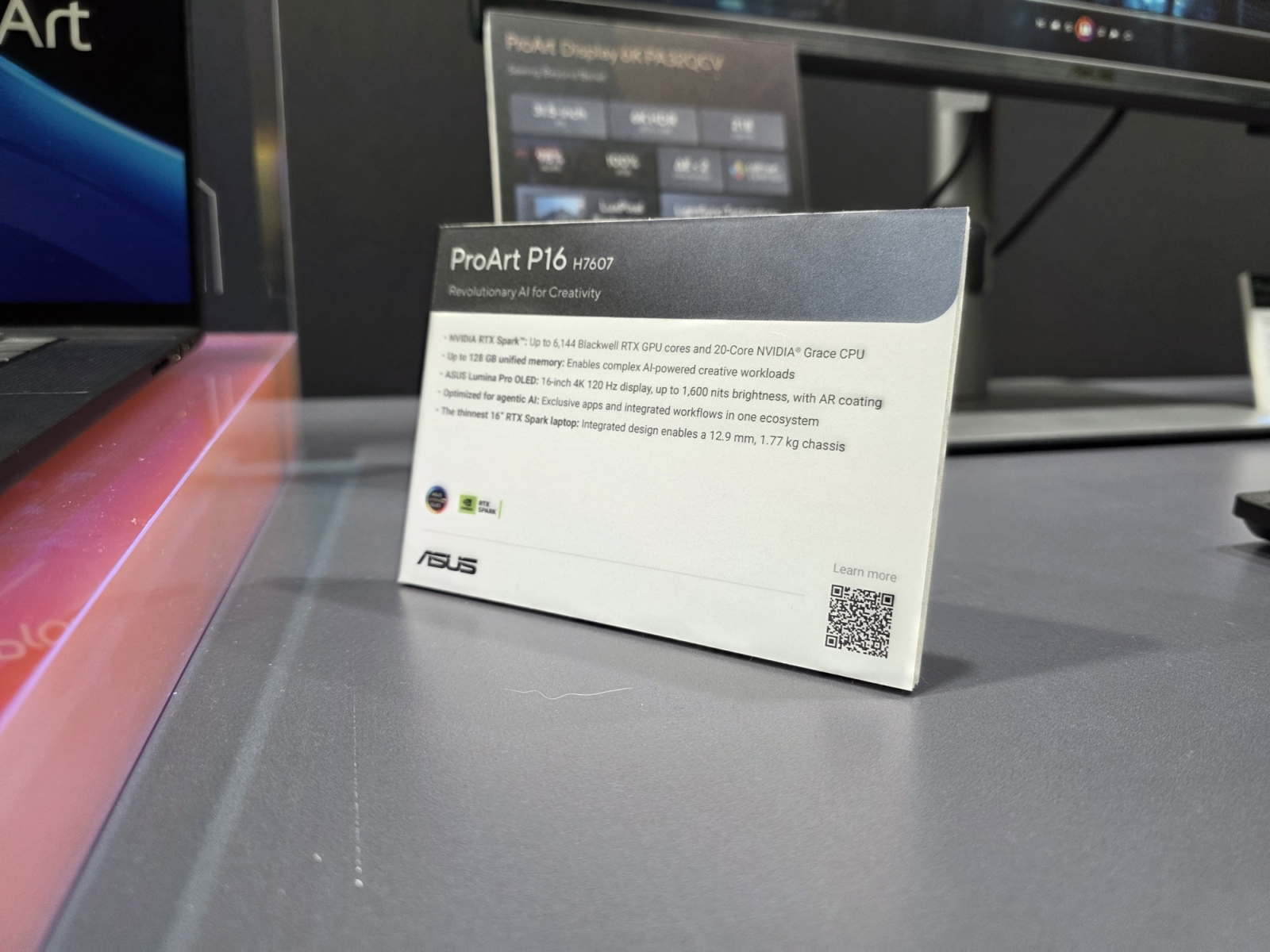
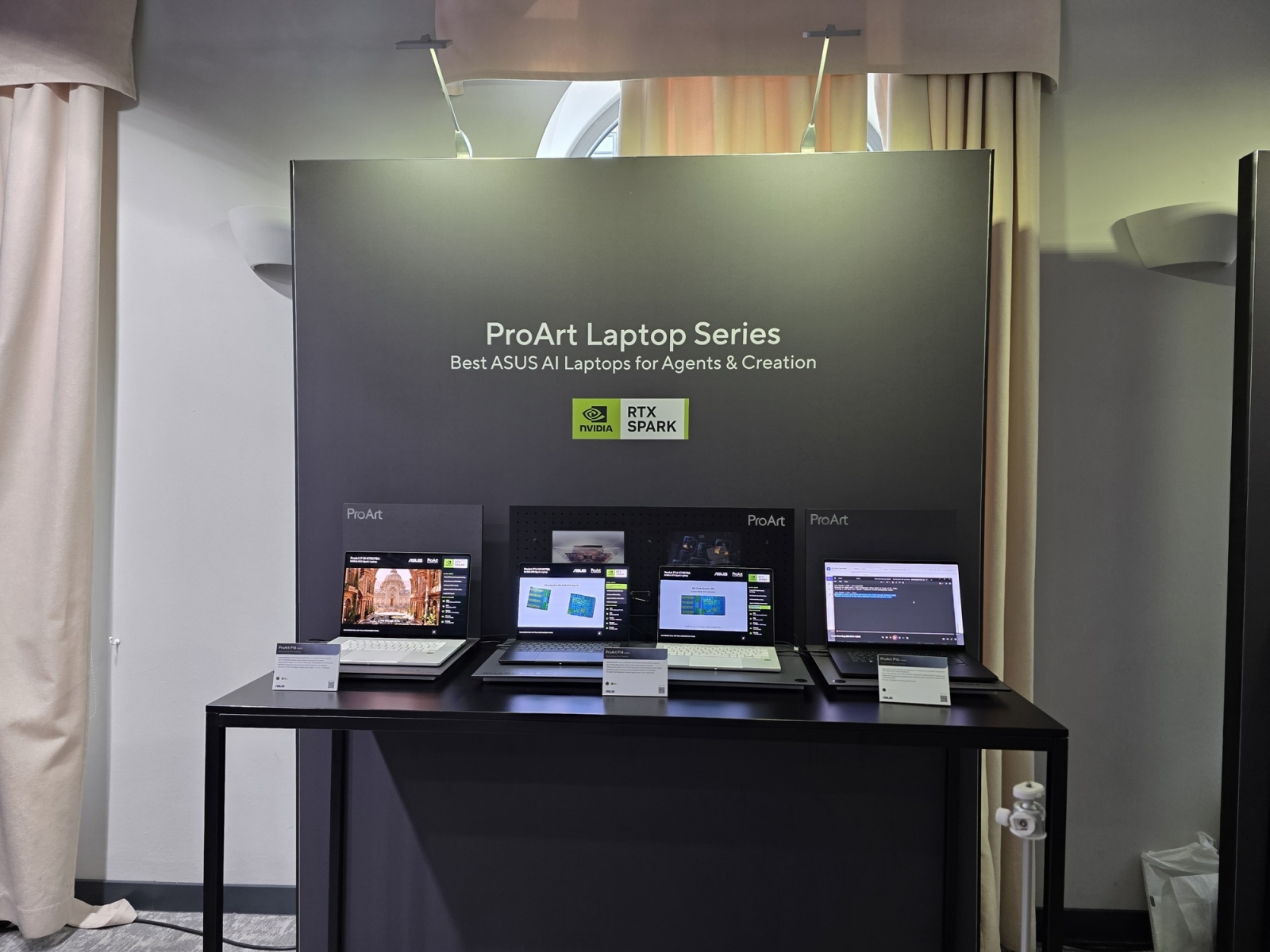
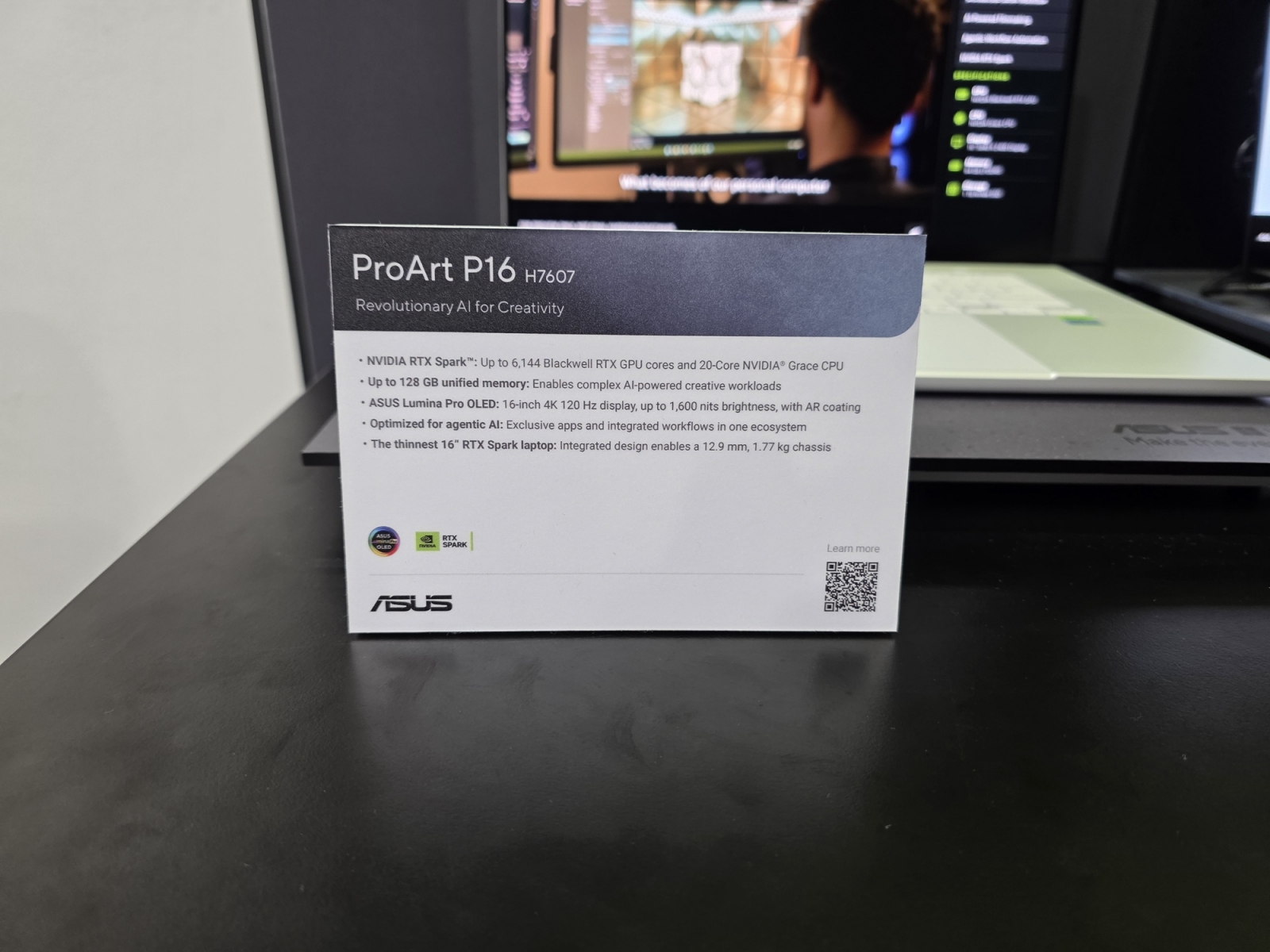
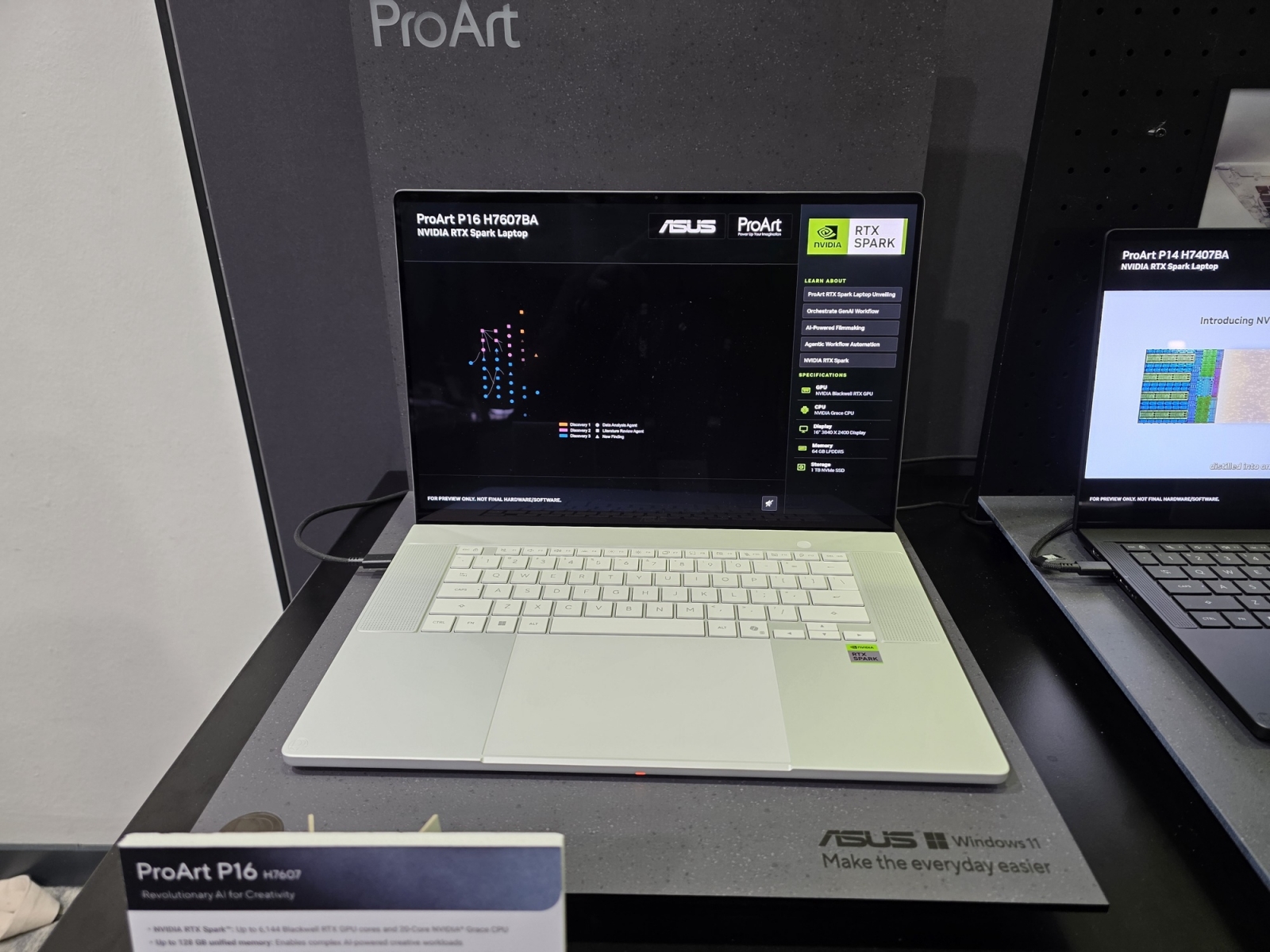
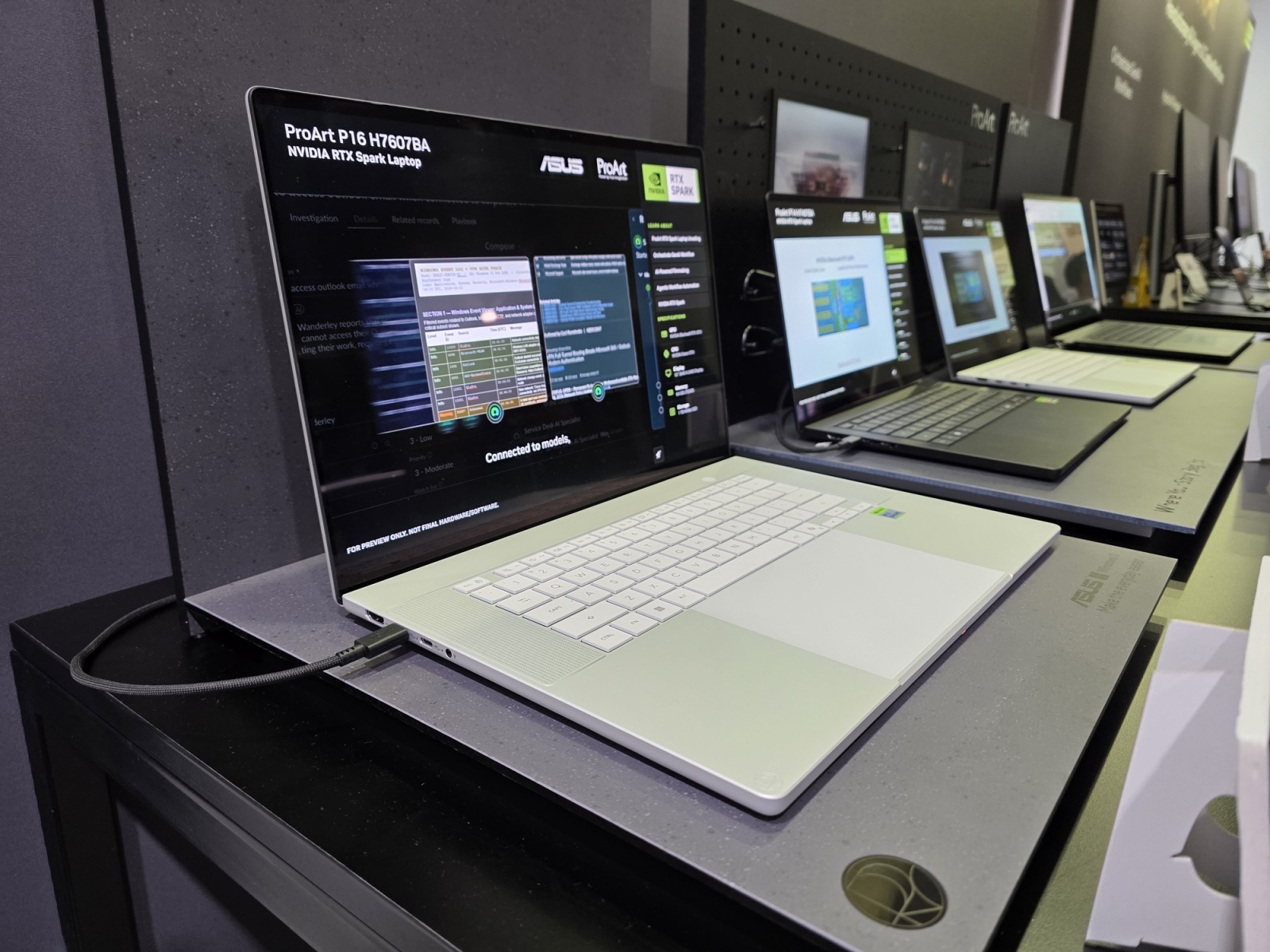
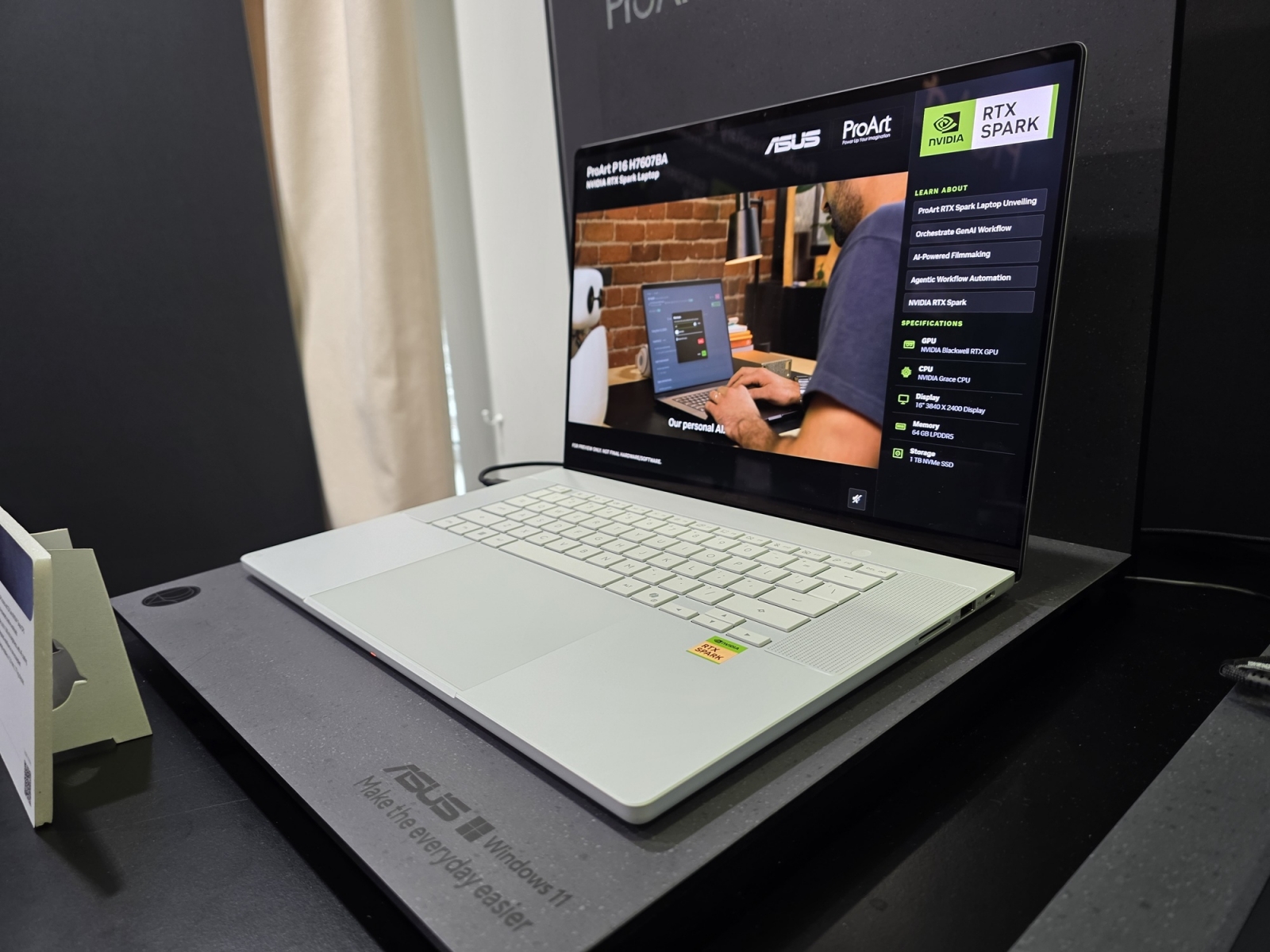
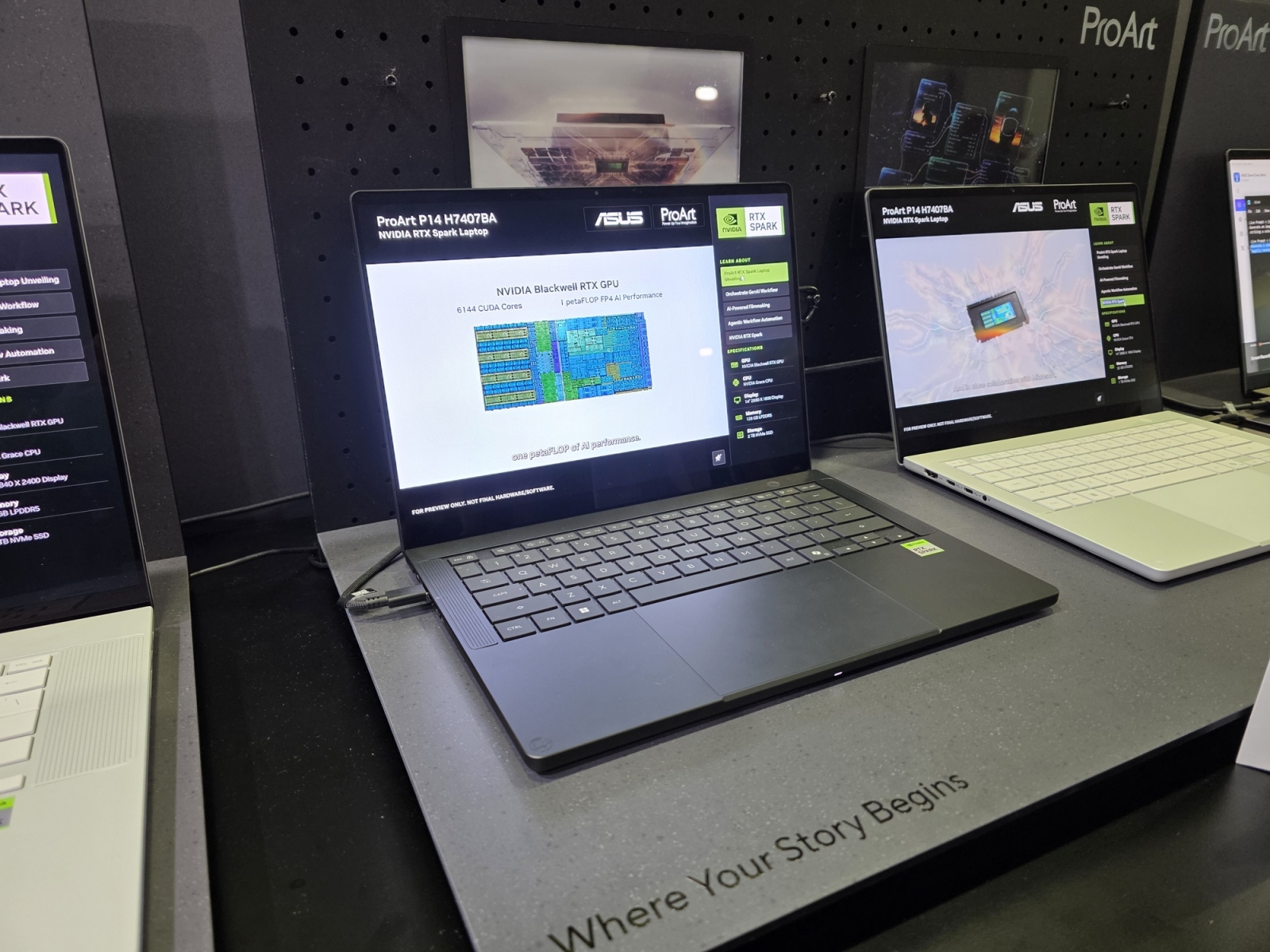
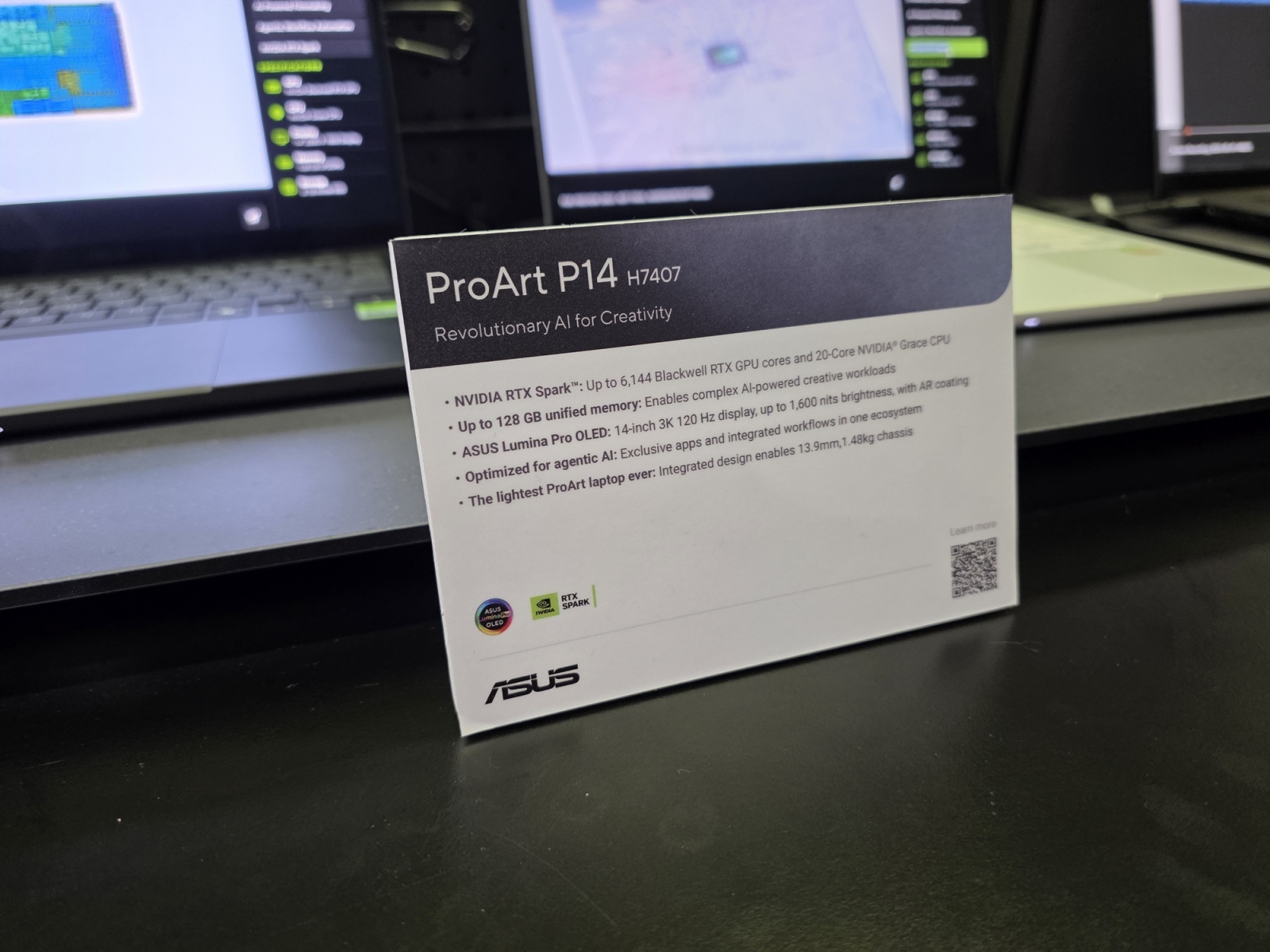
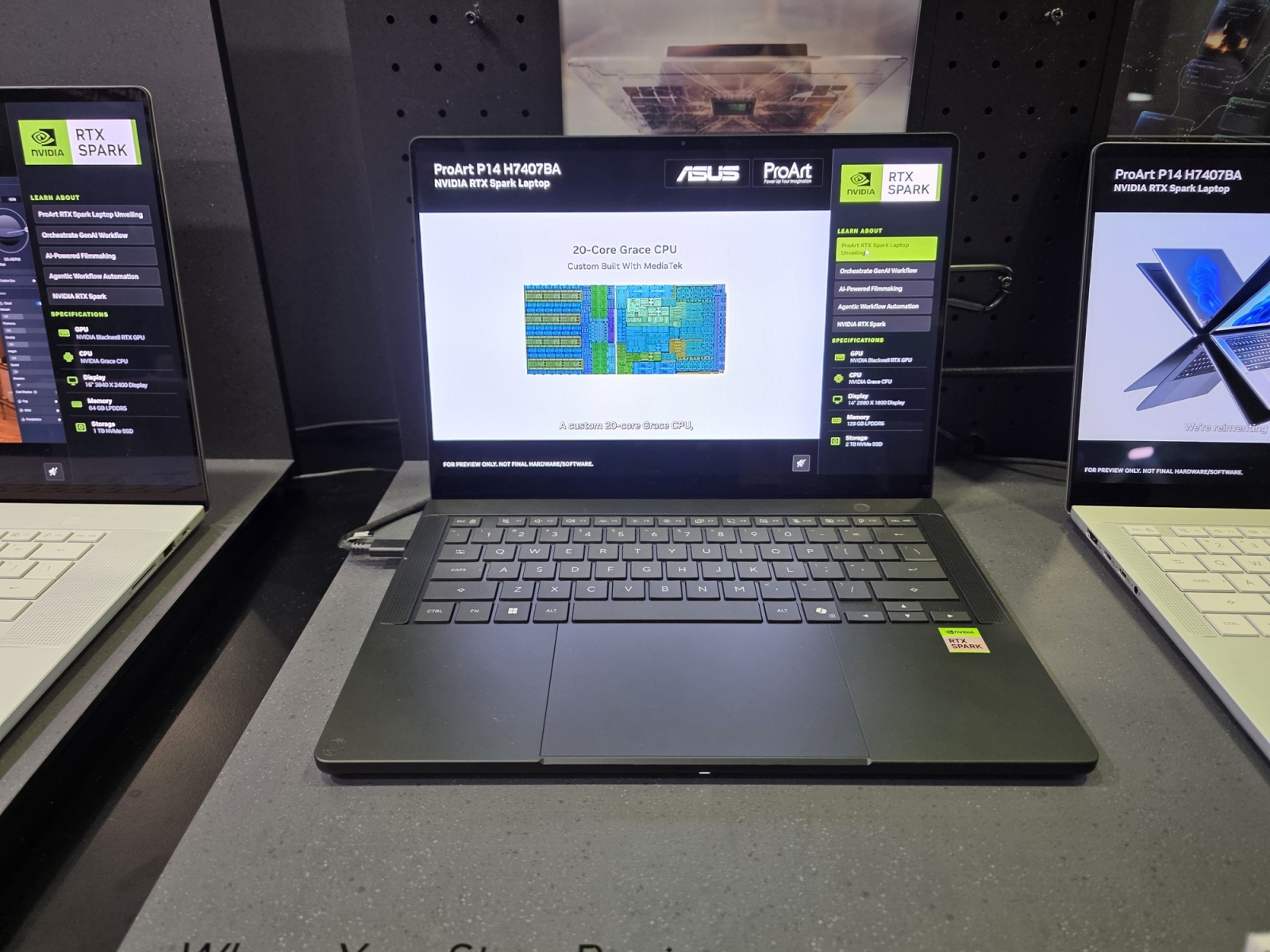
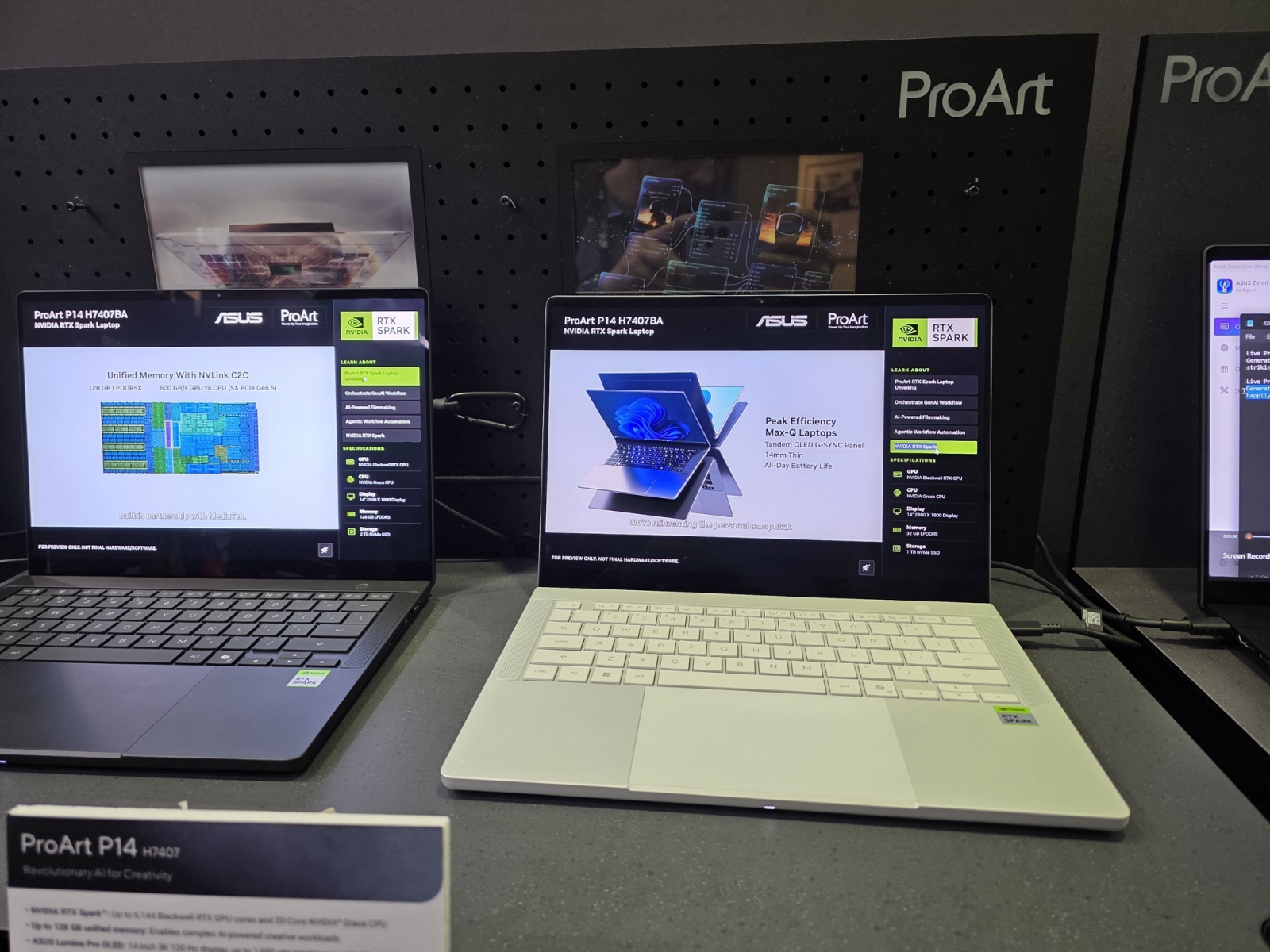

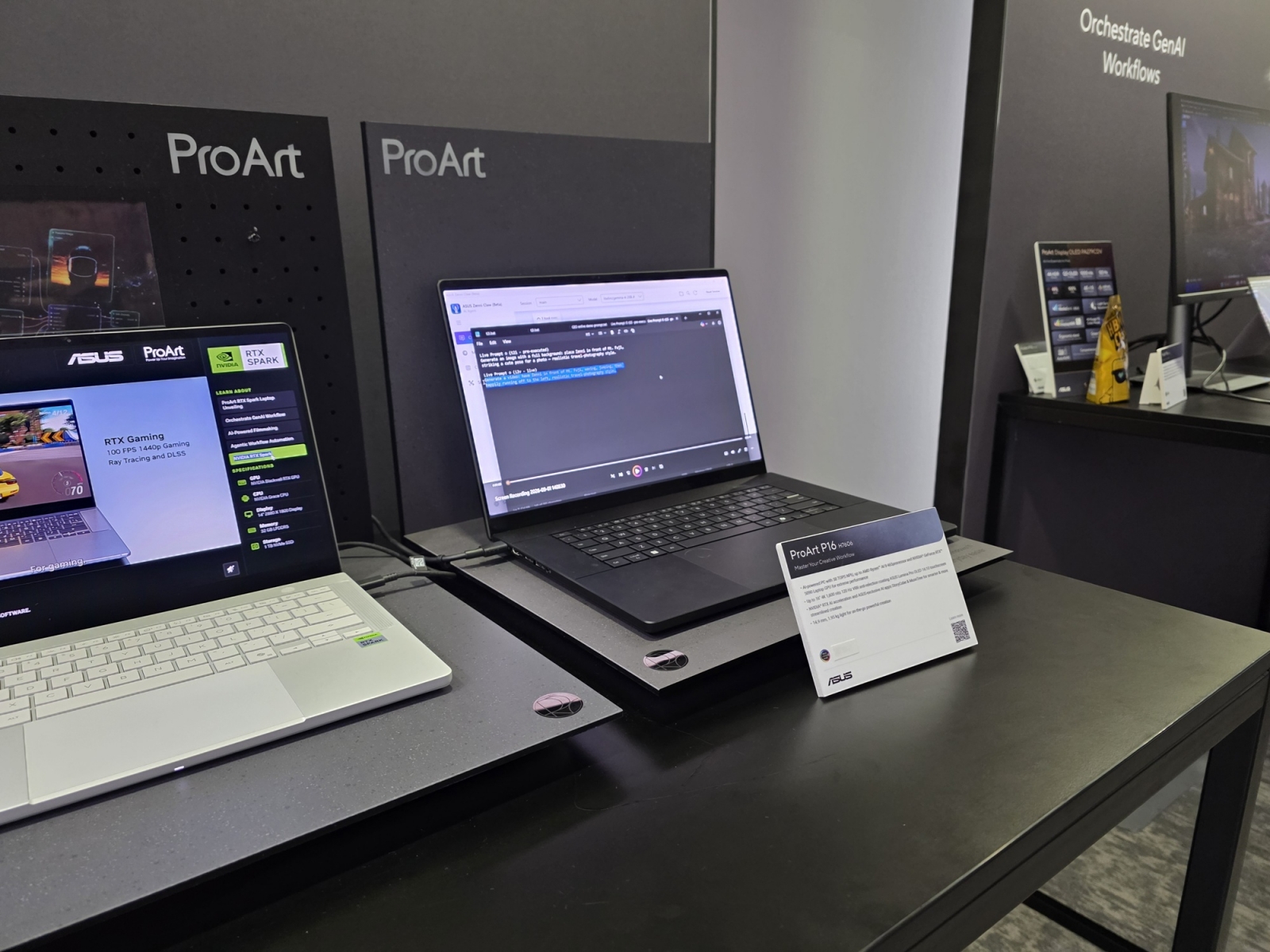
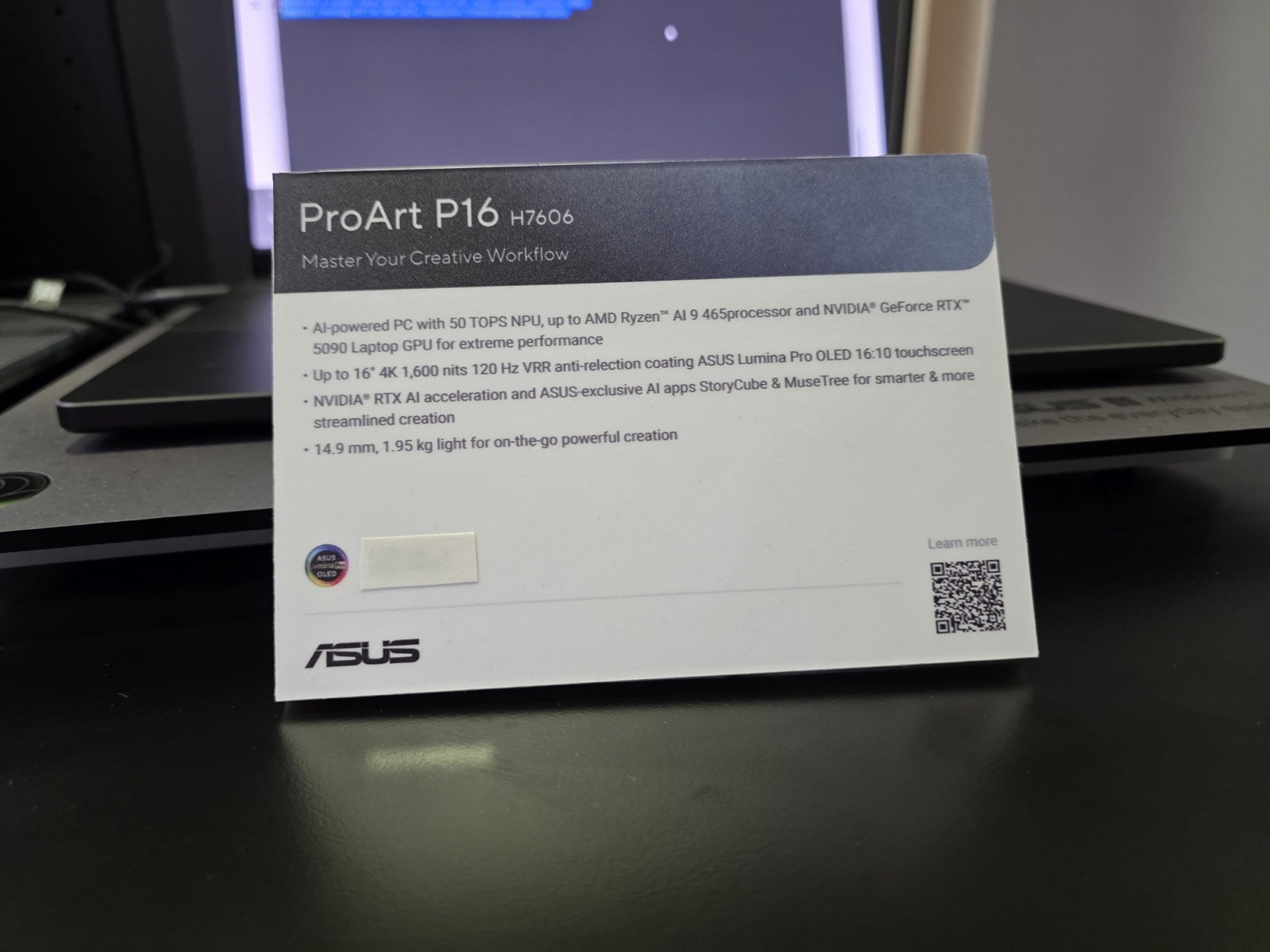
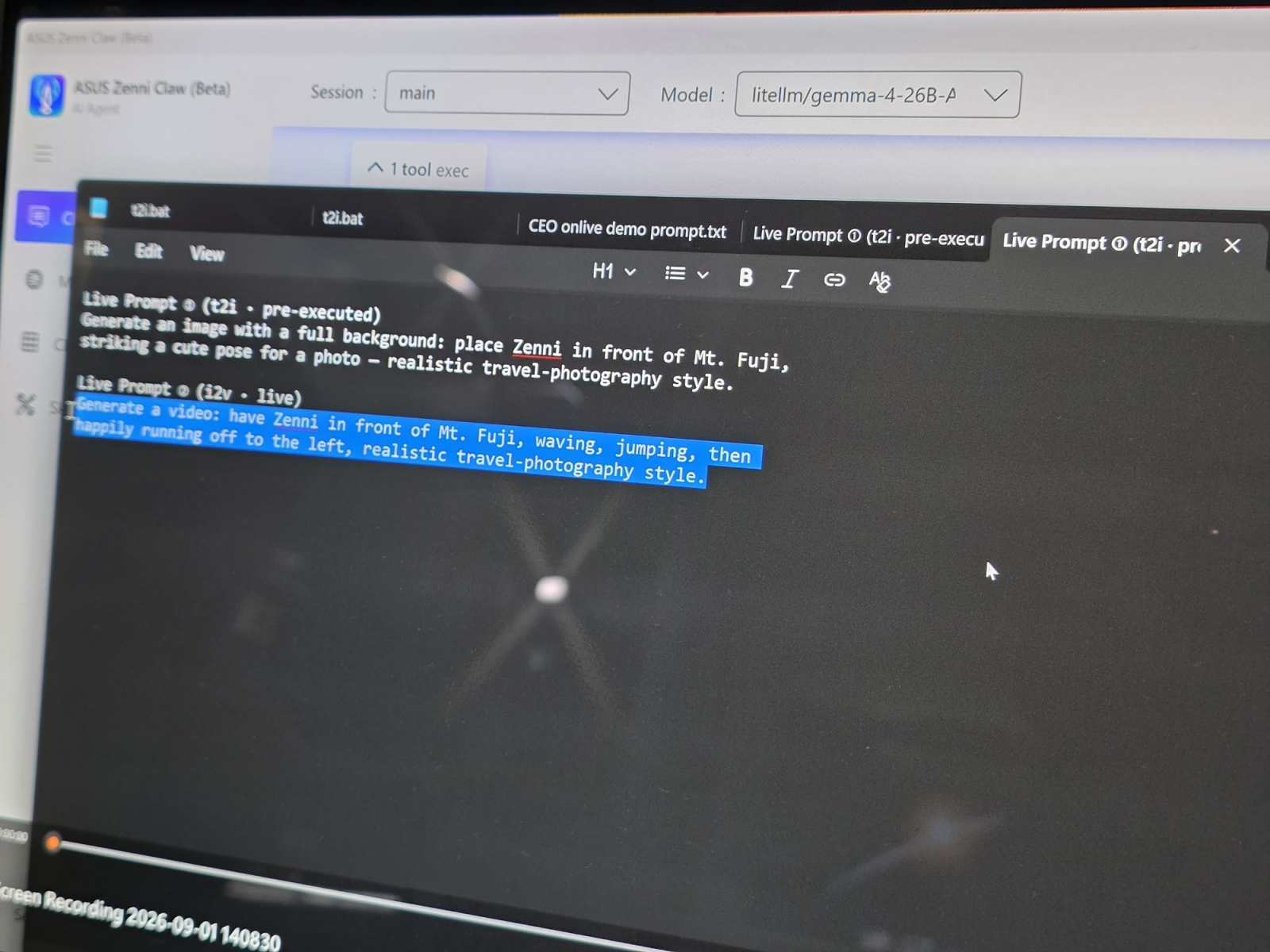

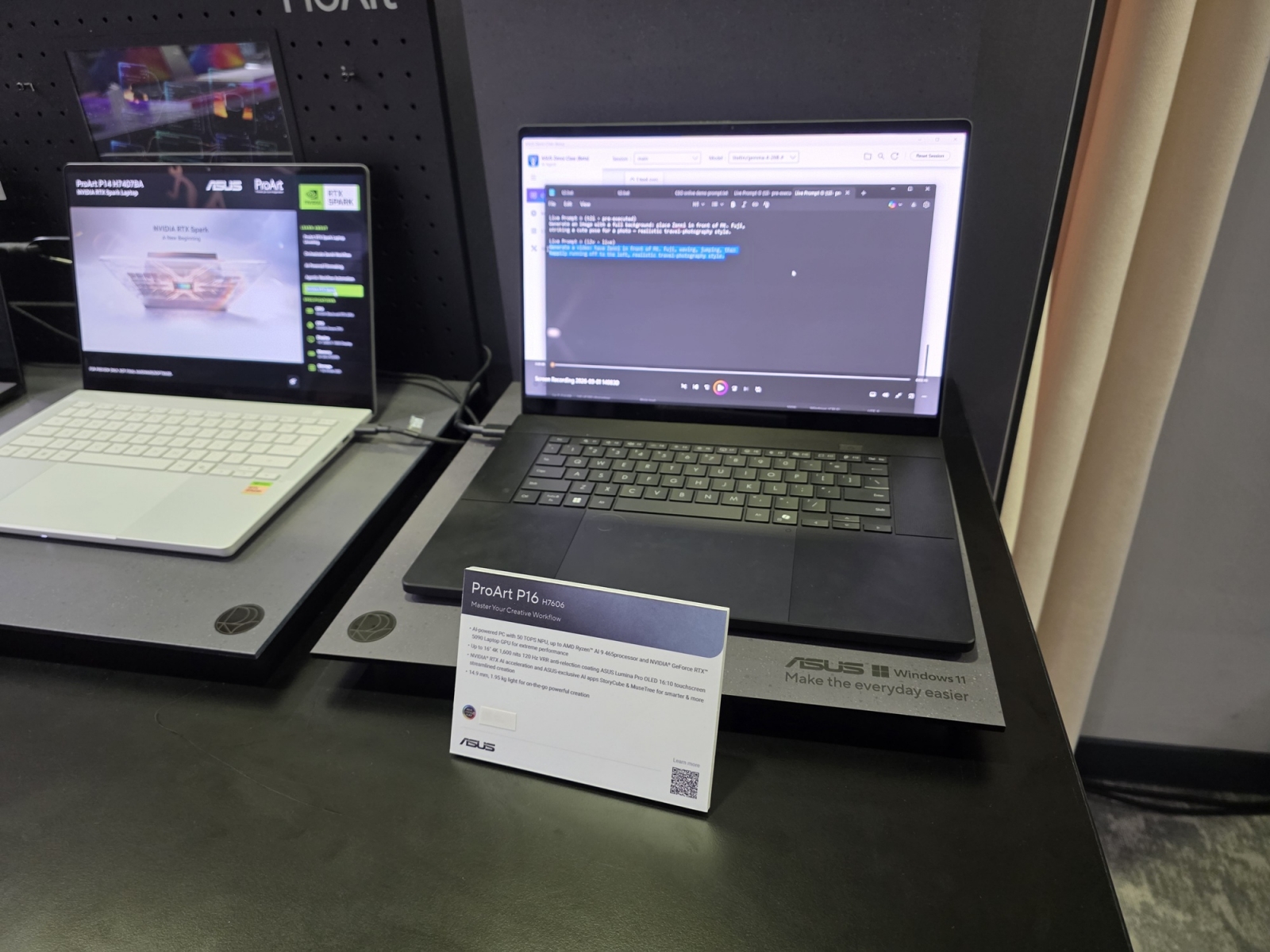
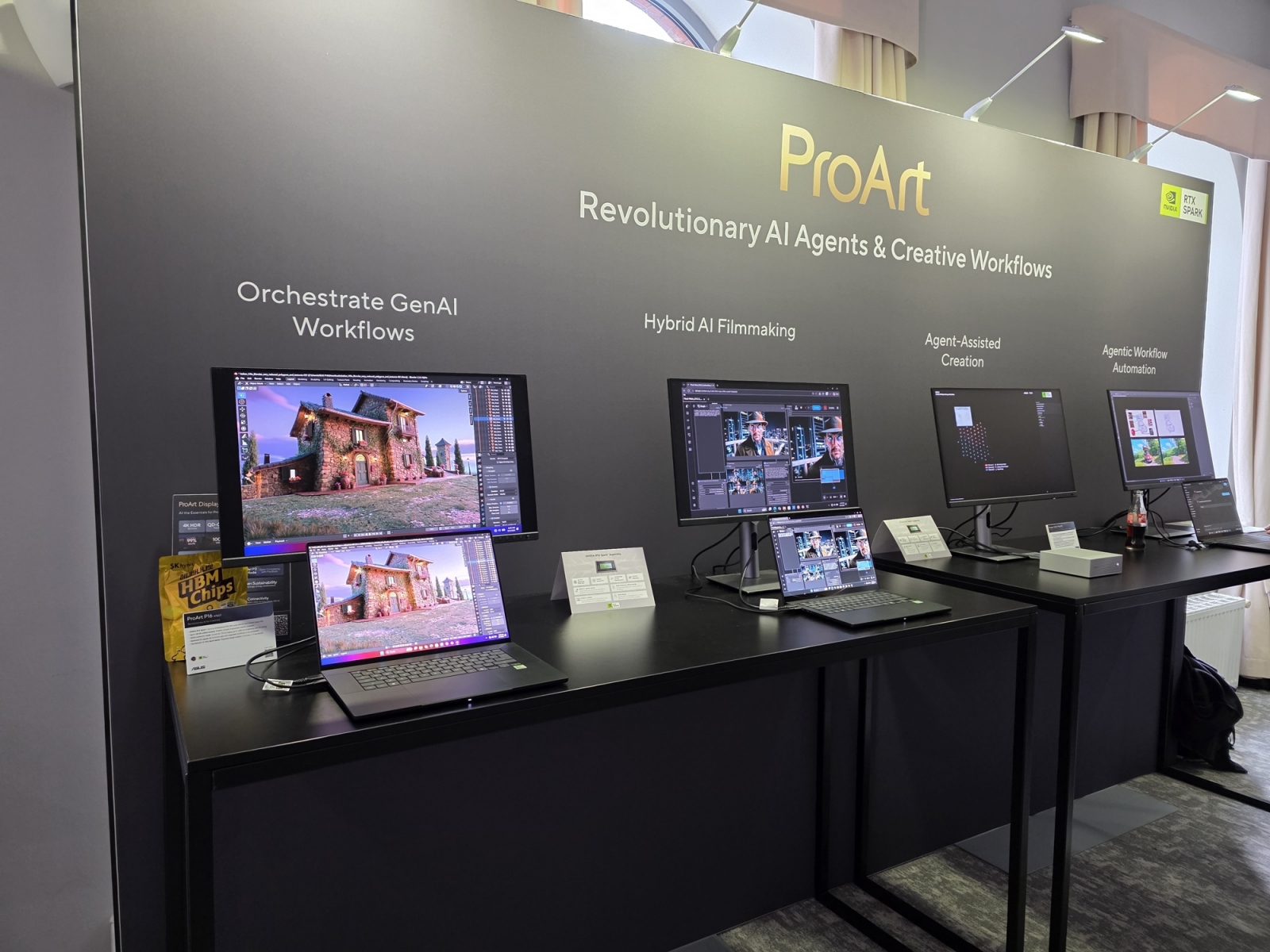

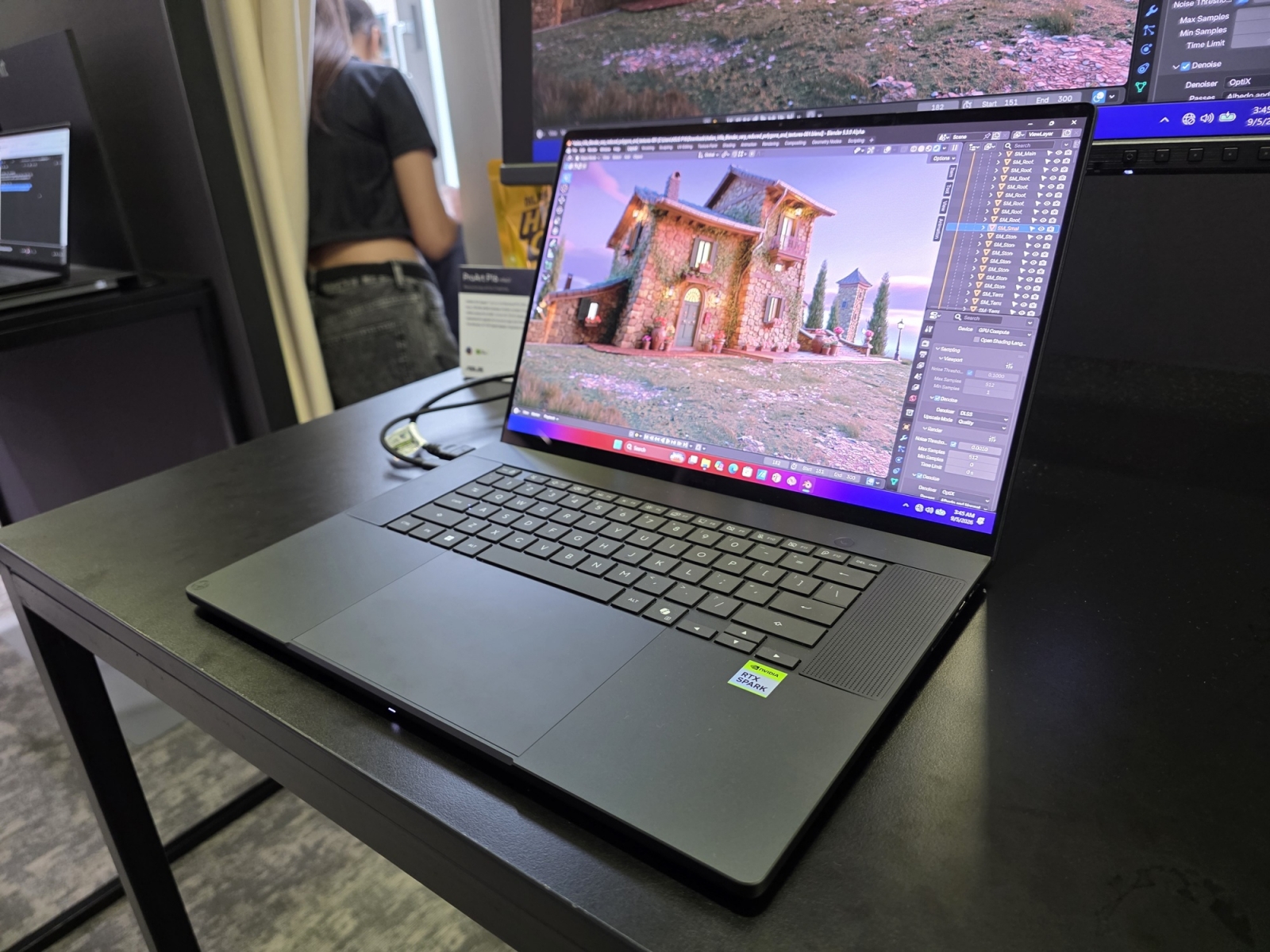
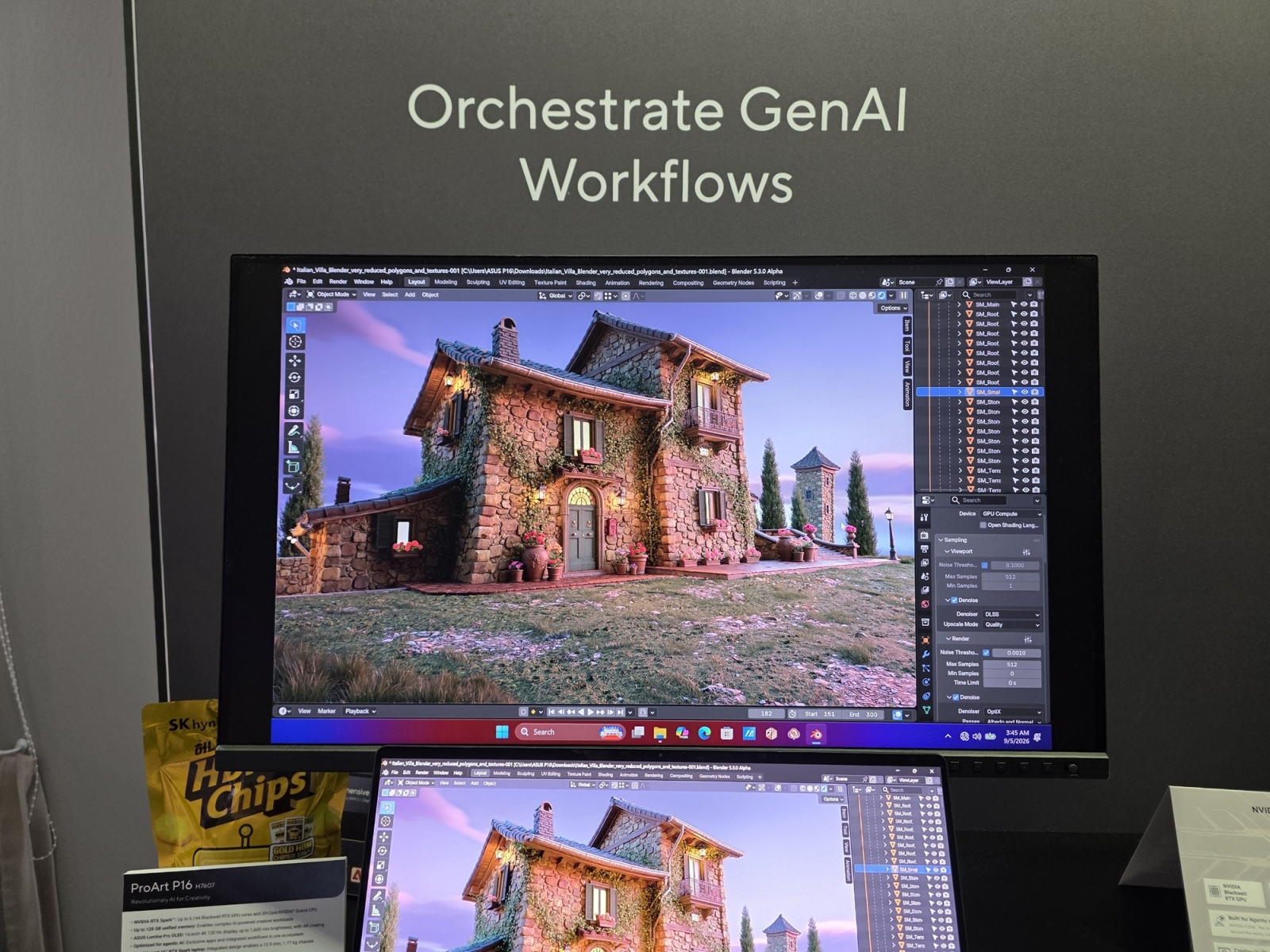
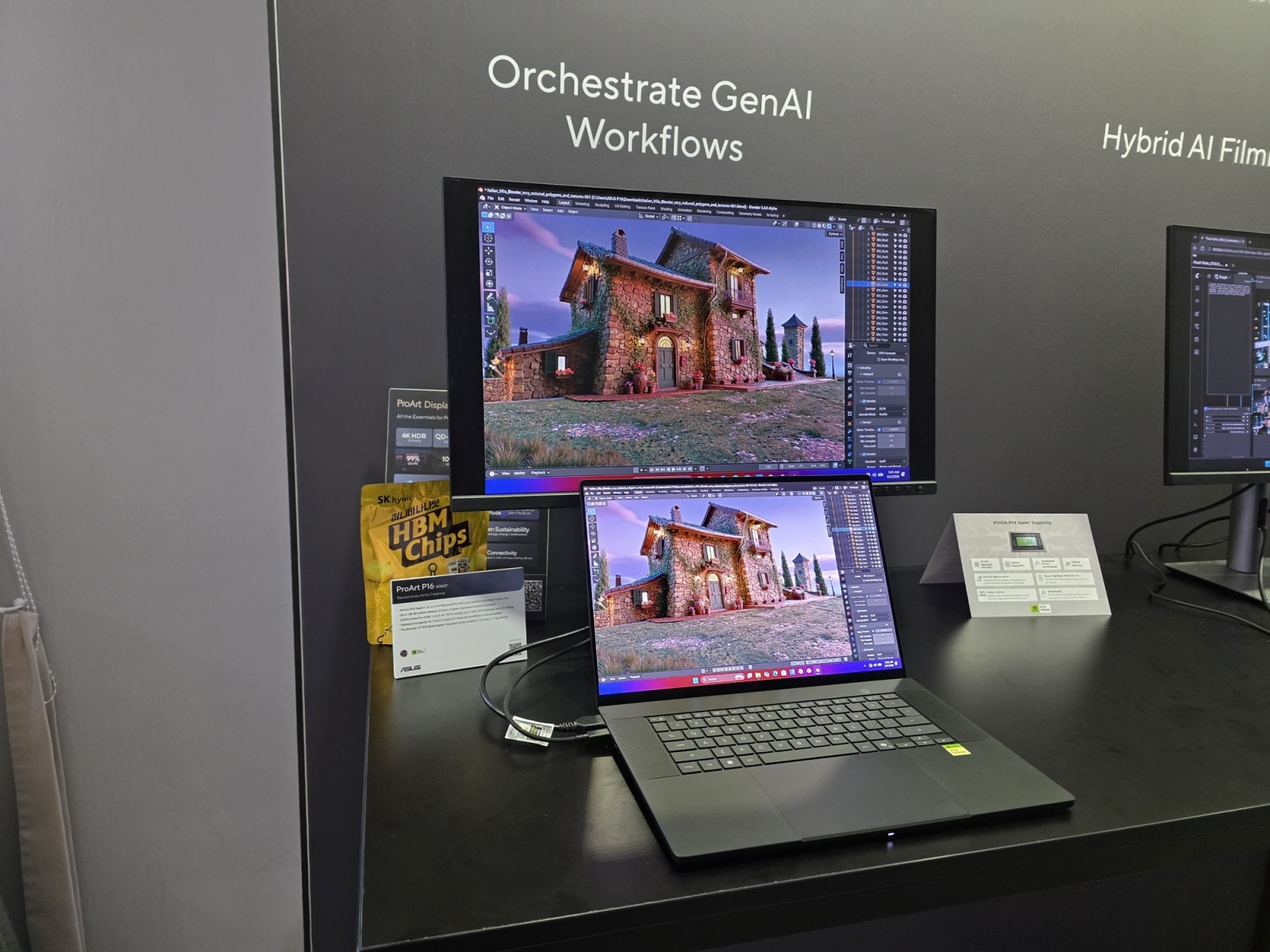
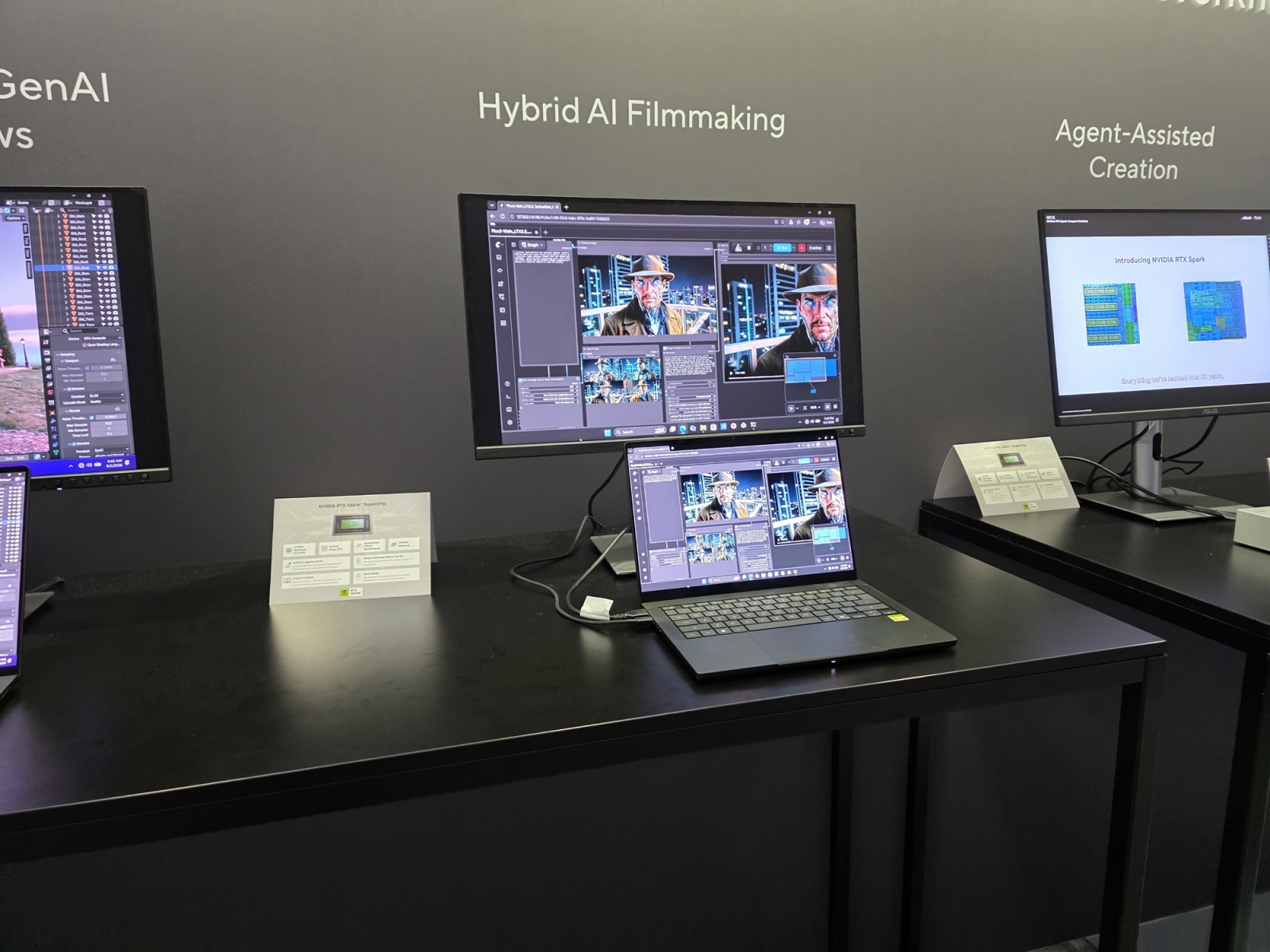
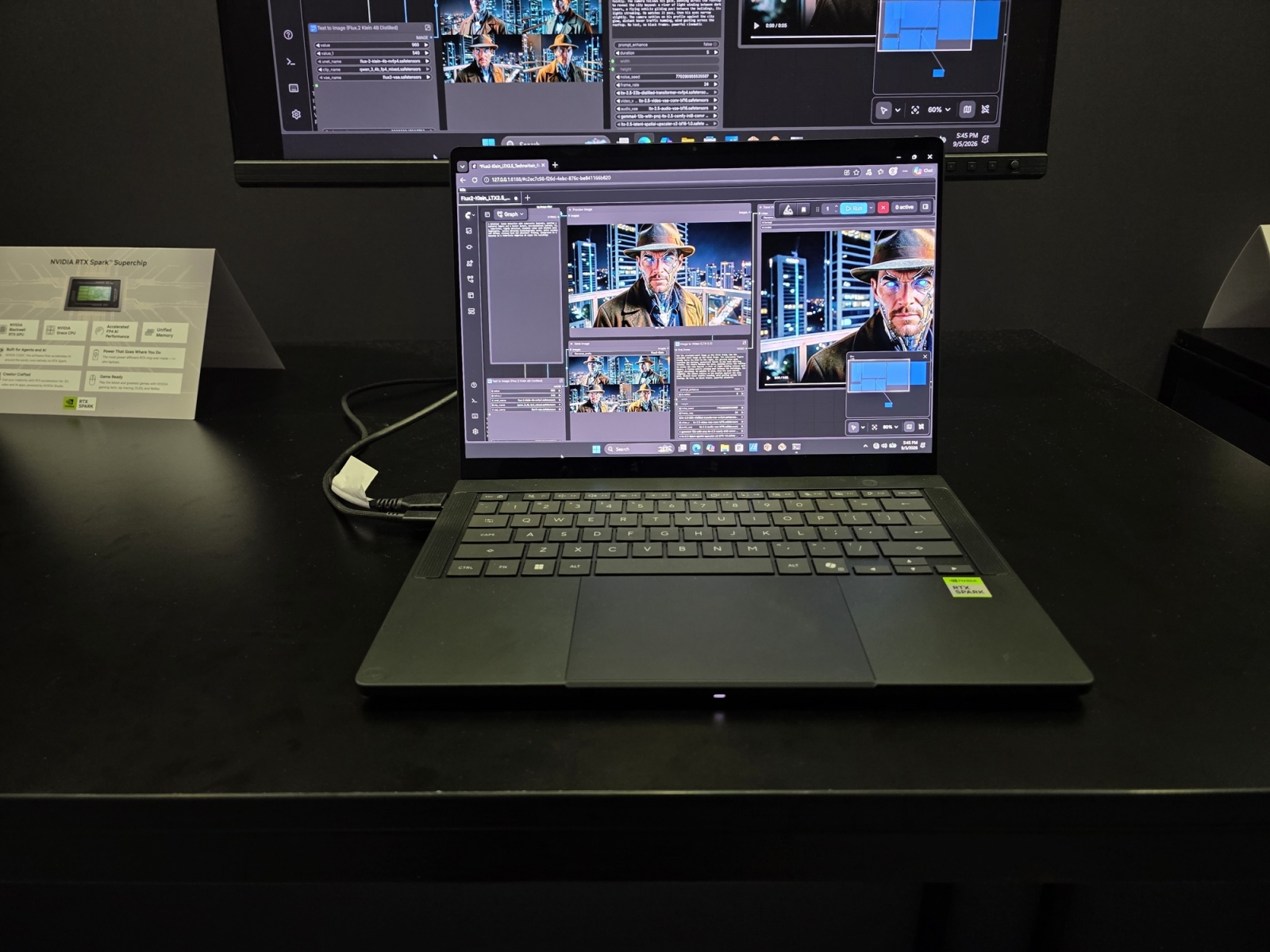
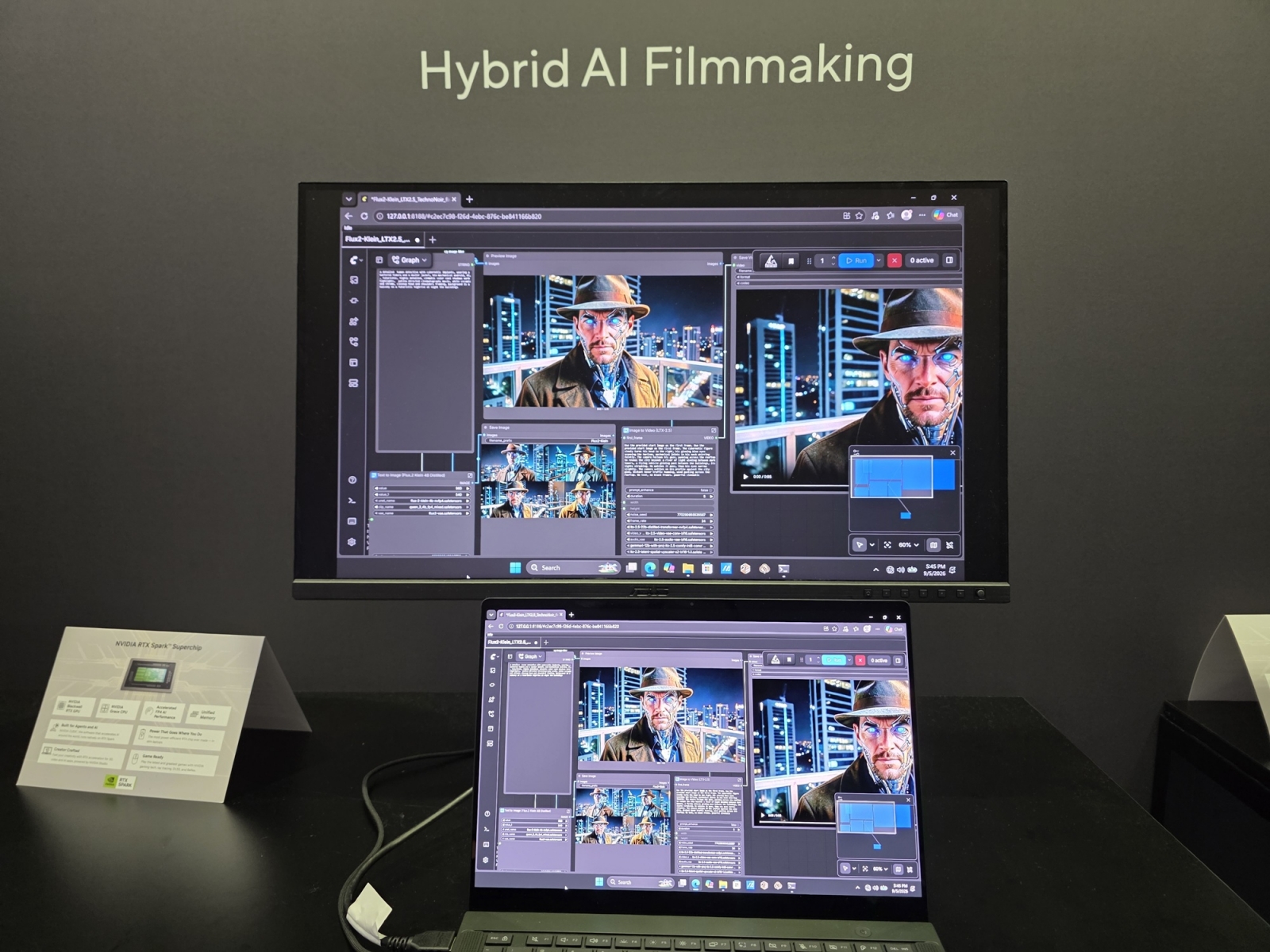
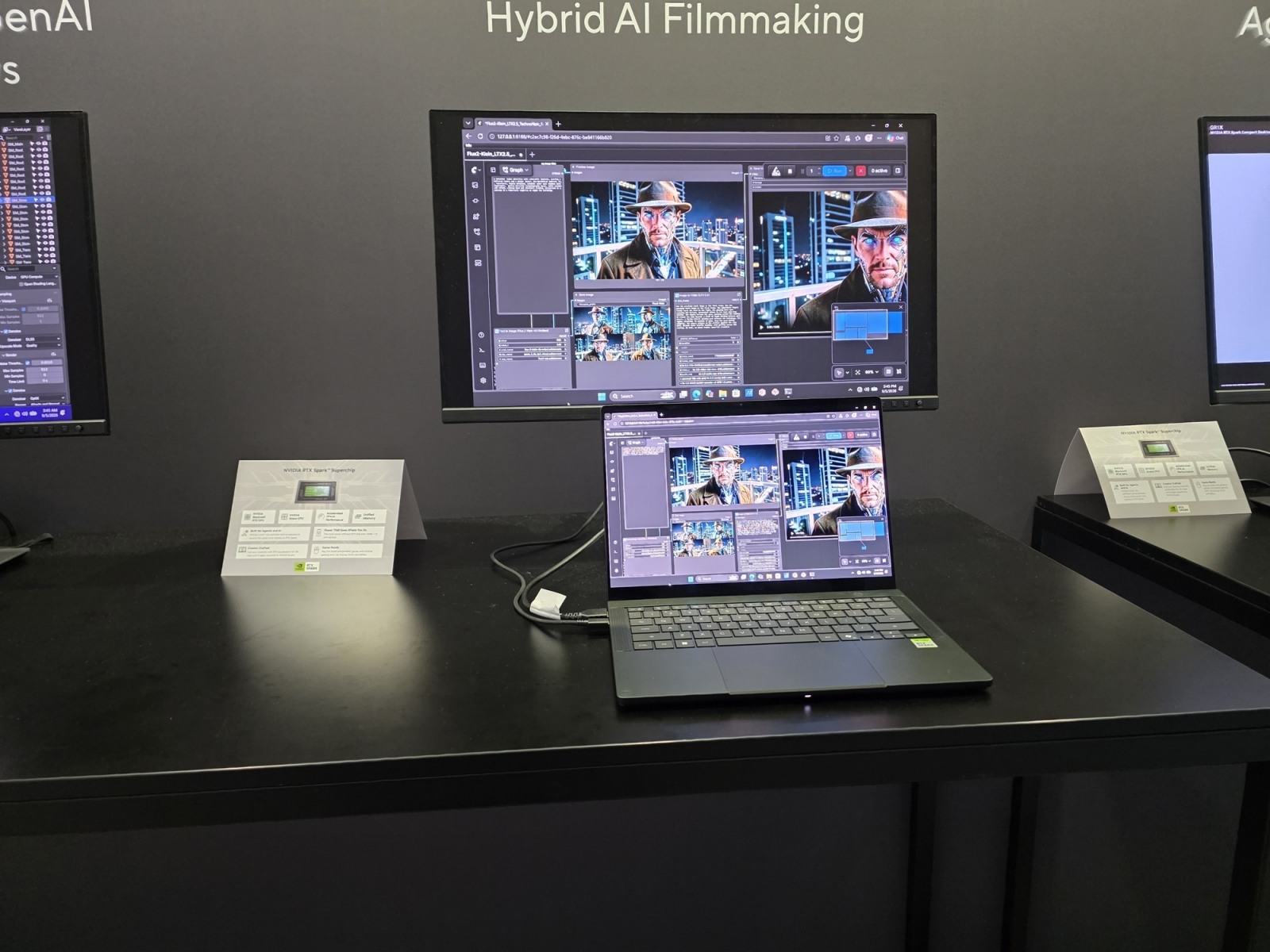

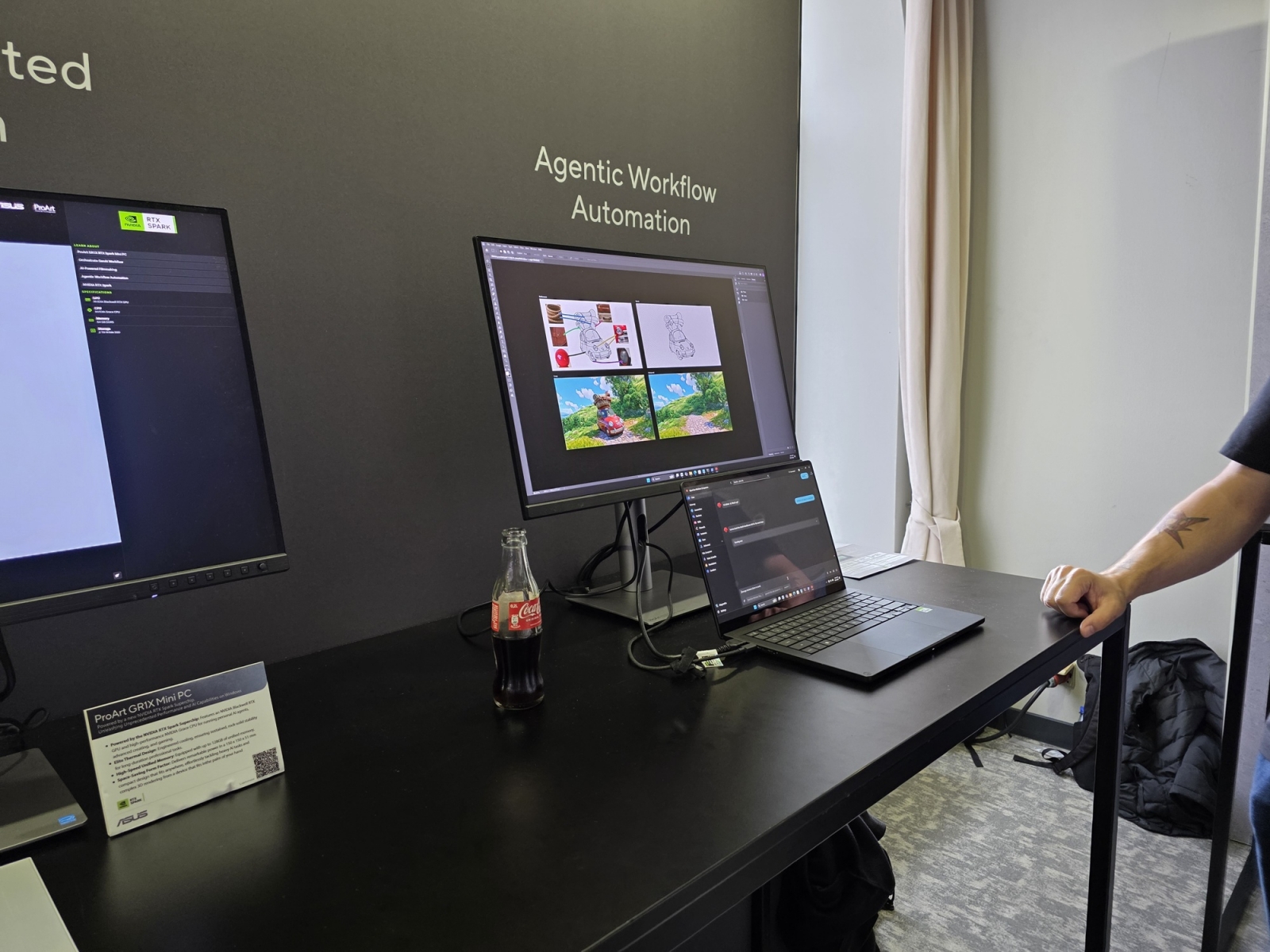
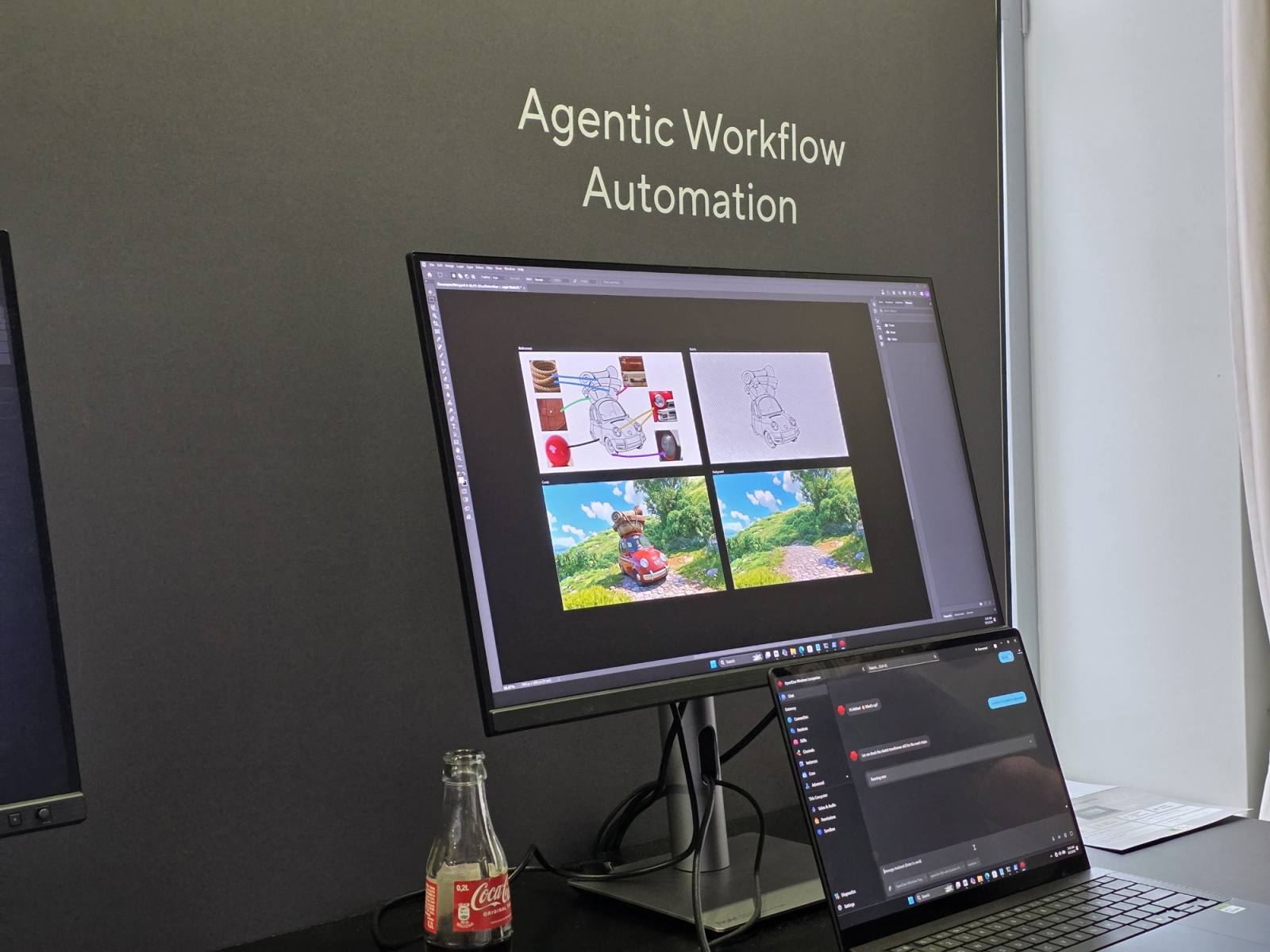

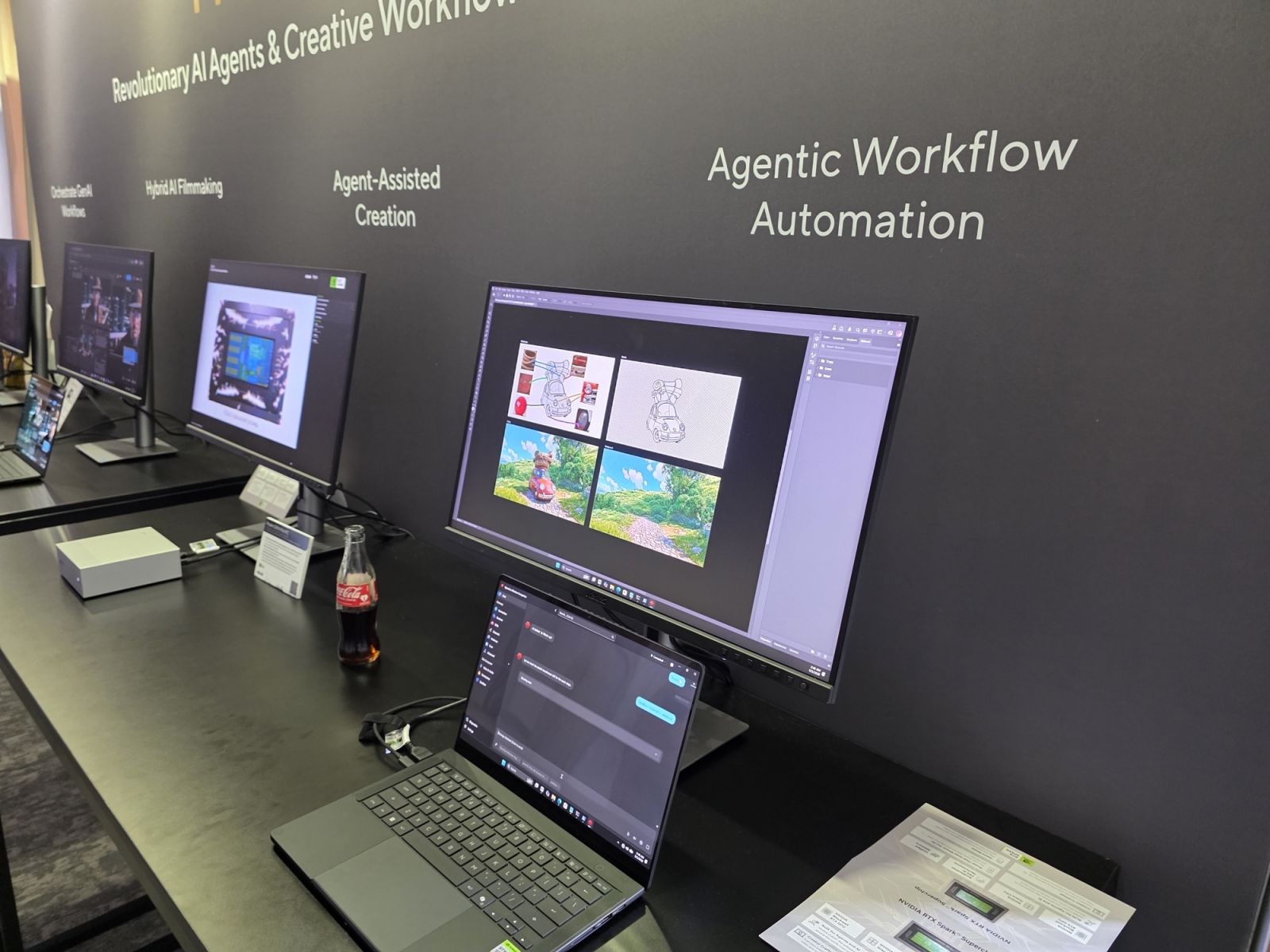
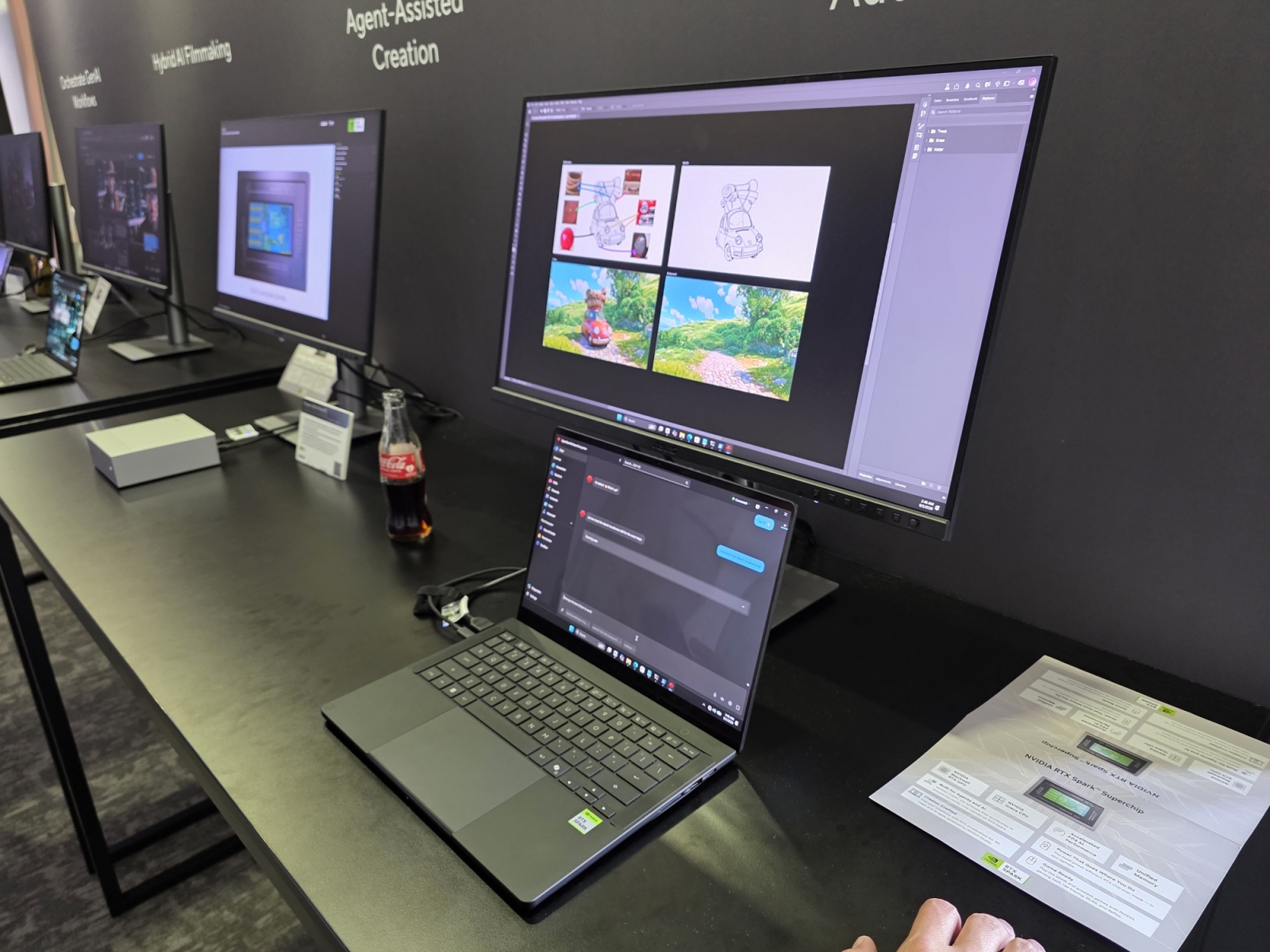
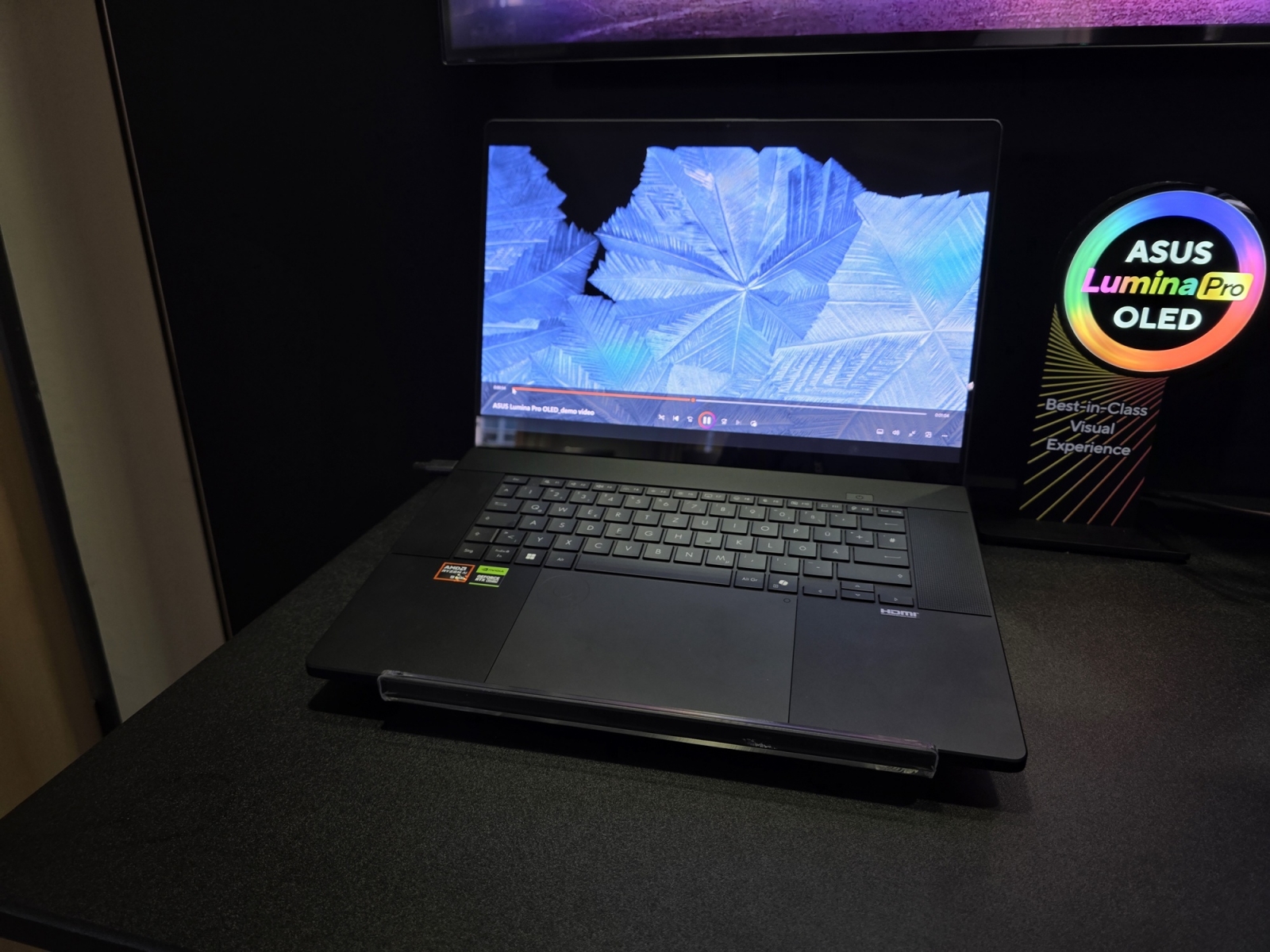
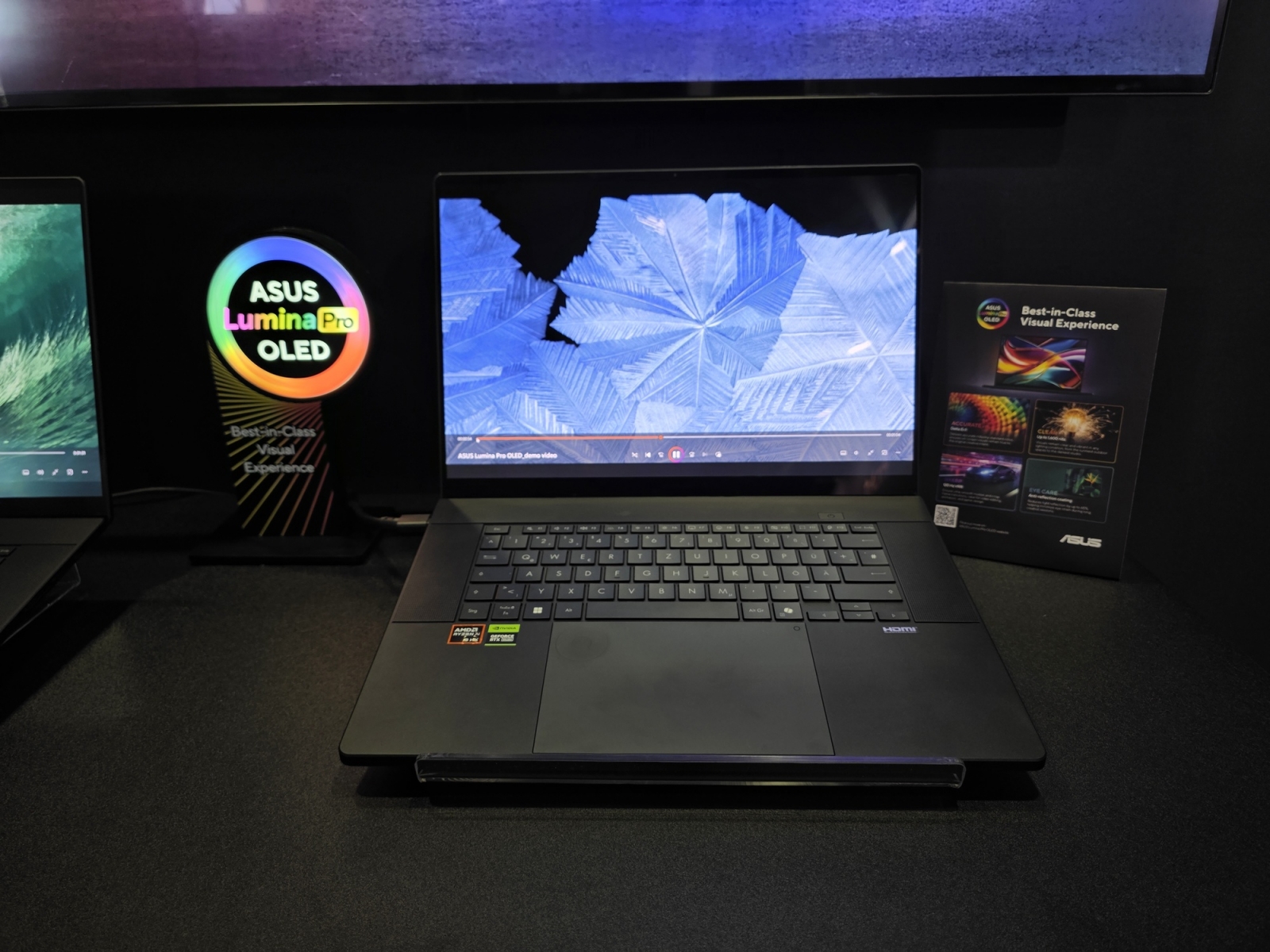
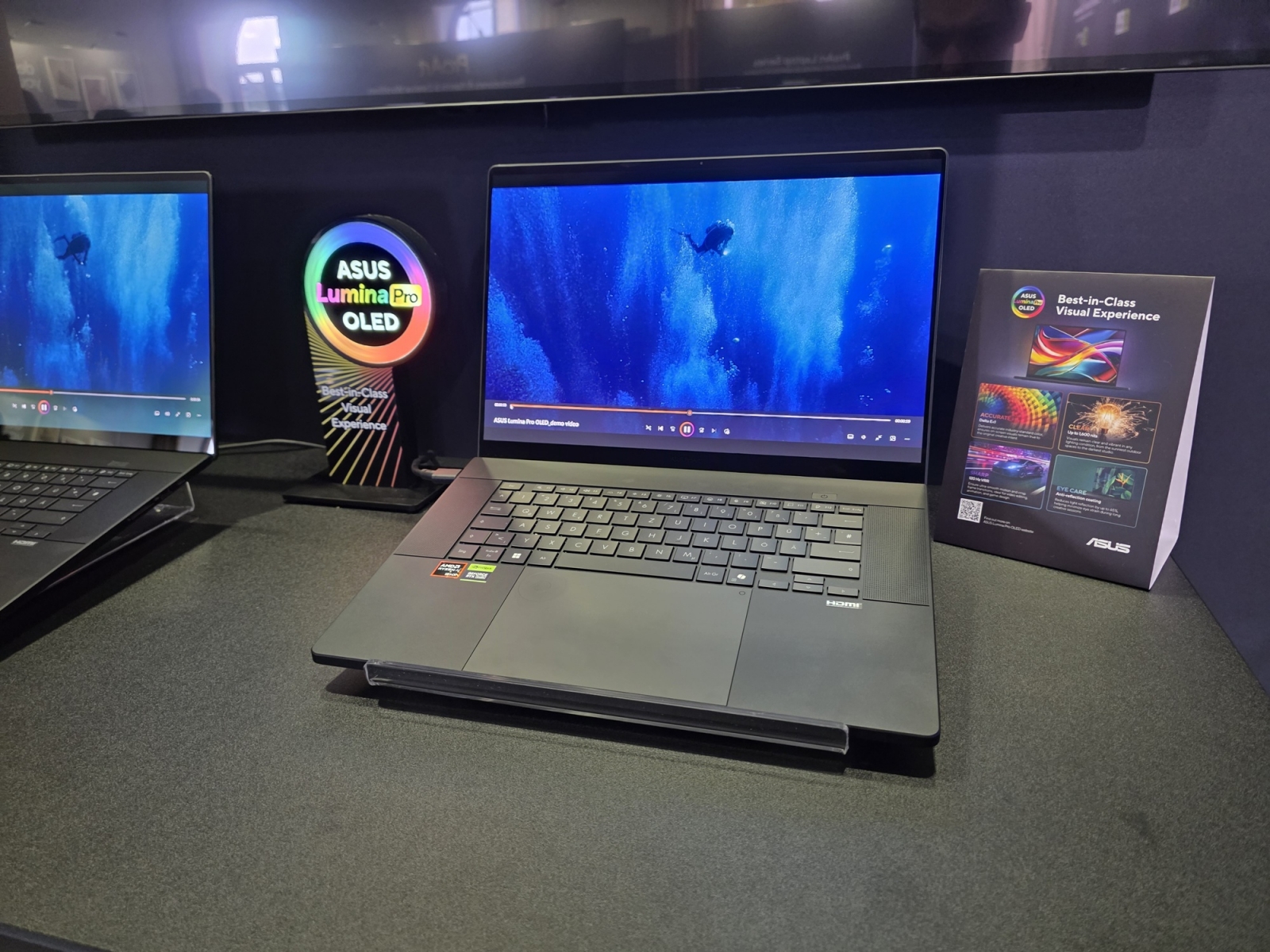
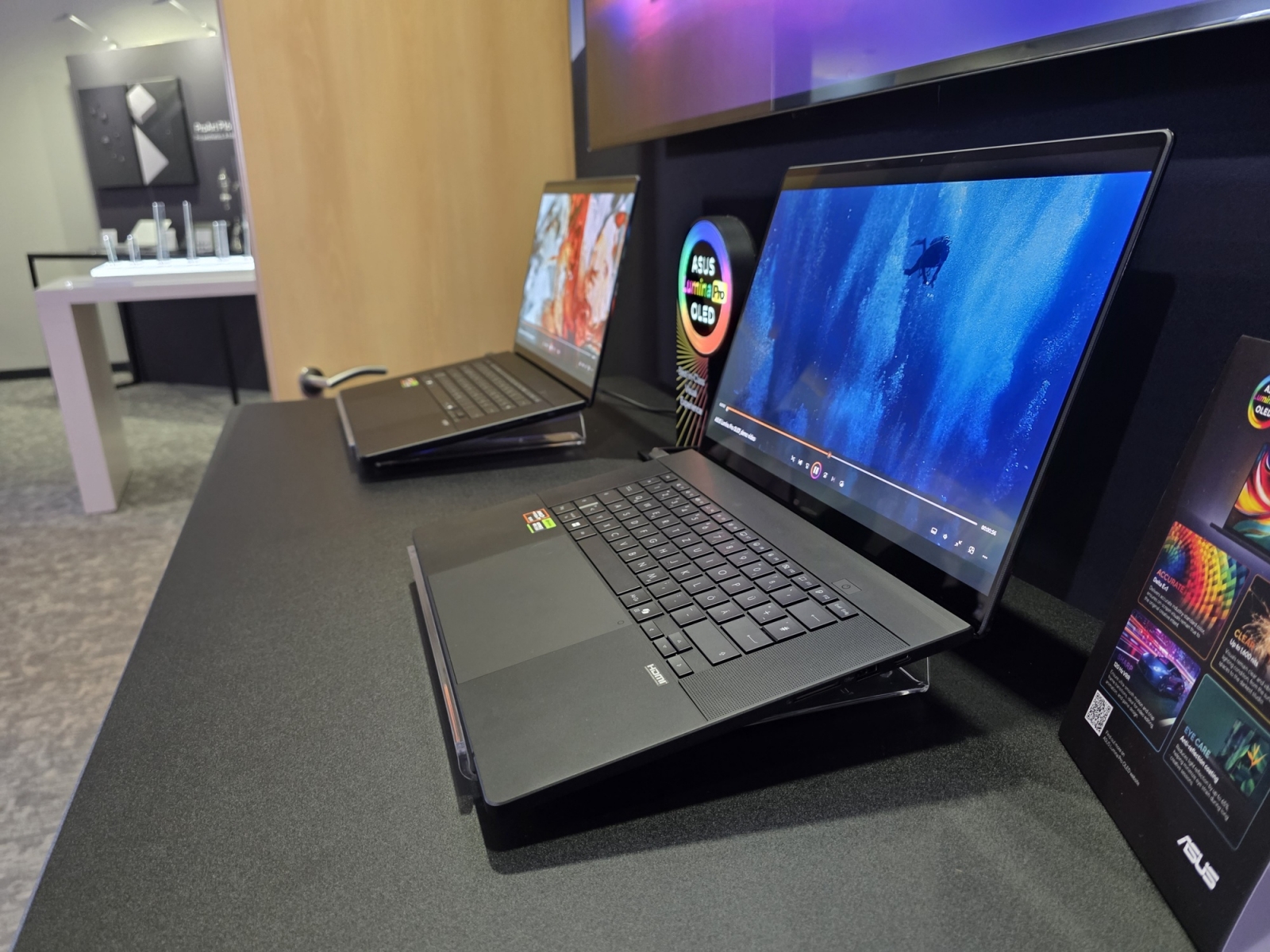
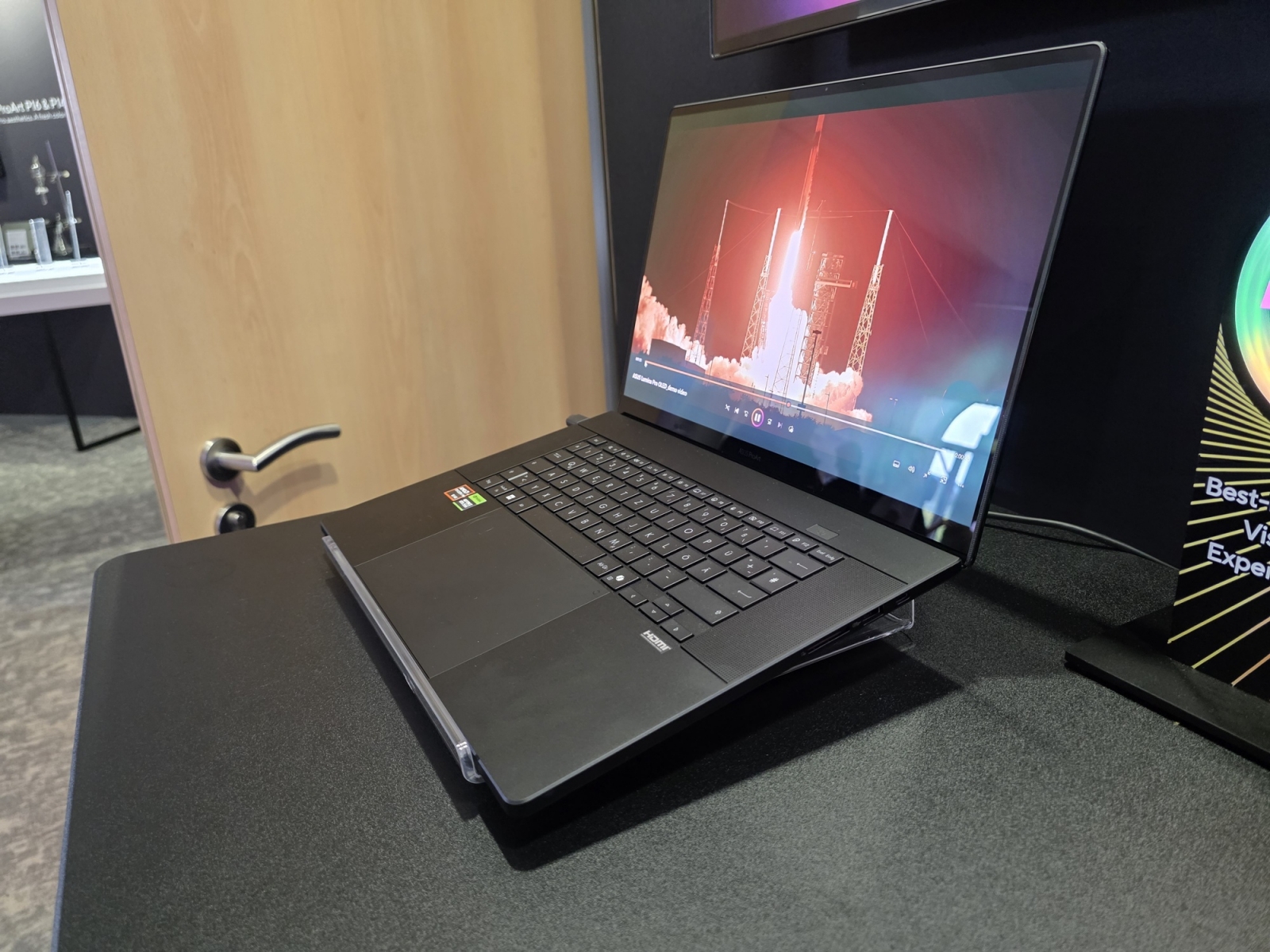
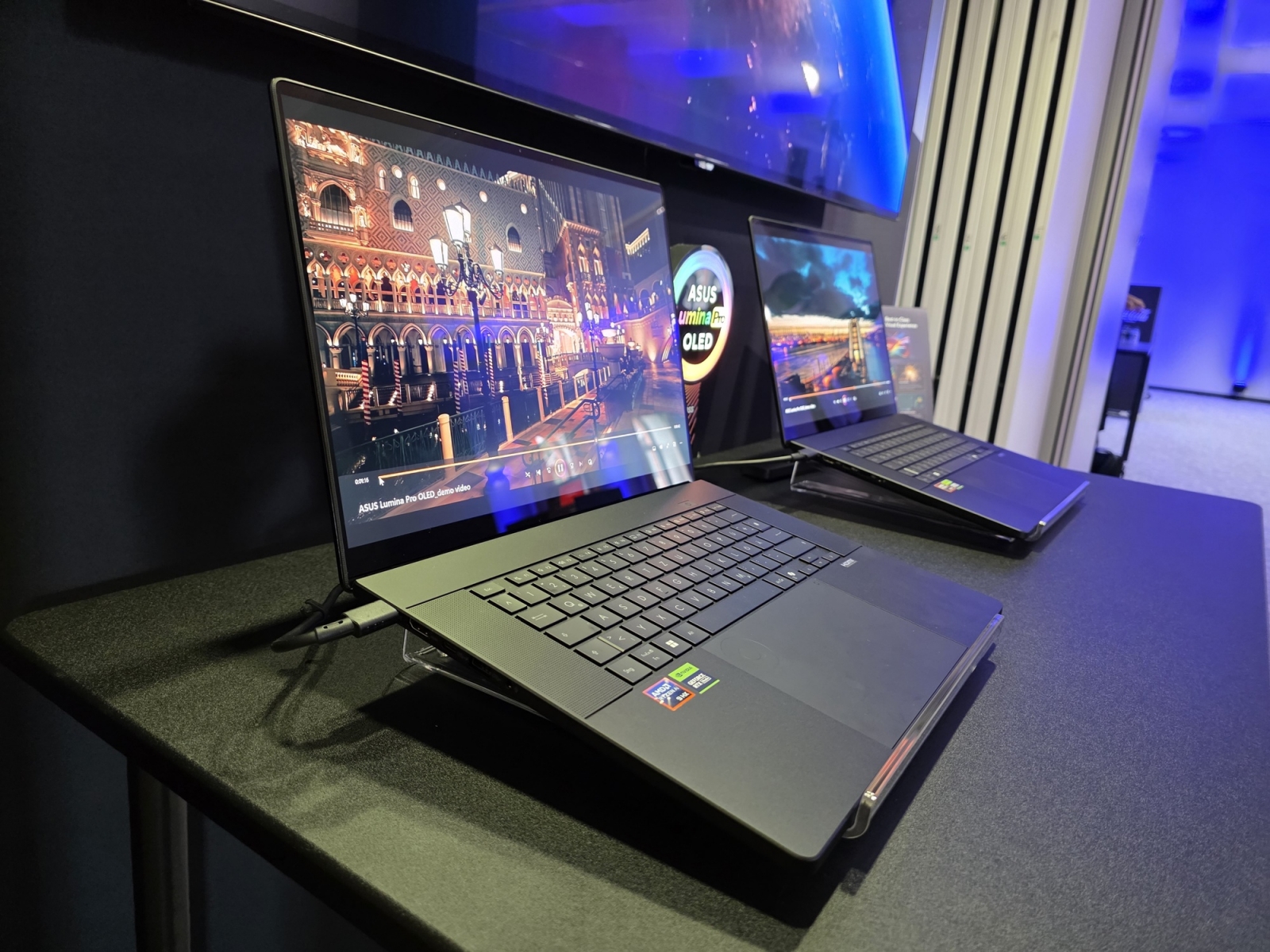
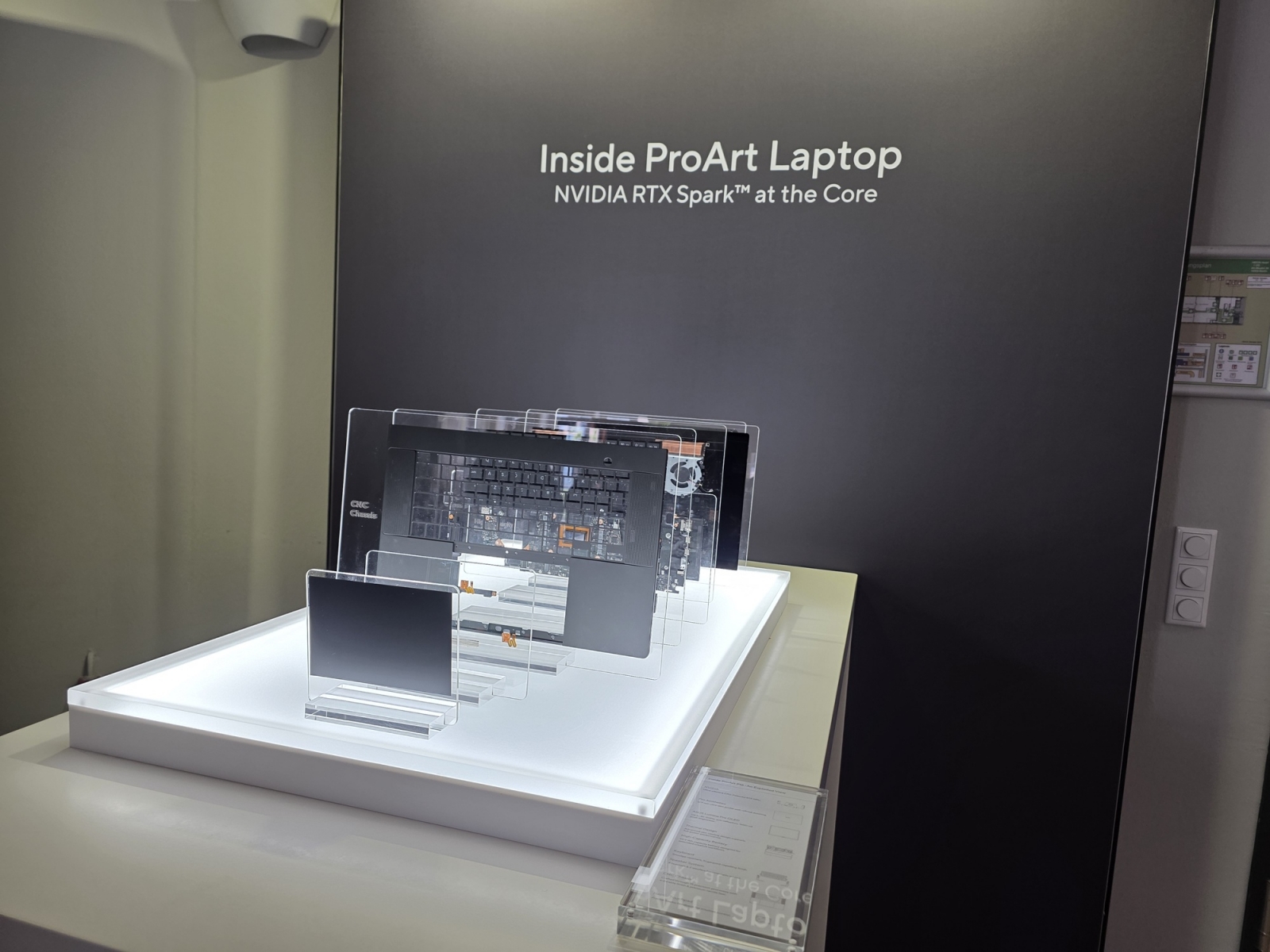
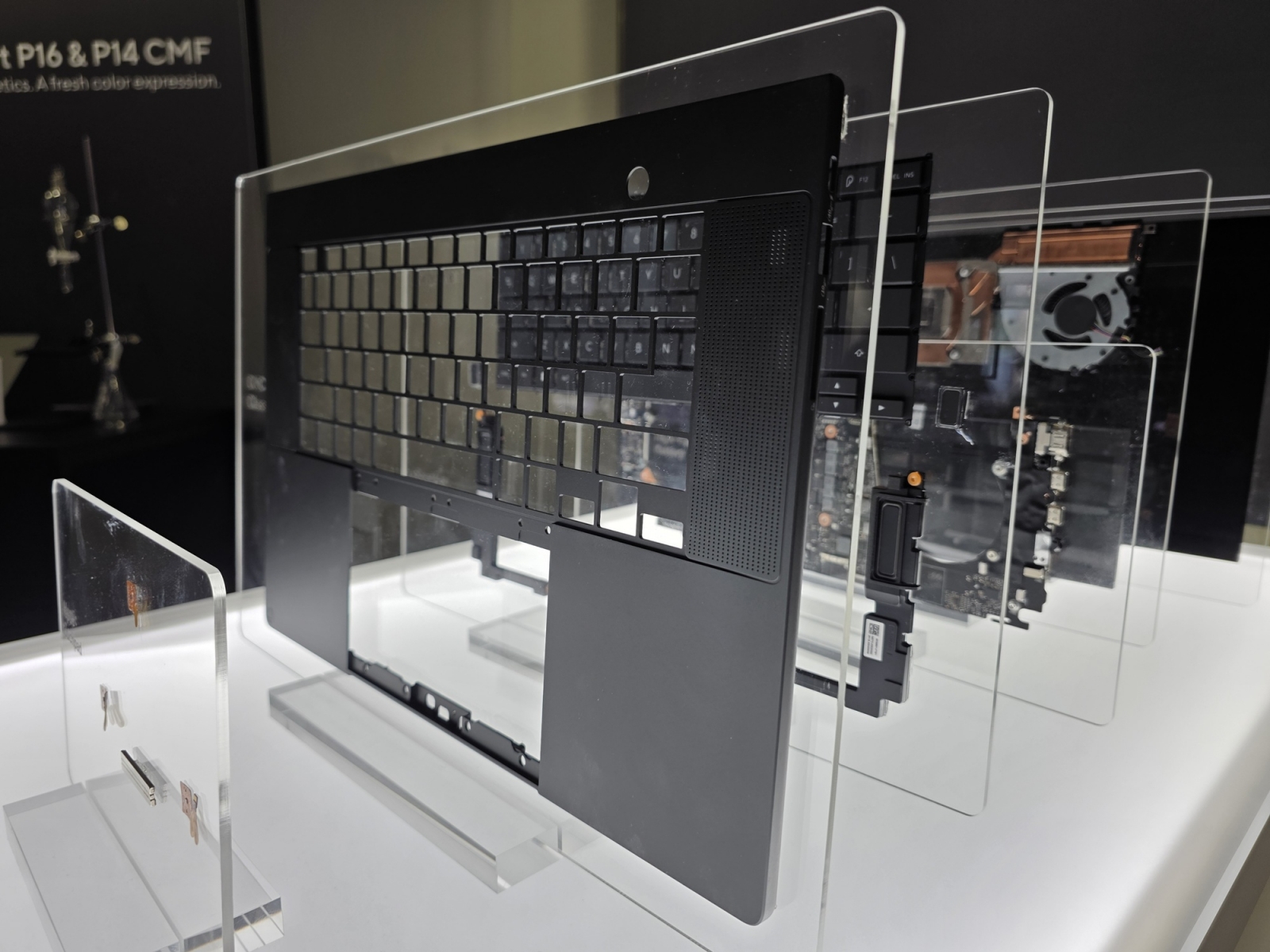
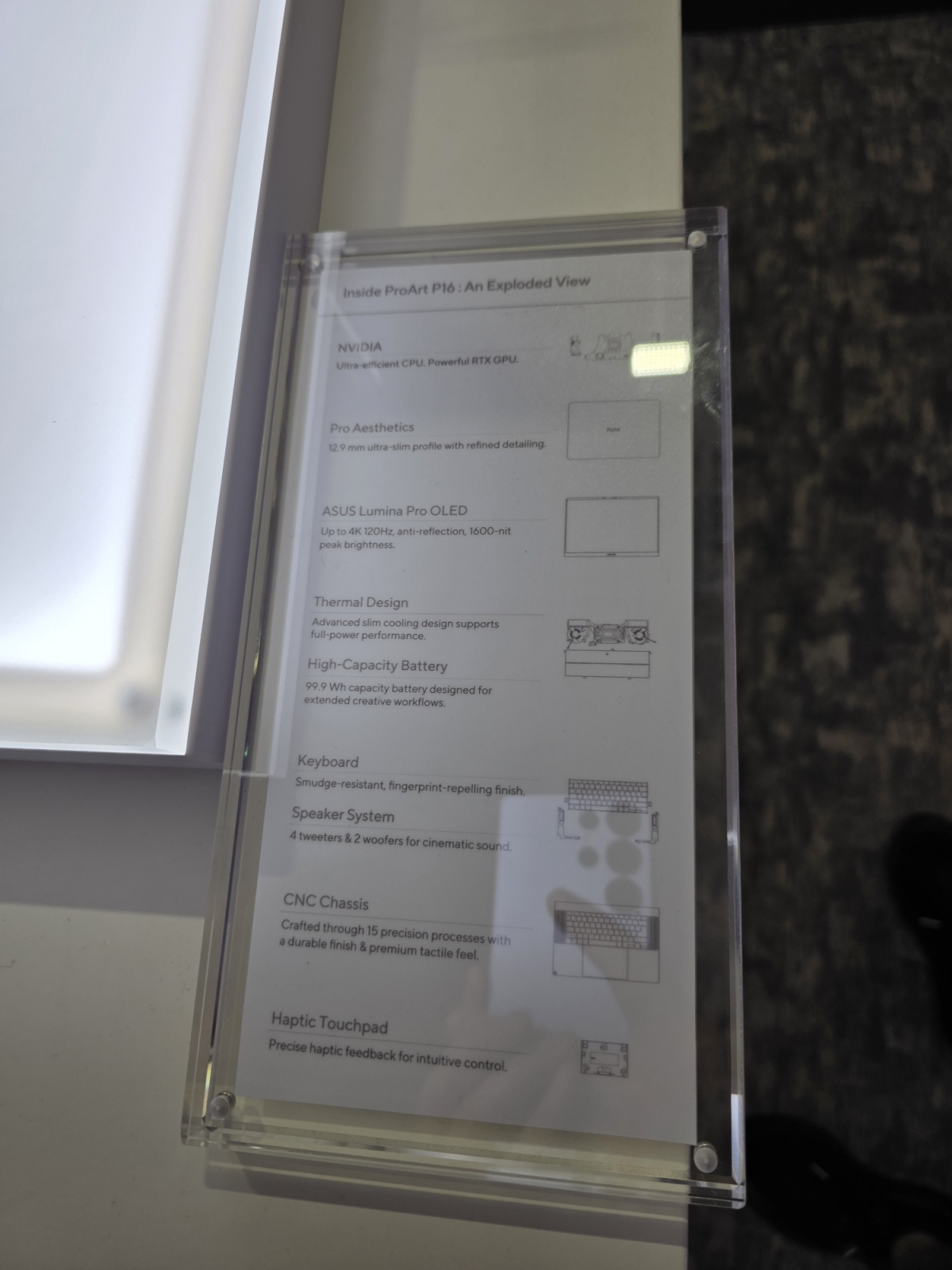
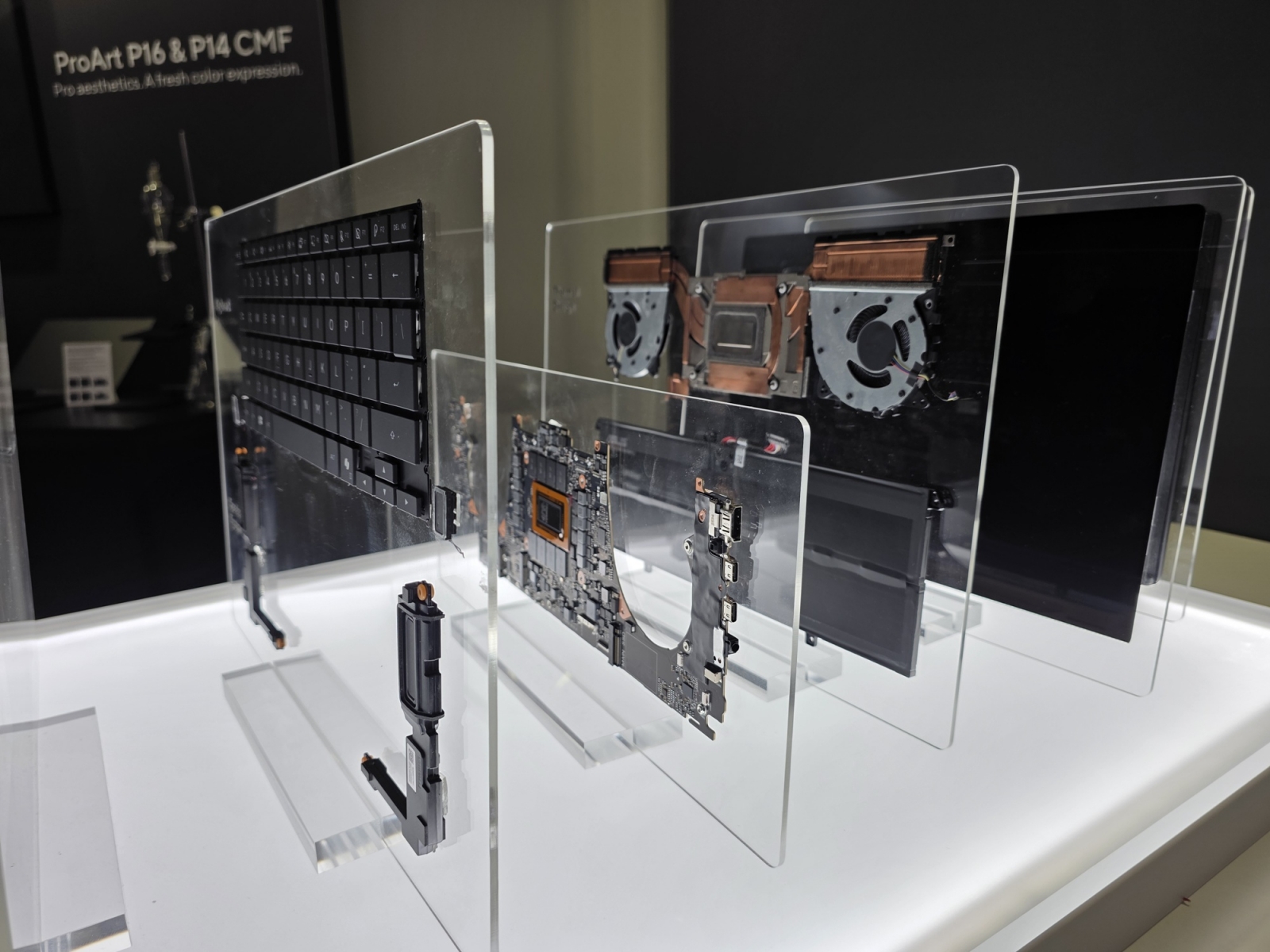
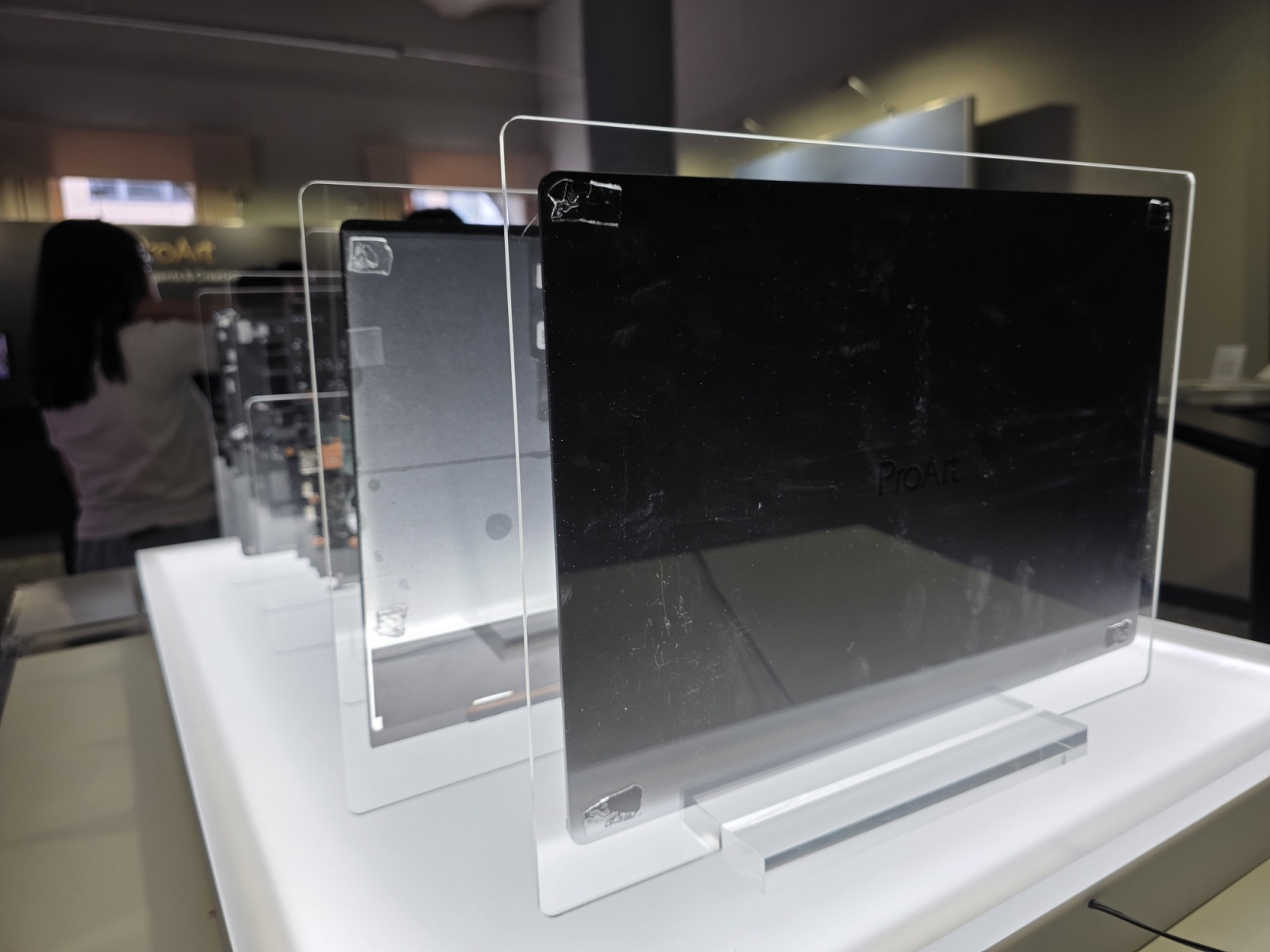
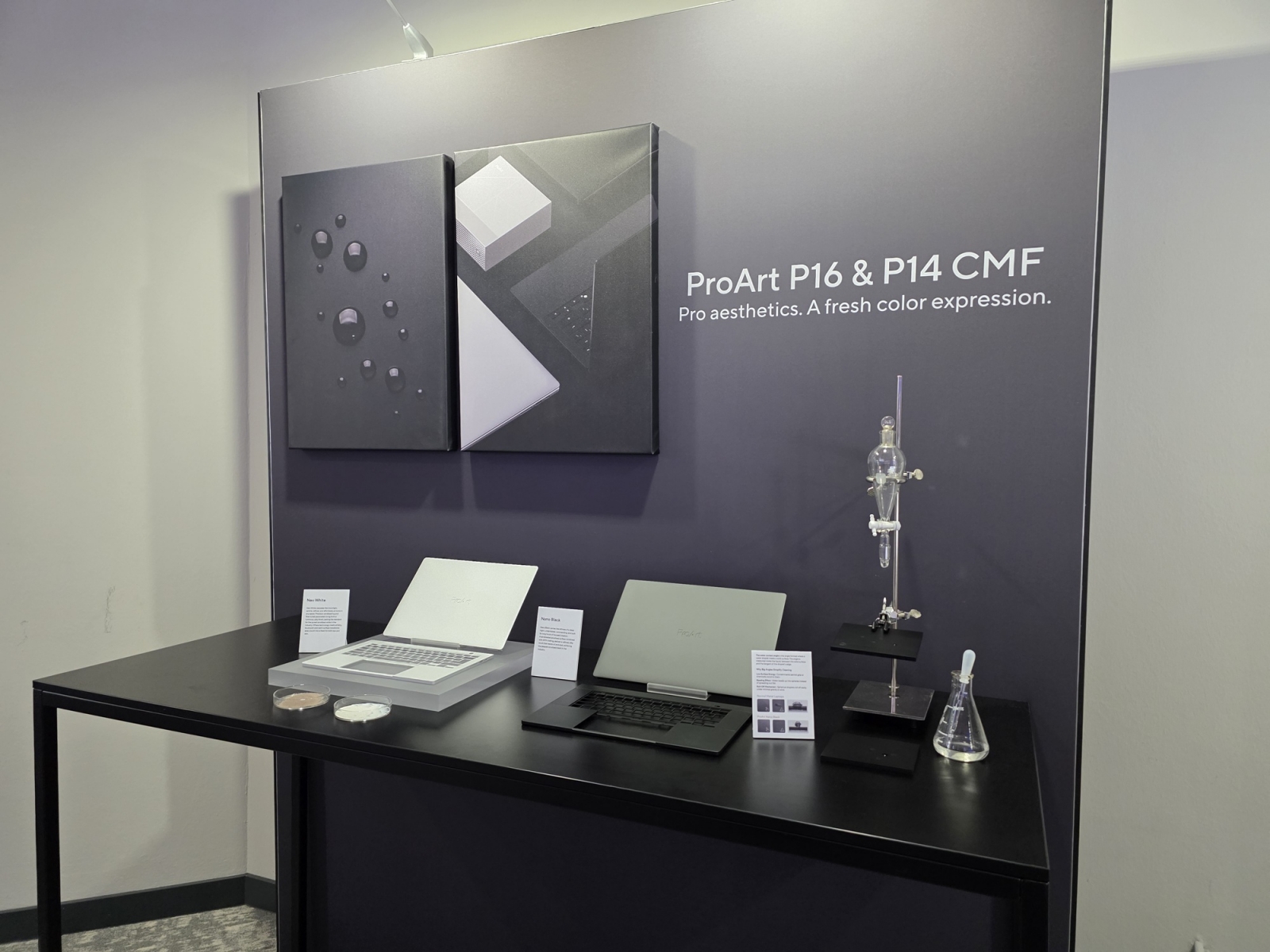
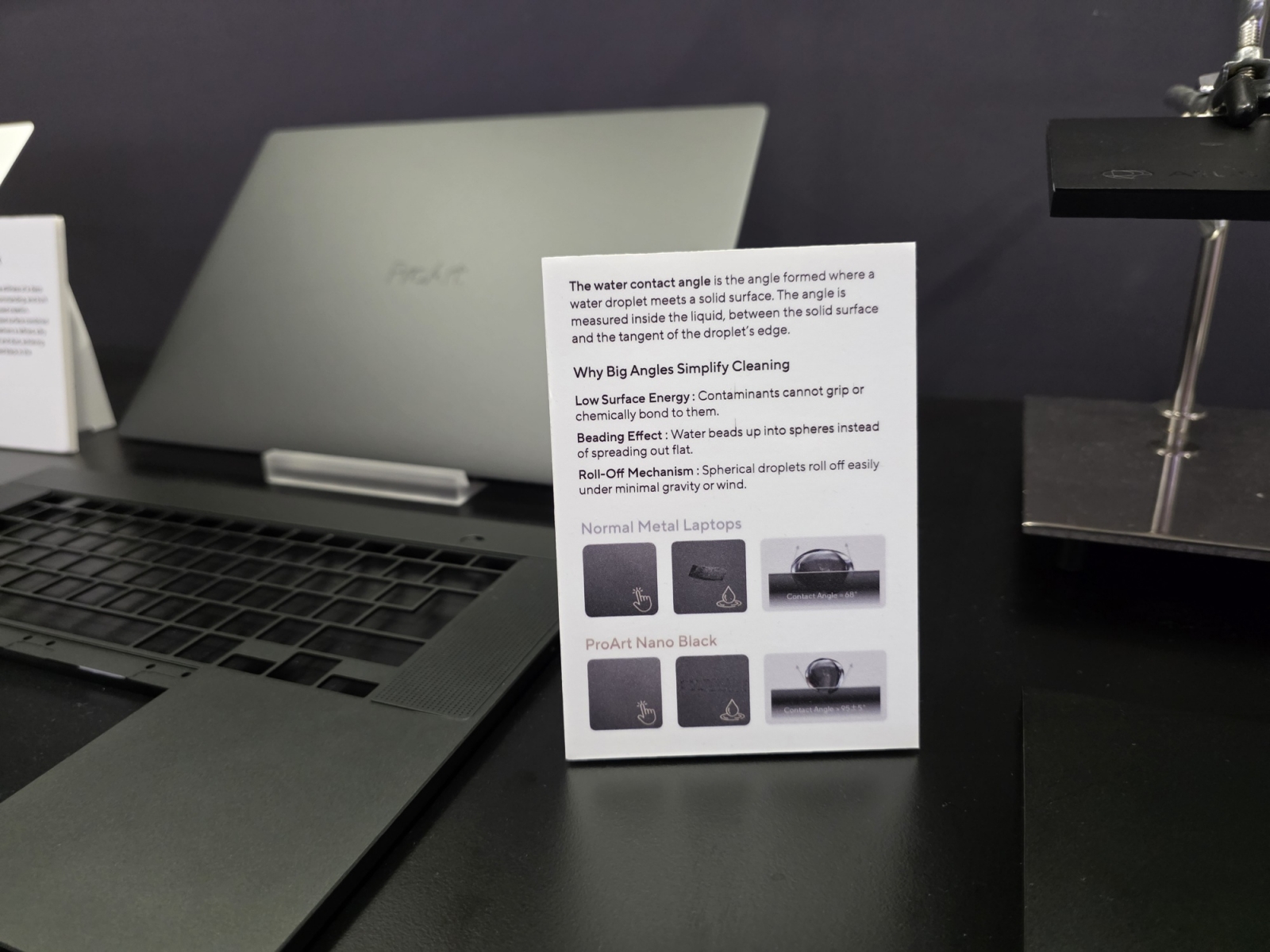
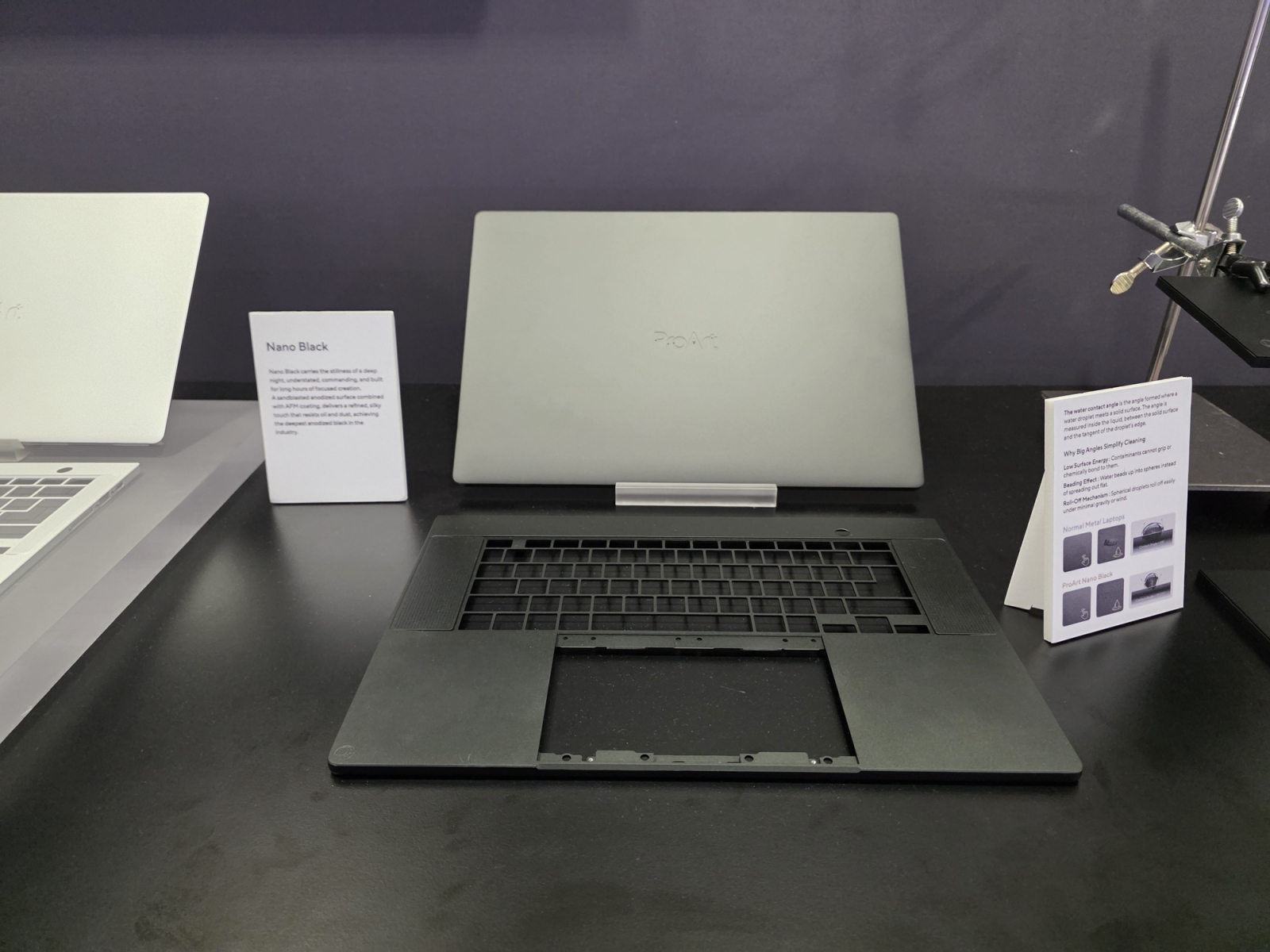
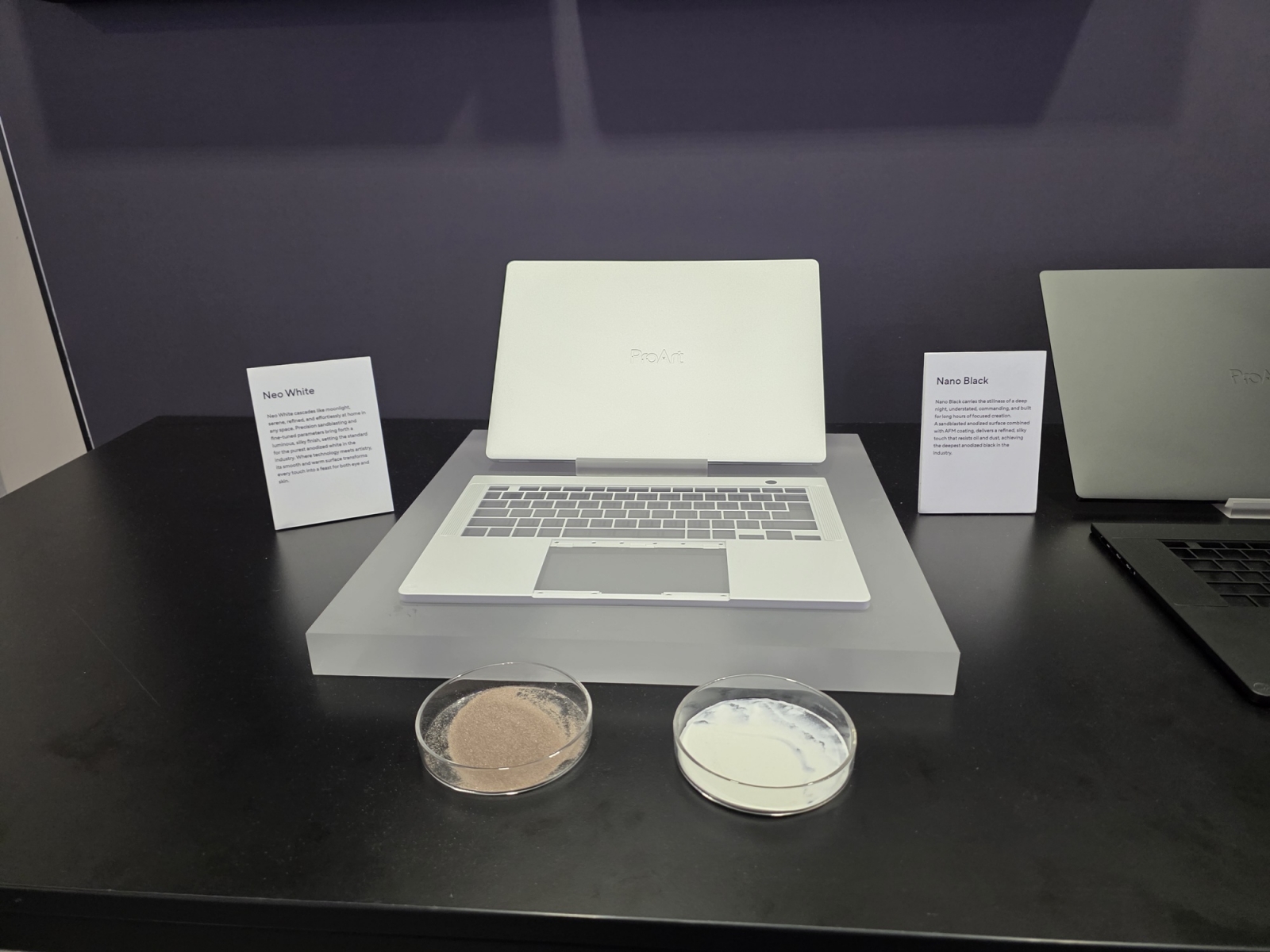
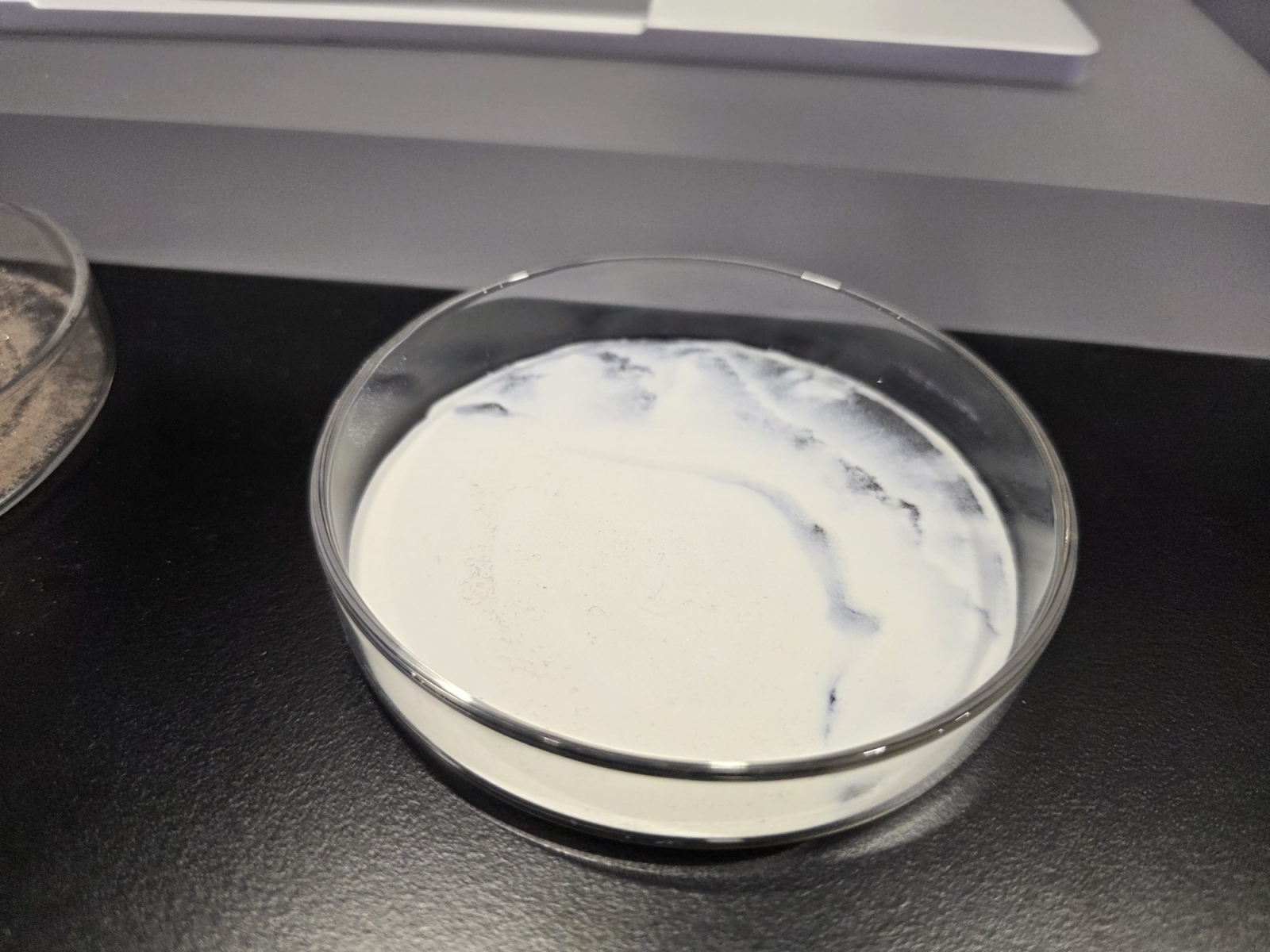

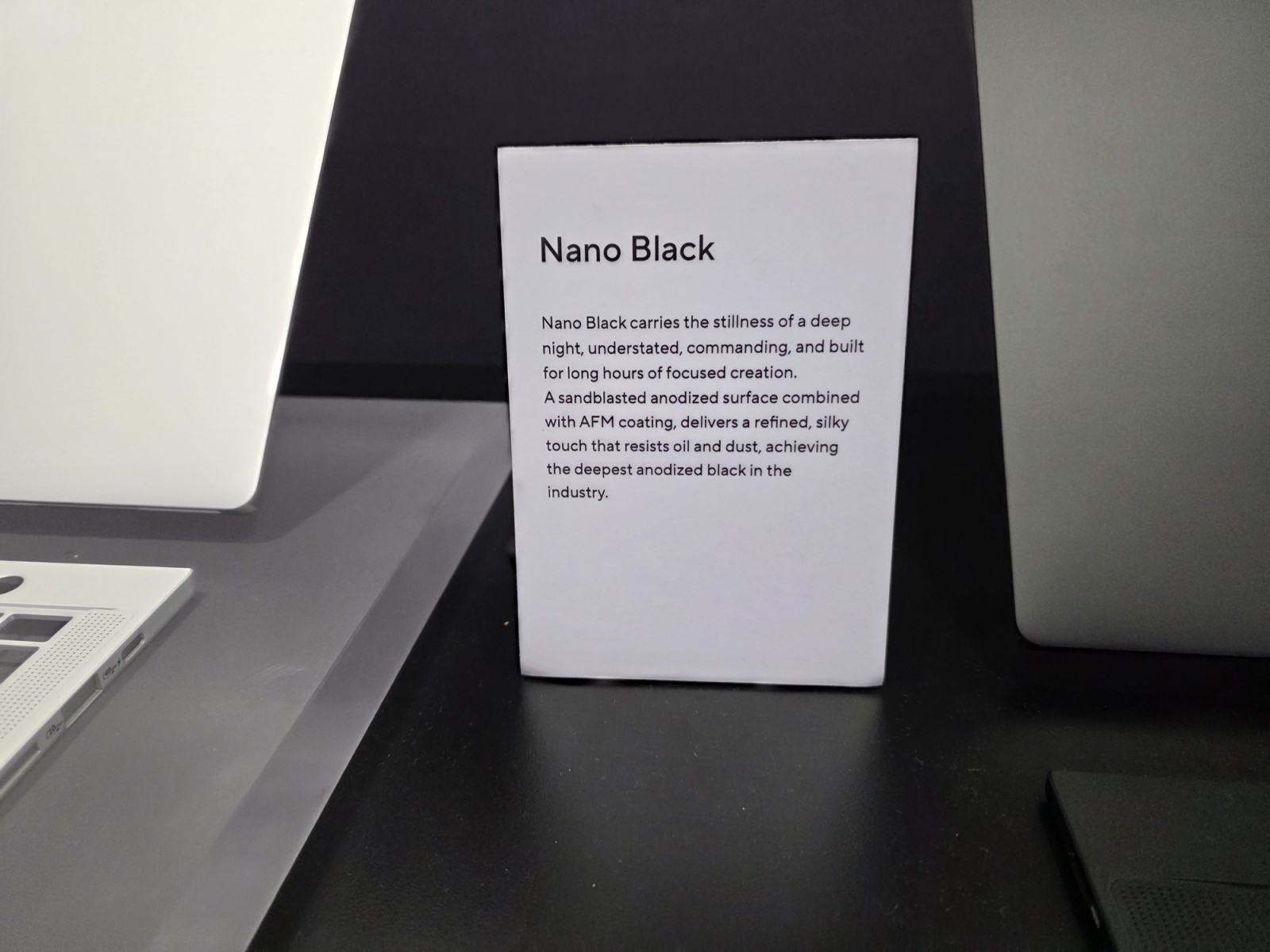
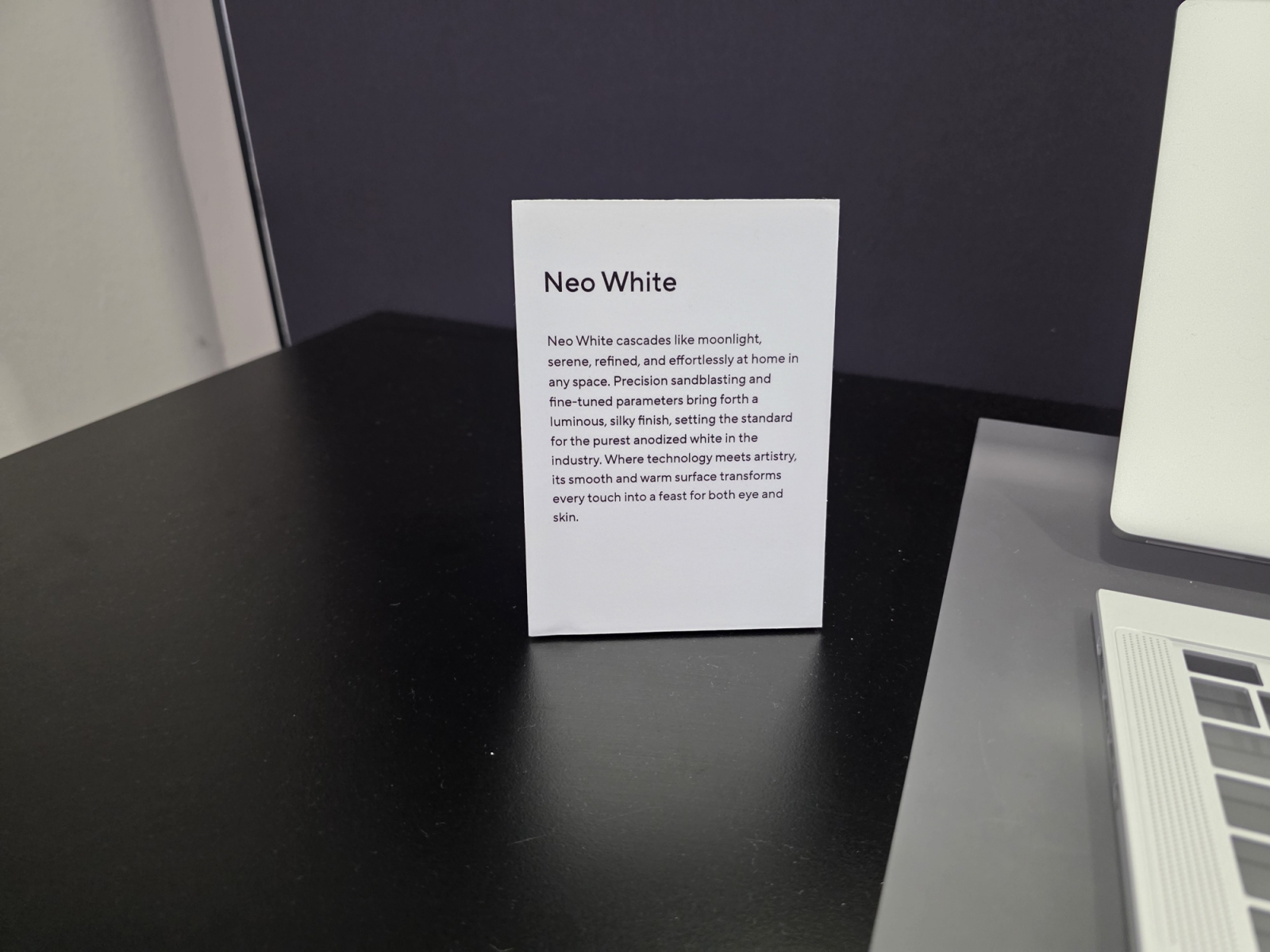
The 14-inch ProArt P14 is the travel-oriented option, measuring 13.9mm thick and weighing 1.48kg (3.26 pounds), with a 90Wh battery. The 16-inch ProArt P16 is listed at 12.9mm thick and 1.77kg (3.90 pounds), while increasing battery capacity to 99.9Wh. Memory configurations start as low as 24GB in the reported lineup and extend through 32GB, 48GB, and 64GB to 128GB. The P16 also includes two M.2 slots, offering storage expansion for users working with large media and model files.
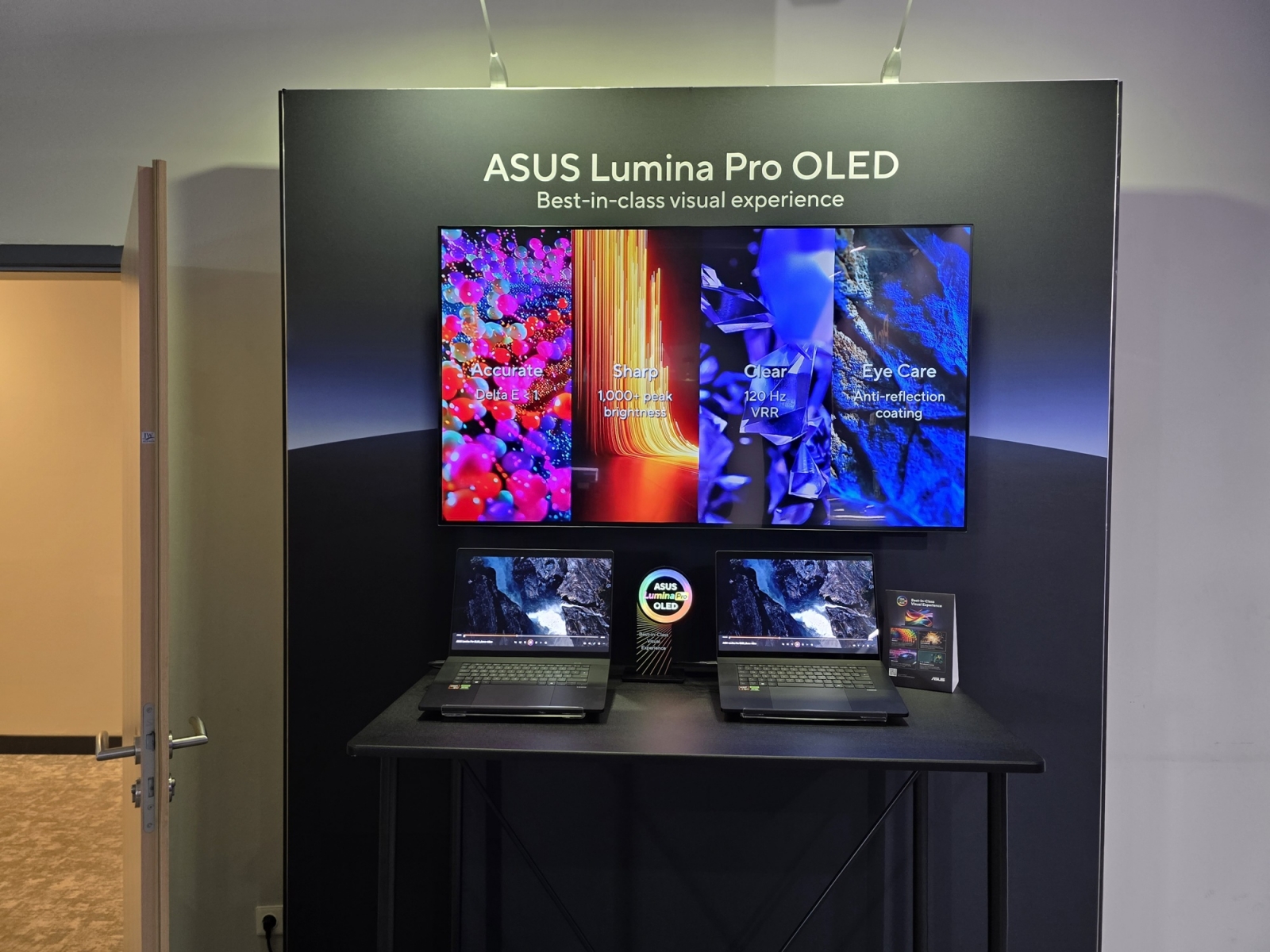
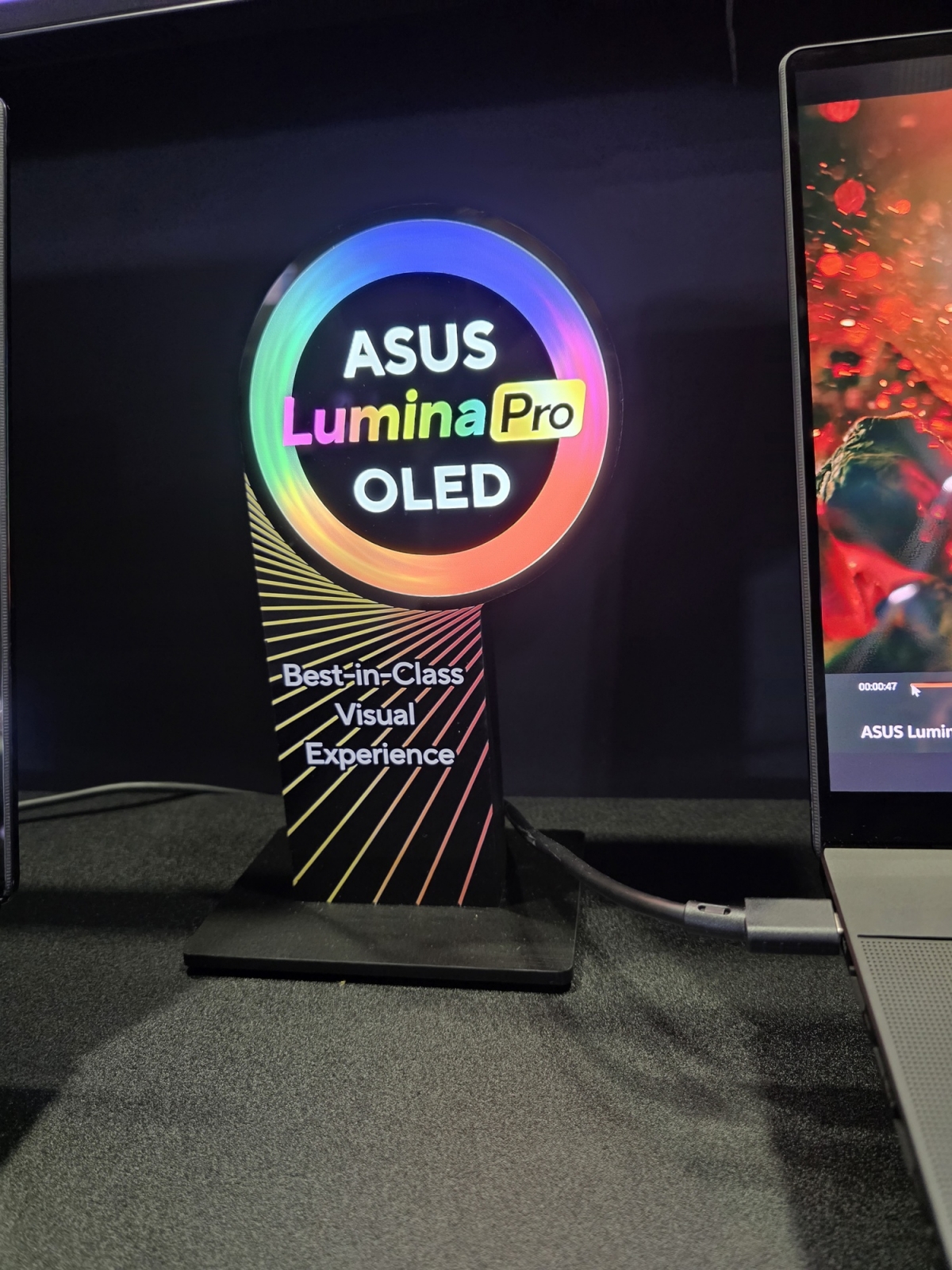
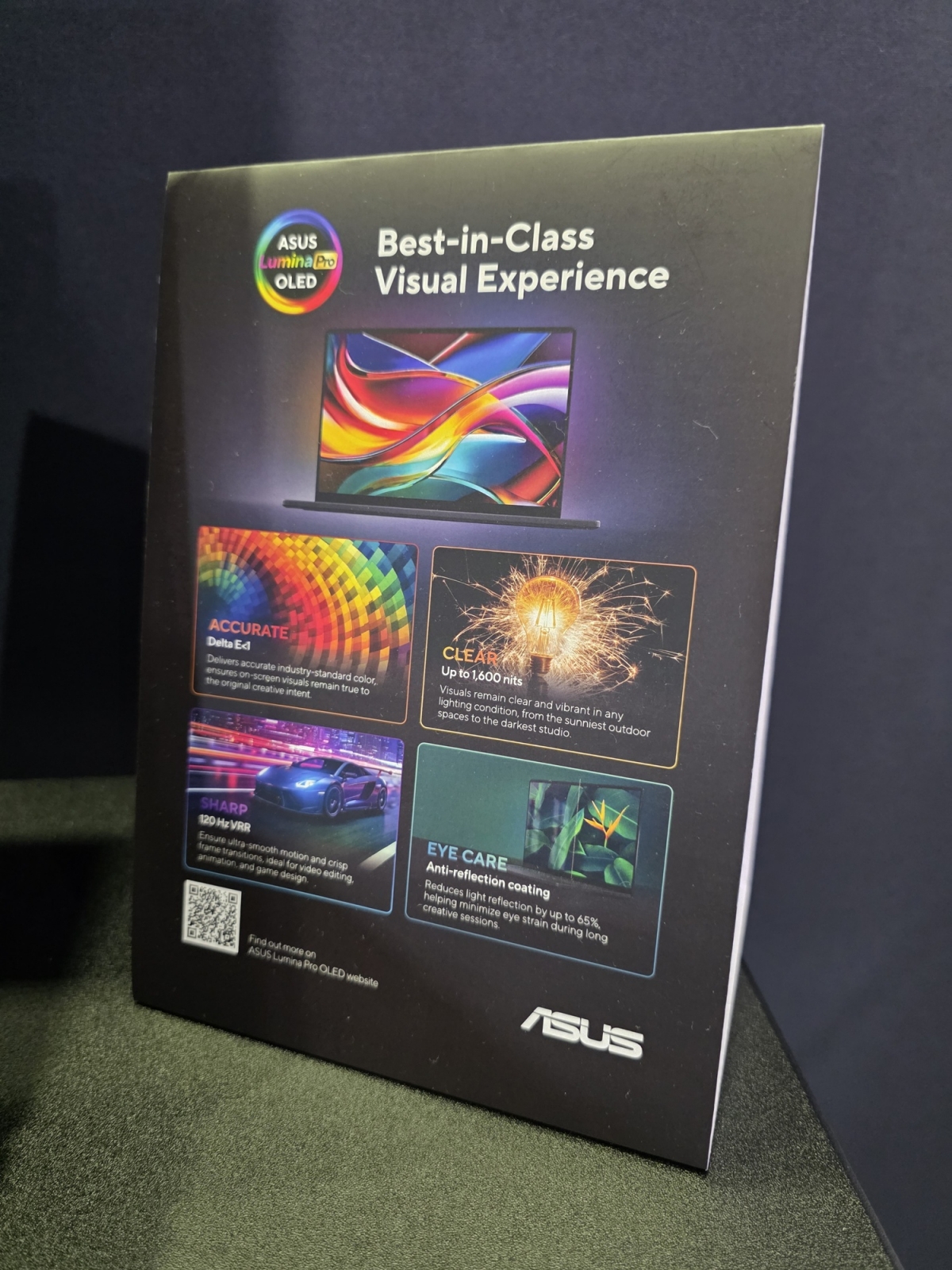
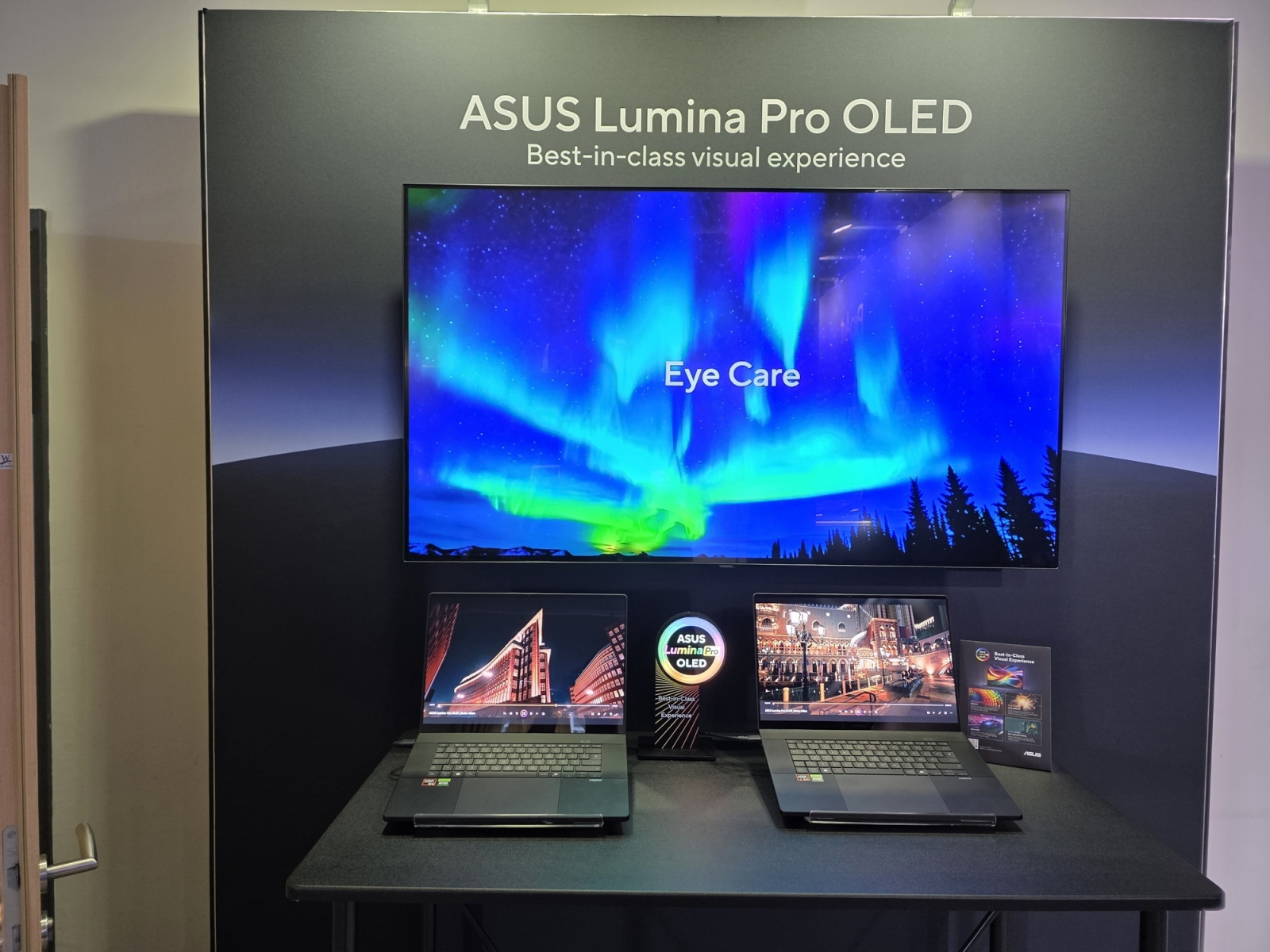
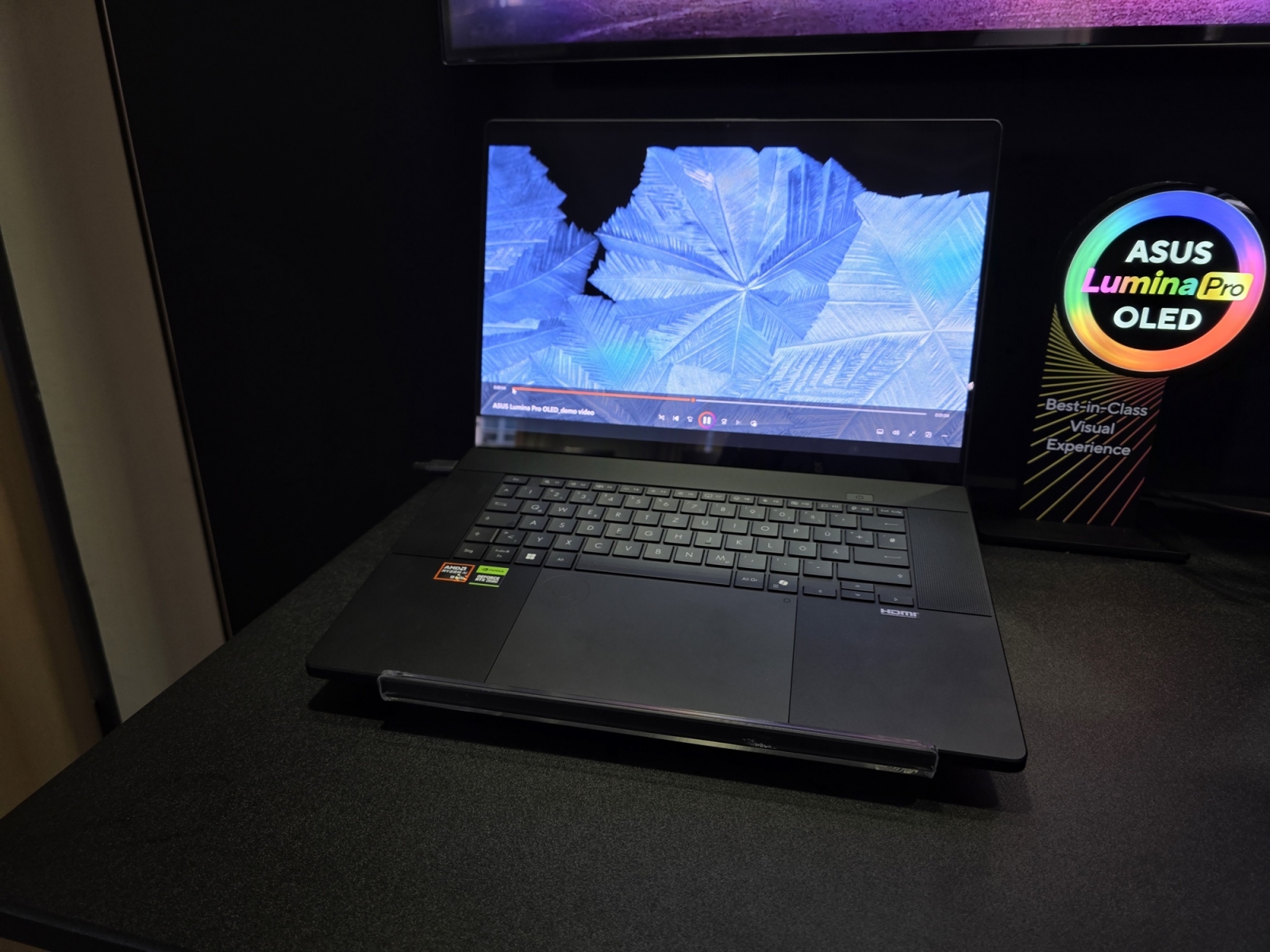
Both notebooks use Lumina Pro OLED displays with 120Hz variable refresh rate, Delta E below 1, and HDR brightness of up to 1,600 nits. The P14 has a 14-inch 3K OLED panel, while the P16 can be configured with a 16-inch 4K OLED display. ASUS also demonstrated improved reflection control on the newer OLED implementation, a potentially practical upgrade for creators editing away from a controlled studio environment.
ASUS quotes up to 6,144 Blackwell CUDA cores, a 20-core Grace CPU, and up to 1 petaFLOP of FP4 AI performance for RTX Spark systems. The FP4 figure is specific to low-precision AI work and should not be read as a comparable measure of gaming or traditional graphics performance.
A palm-sized system for a fixed desk
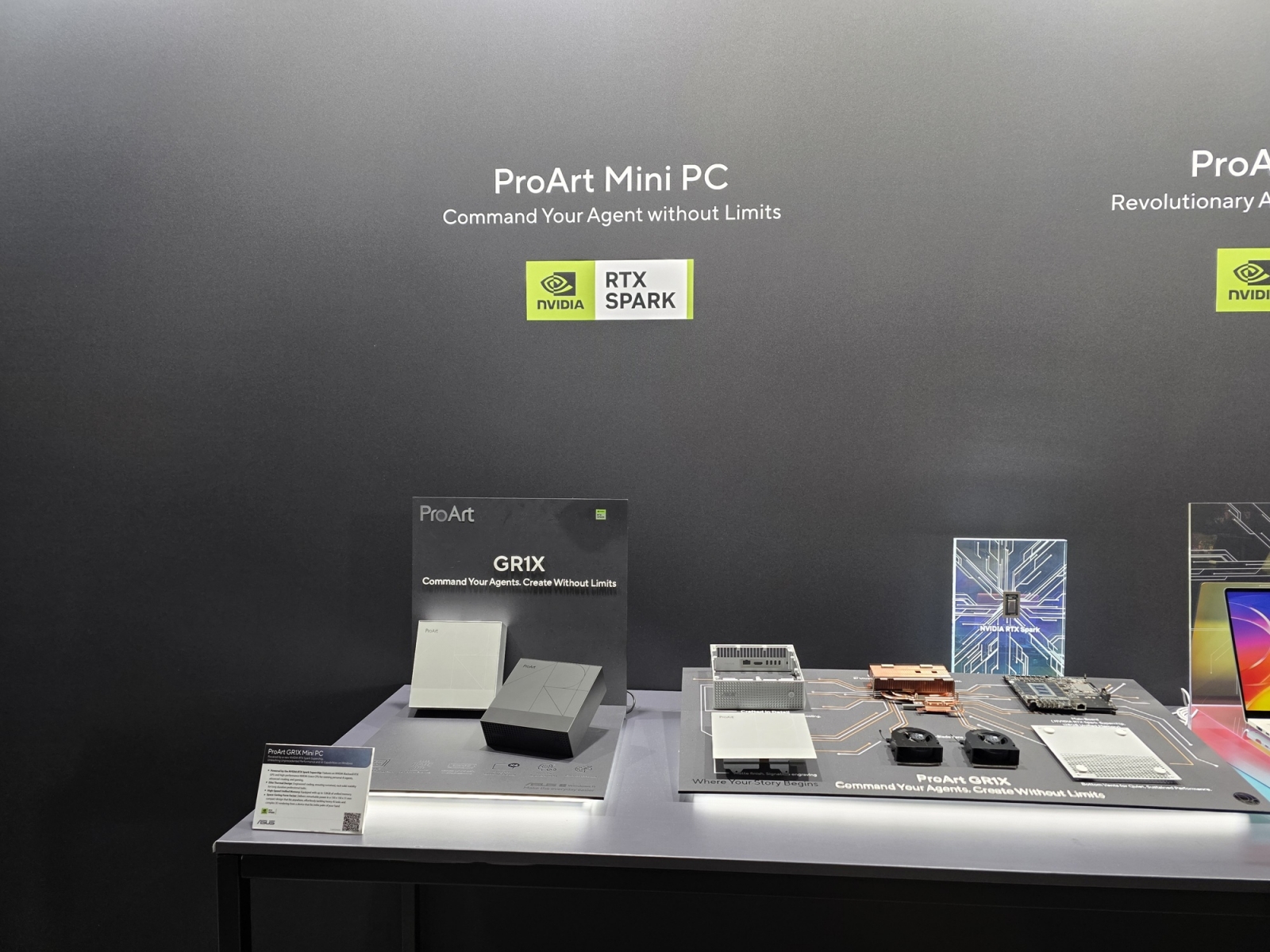
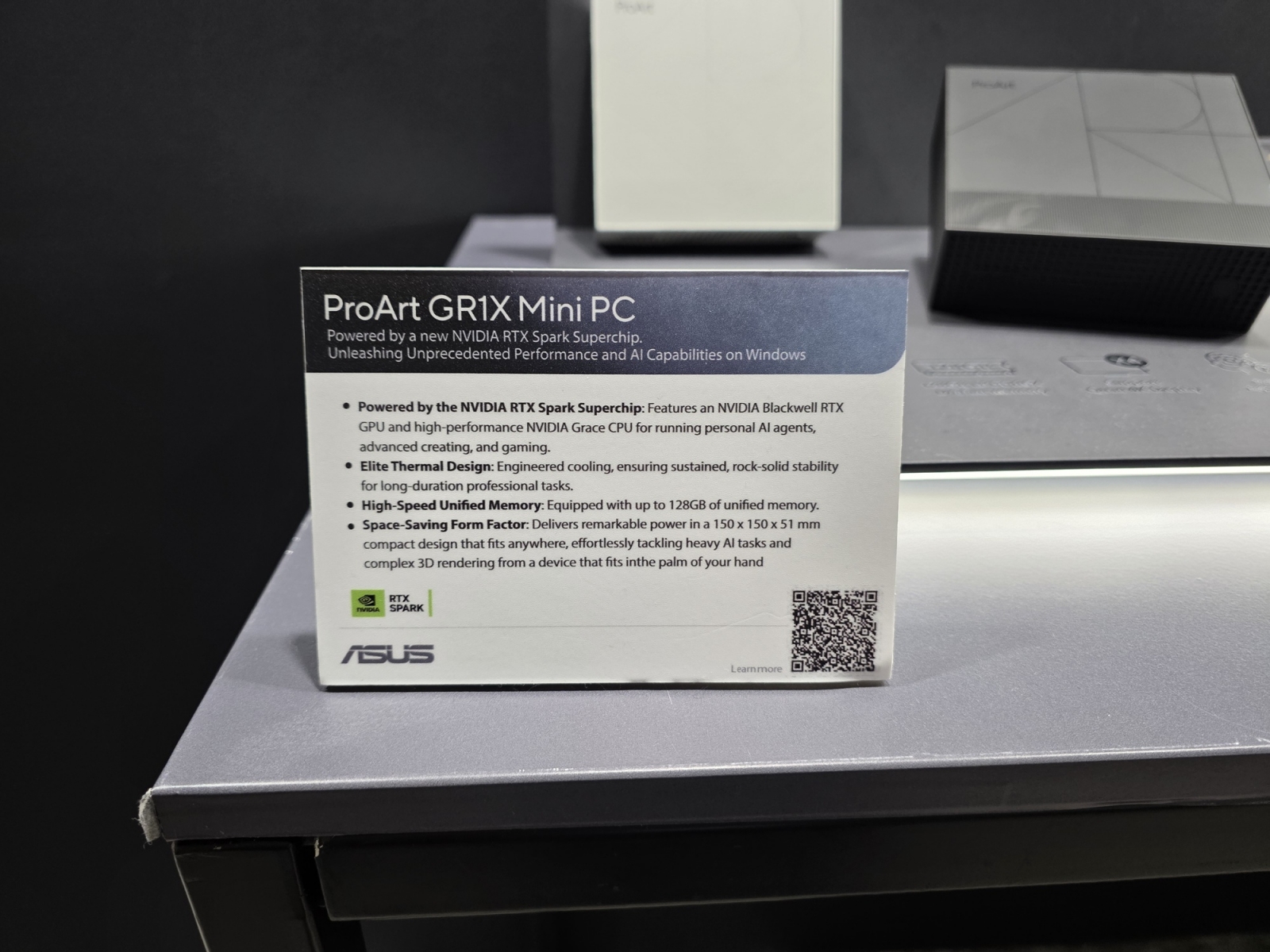
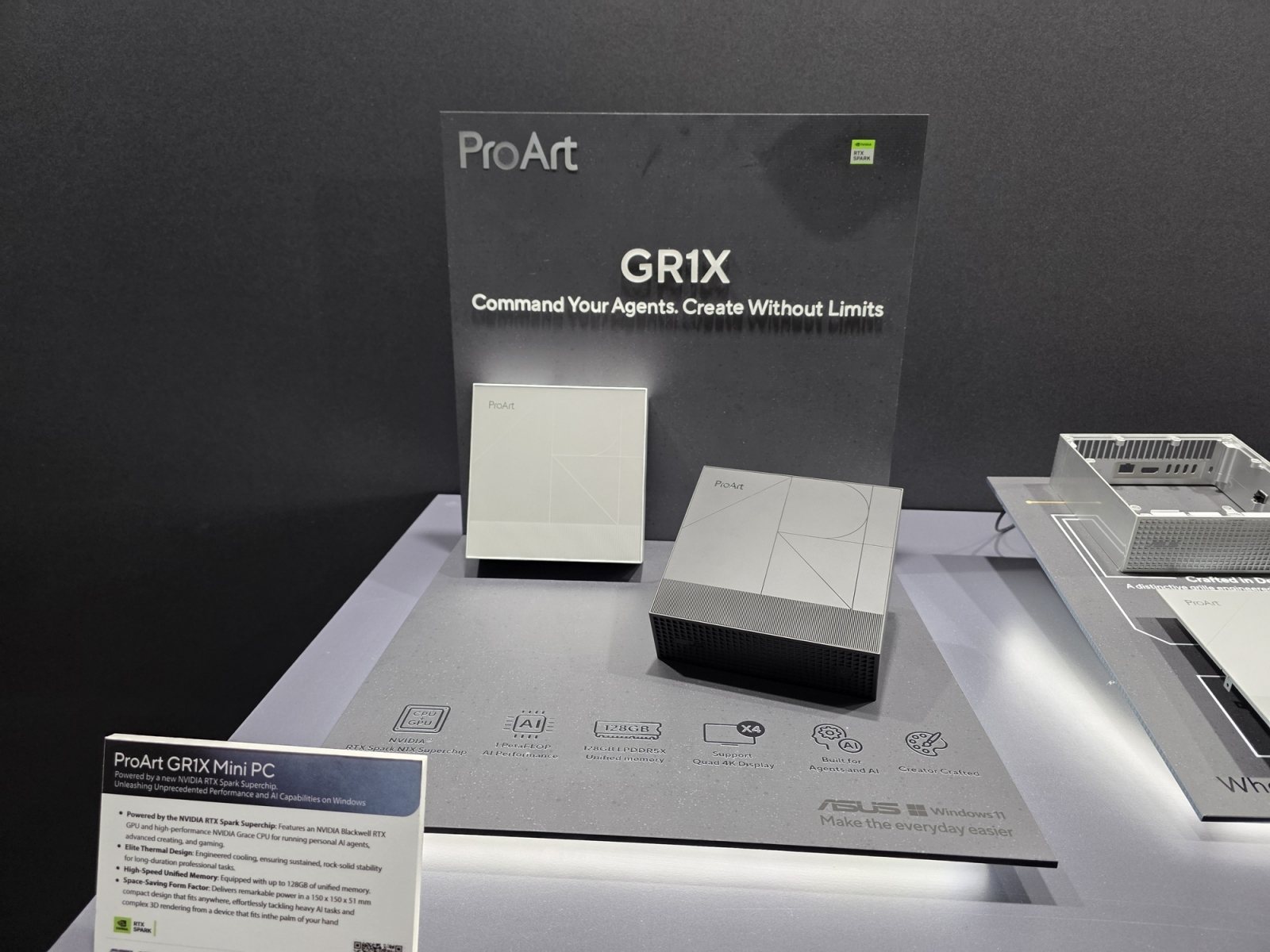
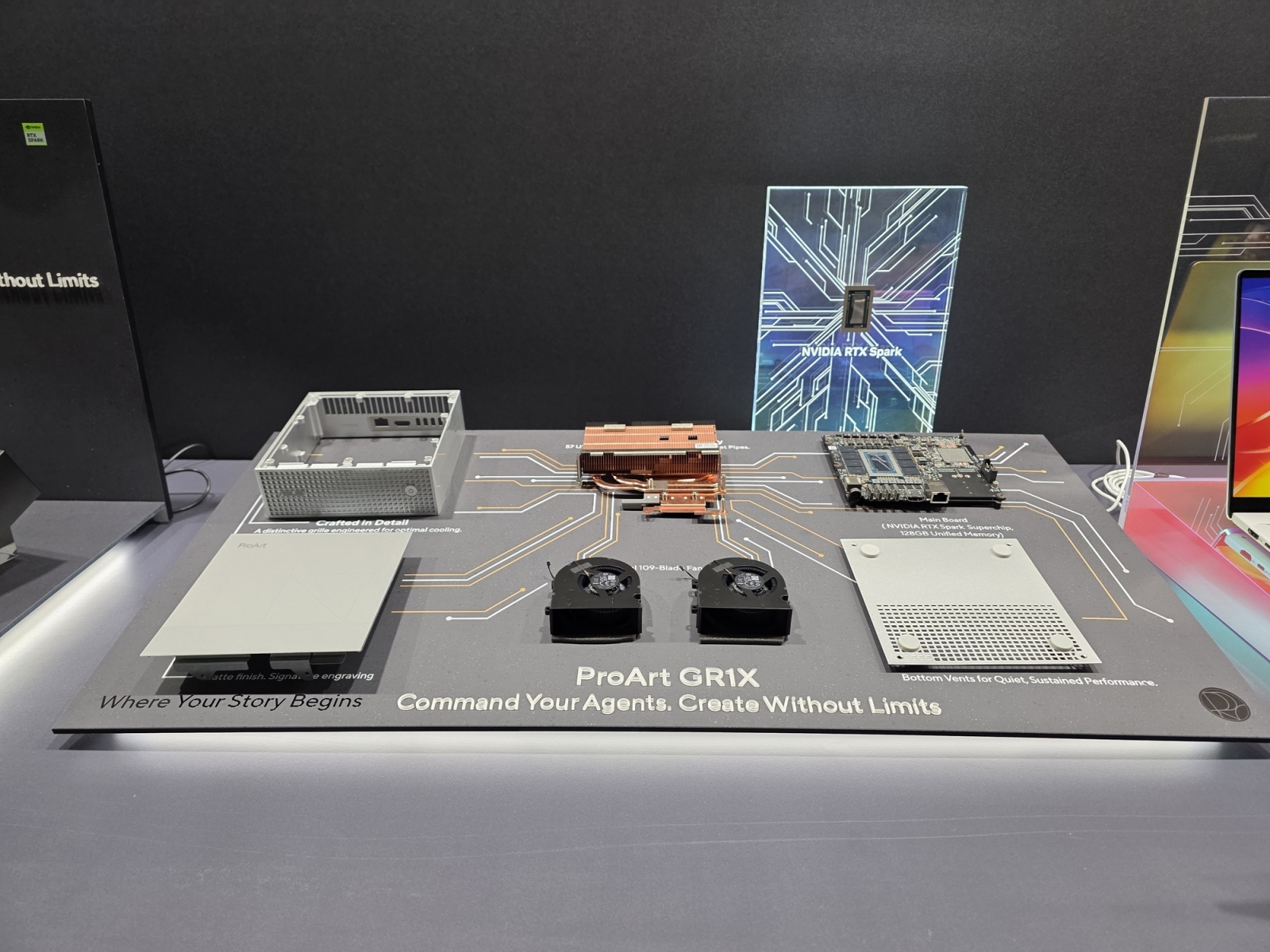
The same direction extends to the ProArt GR1X, a mini PC measuring 150 x 150 x 51mm. ASUS says it can be equipped with up to the same 20-core Grace CPU, 6,144 CUDA-core Blackwell GPU configuration, 128GB of unified memory, and 1 petaFLOP of FP4 AI throughput.
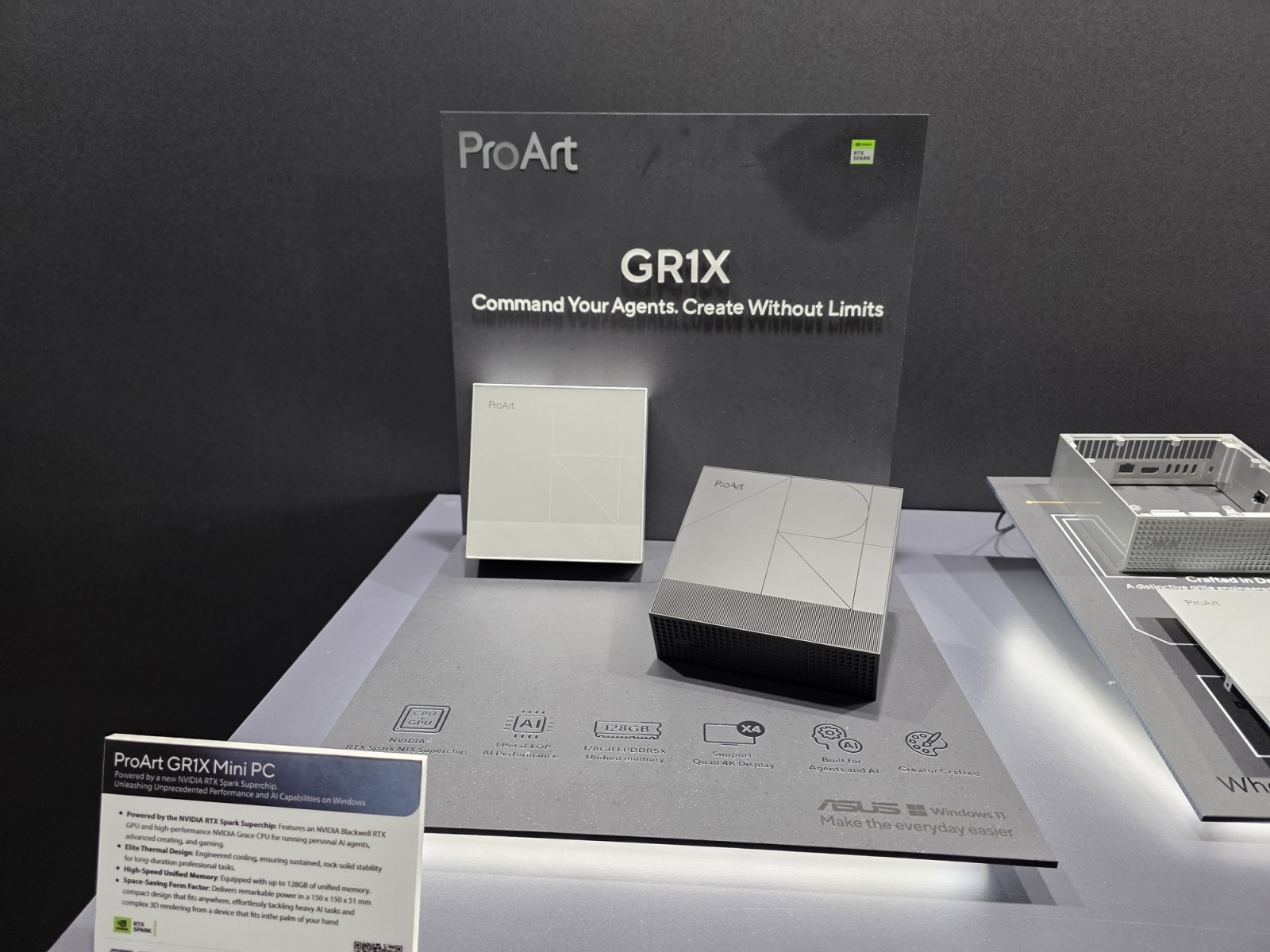
For a desk-based creative setup, the GR1X offers 10GbE, Wi-Fi 7, and support for as many as four 4K displays. ASUS positions it for sustained use with local AI agents, inference, 3D rendering, and related workloads, with a dual-fan cooling system designed for 24/7 operation. Its small footprint could be meaningful for studios or developers that need a dedicated local compute system without making room for a conventional tower workstation.
A 6K display and compact input accessories
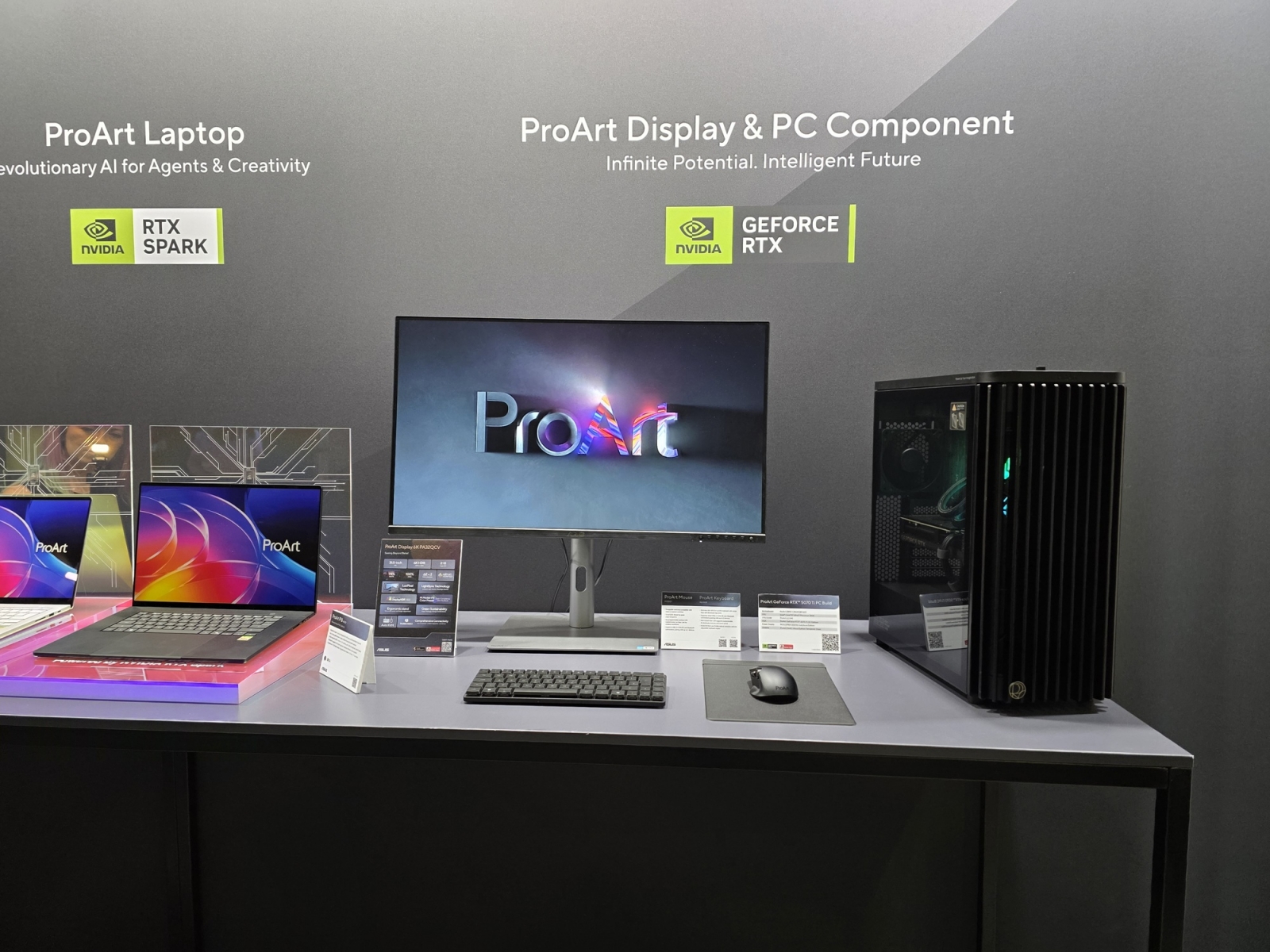
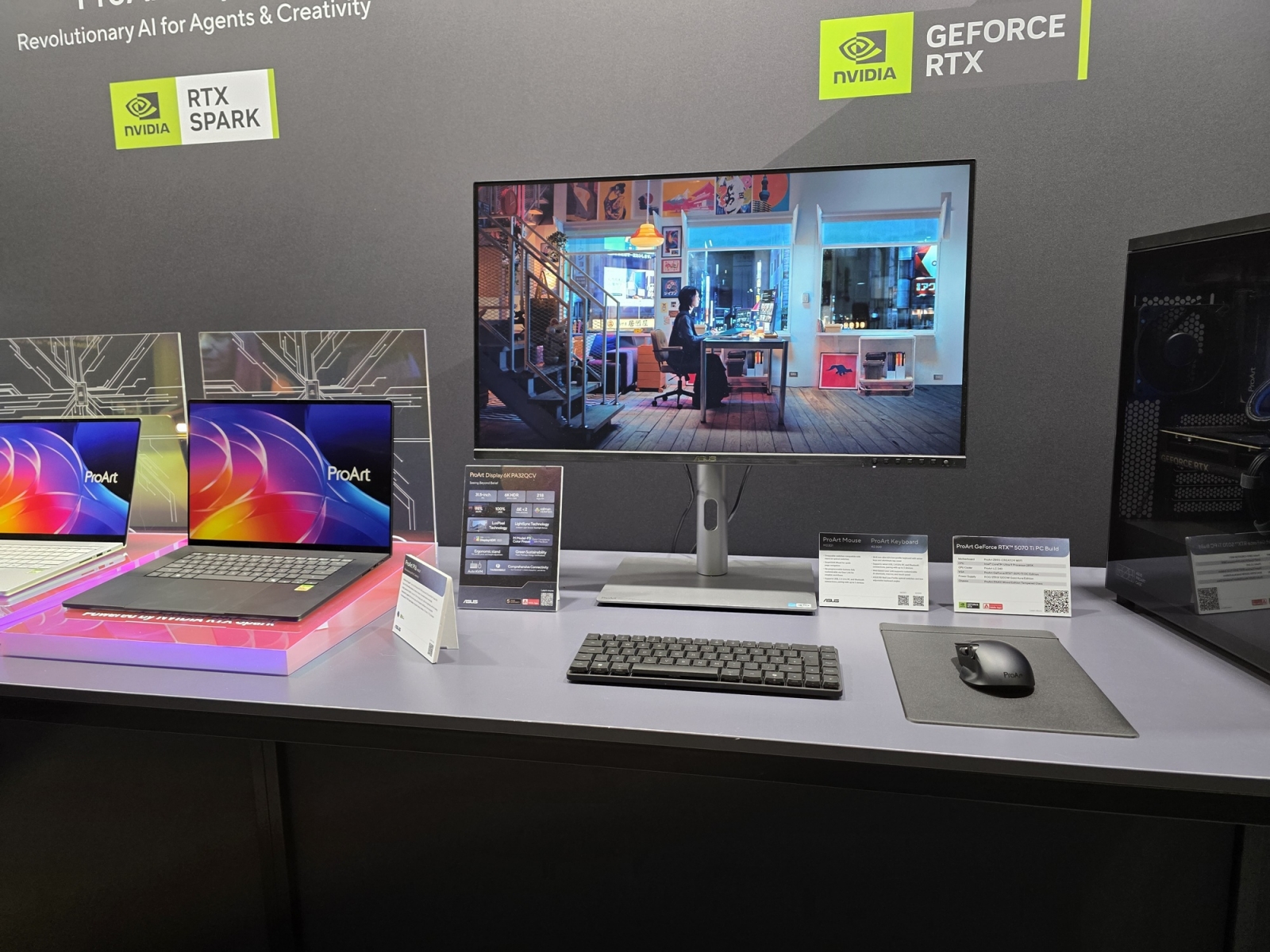
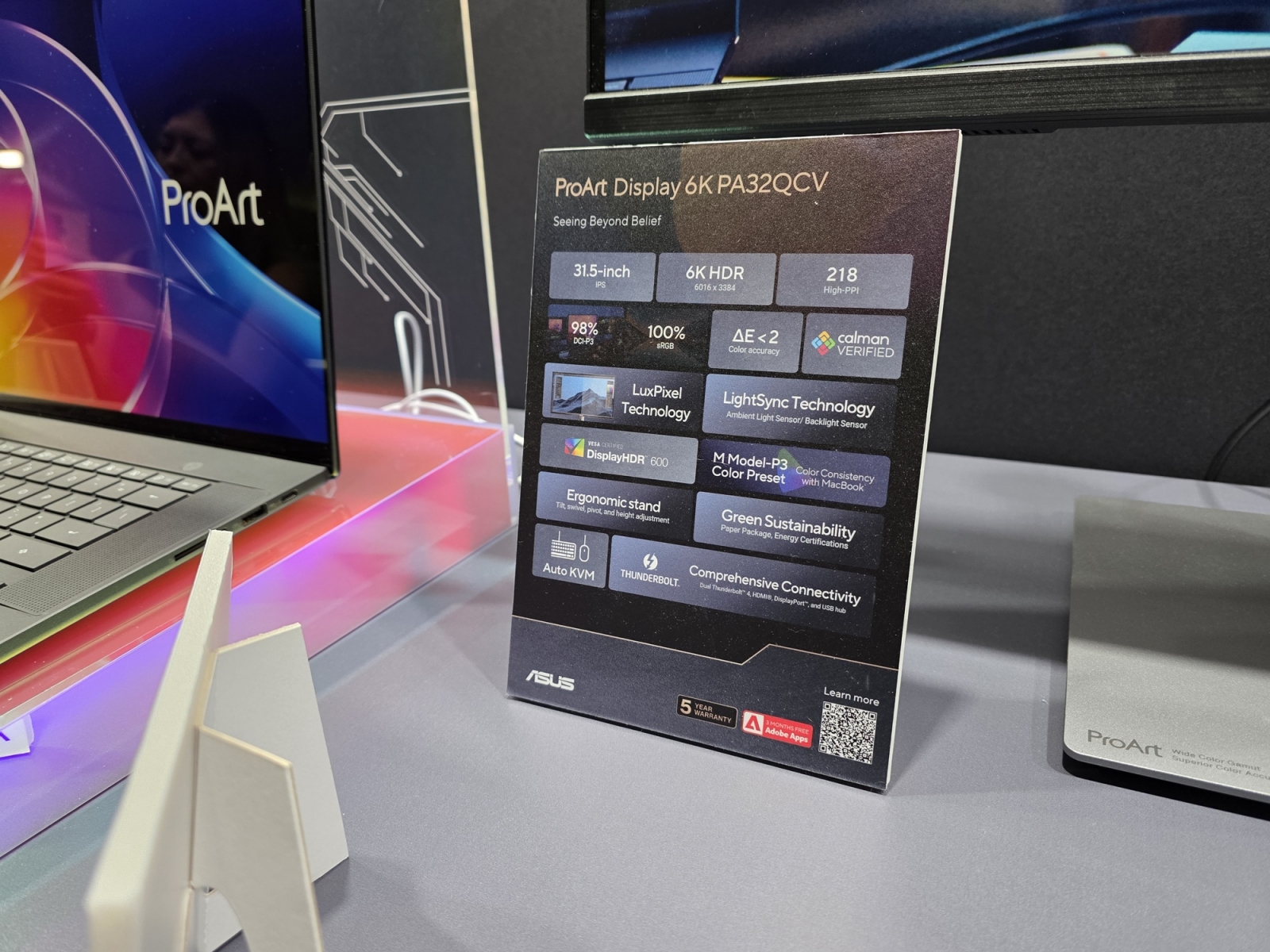
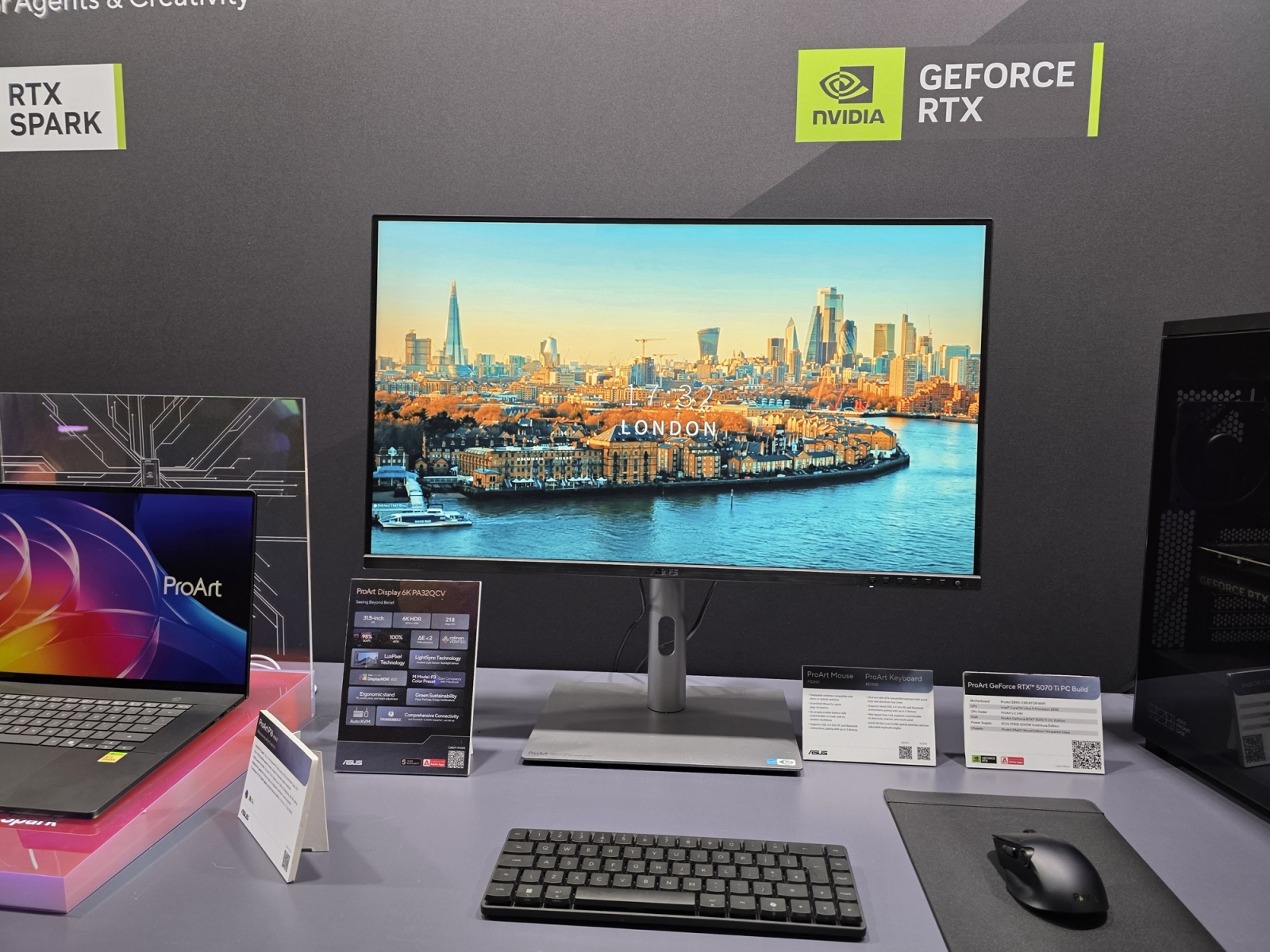
ASUS also showed the ProArt Display 6K PA32QCV, a 31.5-inch monitor with a 6,016 x 3,384 resolution and 218 pixels per inch. Its specifications include 98% DCI-P3 coverage, factory calibration to Delta E below 2, Calman validation, and VESA DisplayHDR 600 certification. Two Thunderbolt 4 ports can deliver up to 96W of Power Delivery, allowing a compatible laptop to connect to the display and charge over one cable.
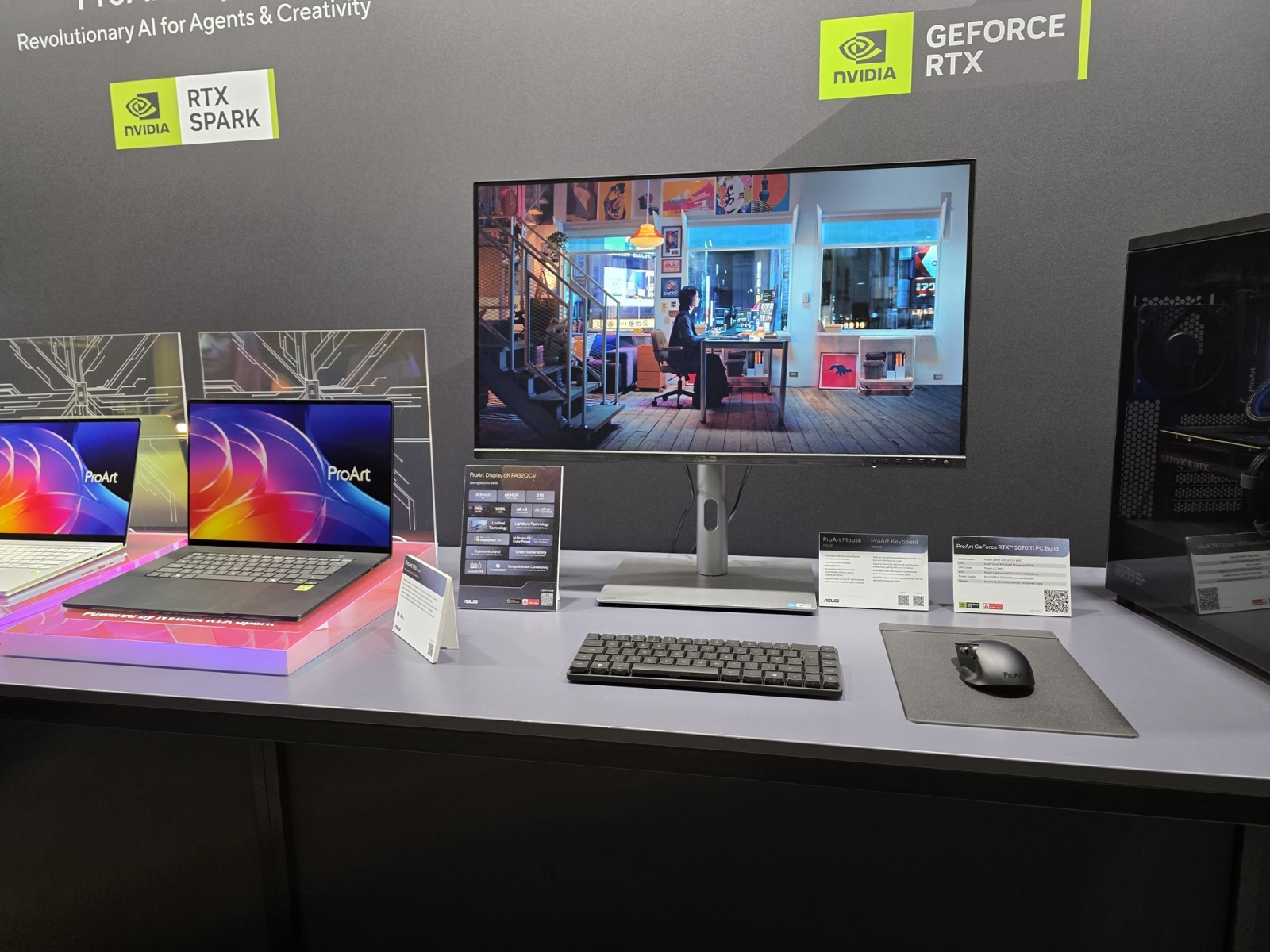
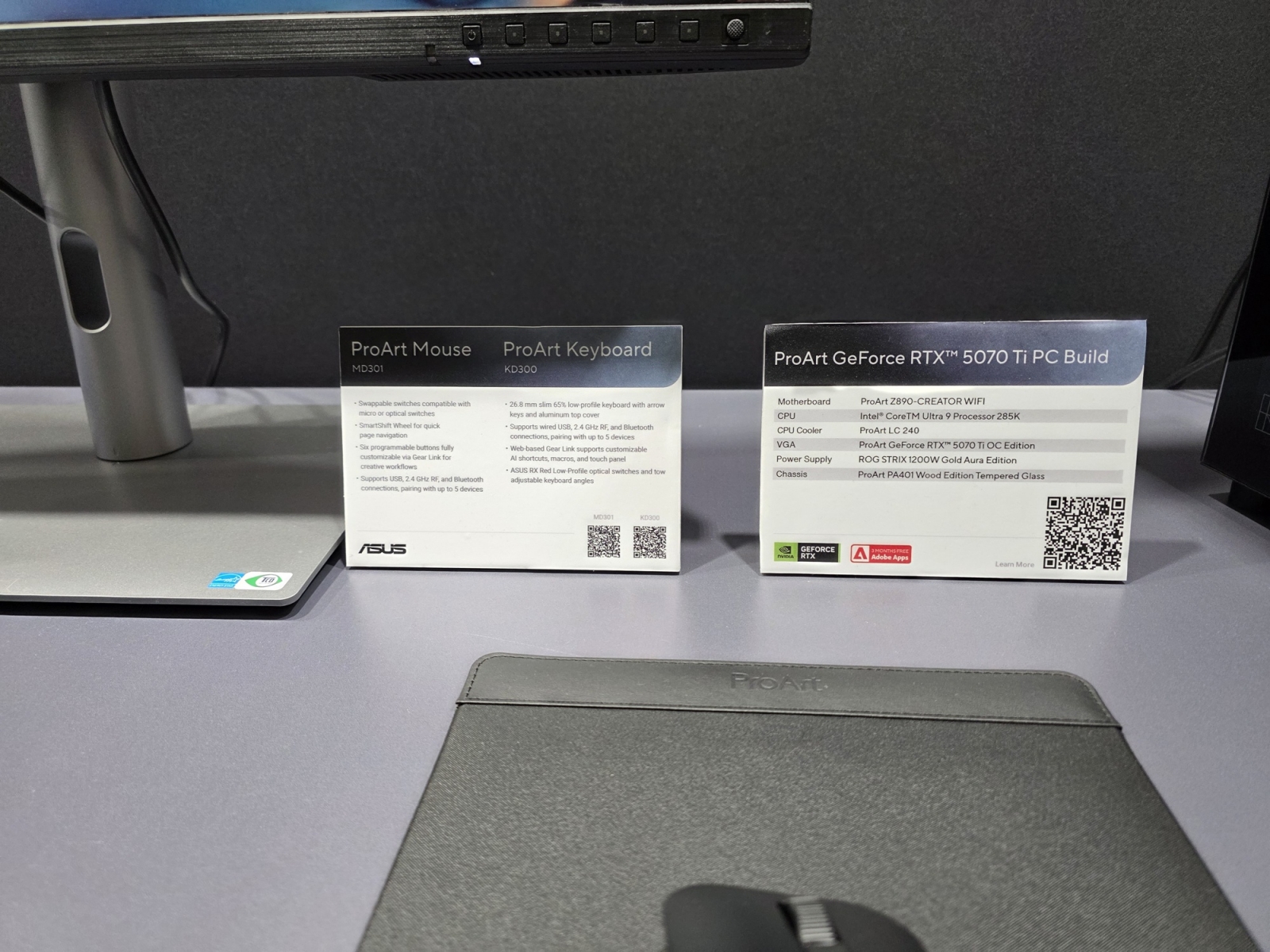
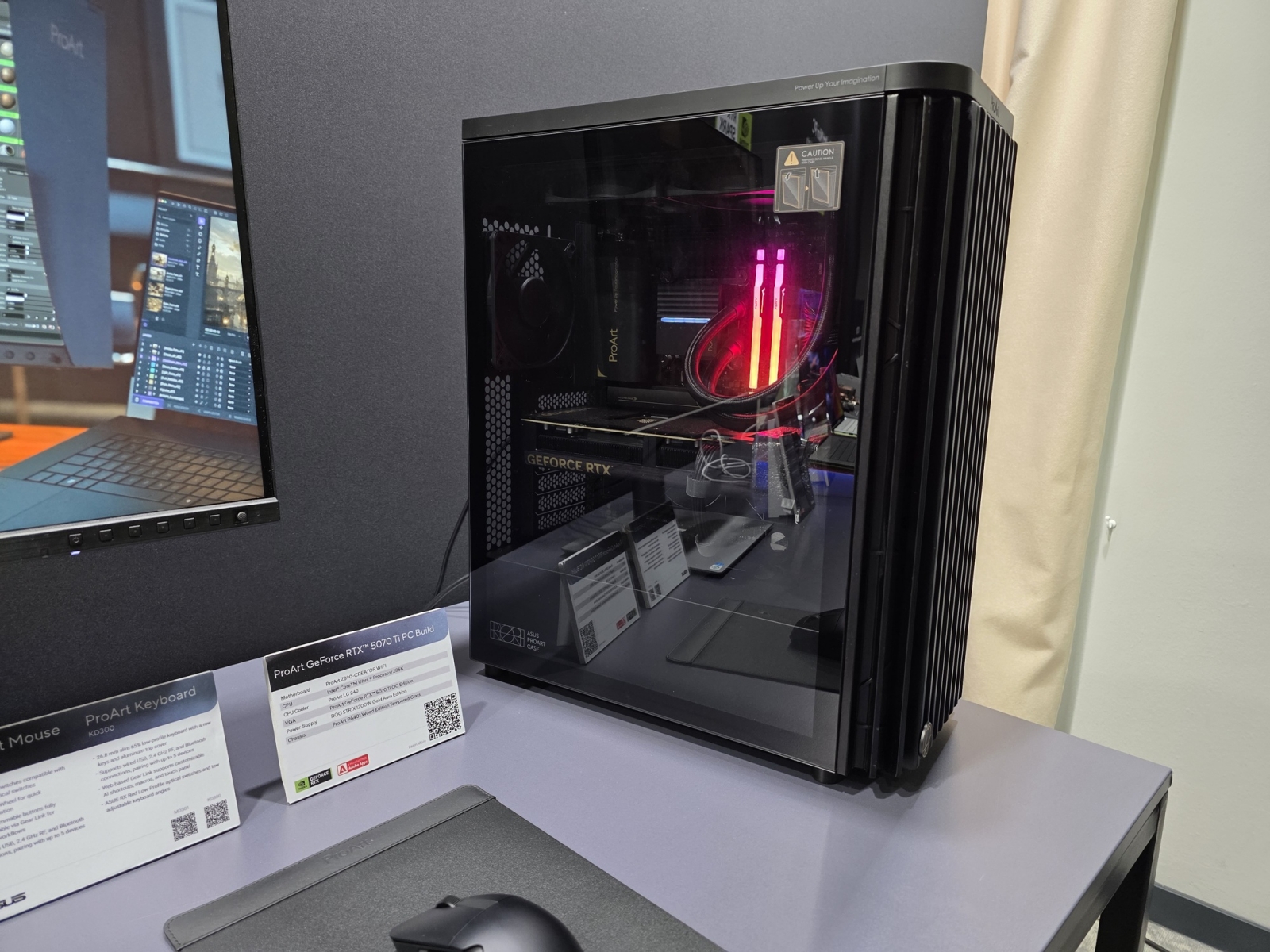
The accompanying accessories include the ProArt Mouse MD301, with interchangeable switches, an 8,000 DPI sensor, six programmable buttons, and USB, 2.4GHz wireless, or Bluetooth connectivity. The ProArt Keyboard KD300 is a 65% low-profile model measuring 26.8mm thick, using ASUS RX Red Low-Profile optical switches and supporting connections to up to five devices.
ASUS says RTX Spark supports more than 1,000 CUDA-accelerated applications and tools, including Adobe Creative Cloud, DaVinci Resolve, Blender, and ComfyUI. The P14, P16, and GR1X are therefore aimed less at general-purpose AI features and more at creators, AI developers, researchers, and small studios that want to keep heavy workflows local. ASUS has not provided U.S. pricing or availability details in the information available here.
Post Footer automatically generated by Add Post Footer Plugin for wordpress.