California’s ShakeAlert network issued its first warning 4.6 seconds after detecting a magnitude 5 earthquake near Manhattan Beach on November 28. That rapid response can help deliver earthquake alerts to Android phones in California, but the quake’s proximity to Los Angeles International Airport (LAX) left little practical warning time for the airport itself.
The quake struck at 9:30 a.m. local time at a depth of 12.8 kilometers, with its epicenter offshore near Manhattan Beach, according to the U.S. Geological Survey. At LAX, several windows broke and ceiling panels fell, though no injuries were reported.
Arrival traffic paused during the shaking
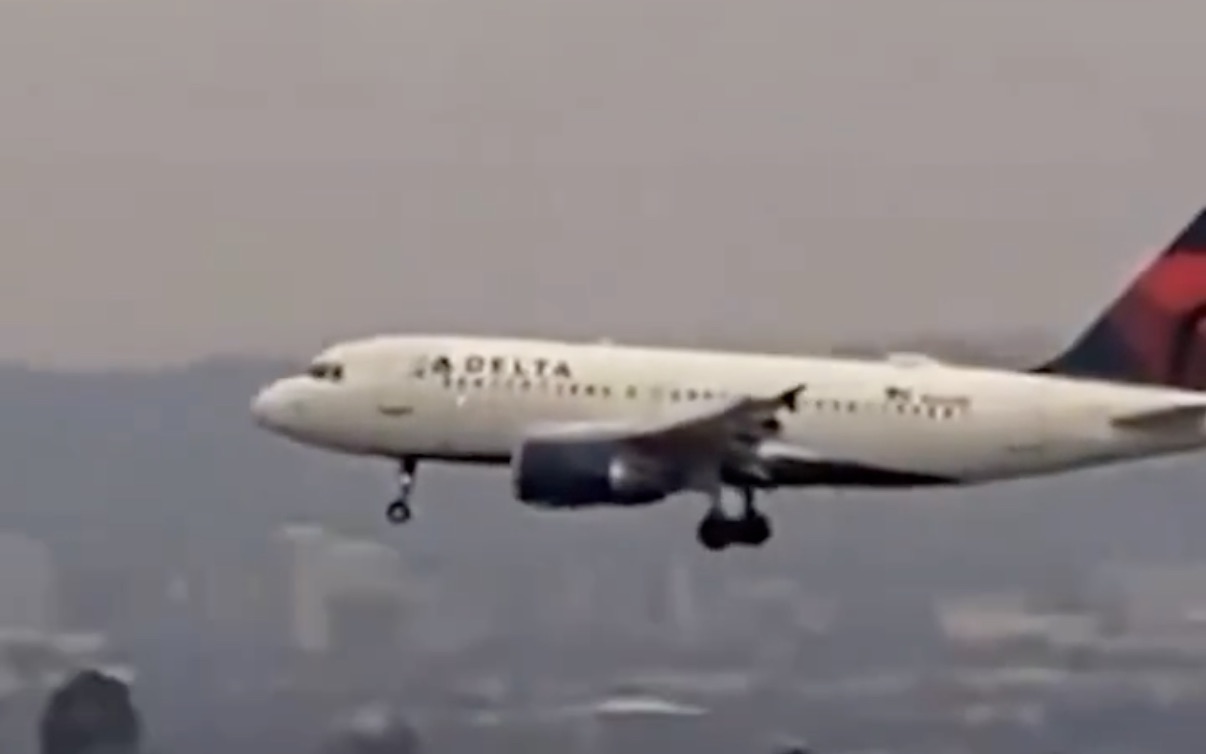
A Delta Air Lines Airbus A319 arriving from Kansas City was on approach when air traffic control instructed it to climb and discontinue its landing. Footage from Airline Videos Live captured the camera shaking and car alarms sounding as the call was transmitted over the radio.
Delta 1972, go around! We have a strong earthquake!
Air traffic control radio
The A319 remained airborne for roughly 30 minutes before landing safely. Another Delta flight arriving from Seattle was also affected as airport staff checked the runways before arrivals resumed.
What the warning system can—and cannot—do
ShakeAlert detects the earliest seismic waves and can send warnings before more damaging shaking reaches locations farther from the source. It can also support automated actions such as slowing trains or closing pipelines. The available reporting does not establish whether ShakeAlert played a role in the controller’s decision at LAX.
For mobile users, California is among the places where Android phones can display earthquake alerts using ShakeAlert data. The LAX incident is a useful reminder that alert systems are most valuable when there is distance between the user and the epicenter; when a quake begins nearby, even a warning generated in seconds may offer only a narrow window to react.
Post Footer automatically generated by Add Post Footer Plugin for wordpress.