
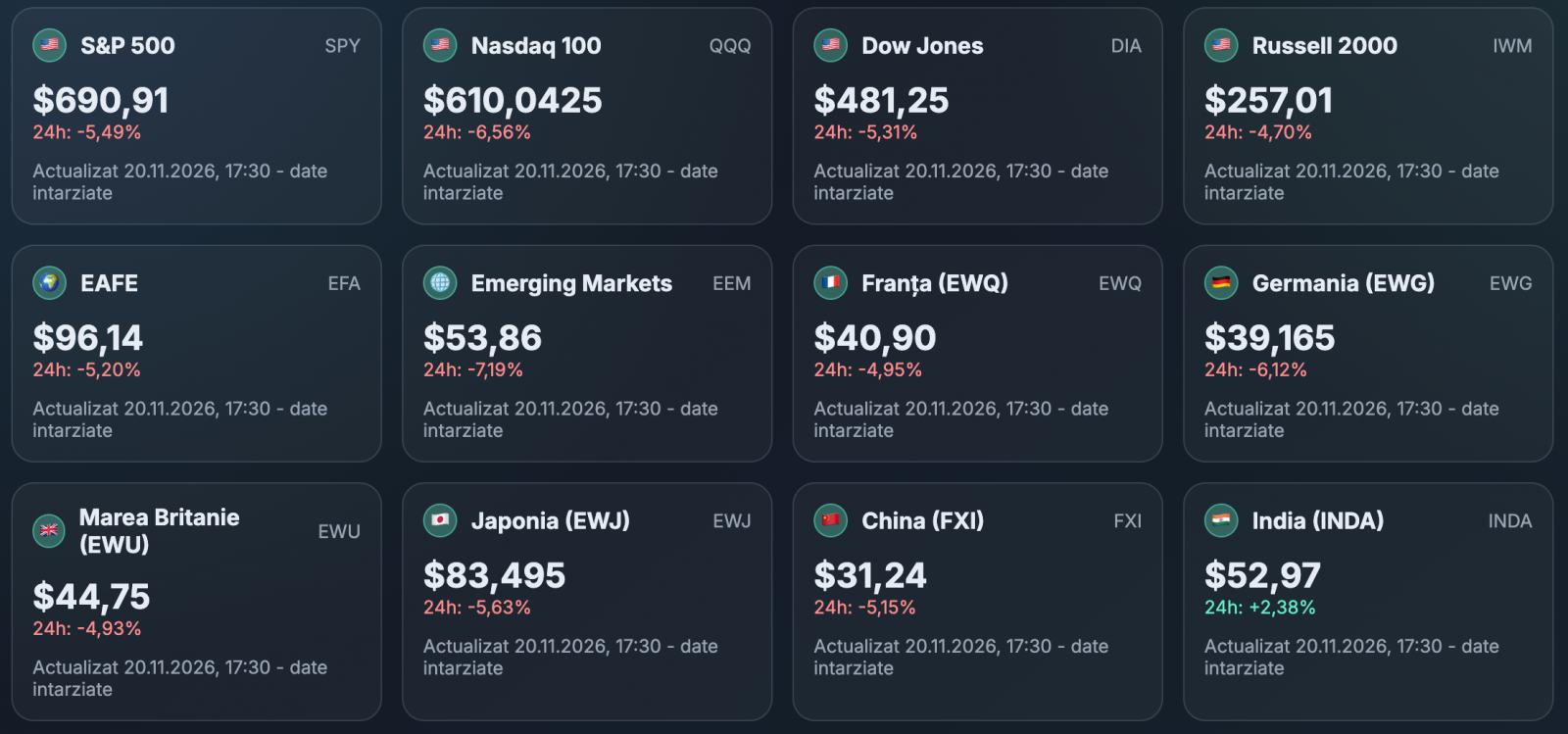
The companies building the chips and data-center infrastructure behind today’s AI features in phones, tablets and PCs were at the center of a severe U.S. market sell-off on Friday, November 20. NVIDIA closed down about 14% at $125.53, AMD fell 13.2% to $424.39, and Broadcom dropped about 12%, as investors reassessed AI spending, valuations and the prospect of higher financing costs.
The move matters beyond Wall Street because NVIDIA, AMD and Broadcom sit upstream of much of the computing industry’s AI roadmap. Their hardware supports the cloud services that power generative-AI tools, while the sector’s spending outlook can influence development across PCs, mobile software and connected devices. The session did not establish that AI demand has weakened, but it showed that investors are questioning how quickly enormous infrastructure investments will translate into returns.
| Index | Close on Nov. 20 | Daily change | Weekly change |
|---|---|---|---|
| Nasdaq Composite | 22,617.73 | −5.28% | −10.0% |
| S&P 500 | 6,910.39 | −3.70% | −8.6% |
| Dow Jones Industrial Average | 48,147.33 | −1.93% | −8.0% |
| Russell 2000 | 2,581.79 | −2.8% | −7.5% |
The Nasdaq’s 5.28% decline wiped out its gain for the year, while the S&P 500 and Dow entered correction territory, generally defined as a decline of at least 10% from a previous high. Associated Press closing data put the Nasdaq’s weekly loss at 10%, its worst week since March 2020. Trading was broad and heavy: 3,964 Nasdaq-listed stocks closed lower versus 928 higher, and total U.S. exchange volume reached 25.19 billion shares, above the 20-session average of 19.5 billion.
Pressure spread beyond semiconductors
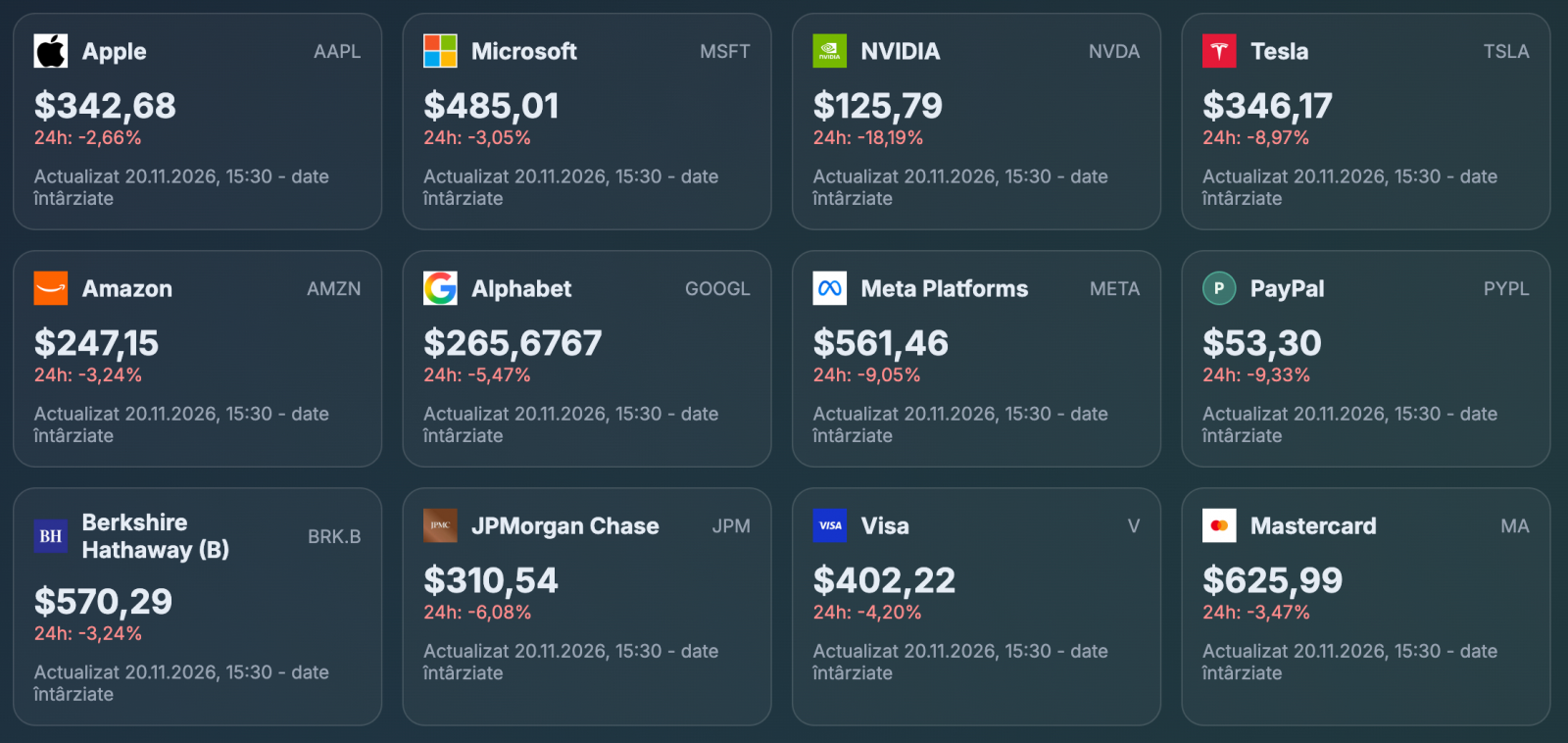
The downturn extended to major consumer-tech platforms and electric vehicles, underscoring how widely AI expectations have become embedded in large-cap technology valuations.
- Tesla fell 7.6% to $345.82.
- Meta fell 5.9% to $560.84.
- Amazon fell 4.1% to $246.82.
- Microsoft fell 2.8% to $484.52.
- Alphabet fell 2.7% to $265.29.
Several forces converged. Reuters reported that the Securities and Exchange Commission is examining potential accounting issues at NVIDIA, according to sources. The existence of an investigation does not establish wrongdoing. NVIDIA shares were already down more than 6% before details of the reported probe emerged.
The market was also weighing a weak second trading day for Anthropic, whose shares fell 9.1% after its Nasdaq debut, along with inflation concerns and the possibility that the Federal Reserve could raise its benchmark rate again in December. Higher rates raise the cost of financing data centers and can reduce the appeal of companies valued primarily on future profit expectations.
A rotation, not a verdict on AI
It is too early to treat one week’s trading as a verdict on the AI market. Still, the reversal has been abrupt: the Nasdaq was up nearly 19% for the year in early October but stood down 2.7% for 2026 after Friday’s close. Reuters reported that the median S&P 500 stock remained up roughly 5% year to date even as the index itself was up only about 1%, illustrating how a relatively small group of heavyweight companies can exert outsized pressure on the broader benchmark.
For the portable-computing industry, the key issue is whether cloud providers and other large customers sustain their current pace of AI-infrastructure investment. Strong chip sales alone may not settle that question; investors are looking for clearer evidence that the billions being spent on data centers will produce durable profits. Market attention when U.S. trading resumes November 23 will likely remain fixed on NVIDIA, the broader semiconductor group and incoming inflation data.
Post Footer automatically generated by Add Post Footer Plugin for wordpress.