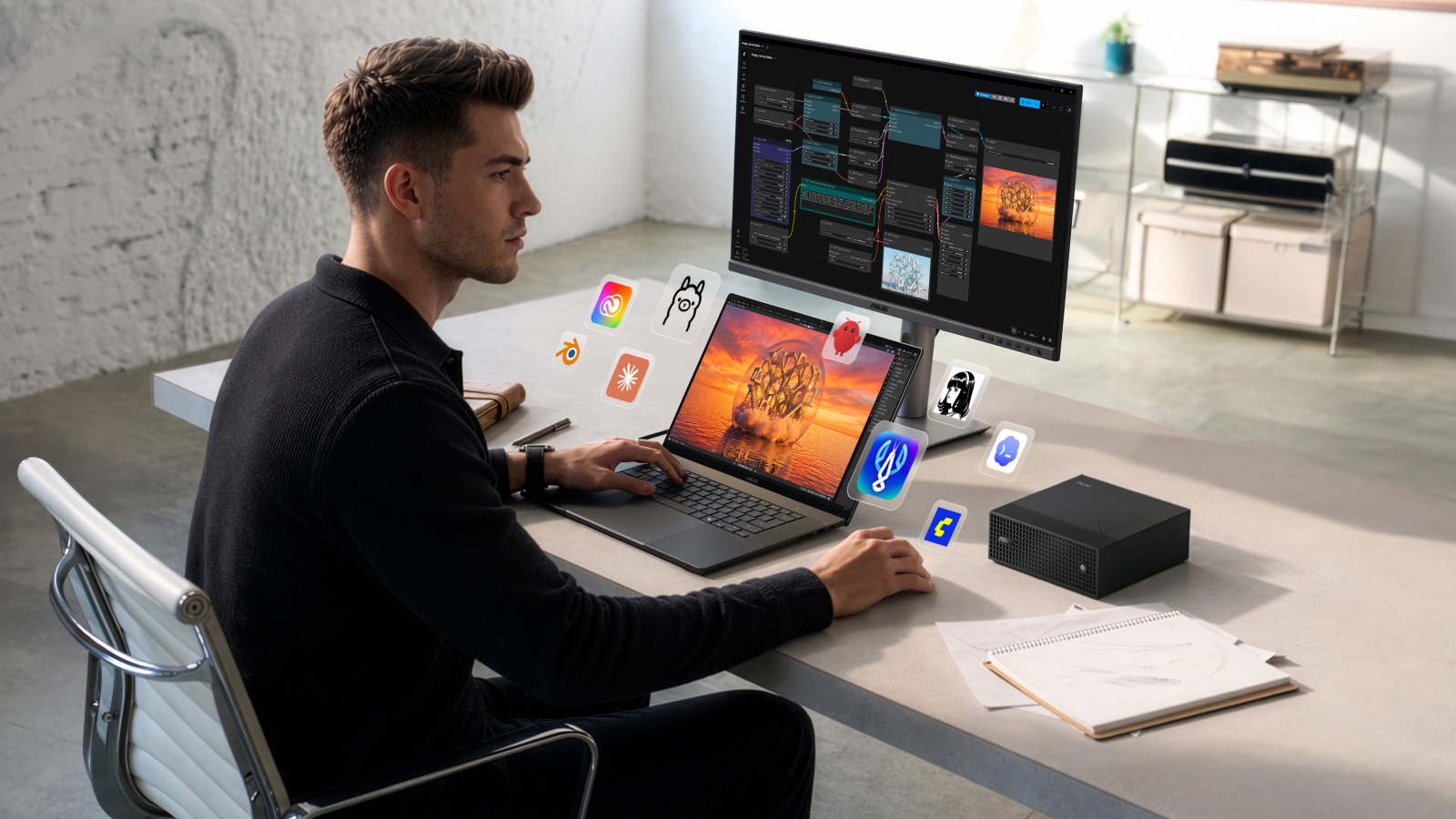
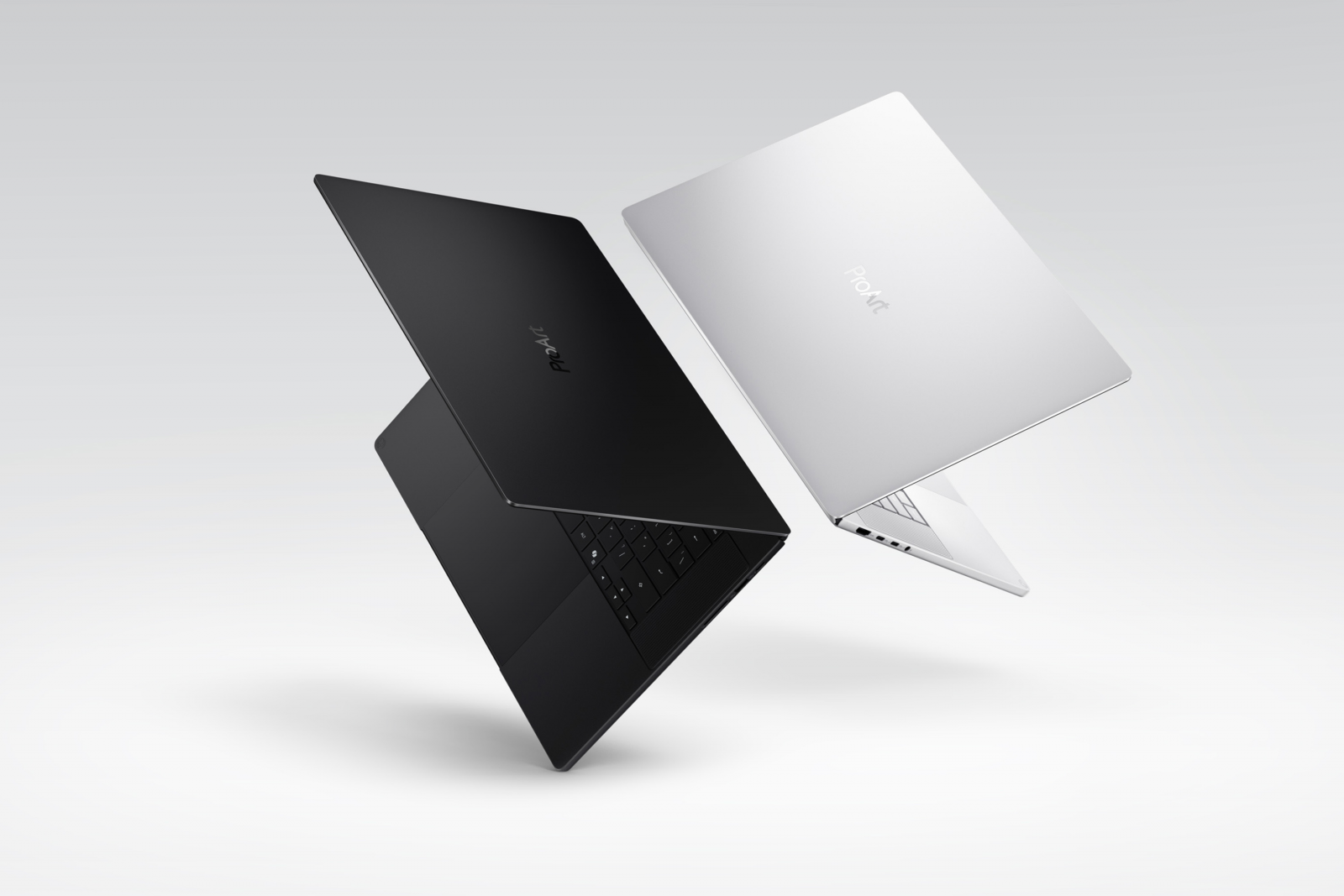
ASUS’ new ProArt P16 H7607 is built for creators whose AI models, video assets, and 3D scenes are becoming too large for the dedicated graphics memory in a conventional laptop. At 3.9 pounds and as thin as 0.51 inch, the 16-inch system uses NVIDIA’s RTX Spark N1X platform, combining a 20-core Grace CPU and Blackwell RTX graphics with up to 128GB of shared LPDDR5X memory.
That shared-memory design is the central change from the prior ProArt P16 approach, which paired an AMD Ryzen processor with discrete GeForce graphics. ASUS rates the new machine at up to 1 petaFLOP of FP4 AI performance, a figure aimed at AI inference workloads rather than a directly comparable measure of gaming, video-editing, or 3D-rendering speed.
ASUS says the platform can handle local large language models with up to 120 billion parameters and context windows up to 1 million tokens, along with 4K AI video generation and 3D scenes exceeding 90GB. Actual results will depend on the model, quantization, and software used, but the appeal is clear: larger projects can potentially remain on the laptop instead of being limited by GPU VRAM or requiring a cloud upload.
A portable workstation built around local workflows

The P16 retains the display and expansion expected from a ProArt machine. Its 16-inch Lumina Pro OLED touchscreen has a 3840 × 2400 resolution, 16:10 aspect ratio, 120Hz variable refresh rate, 100% DCI-P3 coverage, Pantone validation, and a claimed Delta E below 1. ASUS lists 700 nits of brightness and up to 1,600 nits for HDR, while stylus support makes the panel more useful for illustration and direct on-screen editing.
Storage is another practical advantage over the smaller ProArt P14: the P16 supports 1TB or 2TB PCIe 4.0 NVMe SSD configurations and includes two M.2 2280 PCIe 5.0 x4 slots. That capacity and expansion could matter for RAW photo libraries, high-bitrate video, and local models that consume tens of gigabytes.
- NVIDIA Grace CPU with 20 cores, reaching up to 4.1GHz
- NVIDIA Blackwell RTX GPU with up to 6,144 cores
- Up to 128GB of unified LPDDR5X memory
- 16-inch, 3840 × 2400, 120Hz OLED touchscreen with stylus support
- Up to 2TB of SSD storage and two M.2 2280 PCIe 5.0 x4 slots
- Three USB4 Type-C ports at 40Gbps, plus USB-A 3.2 Gen 2, HDMI 2.1 FRL, 3.5mm audio, and an SD Express 7.0 card reader
- Wi-Fi 7 and Bluetooth 5.4
- 99.9Wh battery and 140W USB-C power adapter
- FHD IR camera with Windows Hello and a haptic touchpad
- Windows 11 Pro
The software and compatibility question
ASUS includes its MuseTree local image-generation tool, which supports models such as FLUX and WAN, as well as StoryCube for organizing media. The company also points to access to CUDA, ComfyUI, and Hermes Agent. For professionals handling sensitive material, the proposition is that prompts, source files, and models can stay on the PC without mandatory cloud uploads or per-token charges.
There is a workflow consideration behind the promise of a Grace-based system: Grace is an ARM CPU. Windows on ARM compatibility has improved, but buyers relying on older x86 applications, specialized codecs, or particular plug-ins should verify their exact software stack before treating the P16 as a replacement for an established workstation.
US pricing and availability for the ProArt P16 H7607 have not been confirmed in the supplied information. The system appears aimed less at buyers seeking a conventional high-performance creator laptop and more at mobile professionals who need unusually large local AI workloads, media libraries, or 3D projects to travel with them.
Post Footer automatically generated by Add Post Footer Plugin for wordpress.