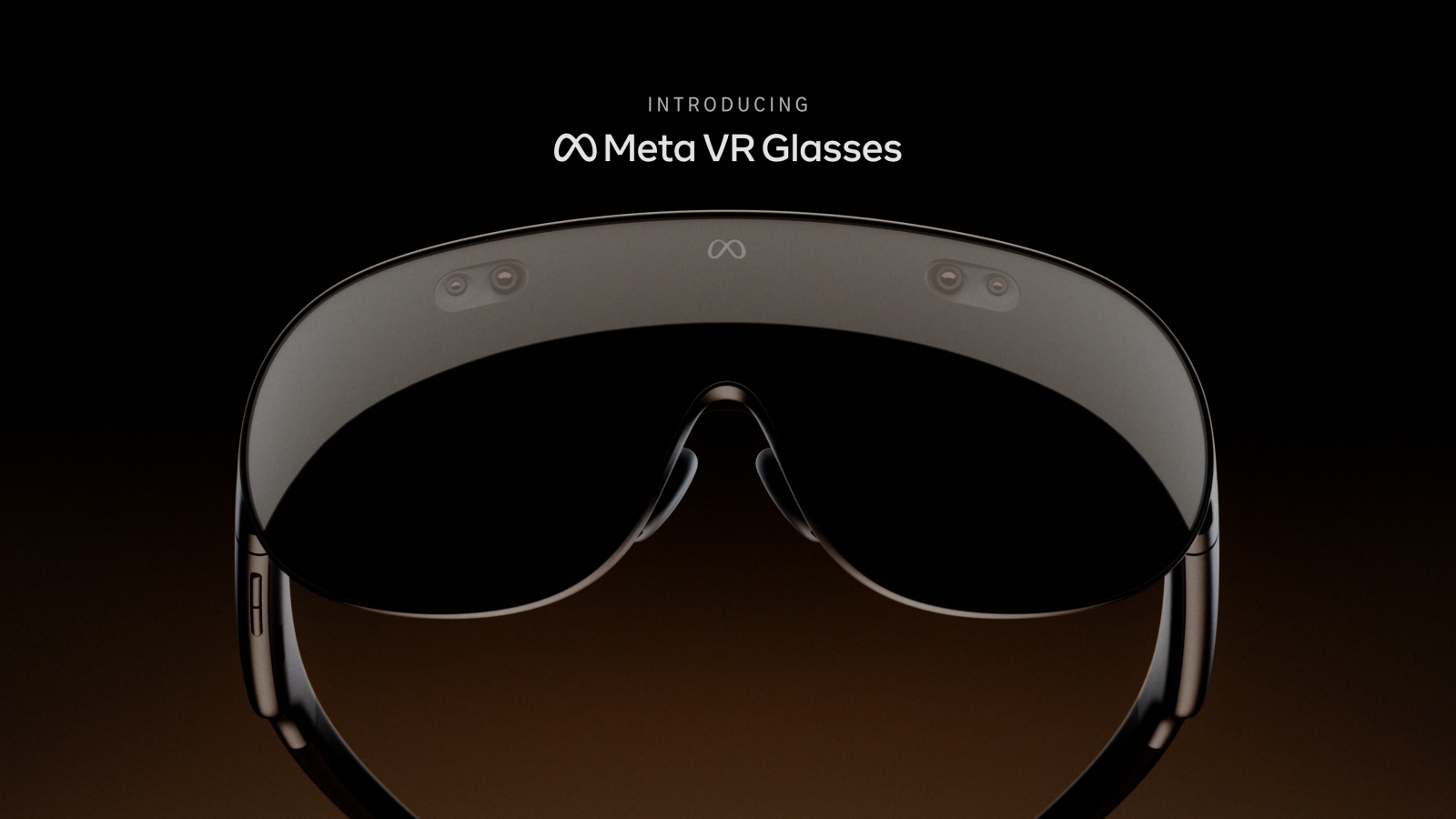
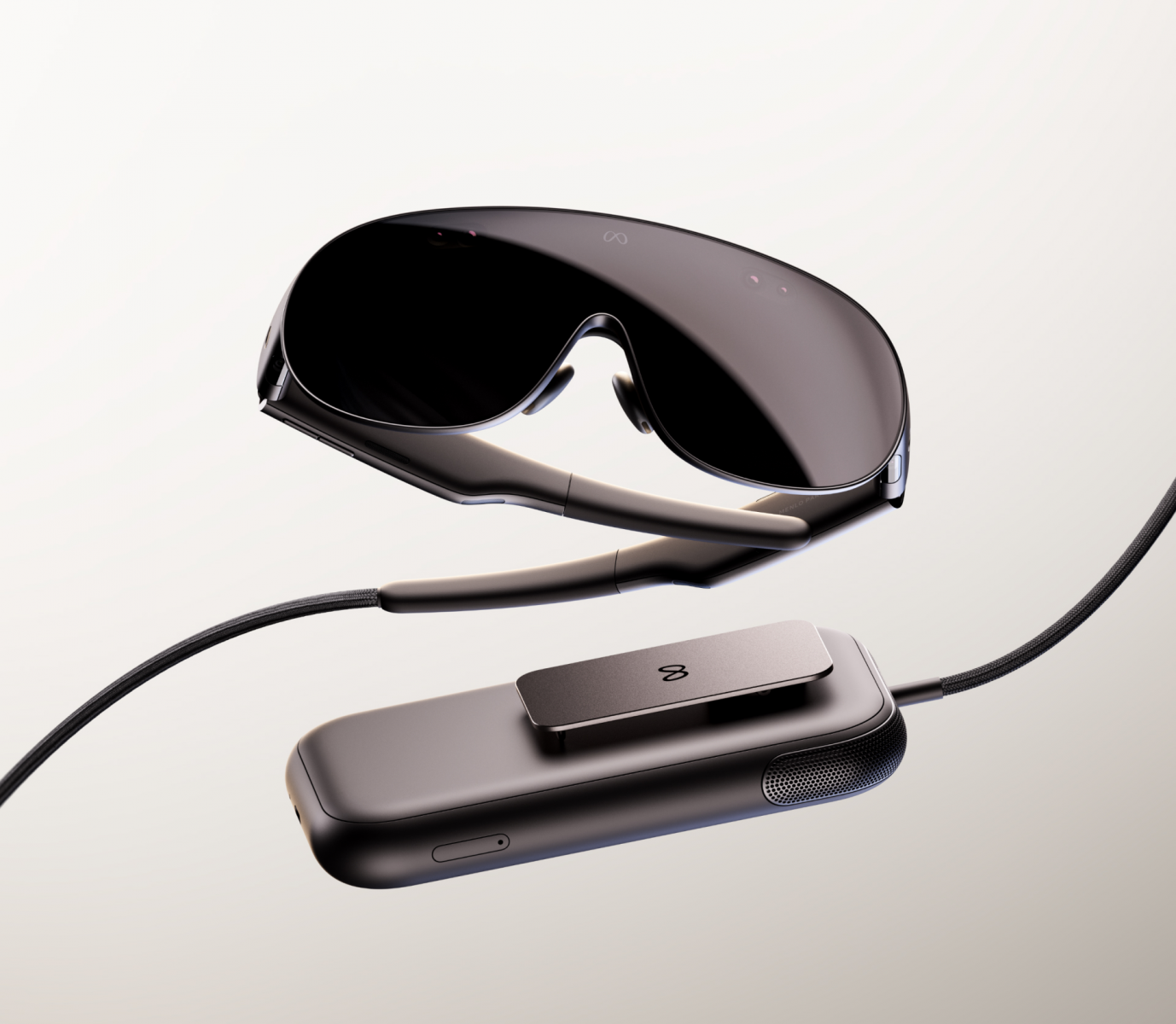
The most consequential part of Meta’s newly announced VR Glasses may be the hardware that is not on your face. Rather than fit the processor, battery, and storage into the eyewear frame, Meta places them in a separate wired module that can be clipped to a belt or carried in a pocket. The trade-off is an optical cable, but Meta says the glasses themselves weigh about 100 grams.
For portable-computing users who find current mixed-reality headsets too heavy for extended entertainment or productivity sessions, that split architecture could matter more than another spec-sheet increase. Meta VR Glasses are scheduled to reach the U.S. in spring 2027 for $1,299.99. The company has not yet had to prove how the cable, pocket module, and heat management will hold up outside a controlled demo, however.
A lighter path to immersive work and media
The external module uses Qualcomm’s Snapdragon Reality Elite platform, which is designed for spatial-computing systems that move power-hungry, heat-producing components away from the wearer’s face. Qualcomm rates the platform at up to 48 TOPS of AI performance.
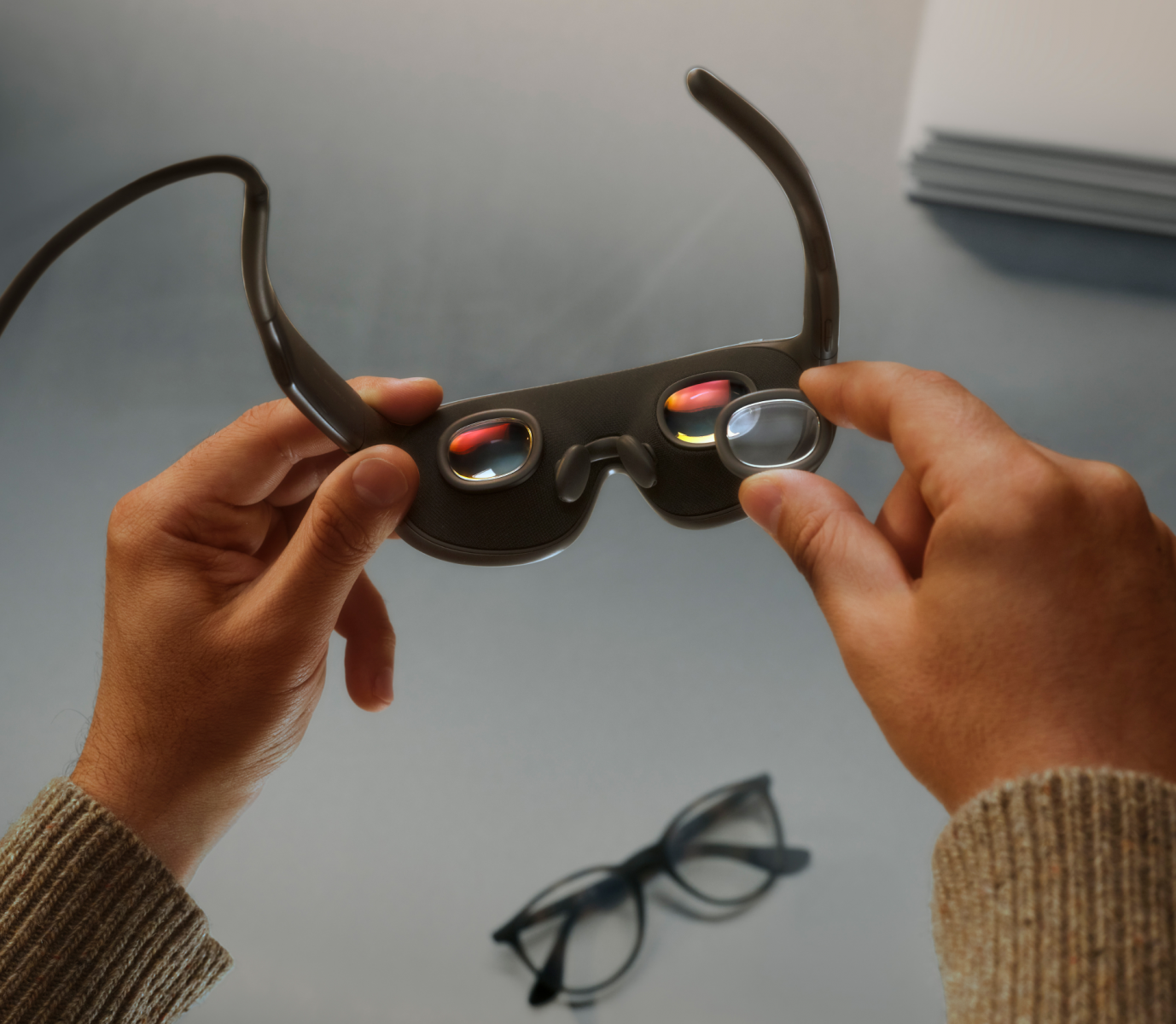
The glasses retain the displays and sensors, with 5K micro-OLED panels rated at 37 pixels per degree and Dolby Vision support. Frame-integrated speakers support Dolby Atmos. Meta says input can come from eye tracking, hand gestures, and voice, without requiring conventional controllers.
- Up to three hours of high-resolution media playback, according to Meta.
- 45W charging for the external compute module.
- More than 75 games designed for hand-only control.
- Xbox Cloud Gaming support.
- Multiple virtual displays for work, plus virtual keyboard and touchpad functions mapped onto surfaces.
- 3D movie playback and IMAX Enhanced certification.
- Hologram Calling with photorealistic representations of participants.
- More than 100 immersive live sports events per year.
Those claims position the device as a travel-friendly personal theater and virtual workspace as much as a conventional VR headset. Still, a three-hour media estimate and a physical tether are meaningful constraints: comfort will depend not only on the reduced face weight, but also on whether users are willing to manage the module in a pocket or on a belt.
A very different weight proposition from Vision Pro
Apple Vision Pro remains the closest high-end spatial-computing comparison, though the two products use different system designs and software ecosystems. Vision Pro keeps Apple’s M5 and R1 chips in the headset, while its external battery weighs 353 grams. Meta’s design instead moves its primary compute hardware and battery entirely outside the glasses.

| Feature | Meta VR Glasses | Apple Vision Pro with M5 |
|---|---|---|
| Weight worn on the face | About 100 g | 750–800 g |
| Processing | Snapdragon Reality Elite in external module | Apple M5 and R1 in headset |
| Battery arrangement | External module | External 353 g battery |
| Claimed battery life | Up to 3 hours of high-resolution media playback | Up to 2.5 hours of general use; up to 3 hours of video |
| Controls | Eyes, hands, and voice | Eyes, hands, and voice |
| Display | 5K micro-OLED; 37 pixels per degree | Micro-OLED; 23 million pixels |
| U.S. price | $1,299.99 | $3,499 |
| Availability | Planned for spring 2027 | Available |
The comparison is not a declaration that the products deliver identical experiences. Vision Pro is already on sale and has visionOS and its existing software ecosystem behind it. But Meta is making an explicit mobility argument: a system that puts roughly 100 grams on the face may be more practical for longer sessions than one that carries most of its computing hardware in the headset.

Ray-Ban Meta Audio takes the opposite route
Meta’s other new wearable avoids immersive displays altogether. Ray-Ban Meta Audio glasses have no camera and no display, reducing the concept to open-ear speakers, microphones, and Meta AI access in a 43-gram frame. They are intended to go on sale October 13 for $349.
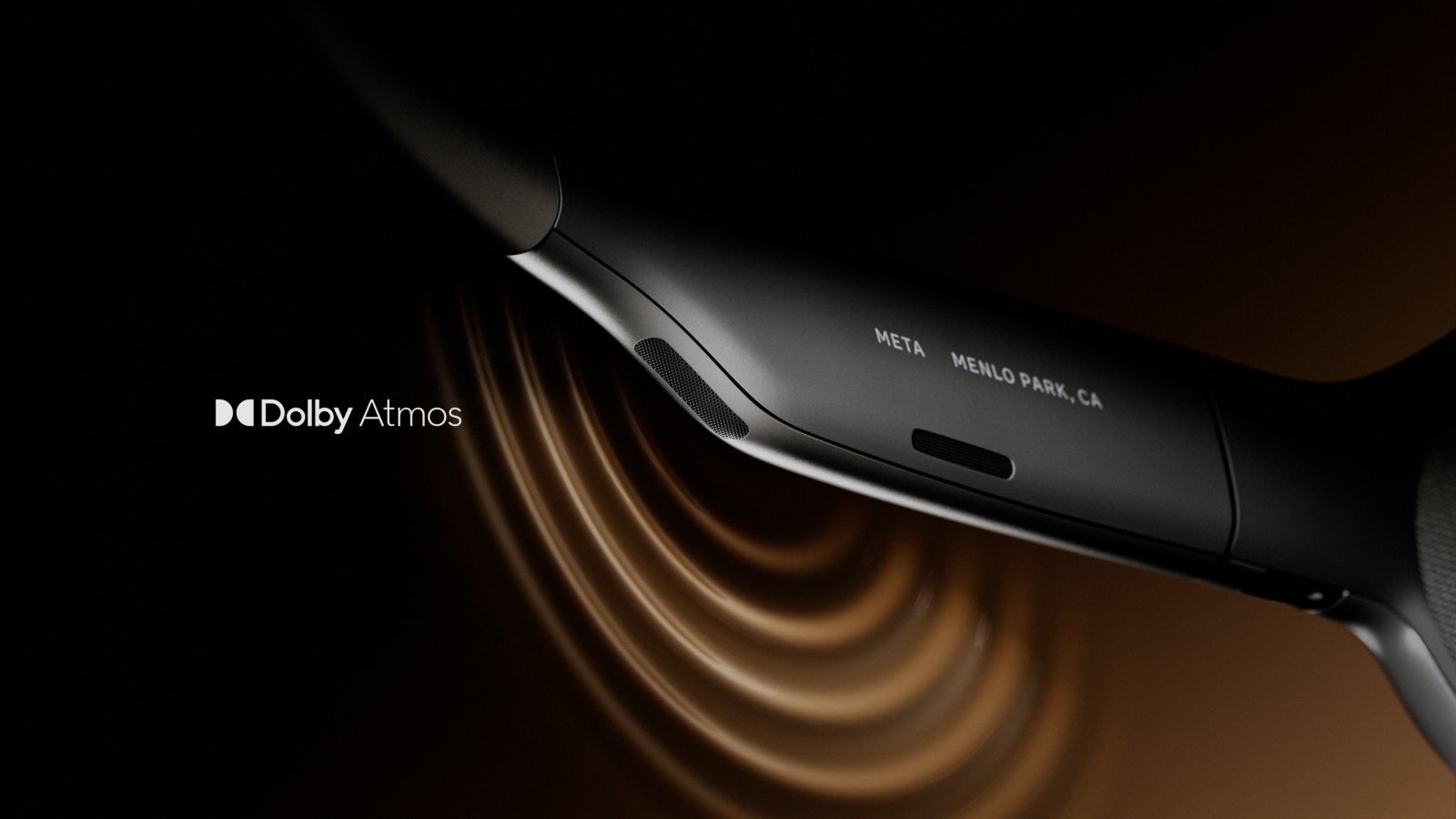
Meta rates the glasses for up to 12 hours of use, with up to 48 hours total when the charging case is included. They will be offered in 23 frame-and-lens combinations across Clubmaster and Burbank styles.
Removing the camera also removes one of the more contentious components of smart glasses for people nearby, even though Meta has not identified privacy as the reason for this product design. Functionally, Ray-Ban Meta Audio is closer to audio wearables built into eyeglass frames than to an AR computer.
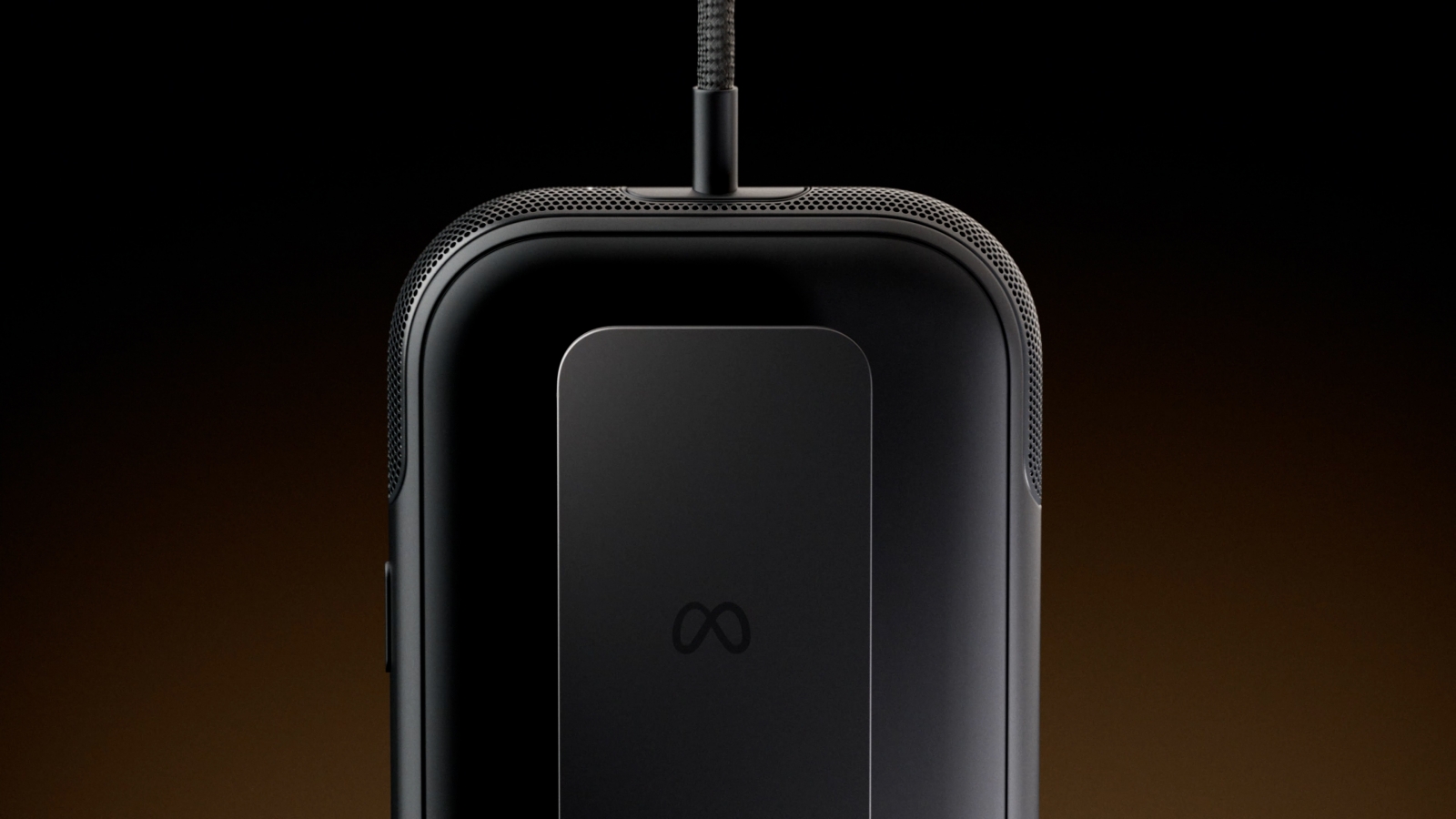
Together, the two products show Meta pursuing separate wearable categories instead of forcing every function into one pair of glasses. Ray-Ban Meta Audio appears aimed at listeners who want a lightweight, discreet voice-and-audio accessory; Meta VR Glasses target people willing to accept a pocket module and cable in exchange for a much lighter immersive display. The remaining questions are whether the tethered design feels practical day to day and whether Meta can deliver its productivity, gaming, and live-media promises when the glasses arrive.
Post Footer automatically generated by Add Post Footer Plugin for wordpress.