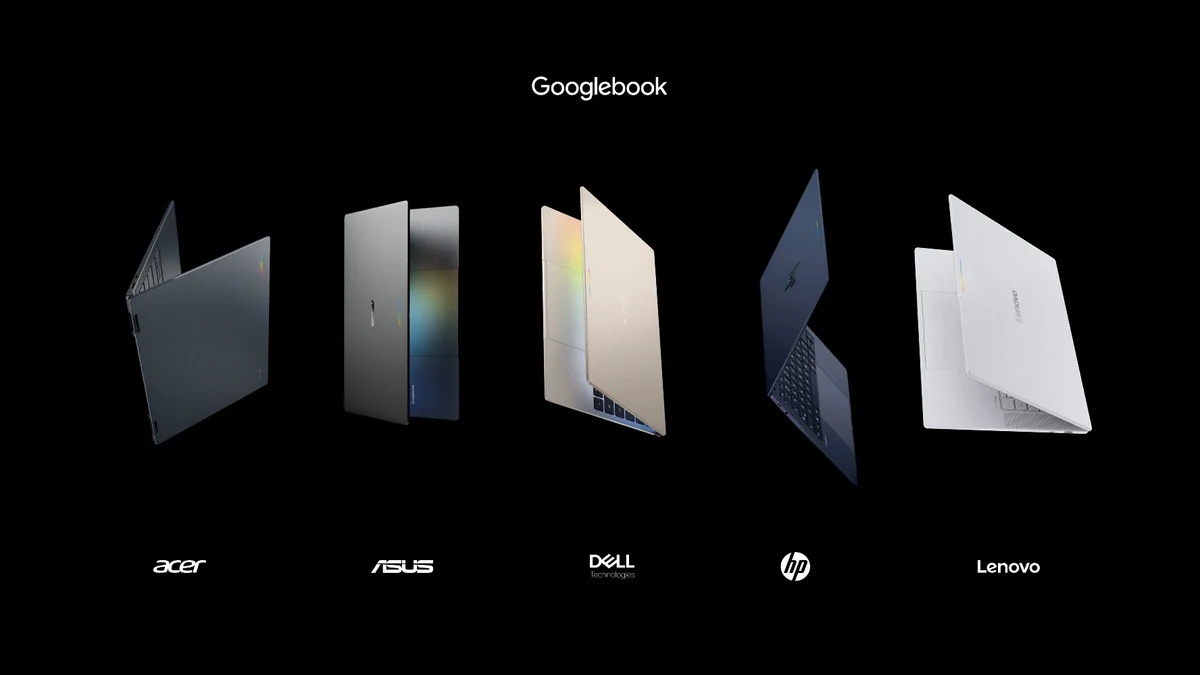
Google is positioning Googlebook as a premium portable-computing category rather than a new take on entry-level Chromebooks. The first five laptops, due in the United States on October 4, run Googlebook OS—a platform built on Android technology and desktop foundations developed for ChromeOS—and start at $899.
The most affordable model is Acer’s Googlebook 14, while the other launch systems begin between $1,199 and $1,299. That pricing places Googlebook against higher-end ultraportables, with a choice between Intel Core Ultra and Snapdragon X Elite hardware, OLED displays on several models, and configurations designed around lightweight mobile work.
Five approaches to Googlebook hardware

- Acer Googlebook 14: The only 2-in-1 convertible in the initial group. It has Intel Core Ultra 5 or Ultra 7 Series 3 processors, a 14-inch 2880 x 1800 OLED touchscreen, 16GB of RAM, 256GB or 512GB of storage, and a weight of about 2.5 pounds. Pricing starts at $899.
- ASUS Googlebook 14: An approximately 2.2-pound laptop with Intel Core Ultra 5 or Ultra 7 Series 3 processors, a 14-inch 3K OLED touchscreen, 16GB or 32GB of RAM, and 256GB or 512GB of storage. It retains HDMI and two USB-A ports. Pricing starts at $1,299.
- XPS Googlebook: A roughly 2.2-pound Snapdragon X Elite model with a 13.4-inch 2560 x 1600 touchscreen, 16GB or 32GB of RAM, and a 512GB SSD. Its physical connectivity is limited to two USB-C ports. Pricing starts at $1,199.
- HP Googlebook 14: A Snapdragon X Elite laptop with an all-aluminum chassis, face authentication, a fingerprint sensor, and storage configurations reaching 1TB. Pricing starts at $1,299.
- Lenovo Googlebook 15: The largest launch model, with a 15.3-inch 2880 x 1800 OLED touchscreen, an Intel Core Ultra processor, magnesium-and-carbon-fiber construction, and a weight of about 2.8 pounds. Pricing starts at $1,299.
Android phone continuity is the central pitch
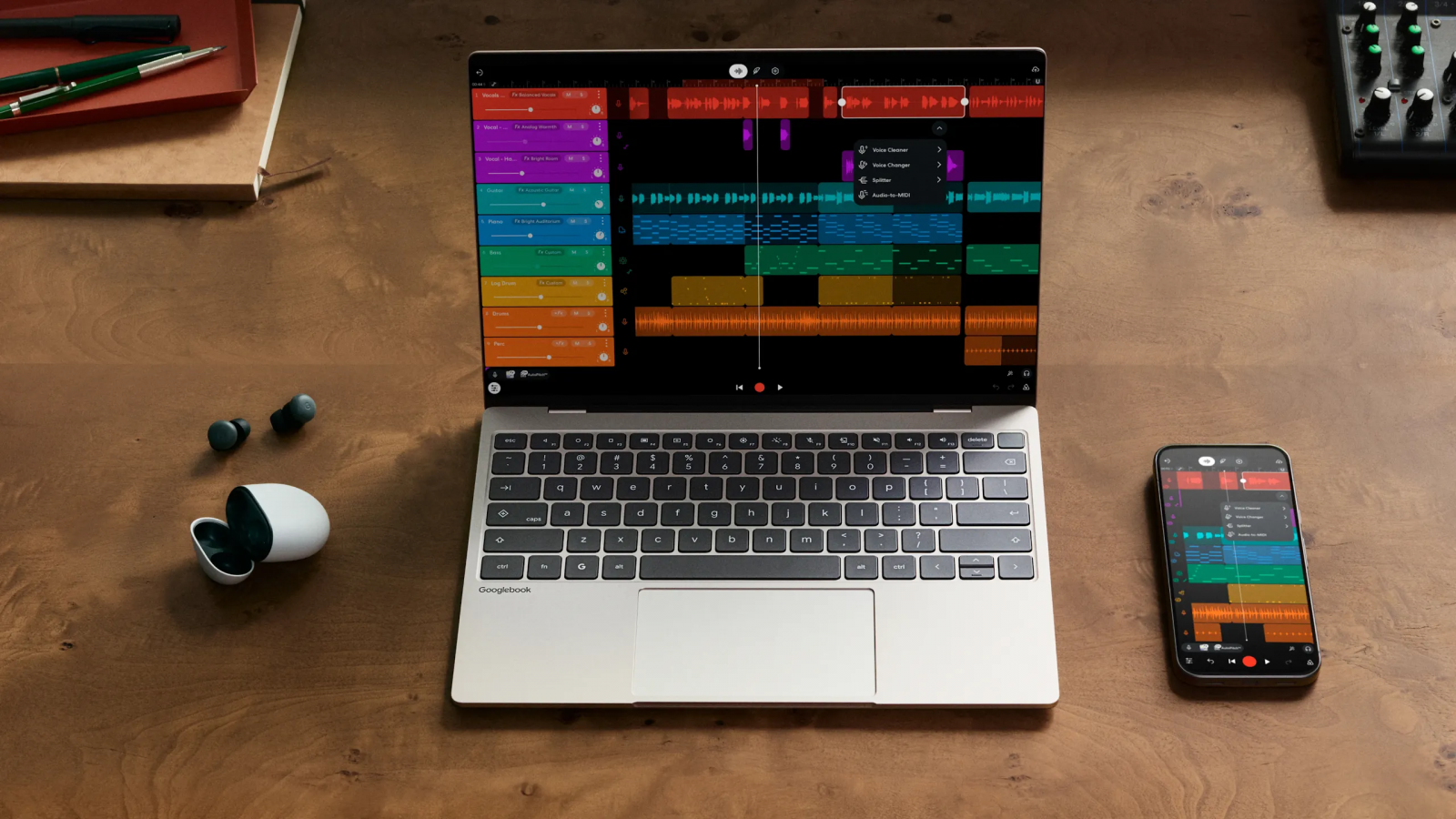
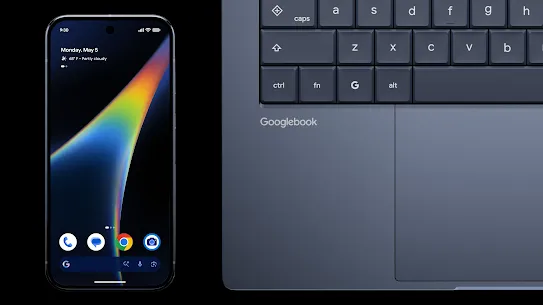
Googlebook systems are designed to work with phones running Android 17 or later. Continue On can move an in-progress phone activity to the laptop taskbar, while Files provides access to phone files and photos. Cast My Apps is intended to open phone apps in a desktop window, extending Google’s effort to make Android and desktop workflows feel more connected.
Gemini is also integrated into the operating system. Magic Pointer can analyze the item beneath the cursor; Rambler turns free-form dictation into structured text; and Create My Widget generates widgets from a written description. Googlebook retains desktop Chrome with extensions, Google Play apps, and a Linux terminal. Google says this generation will receive up to 10 years of updates.
The initial lineup gives buyers a meaningful form-factor split, from Acer’s convertible to Lenovo’s larger OLED notebook and Snapdragon-based systems from Dell XPS and HP. U.S. shoppers will be able to judge whether Googlebook’s Android continuity features justify its premium-laptop pricing when the first systems arrive October 4.
Post Footer automatically generated by Add Post Footer Plugin for wordpress.