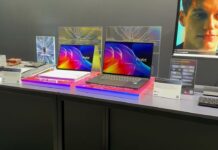
MSI’s latest portable-computing showcase in Berlin makes a case for radically different kinds of performance. At one end is the Claw 8 EX AI+, a Windows gaming handheld redesigned around long-session comfort. At the other is the Prestige N16 Flip AI+, a 16-inch convertible built on NVIDIA’s RTX Spark platform for running demanding AI workloads locally. Between them sits an expanded collection of gaming laptops, ultralight productivity machines, and a limited-edition Titan intended to celebrate MSI’s 40th anniversary in 2026.
A Claw handheld built for a firmer grip
The Claw 8 EX AI+ addresses a basic limitation of many Windows handhelds: their relatively flat bodies can be tiring to hold. MSI has added pronounced rear grips, giving the device a shape closer to an Xbox controller. That matters on a handheld that weighs nearly 800 grams, particularly for extended PC gaming away from a desk.


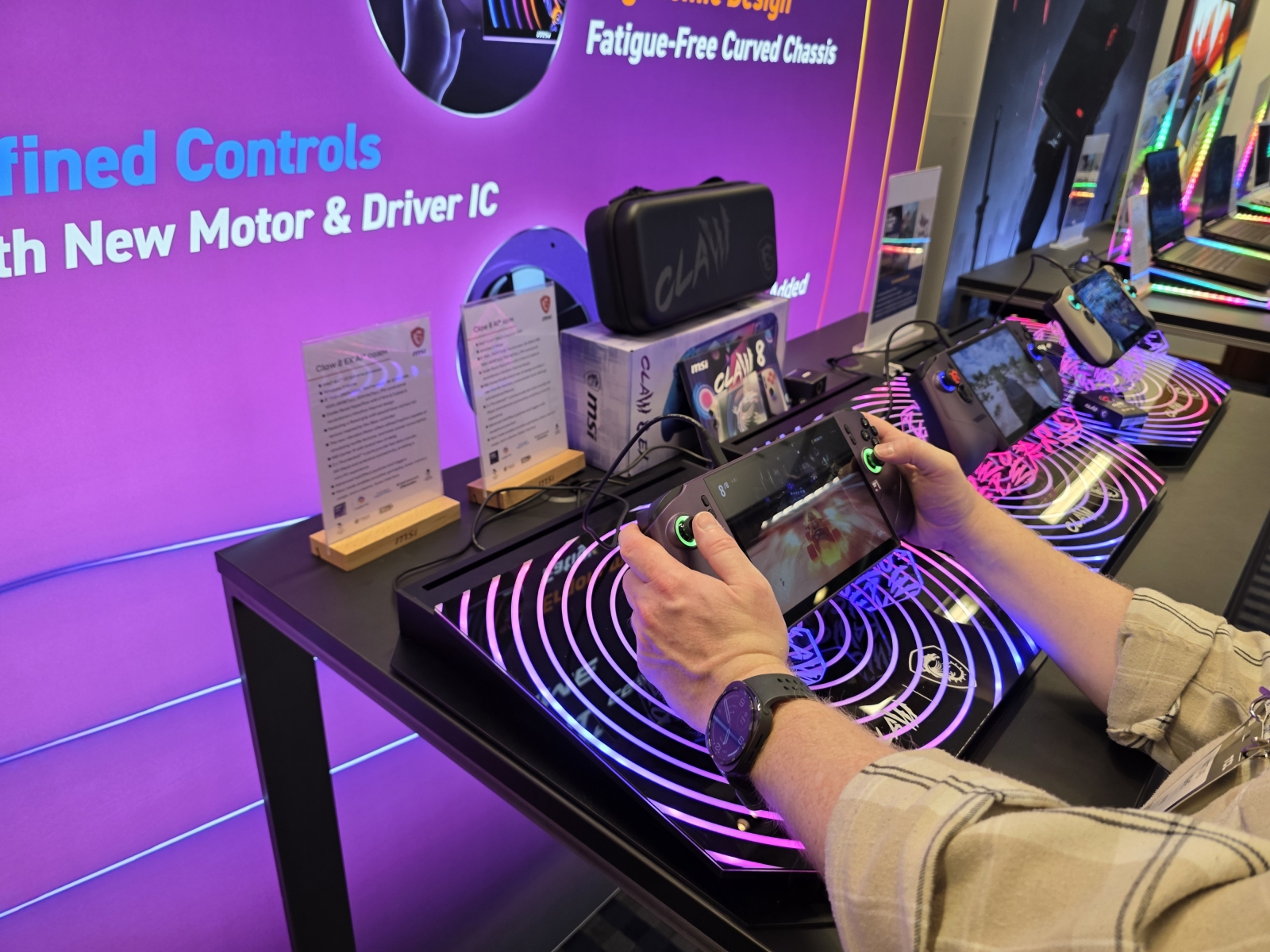
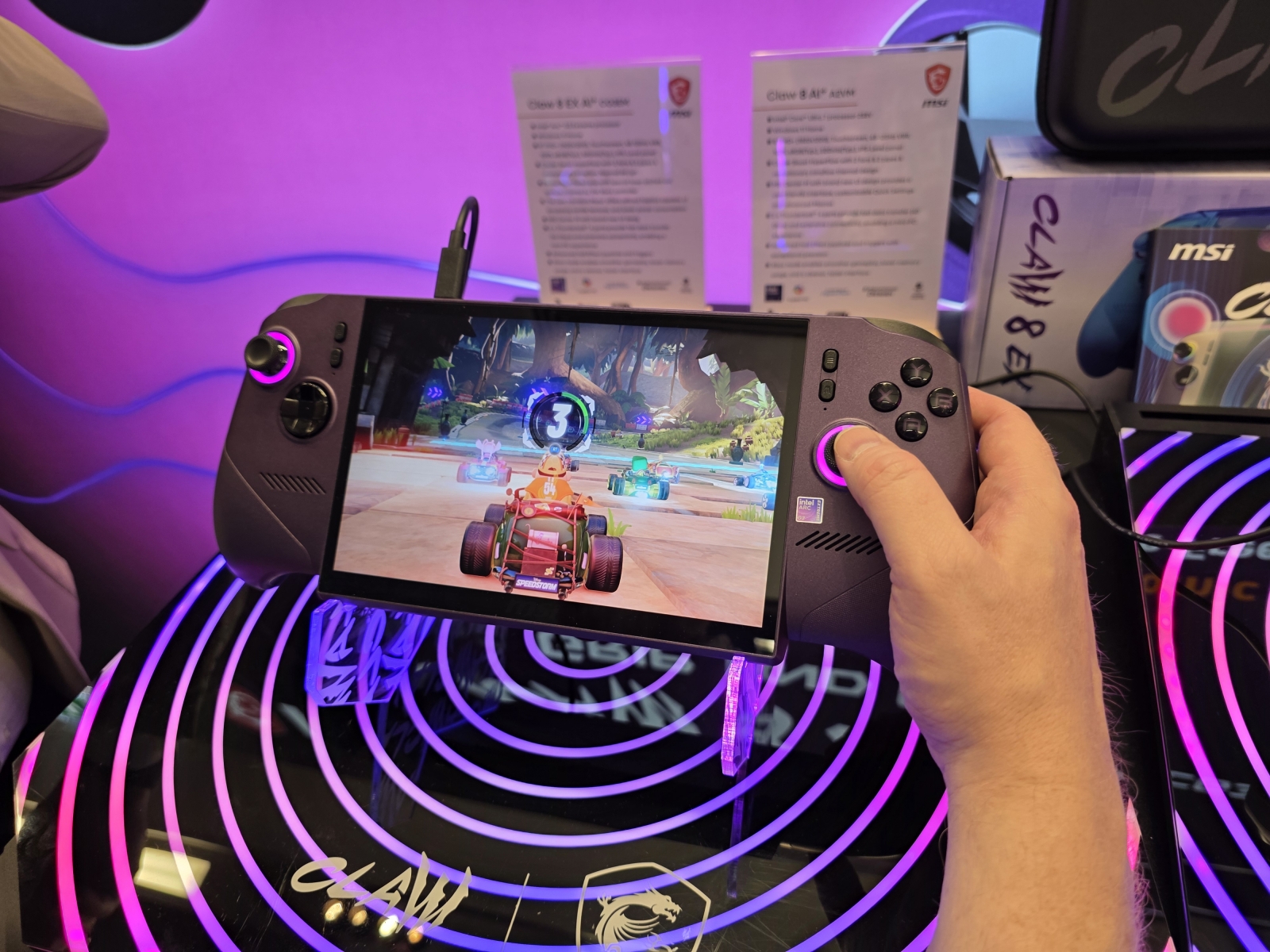

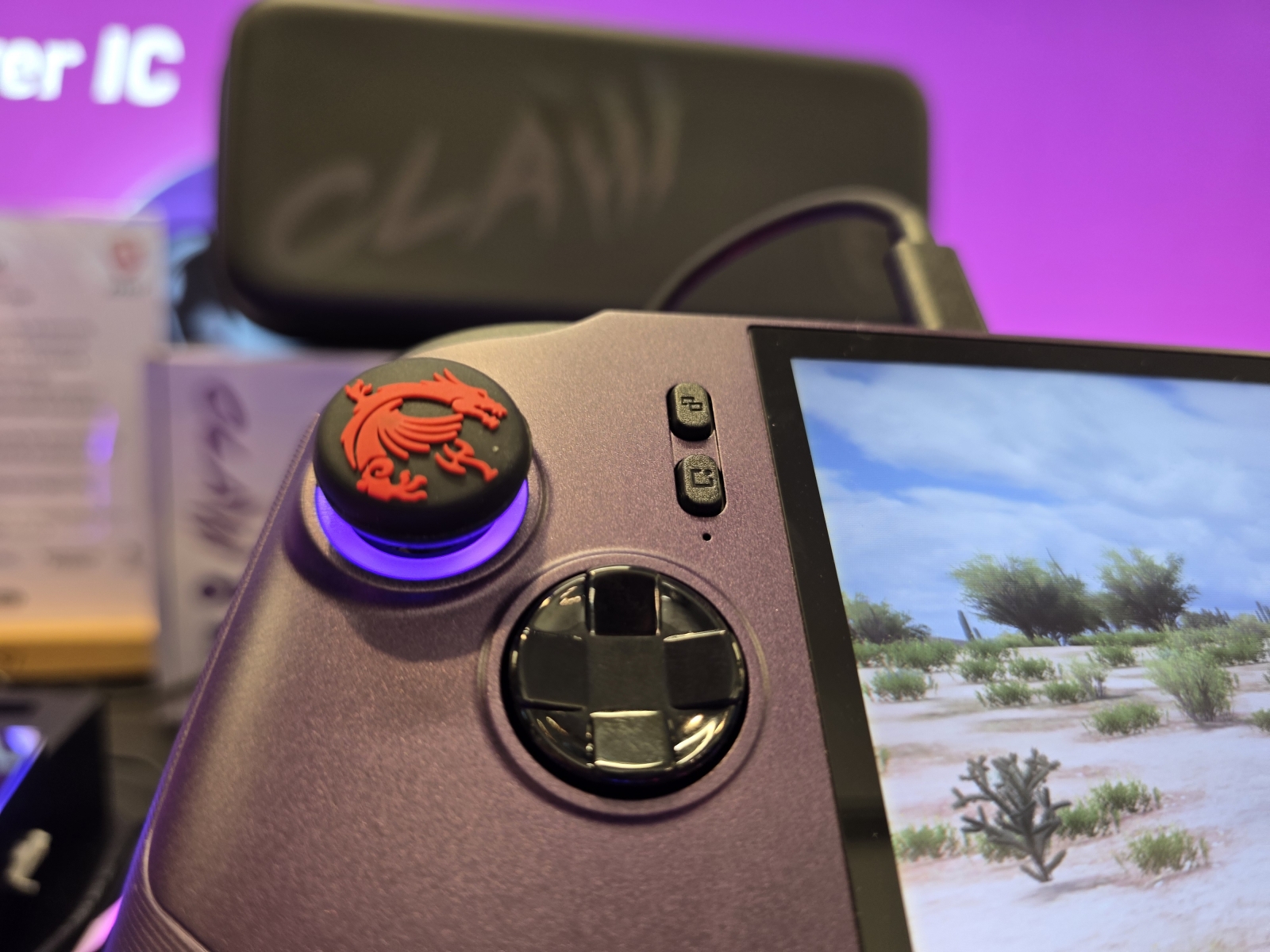

Its 8-inch display runs at 1,920 × 1,200 and supports variable refresh rates from 48Hz to 120Hz. The hardware includes Intel Arc G3 Extreme graphics with an Arc B390 GPU, an 80Wh battery, Hall Effect sticks and triggers, improved haptics, and two Thunderbolt 4 ports. MSI Center M also adds Xbox Mode on top of Windows 11, aiming to make the interface less dependent on mouse-oriented menus.
From more serviceable gaming laptops to a 3.6kg anniversary flagship
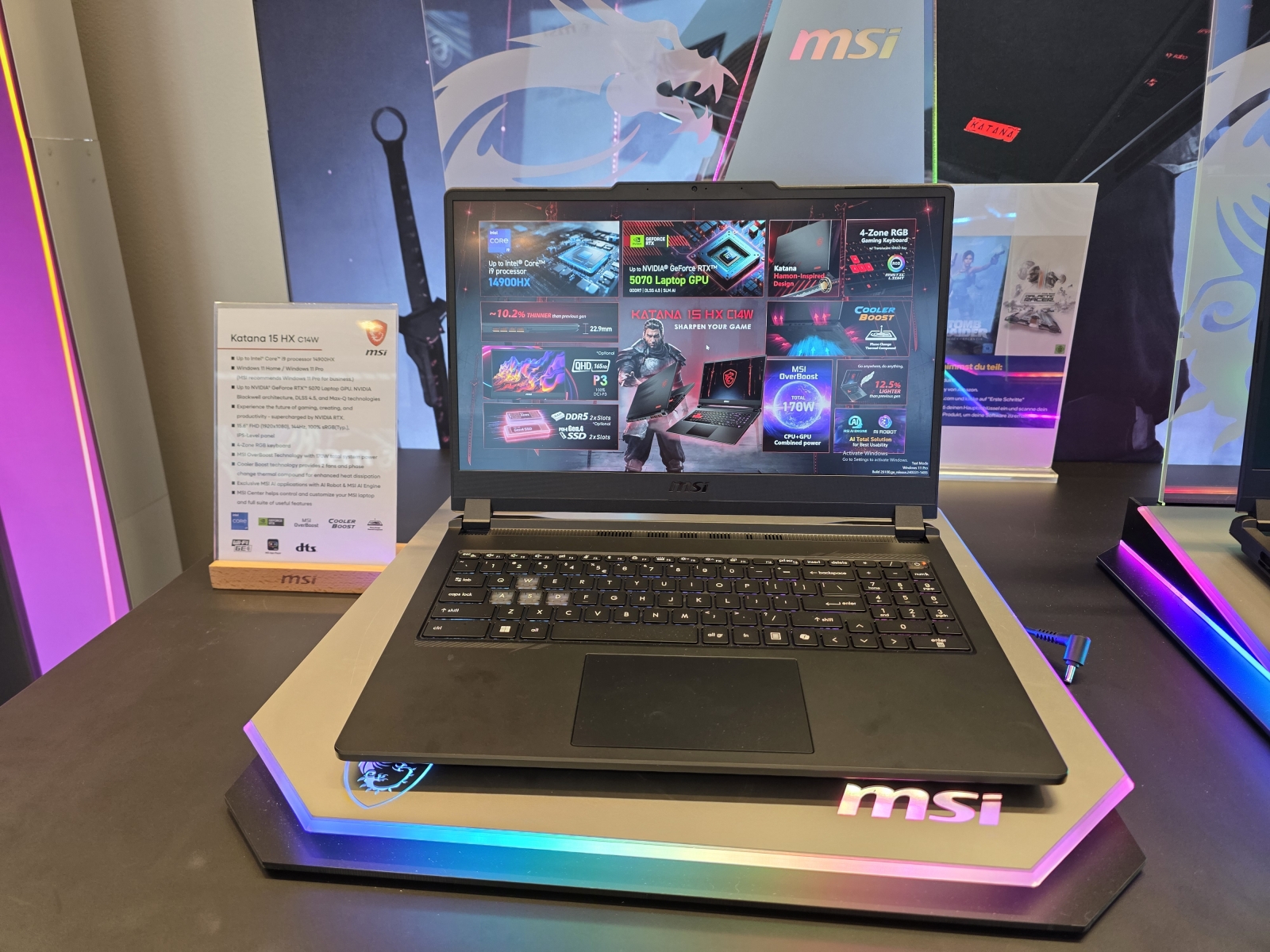
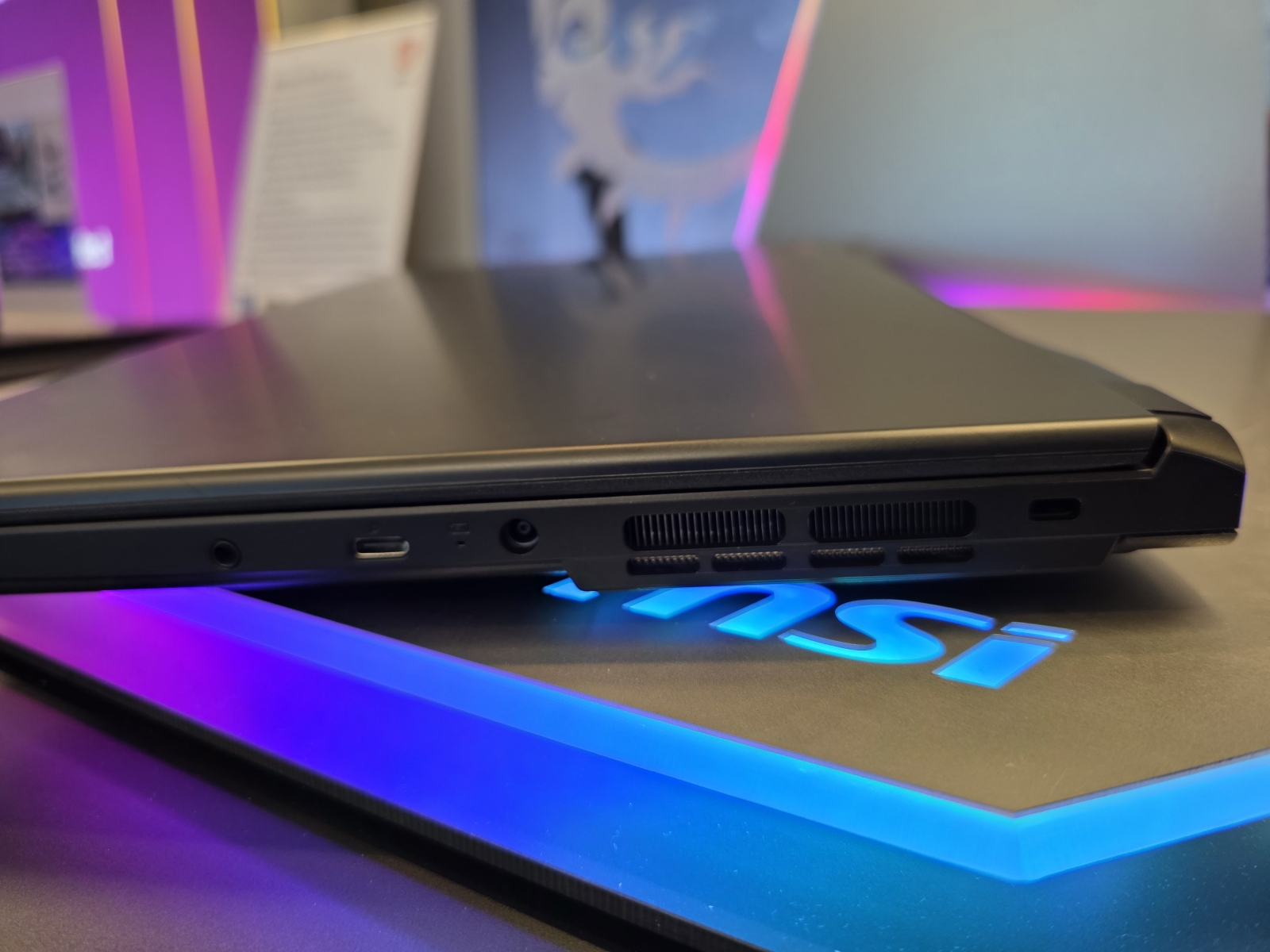
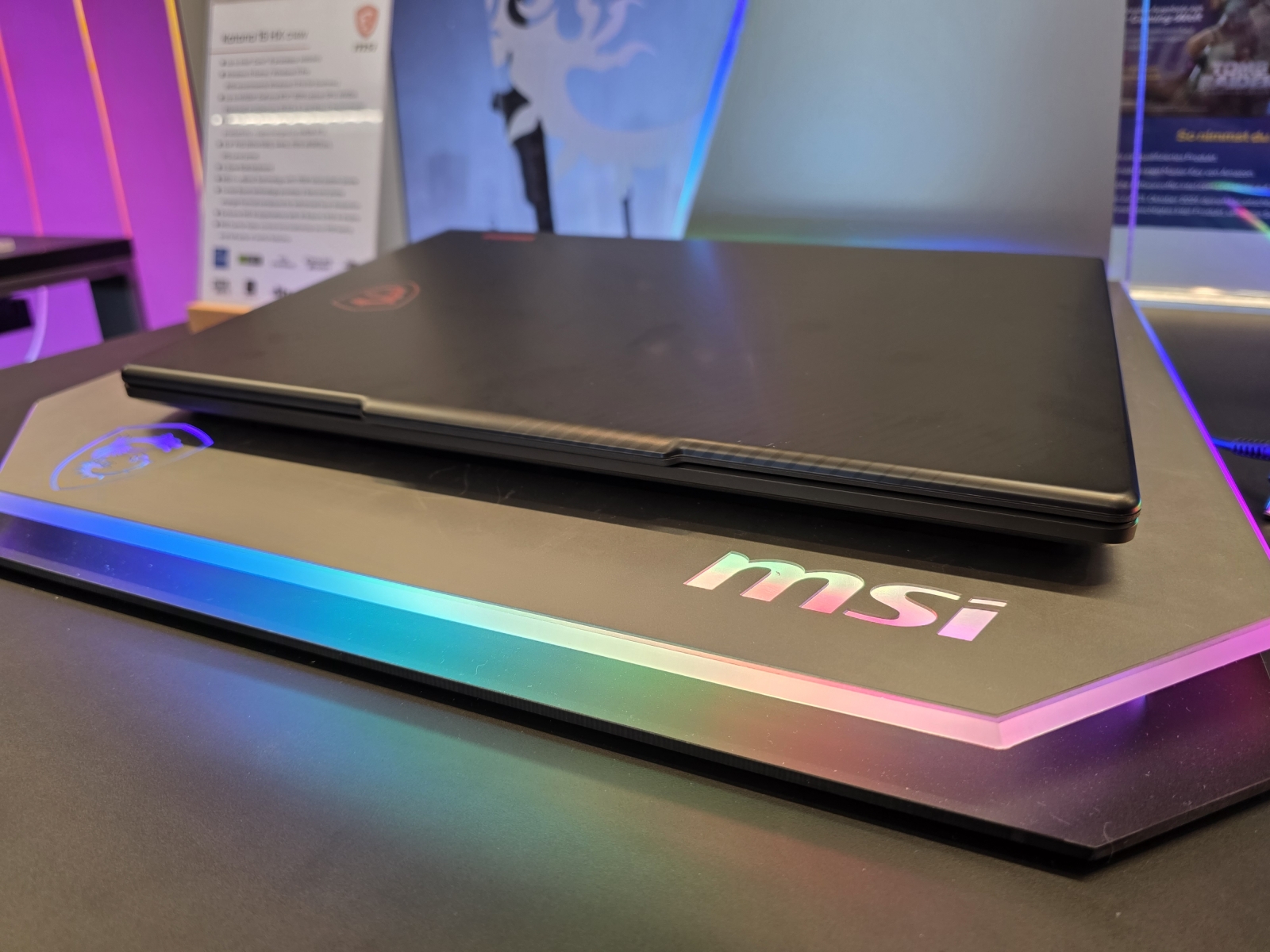
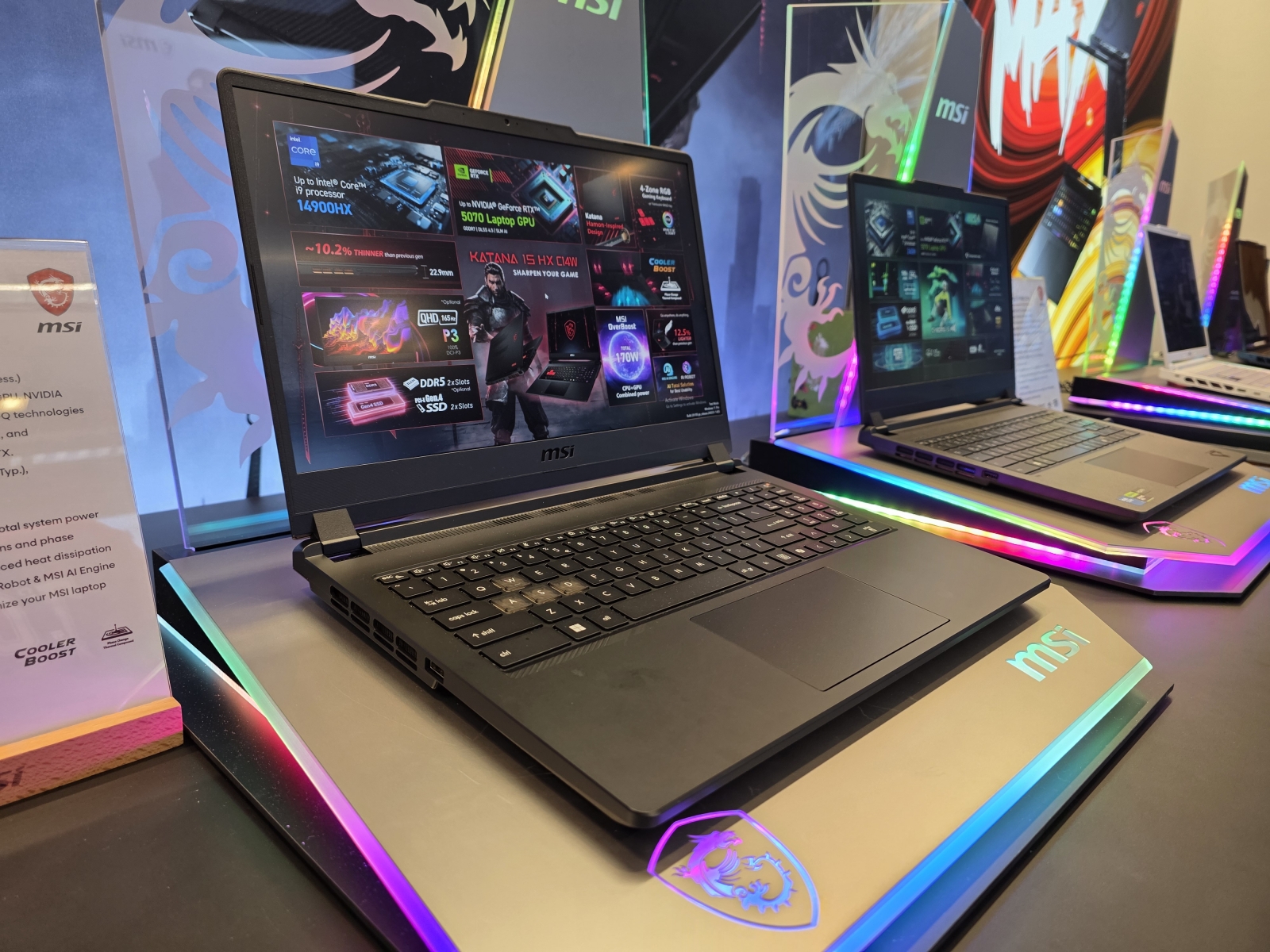
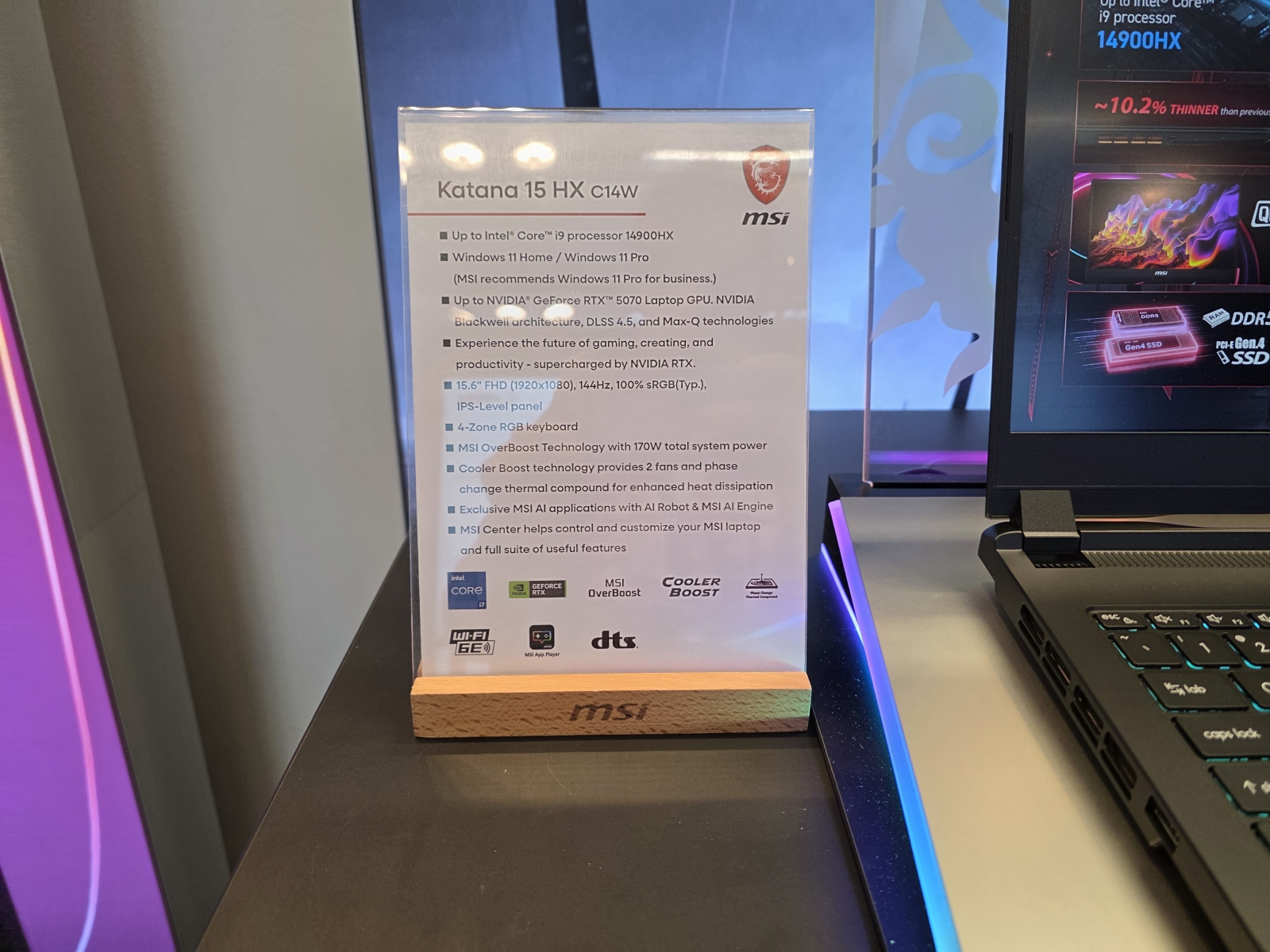
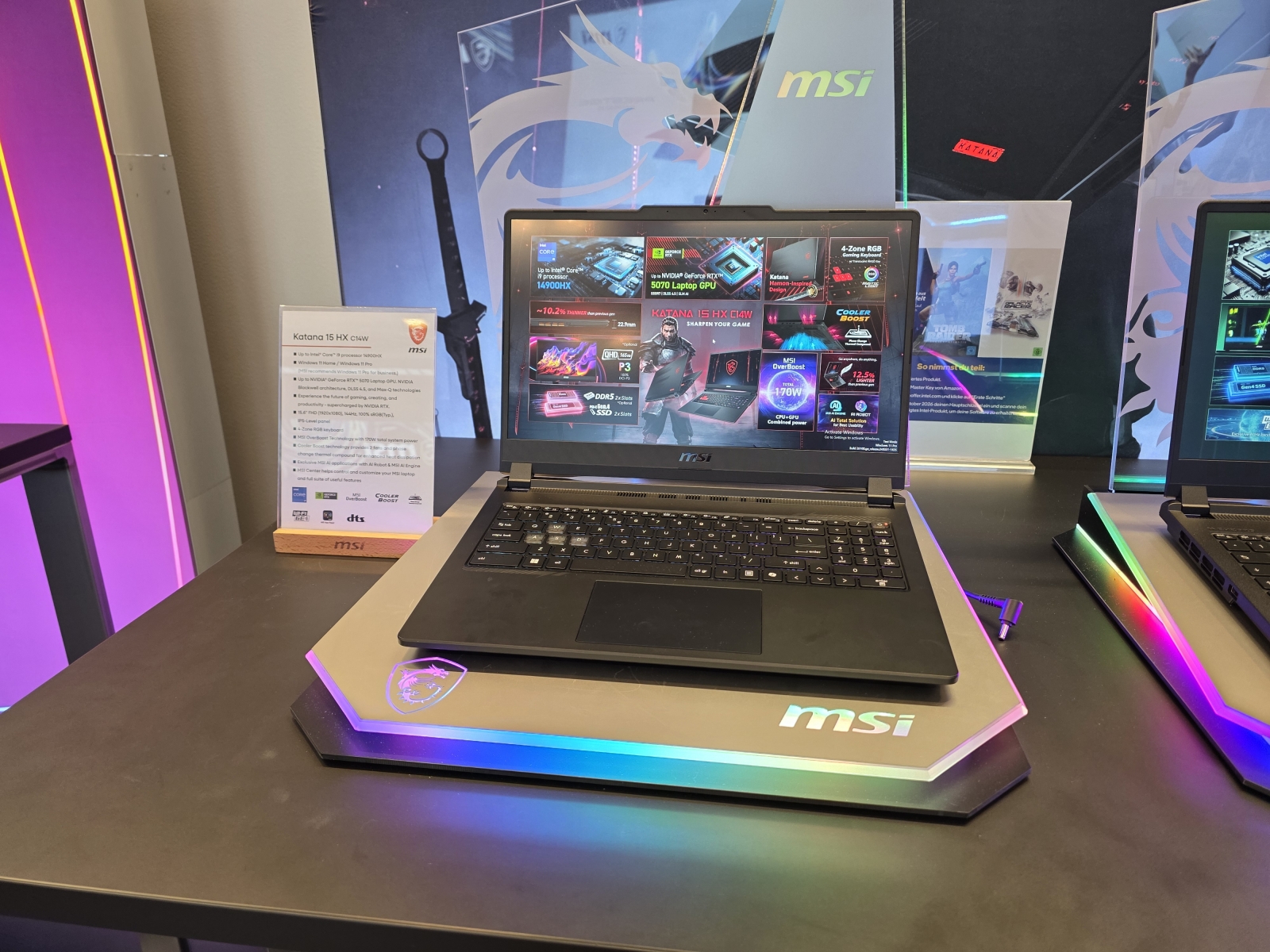
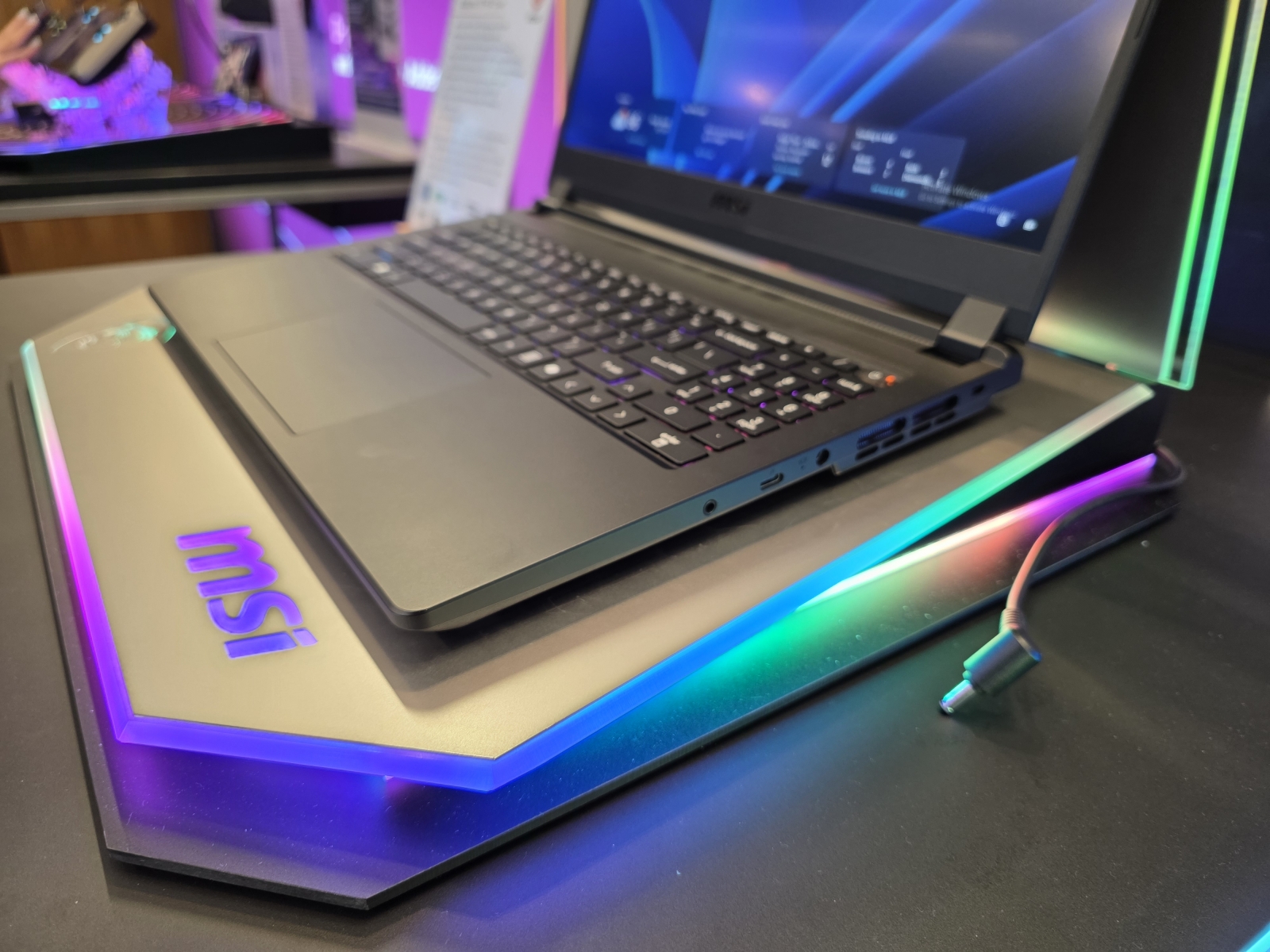
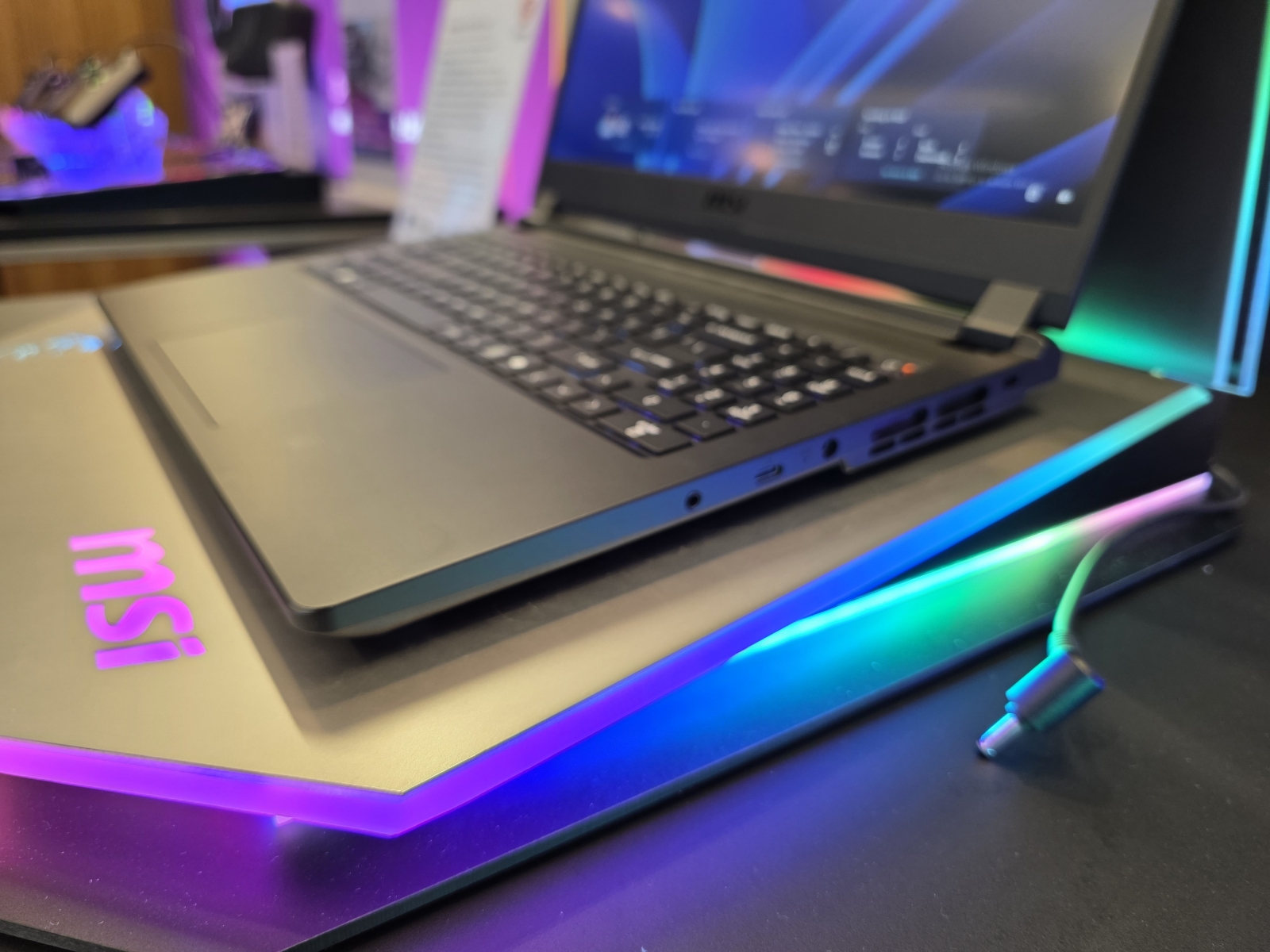
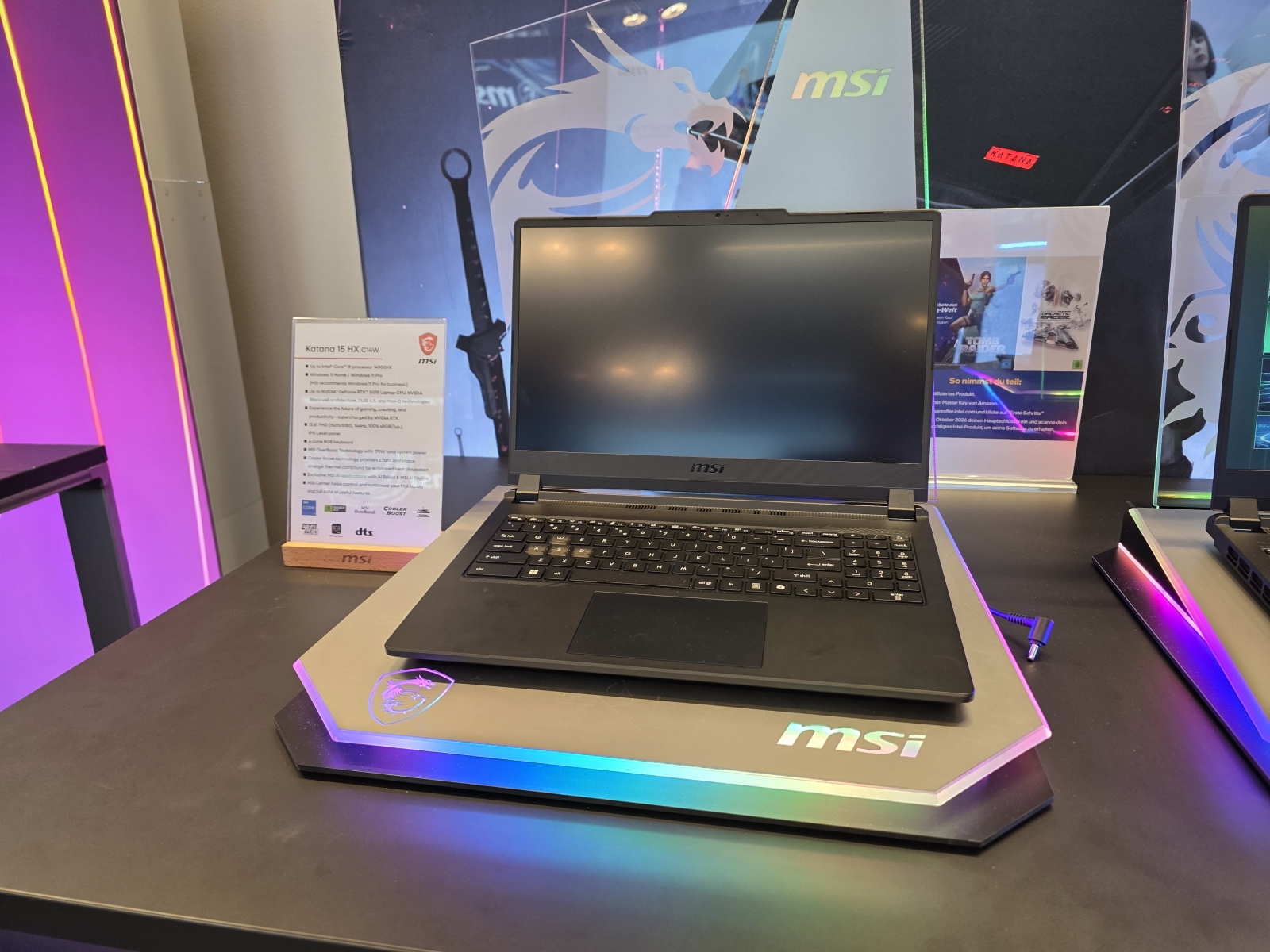
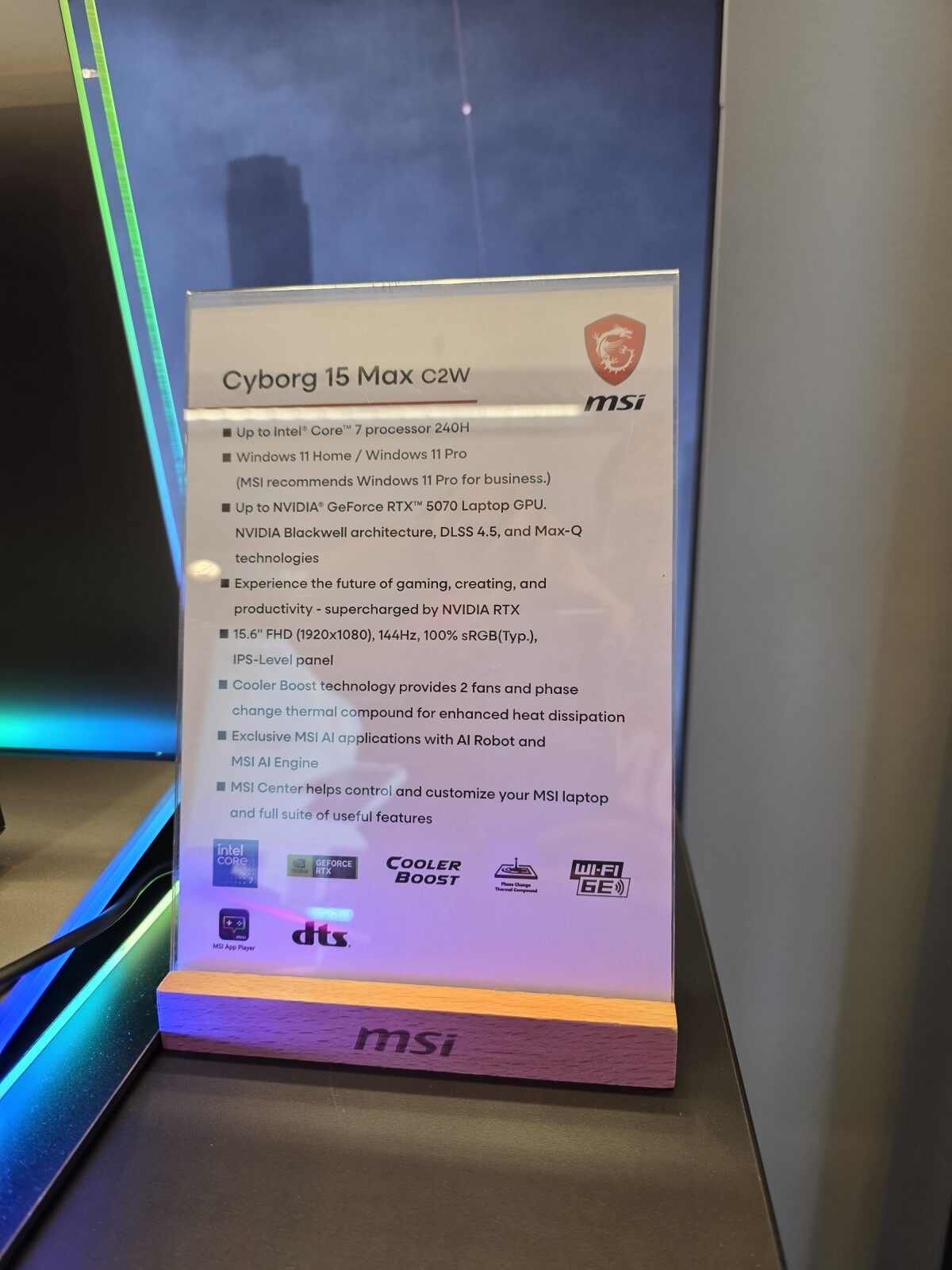
MSI’s gaming range covers several performance tiers. The Katana 15 HX reaches up to an Intel Core i9-14900HX and an RTX 5070, with 170W of combined CPU and GPU power. It can be configured with a 15.6-inch QHD 165Hz display, while MSI says its redesigned chassis weighs 2.1kg and is more than 10% thinner than the prior generation.
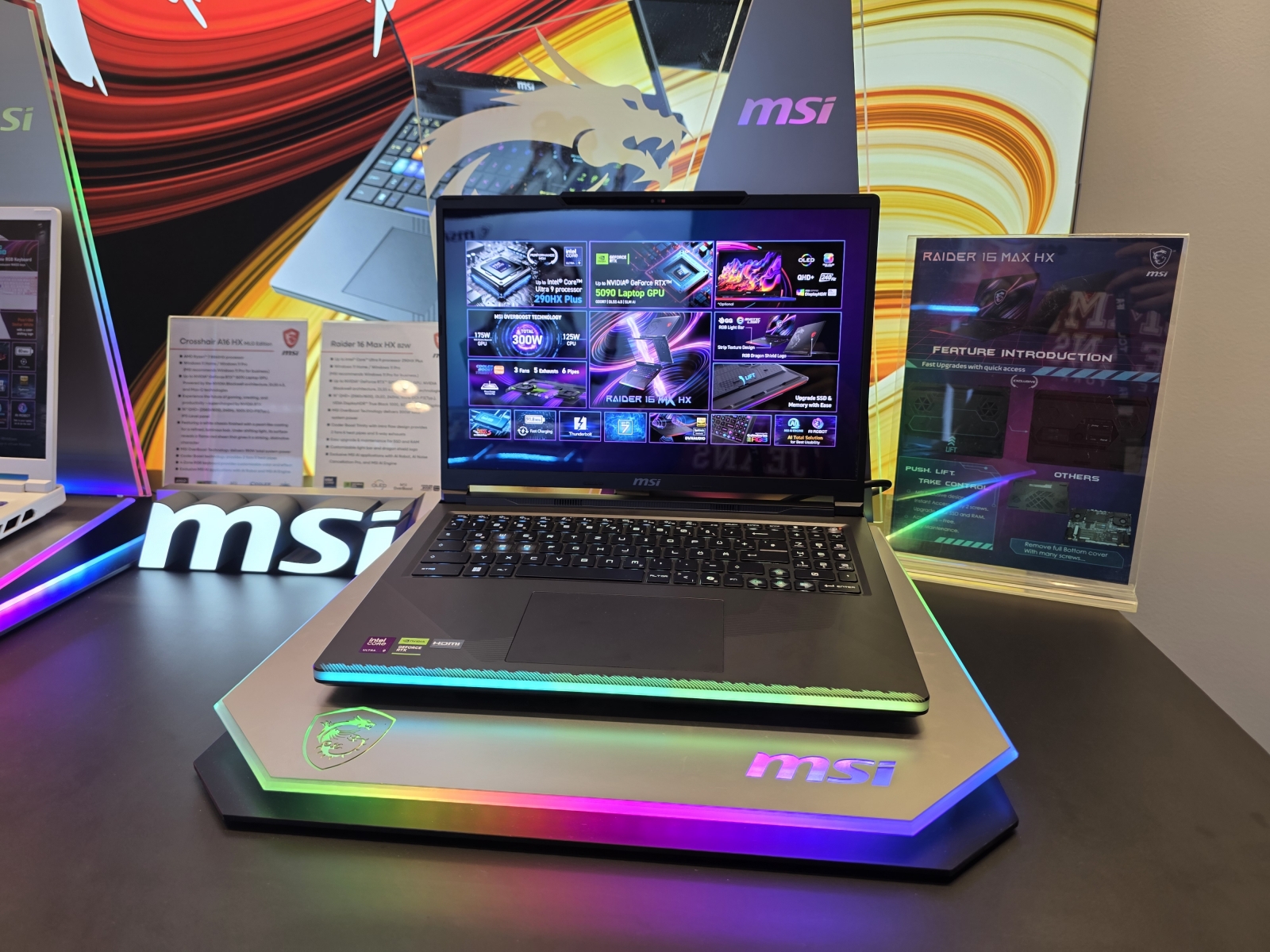
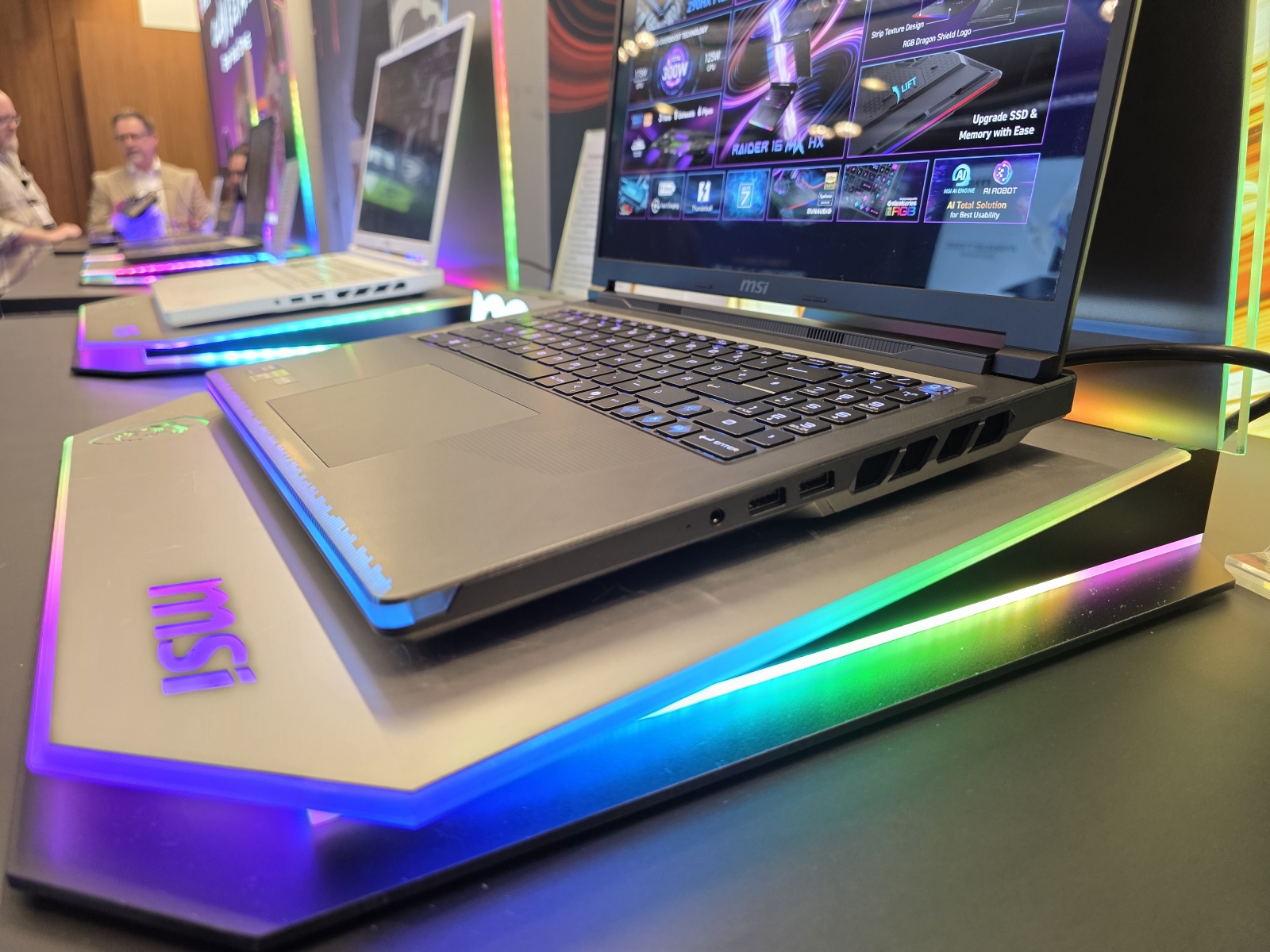

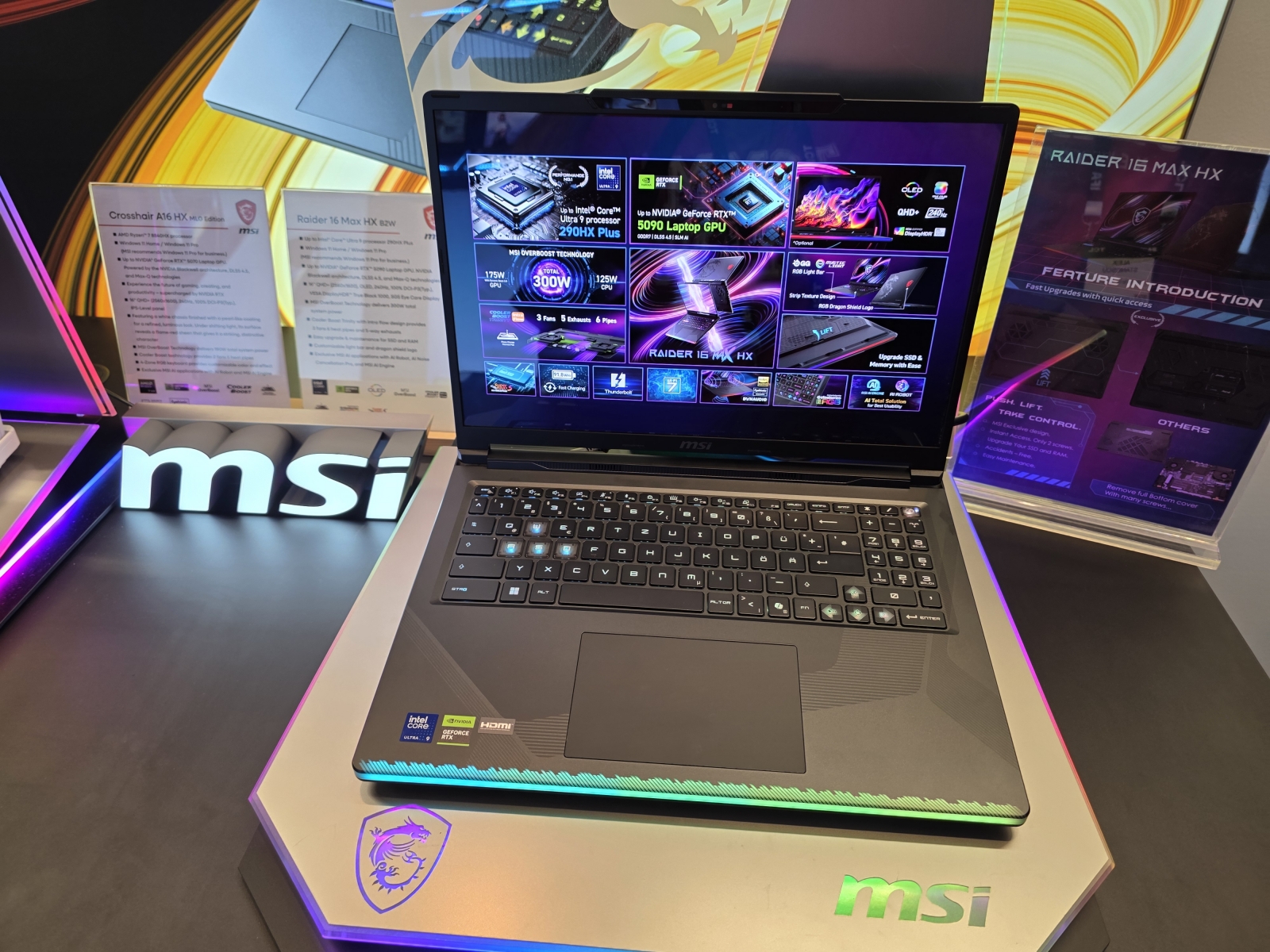
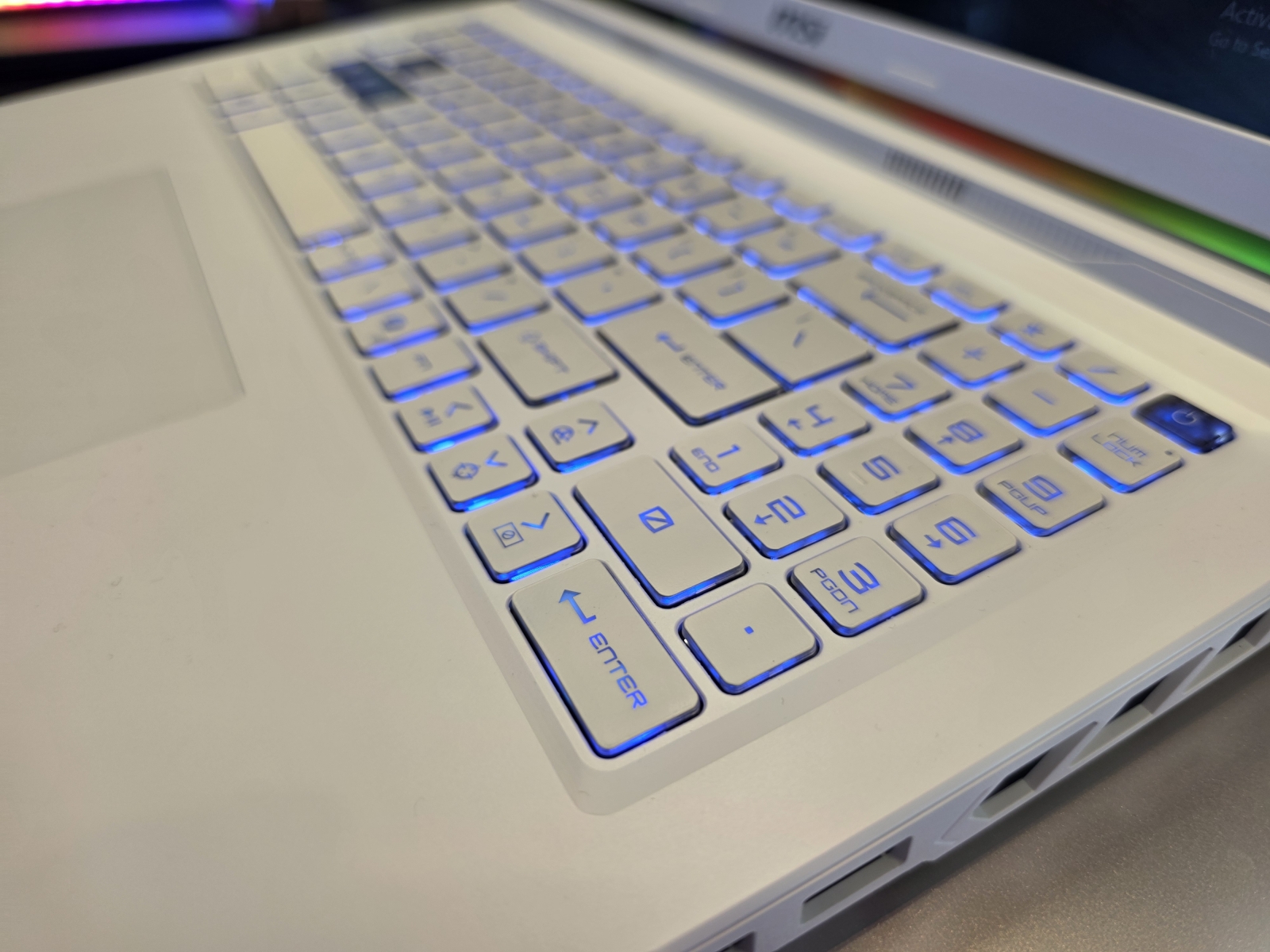
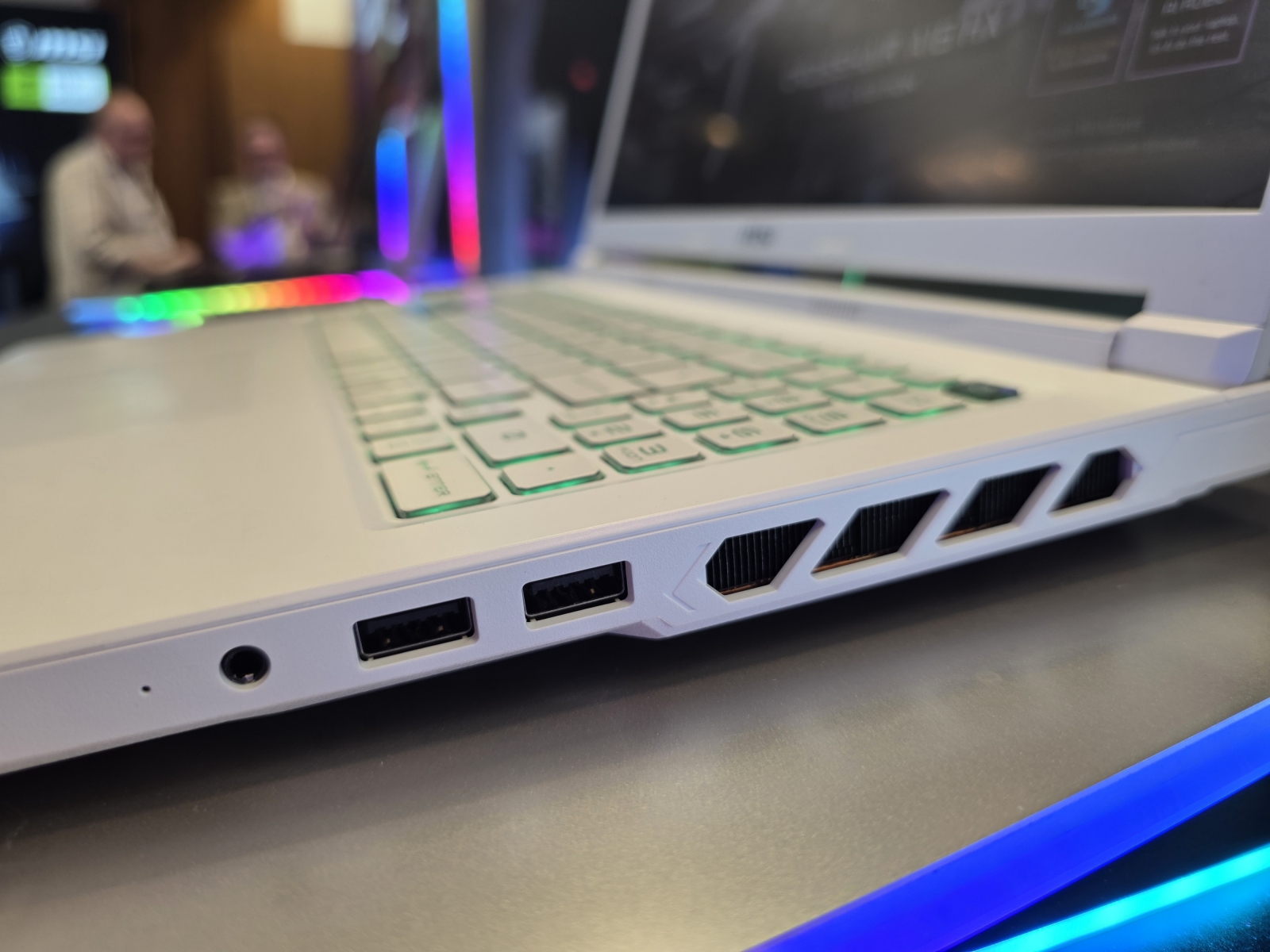


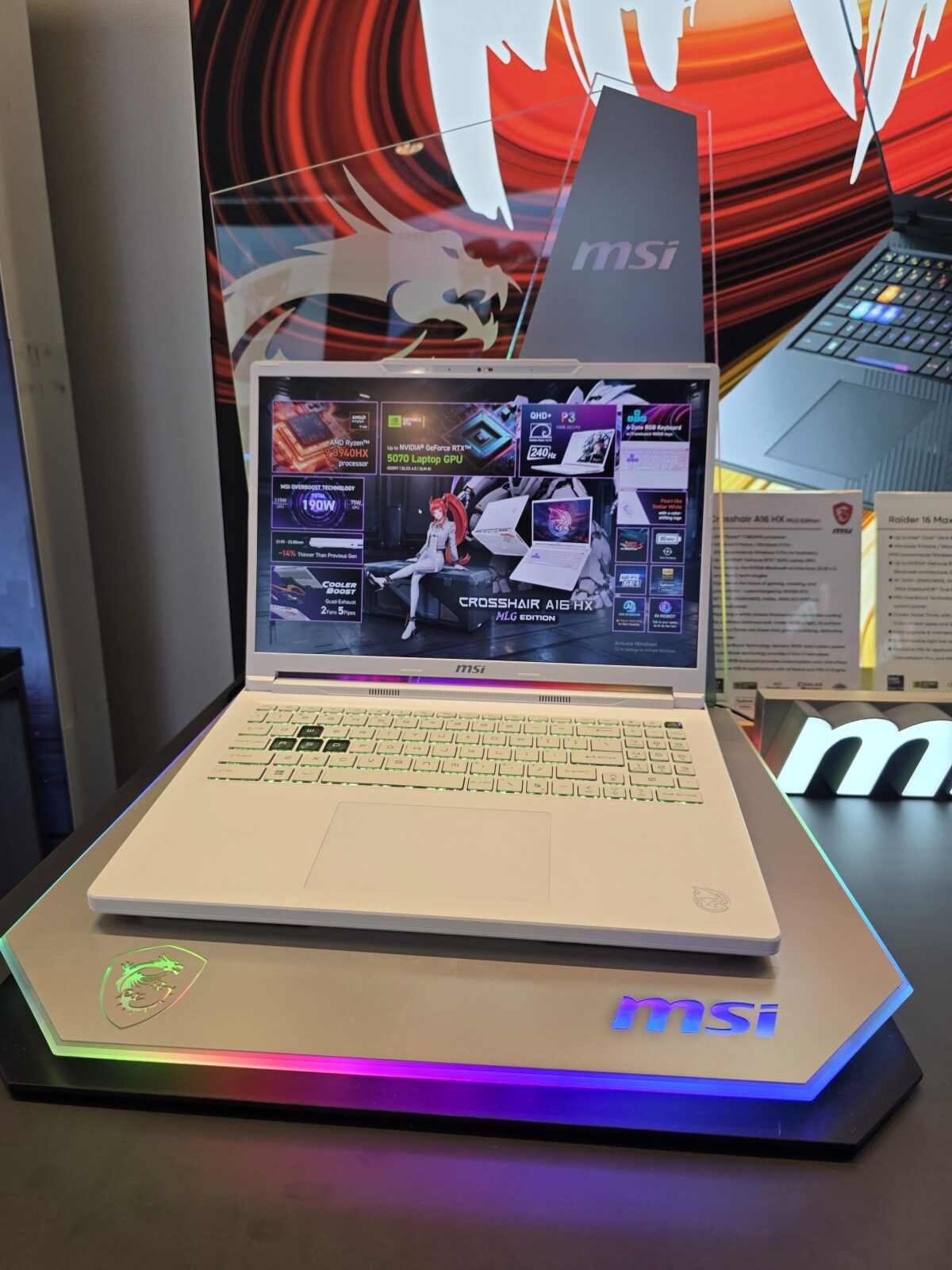
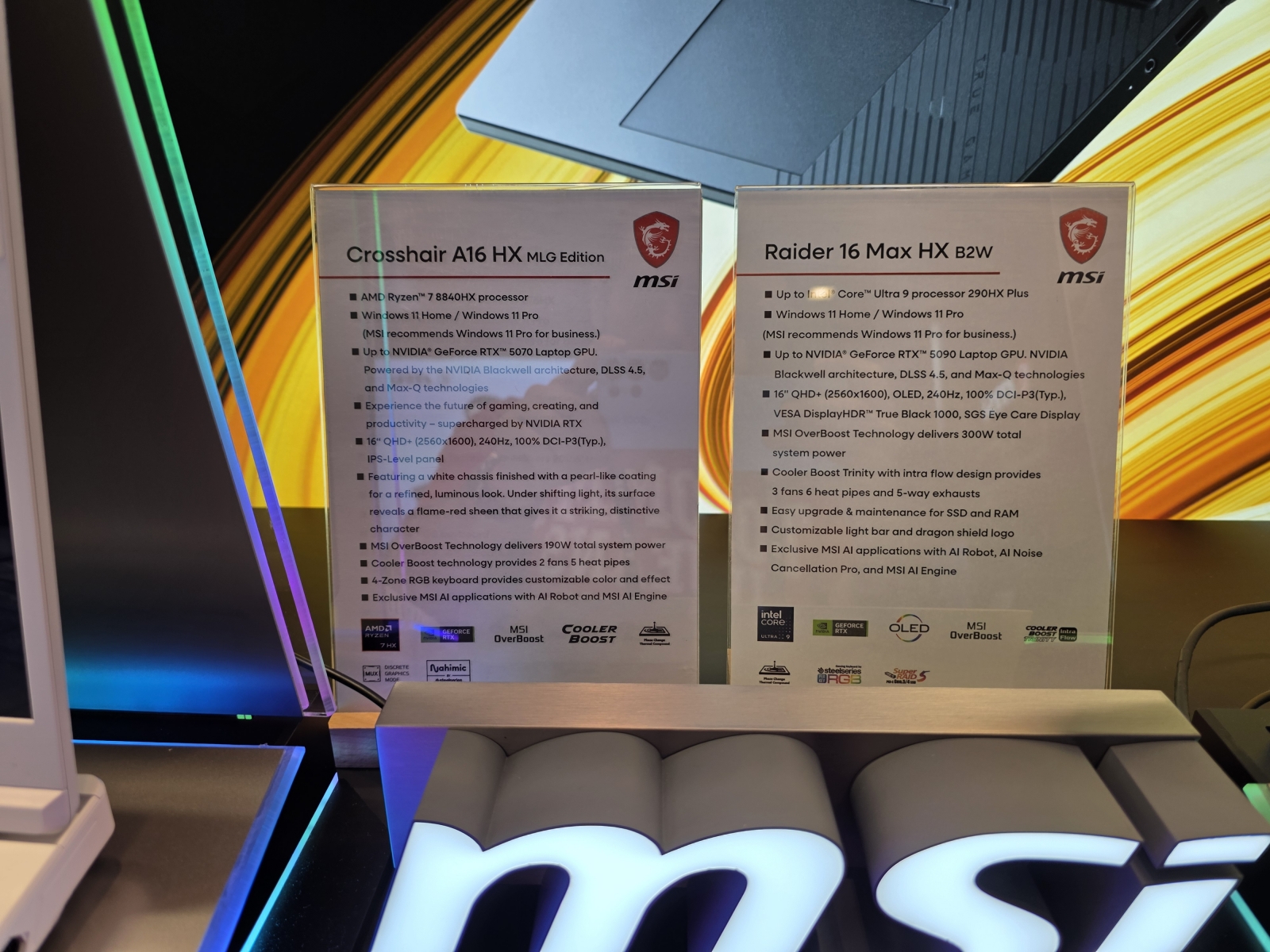




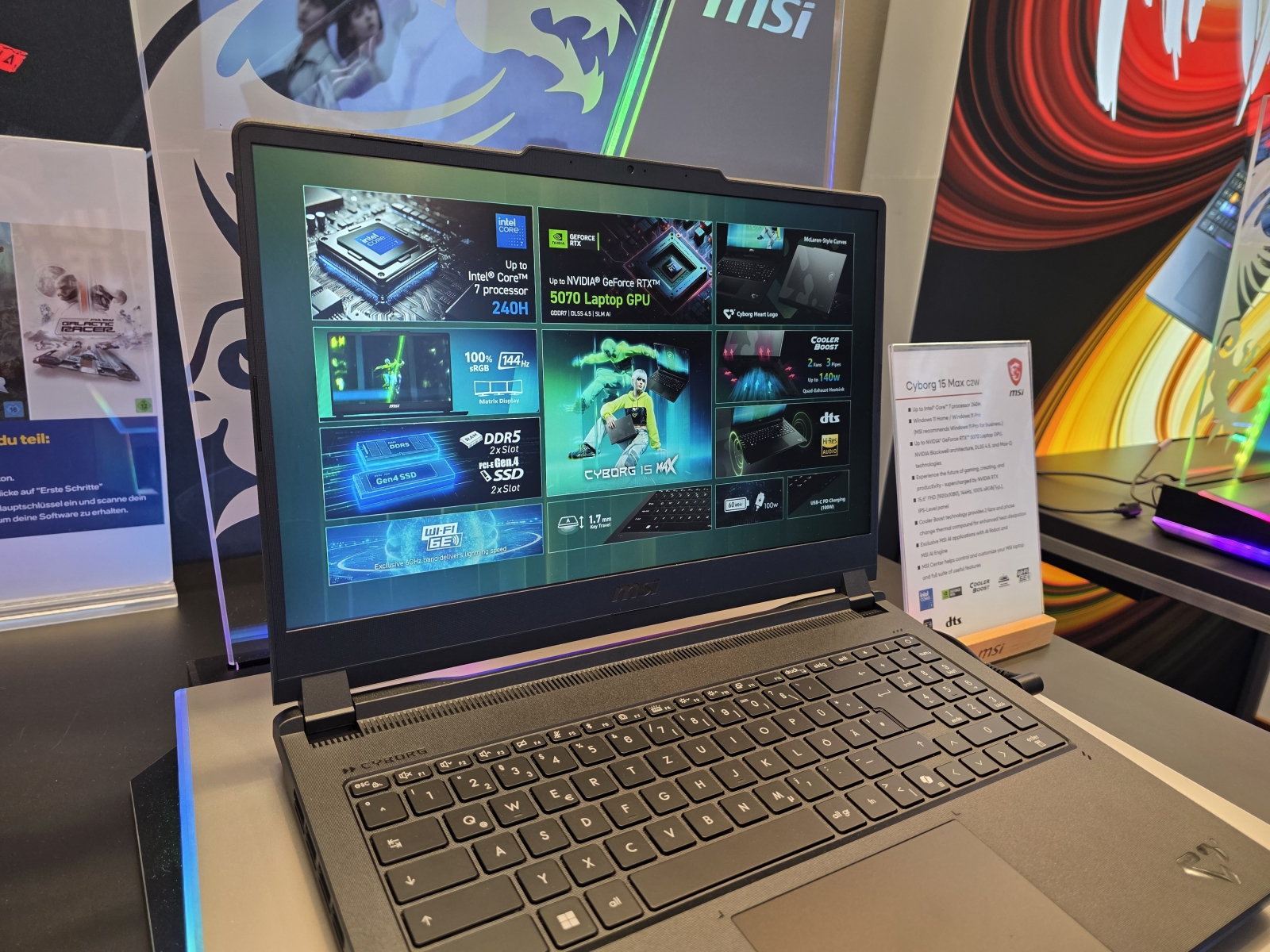
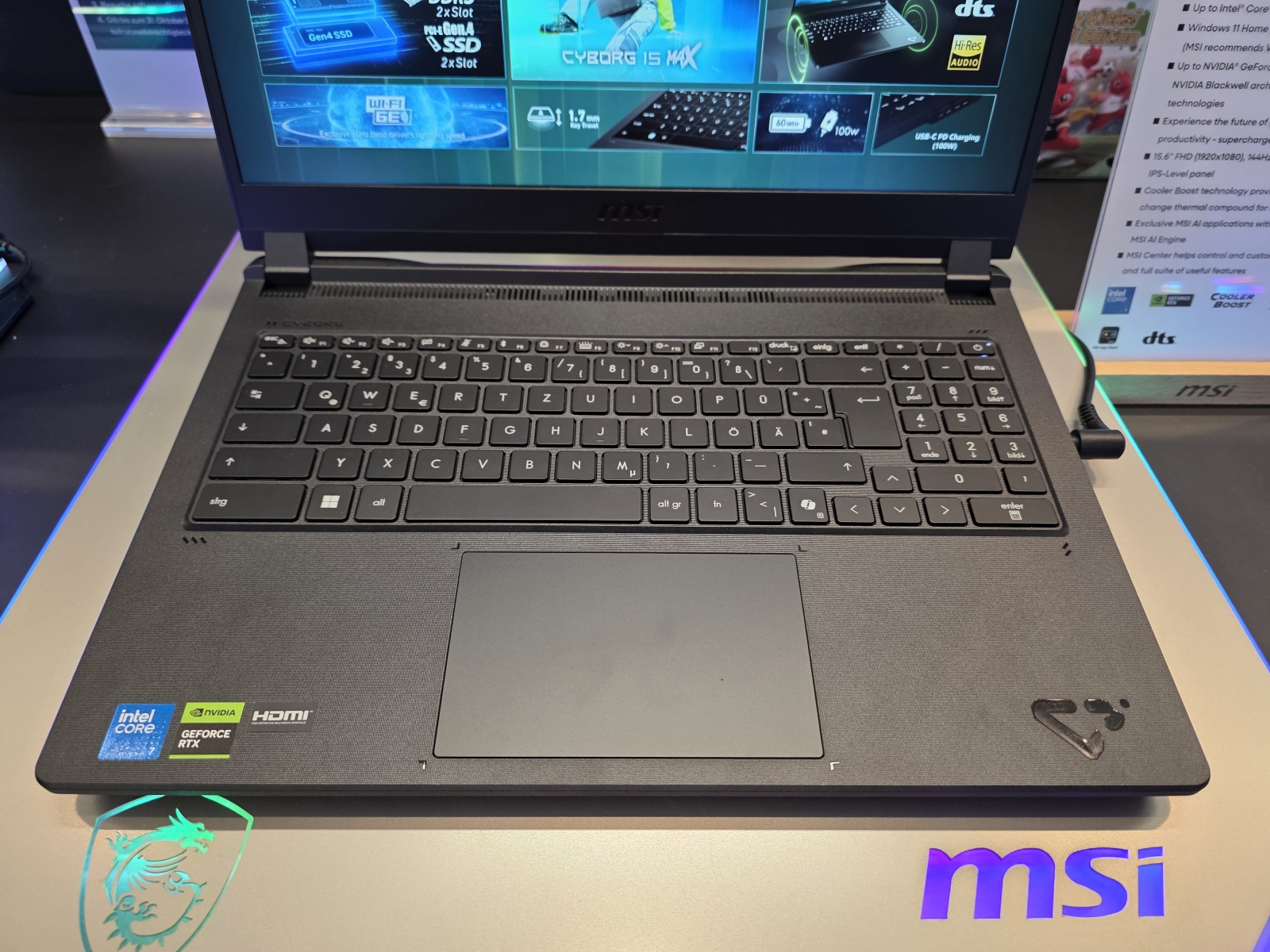
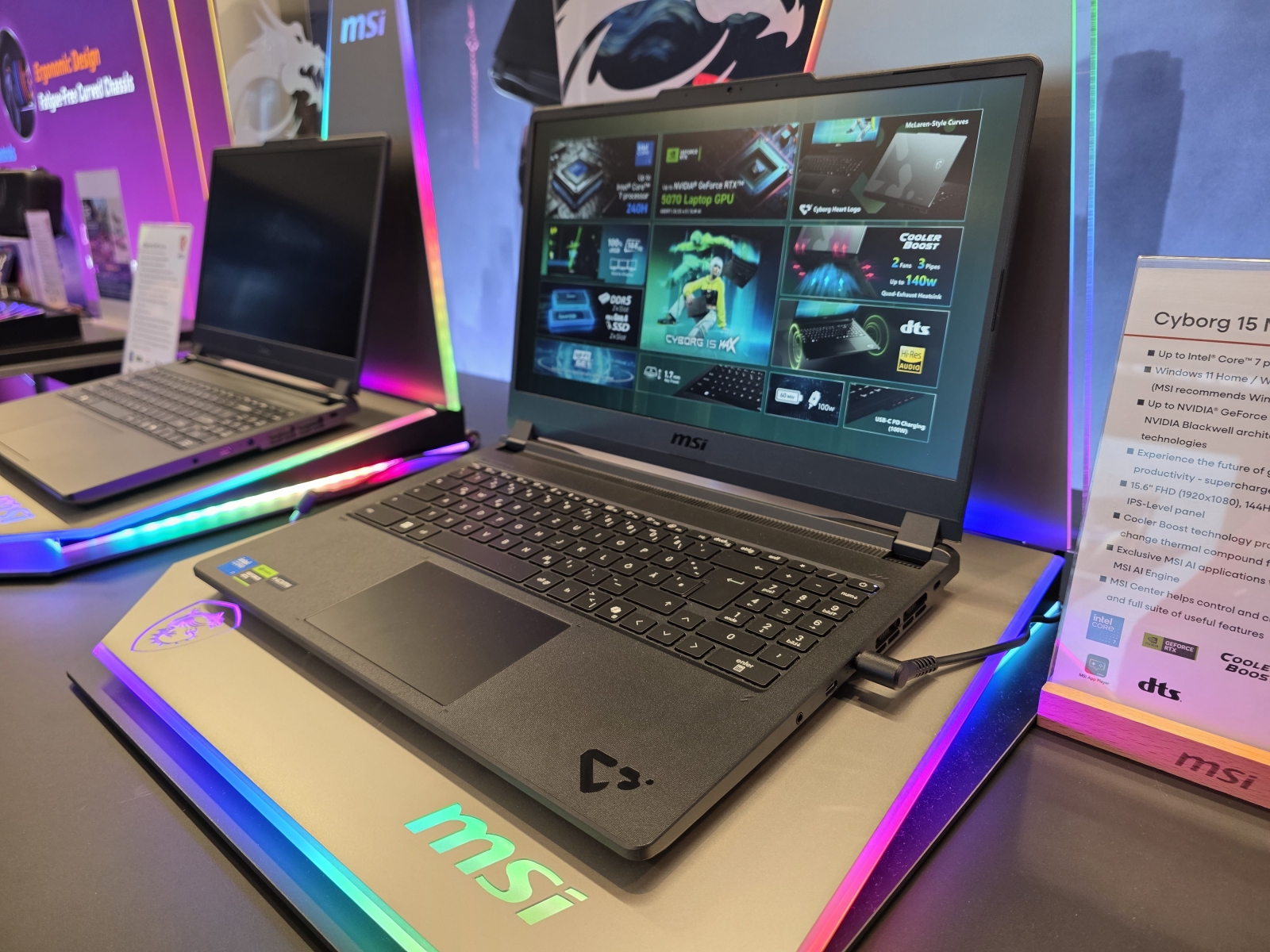
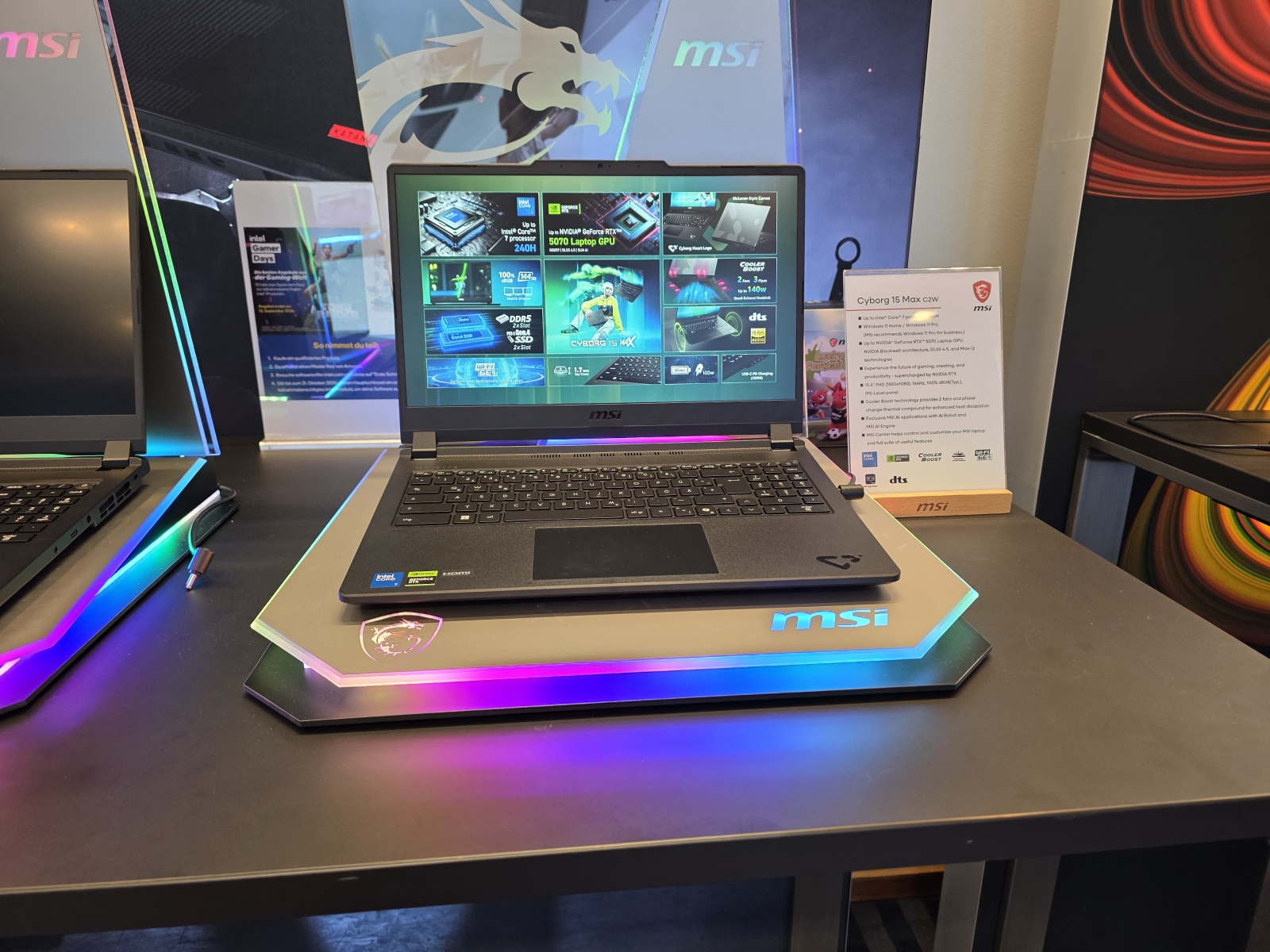
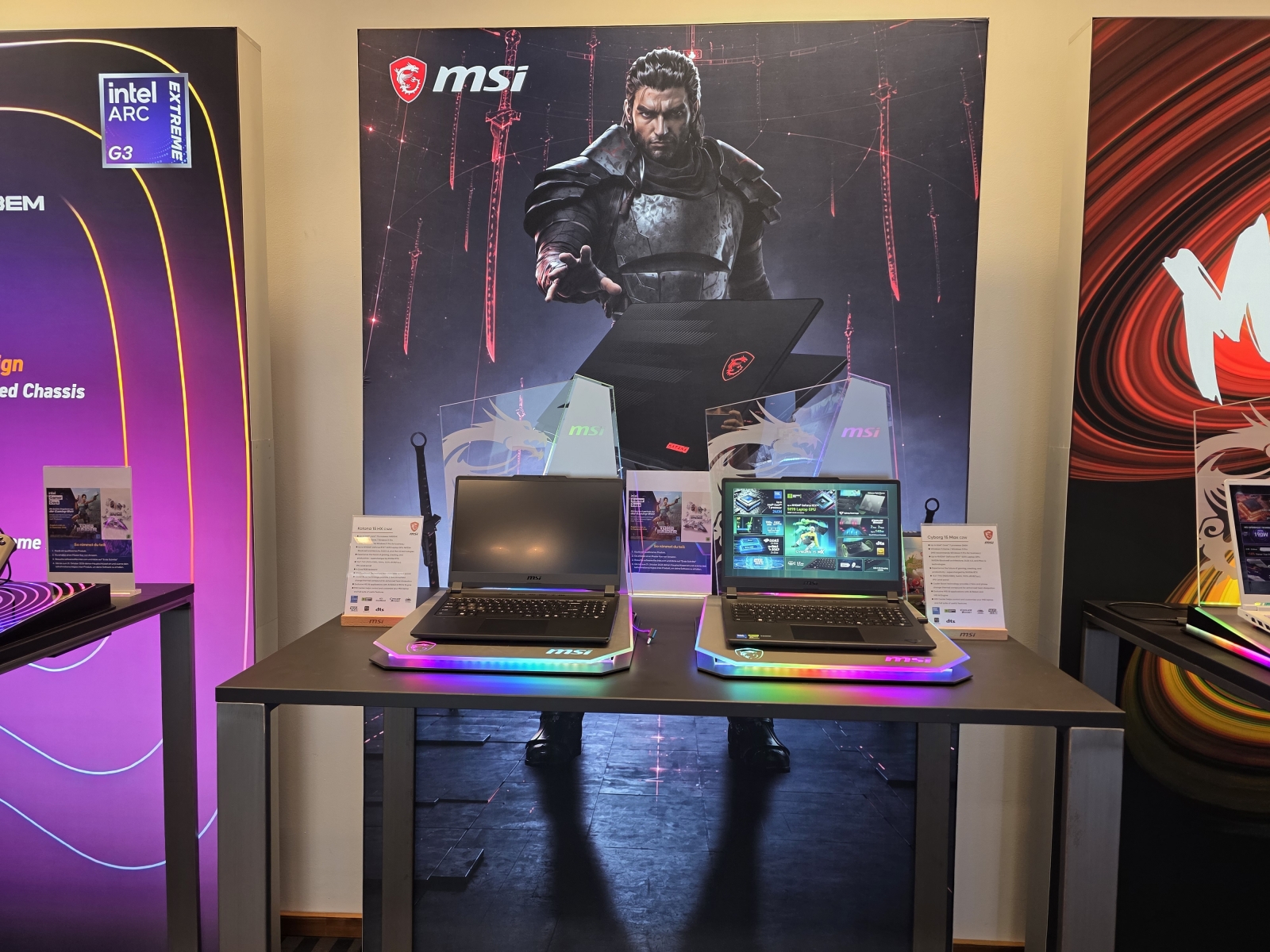
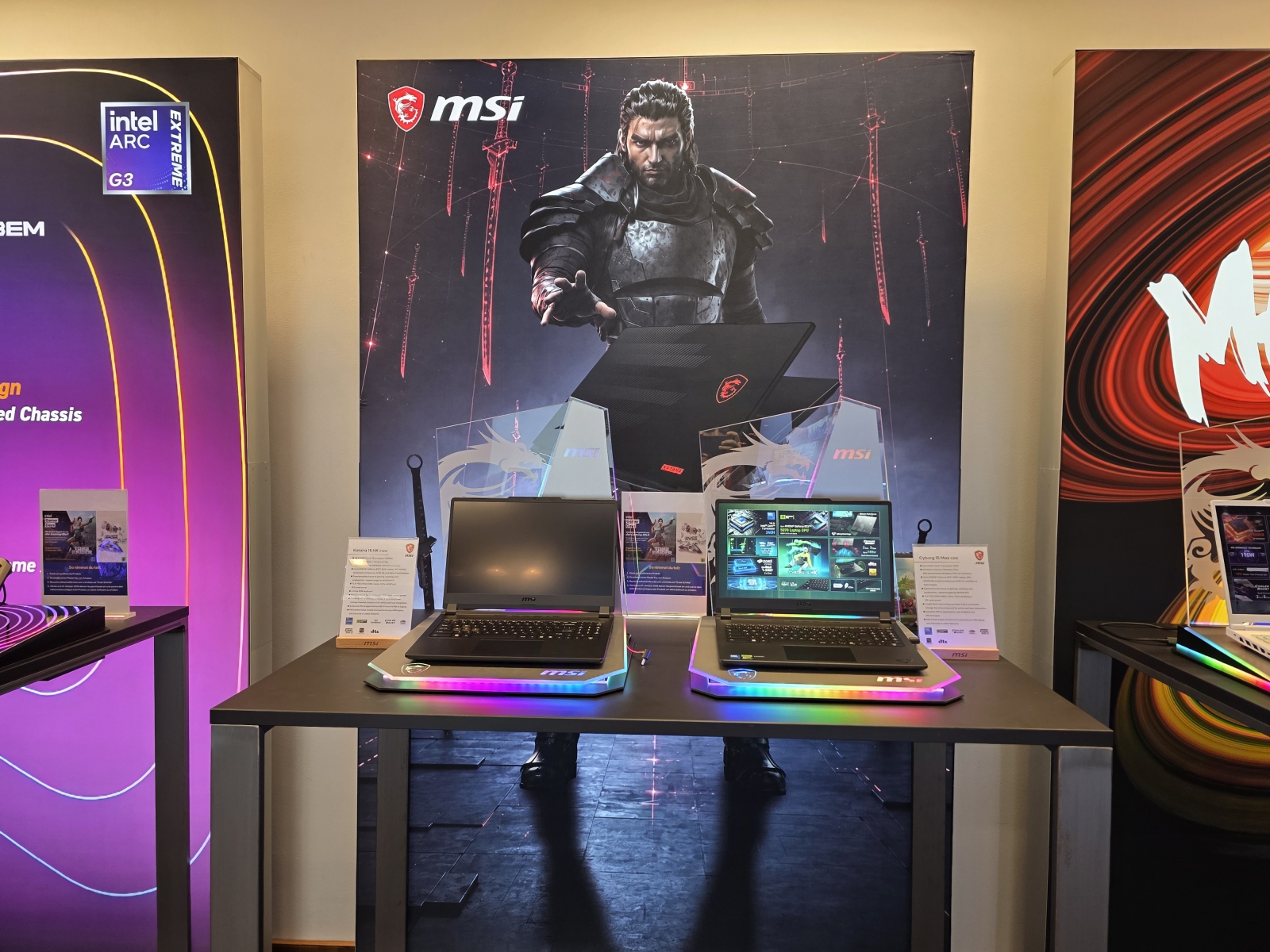
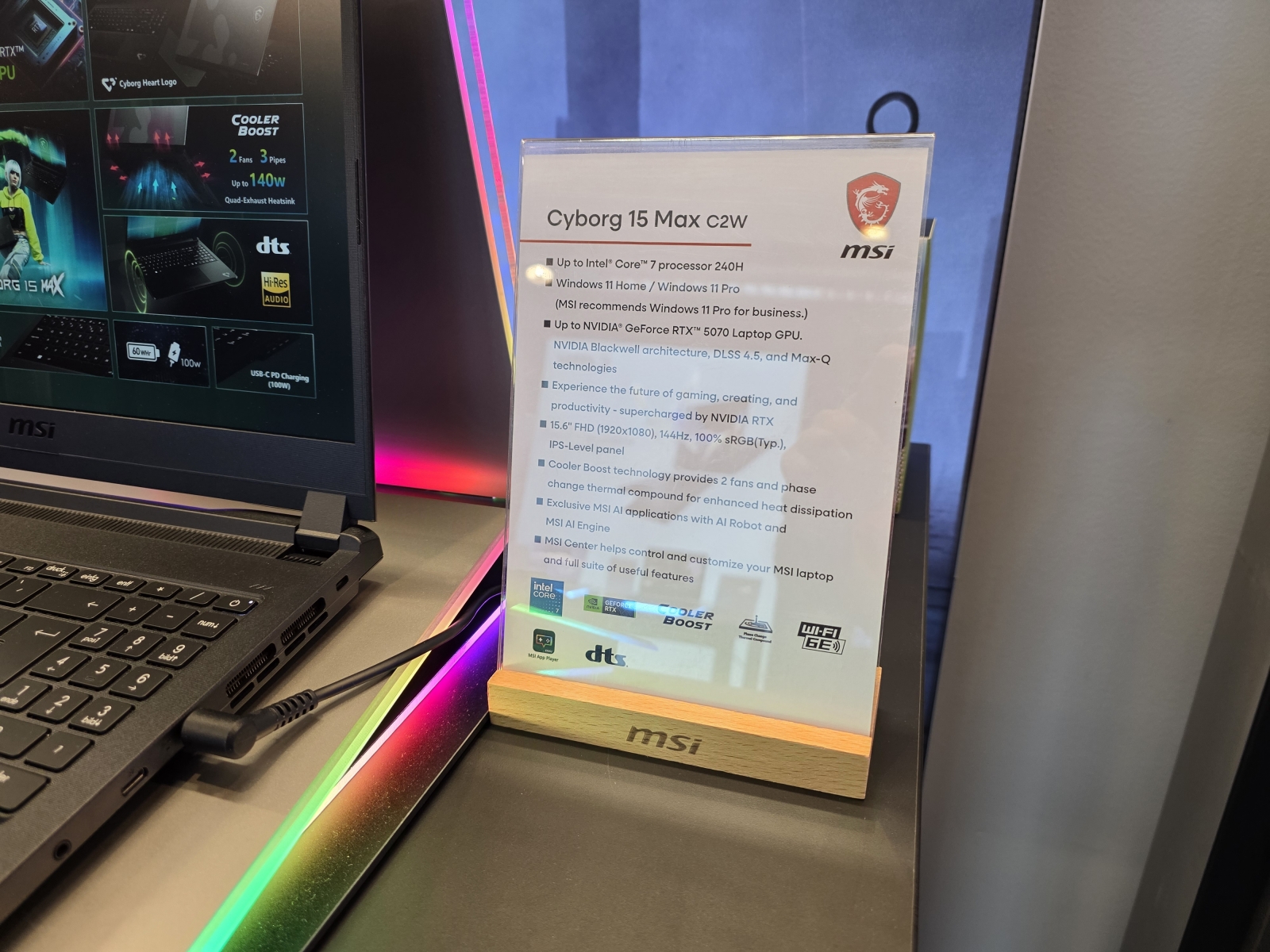
Further up the stack, the Raider 16 Max HX can be equipped with an RTX 5090 and was shown with a 240Hz QHD+ OLED panel. MSI rates its combined CPU and GPU power at 300W and uses three fans, six heat pipes, and five exhausts for cooling. The Crosshair A16 HX offers an AMD alternative, pairing a Ryzen 9 8940HX with an RTX 5070, a 16-inch 240Hz QHD+ panel, and up to 190W of combined power.
One useful change across the gaming systems is easier access to upgradeable parts. MSI says users can remove two dedicated screws and lift the bottom cover to reach the RAM and SSD, an important practical consideration for buyers hoping to extend a laptop’s useful life.

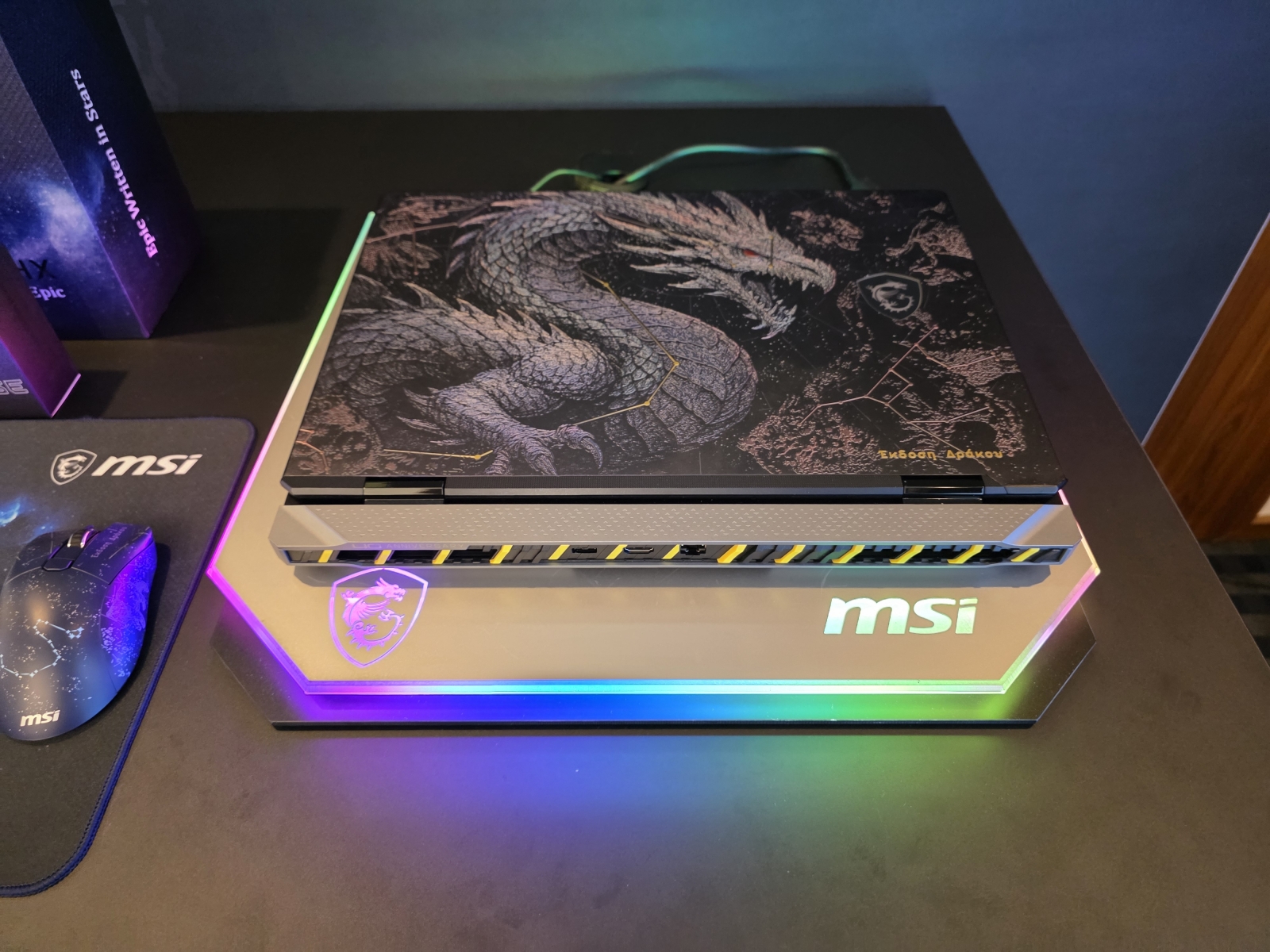
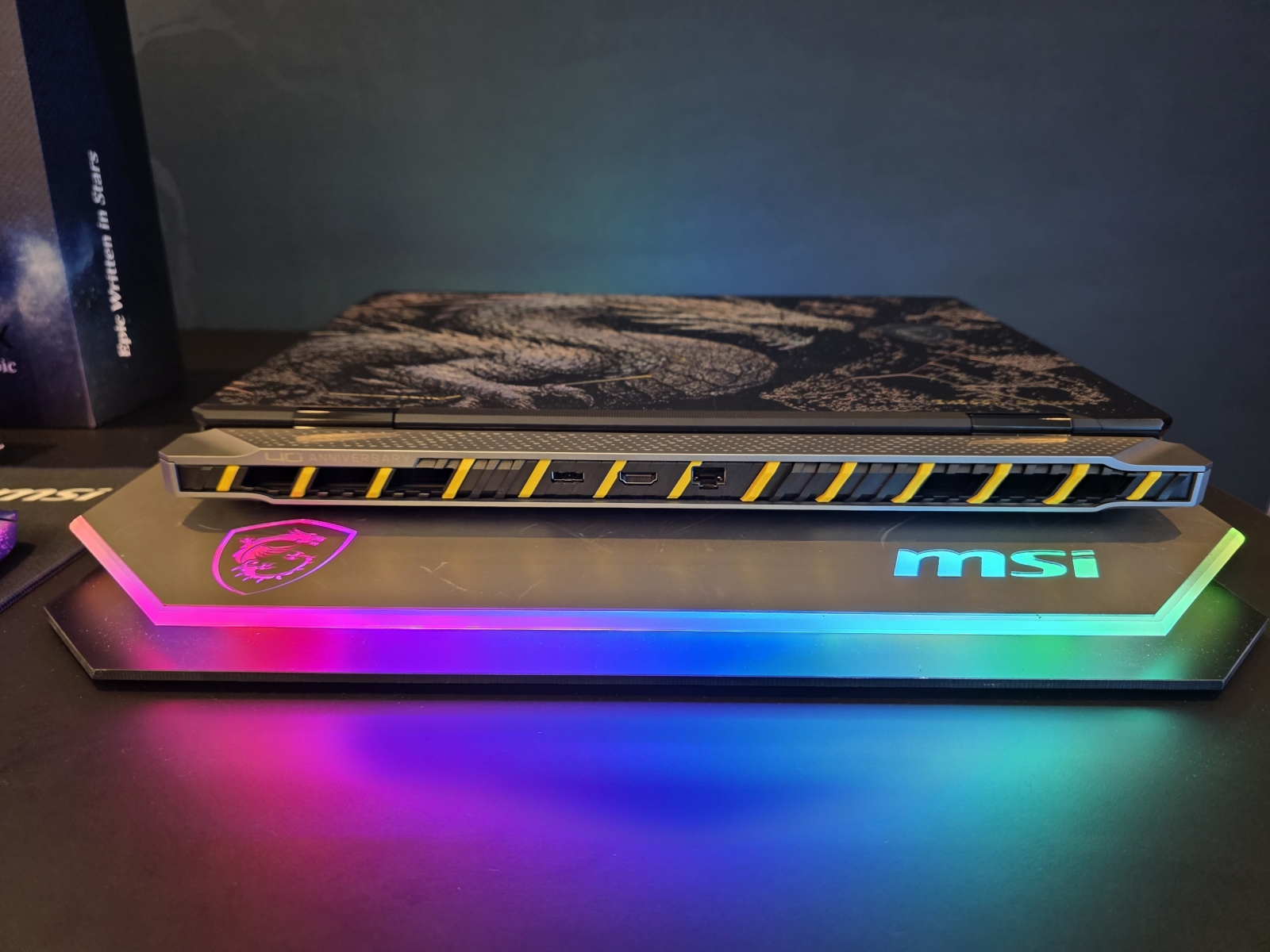

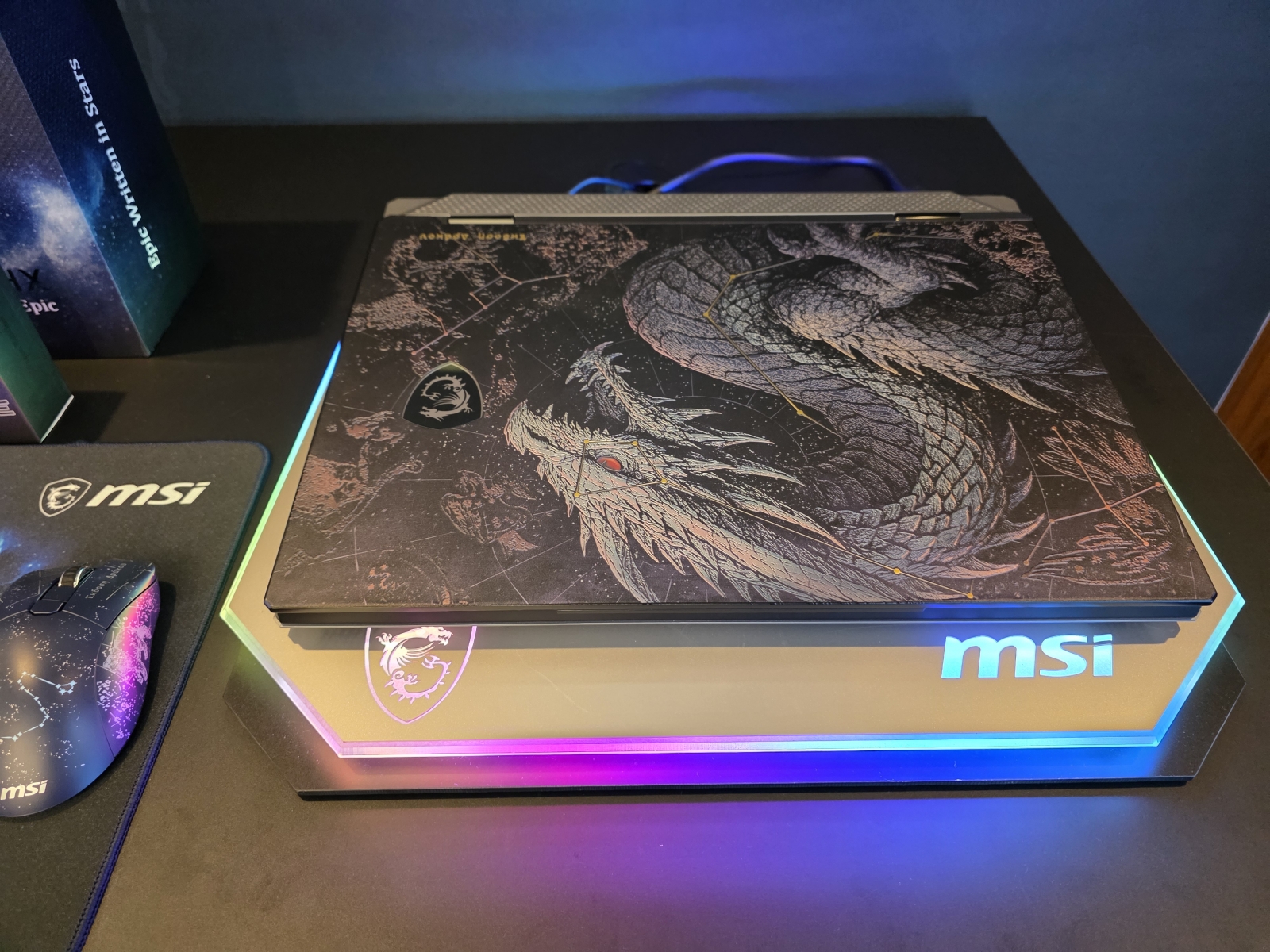
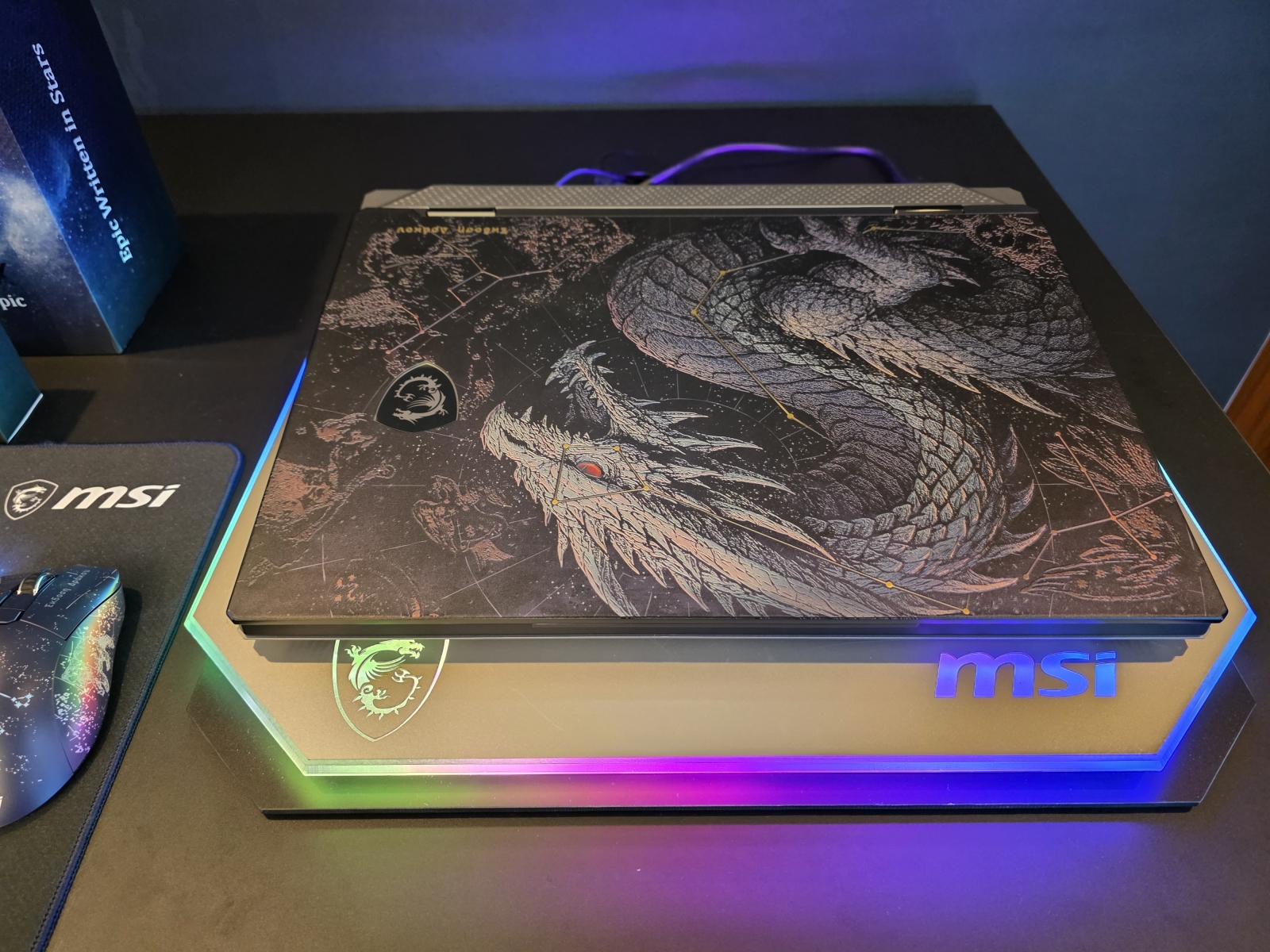
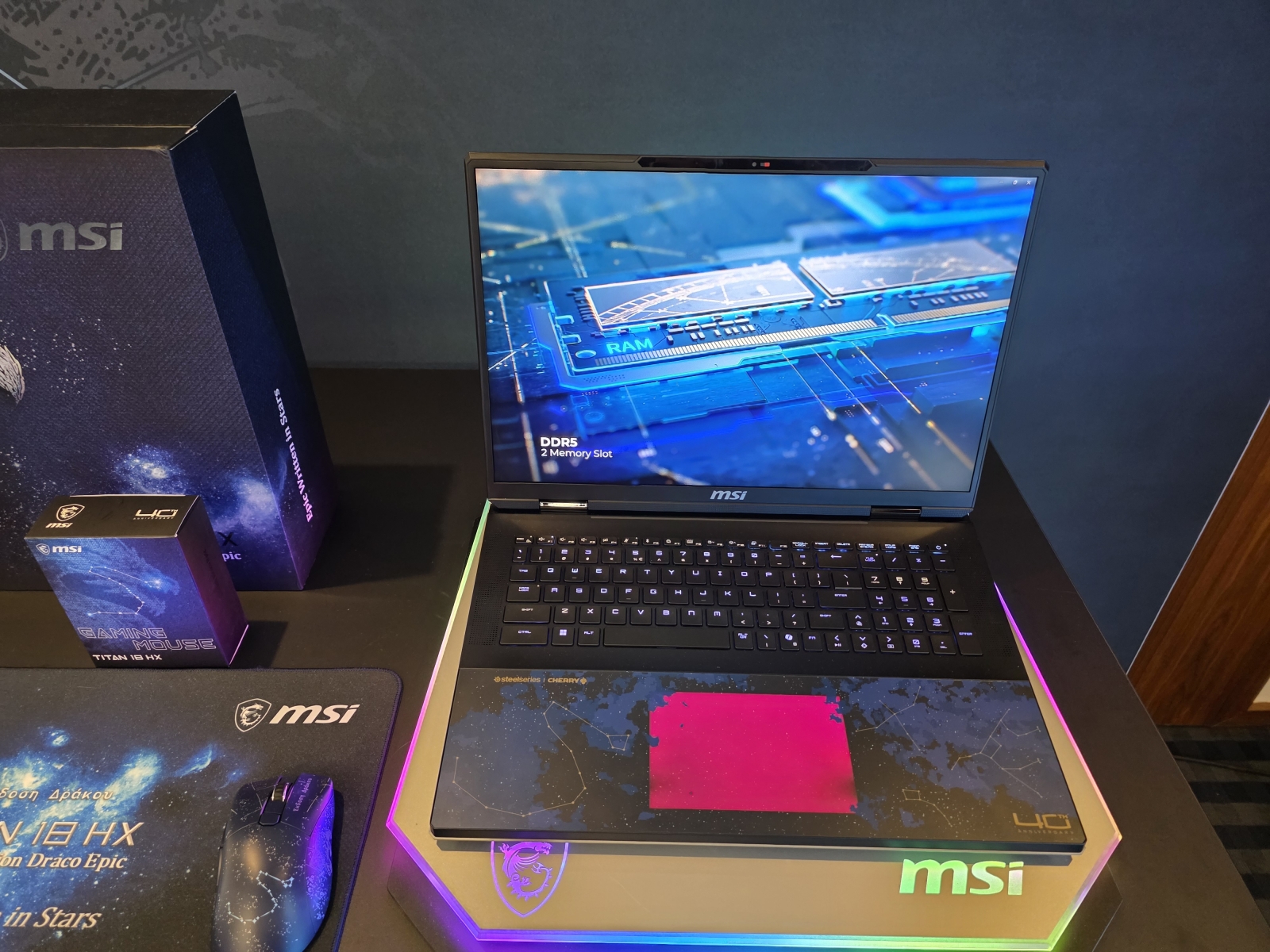

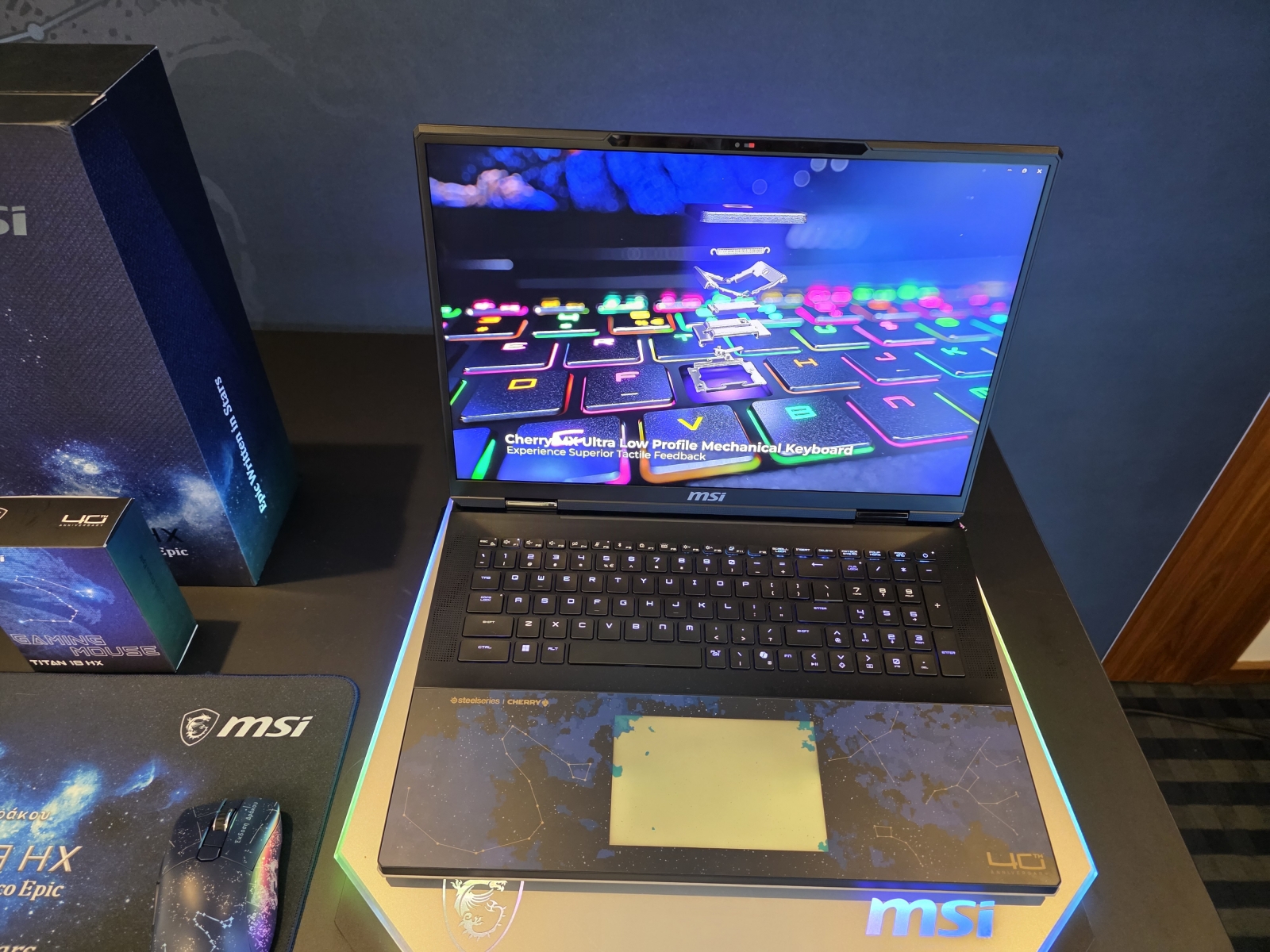
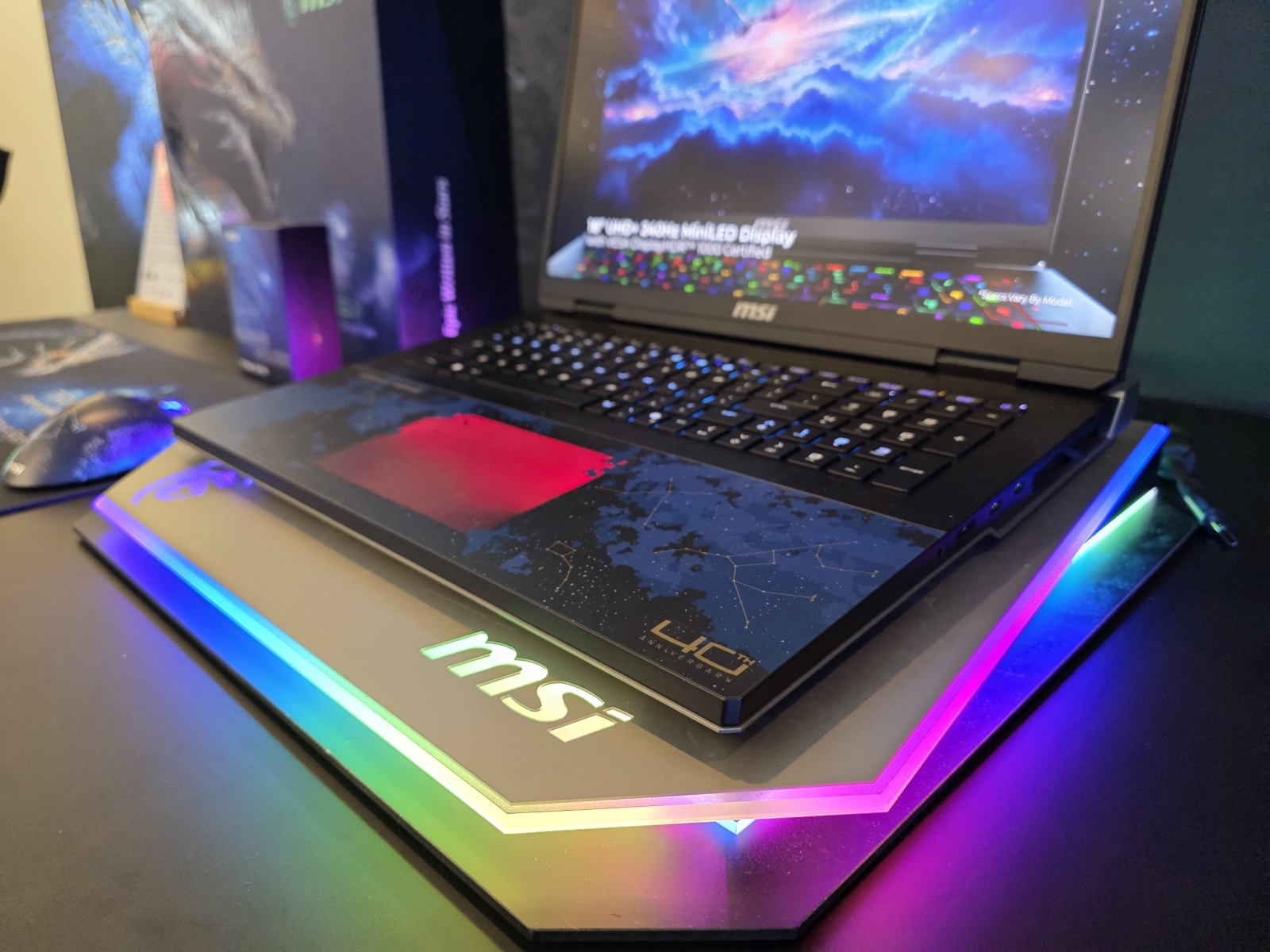
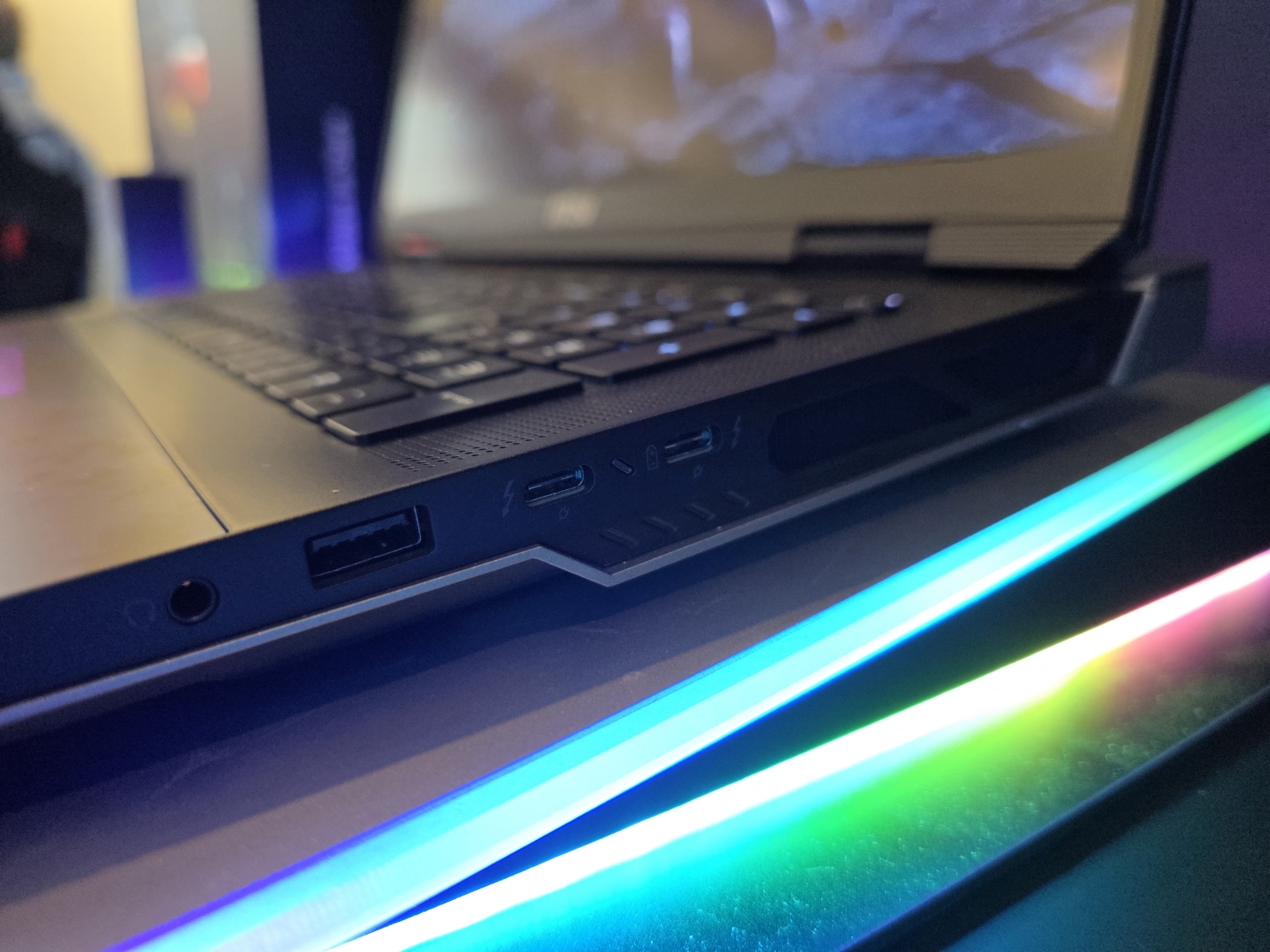
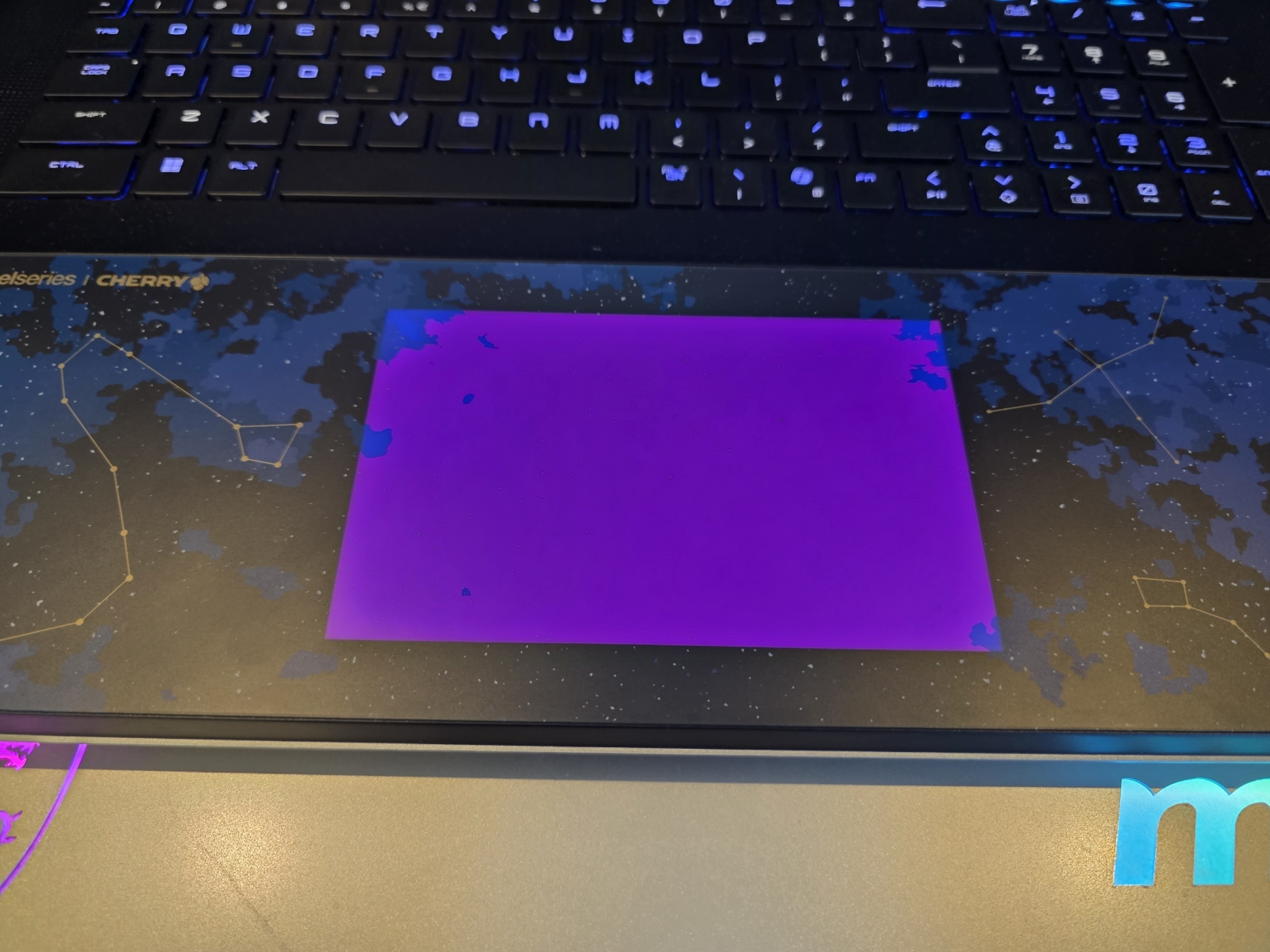
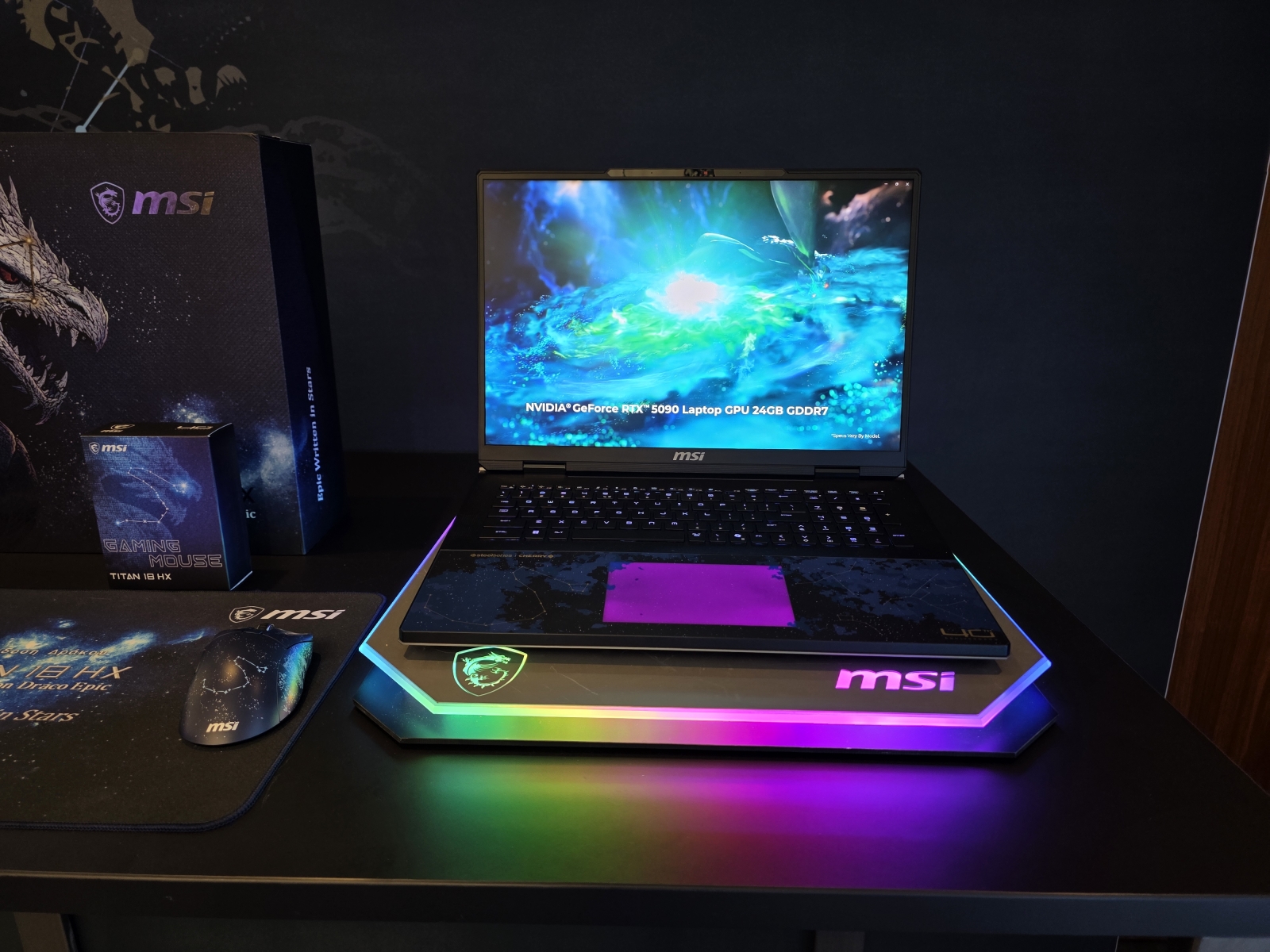
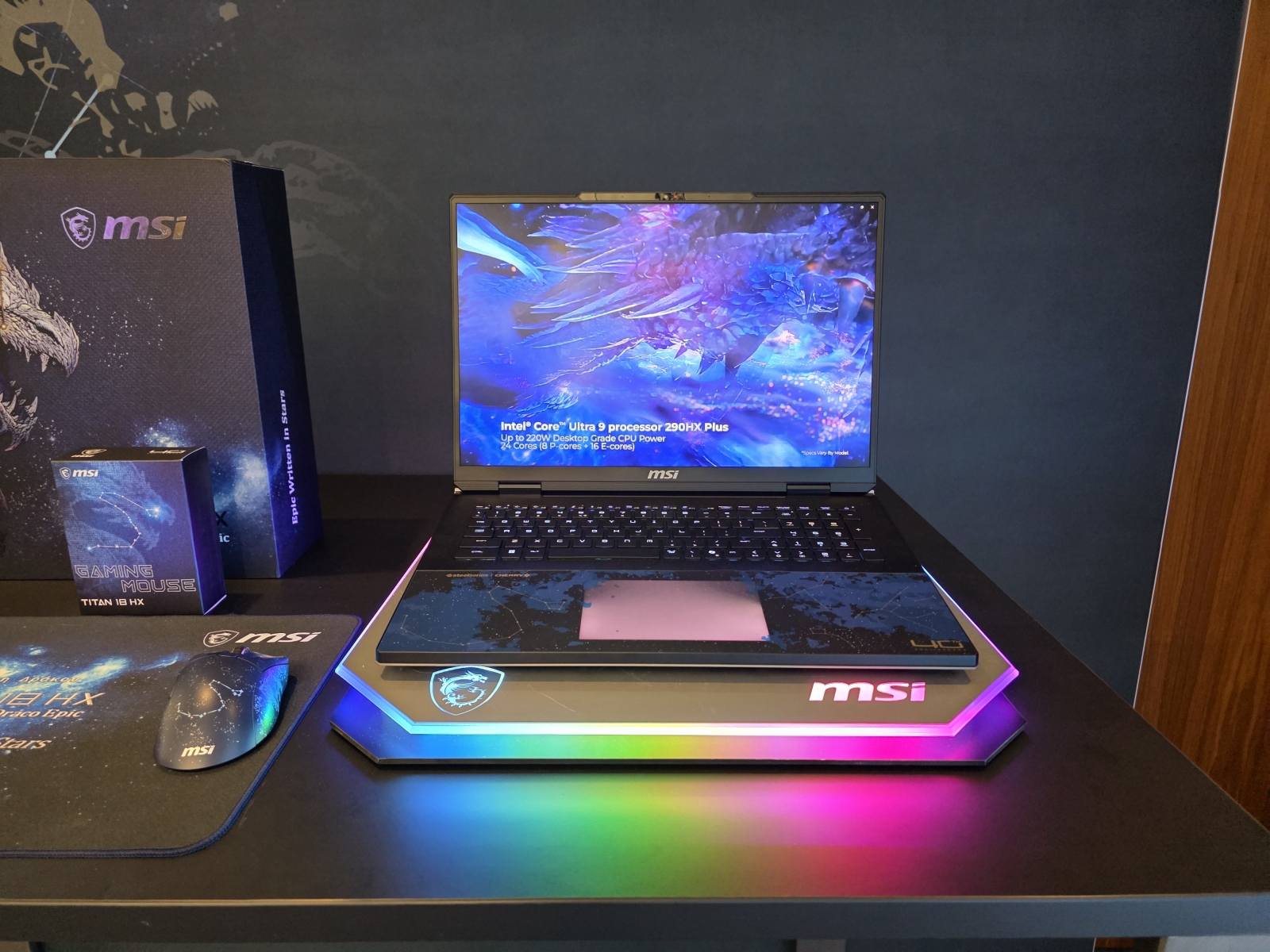
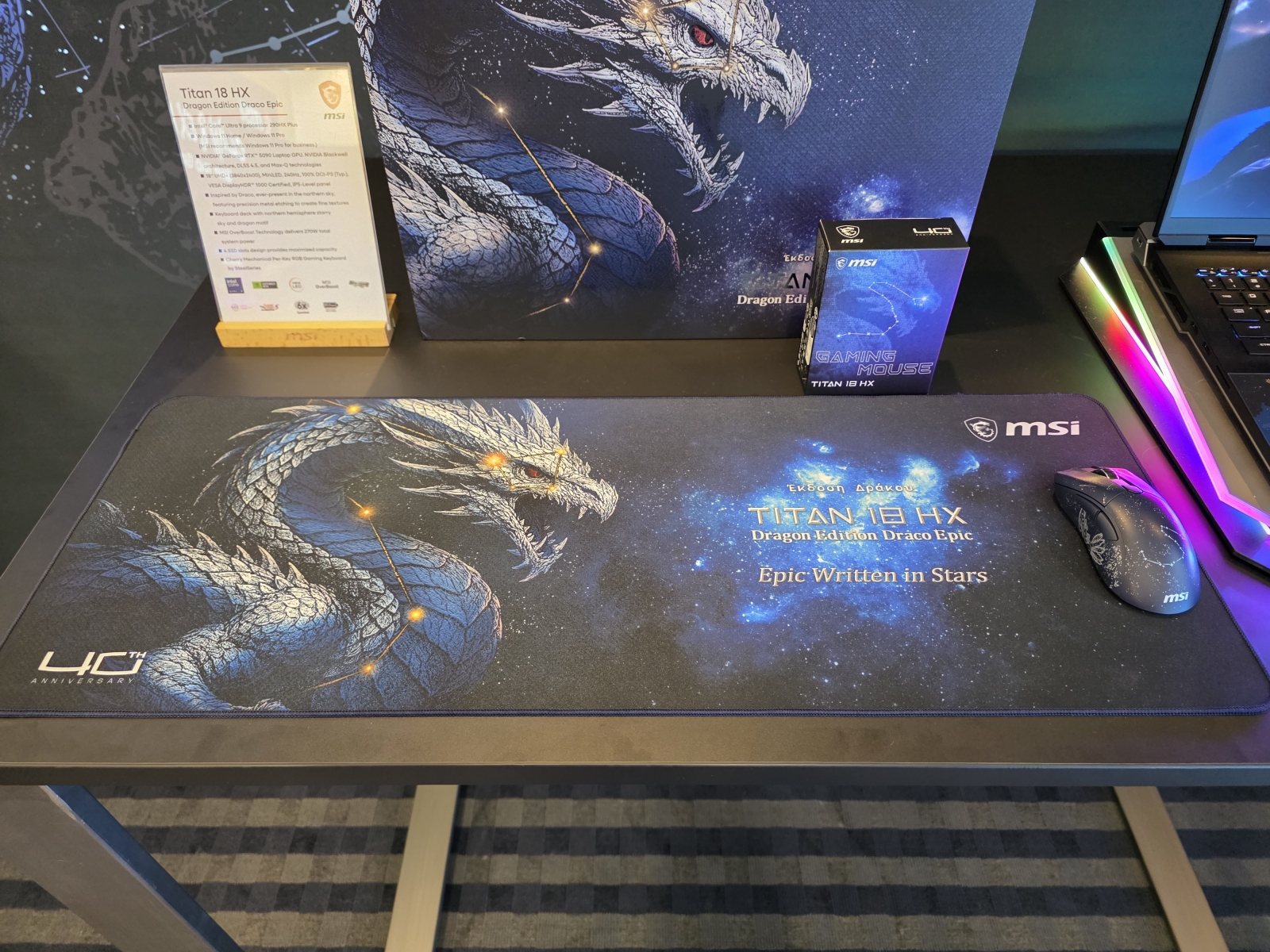
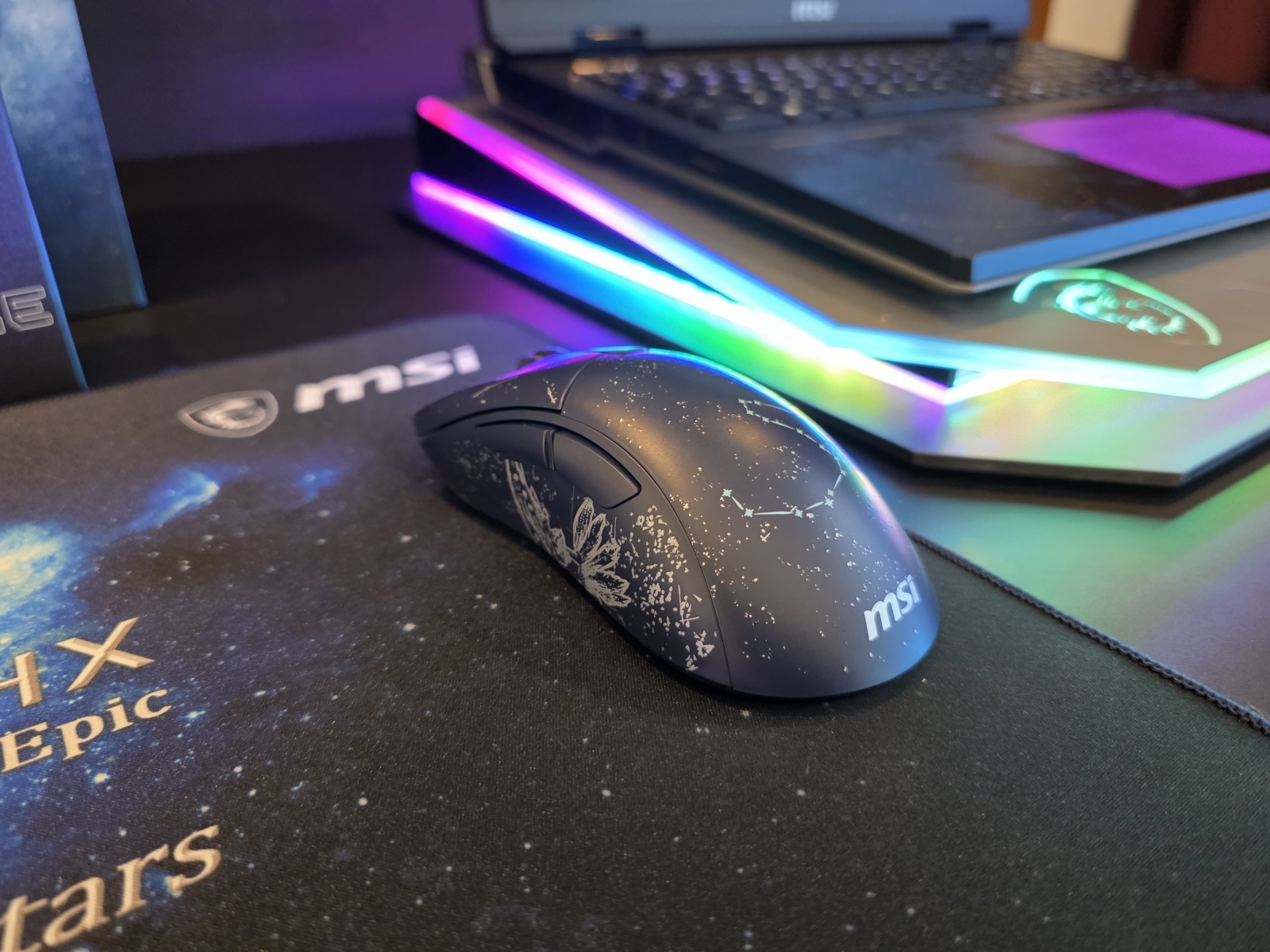

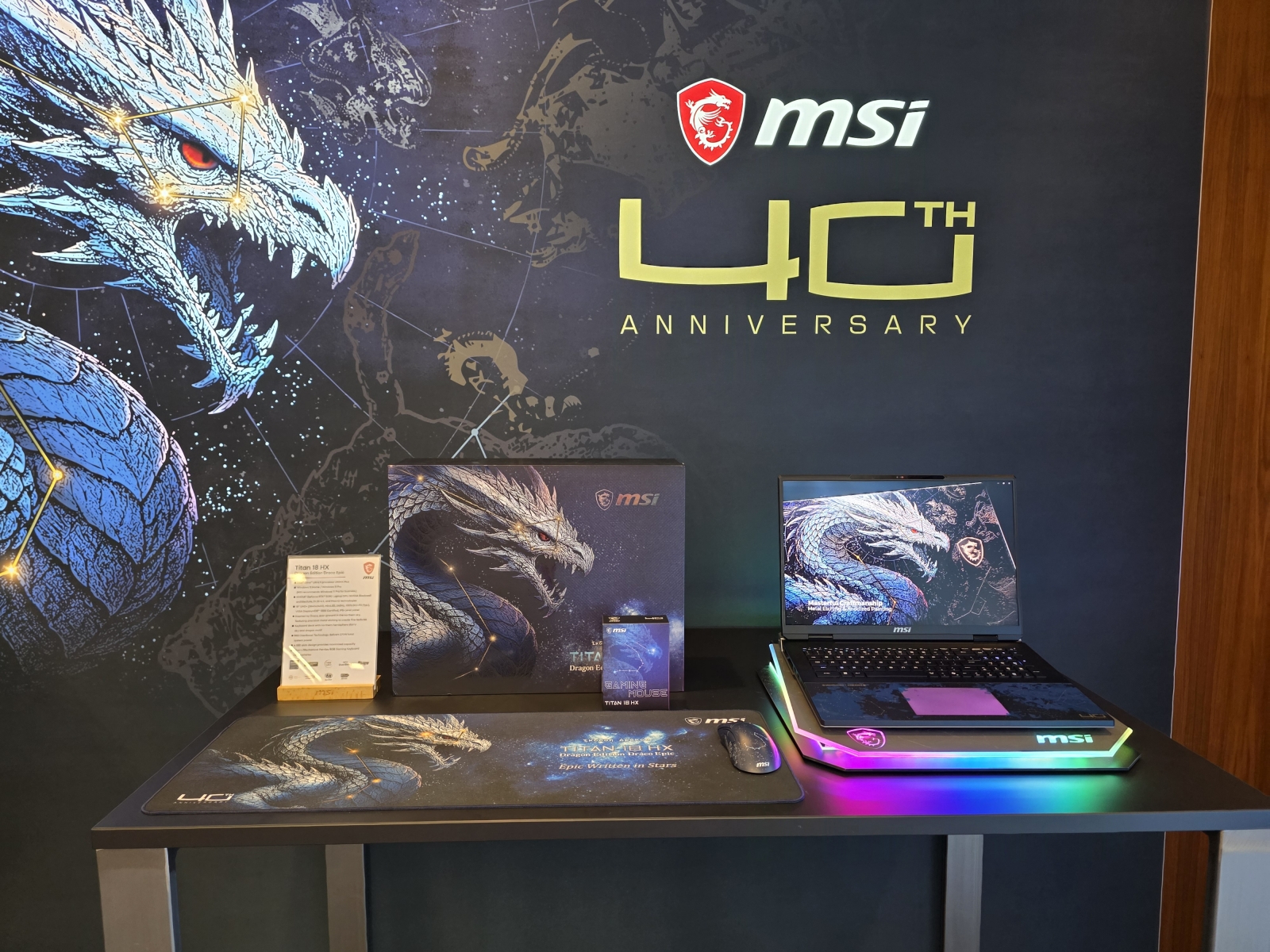
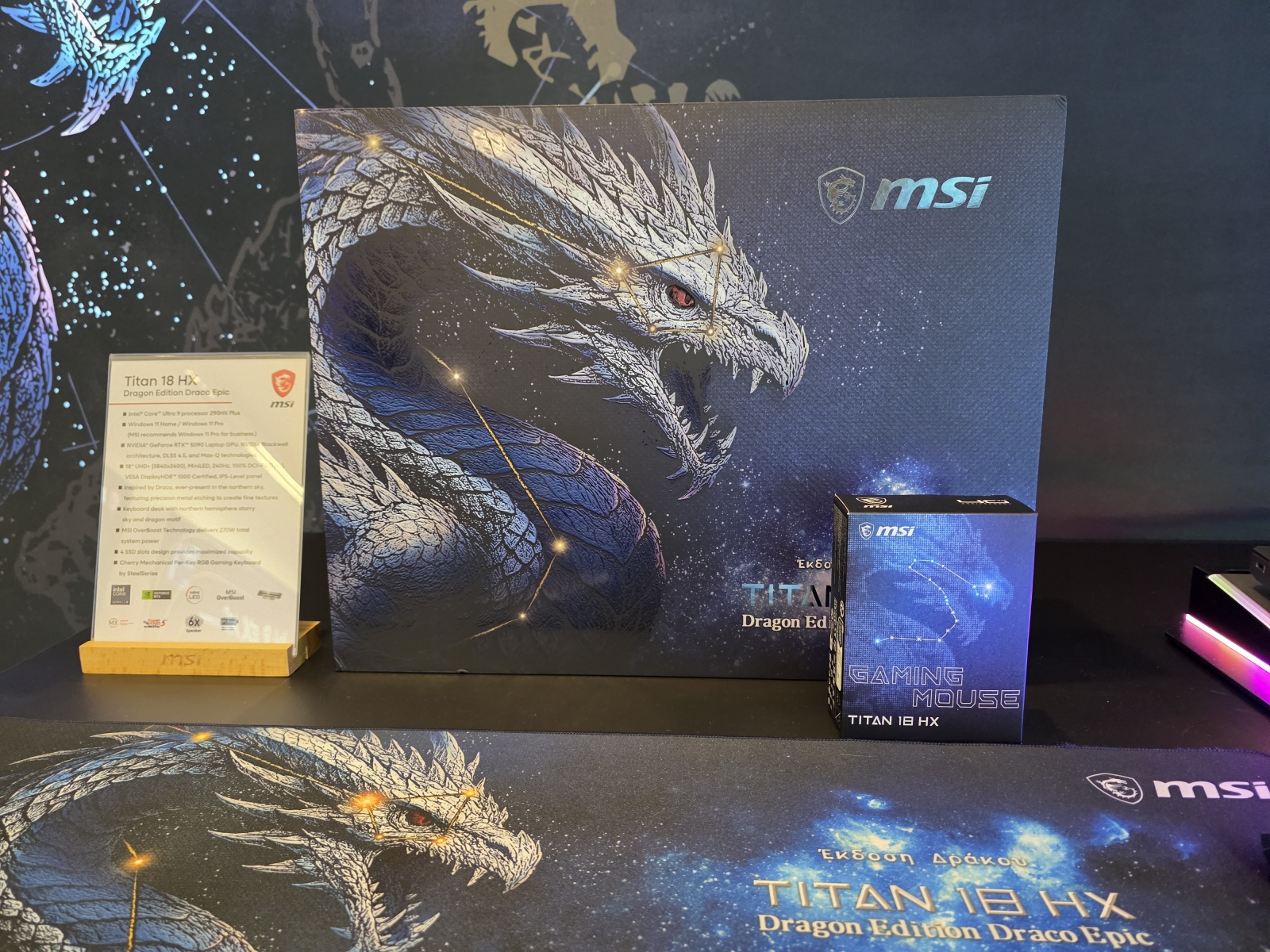
The most extravagant model is the limited-edition MSI Titan 18 HX Dragon Edition Draco Epic. Its Draco constellation-inspired lid uses engraving and anodizing, while the palm-rest area incorporates illuminated constellation artwork beneath glass. The demonstrated configuration combines a Core Ultra 9 290HX Plus, GeForce RTX 5090 Laptop GPU with 24GB of GDDR7, 96GB of RAM, and a 4TB SSD.
The Titan also carries an 18-inch, 3,840 × 2,400 Mini LED display at 240Hz, a Cherry MX mechanical SteelSeries keyboard, an illuminated haptic touchpad, and a 99.9Wh battery. At 3.6kg, it is plainly a desktop-replacement machine rather than a backpack-friendly notebook. MSI’s German store lists the 96GB/4TB configuration at €7,749; no U.S. pricing or availability was provided. The package includes a mouse, mousepad, and anniversary collector coin.
RTX Spark brings workstation-style local AI to a convertible



For mobile creators and developers, the more unusual entry is the Prestige N16 Flip AI+. Rather than relying on a conventional Intel or AMD laptop platform, it uses NVIDIA RTX Spark: a Grace CPU with up to 20 cores connected to a Blackwell GPU with up to 6,144 CUDA cores. The platform uses shared system memory, with capacity up to 128GB, and NVIDIA rates it for up to 1 petaFLOP of FP4 AI performance.
That FP4 figure is specific to AI workloads, not a direct measure of conventional graphics performance. The more meaningful advantage for local AI work is the large shared memory pool, which could accommodate models and projects that would exceed the 8GB, 12GB, or 16GB of dedicated VRAM common in many laptops.
MSI places RTX Spark in a 16-inch convertible with a UHD+ Tandem OLED touchscreen, peak brightness above 1,000 nits, Delta E below 1 color accuracy, and Nano Pen support. It also has a 99.9Wh battery. MSI demonstrated the system for local AI agents, language models, coding, rendering, Unreal Engine work, game assets, and large databases. It supports RTX gaming technologies, but its configuration is clearly aimed at AI-assisted creation and development rather than being a dedicated gaming notebook.
Portability remains part of the story
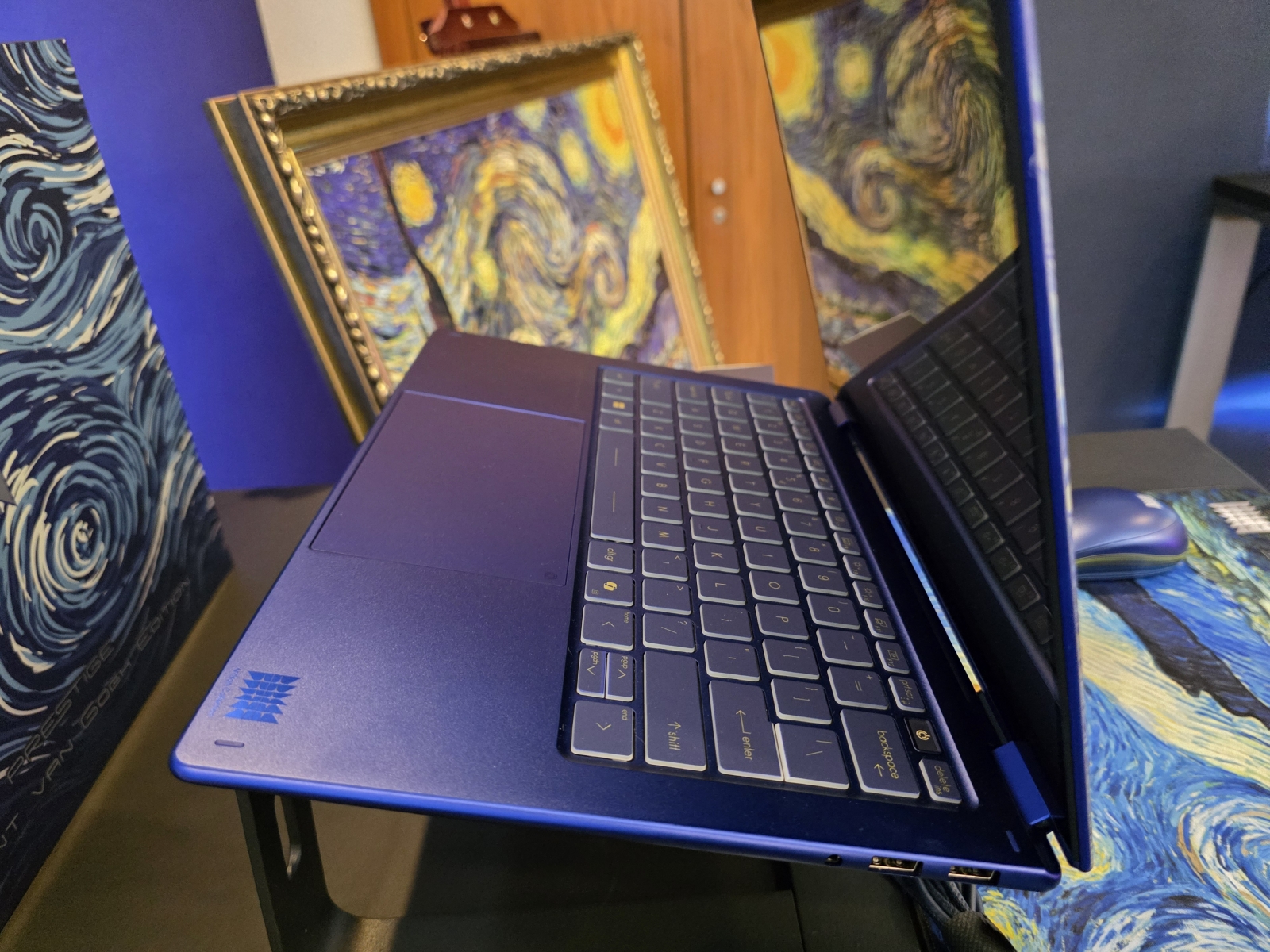
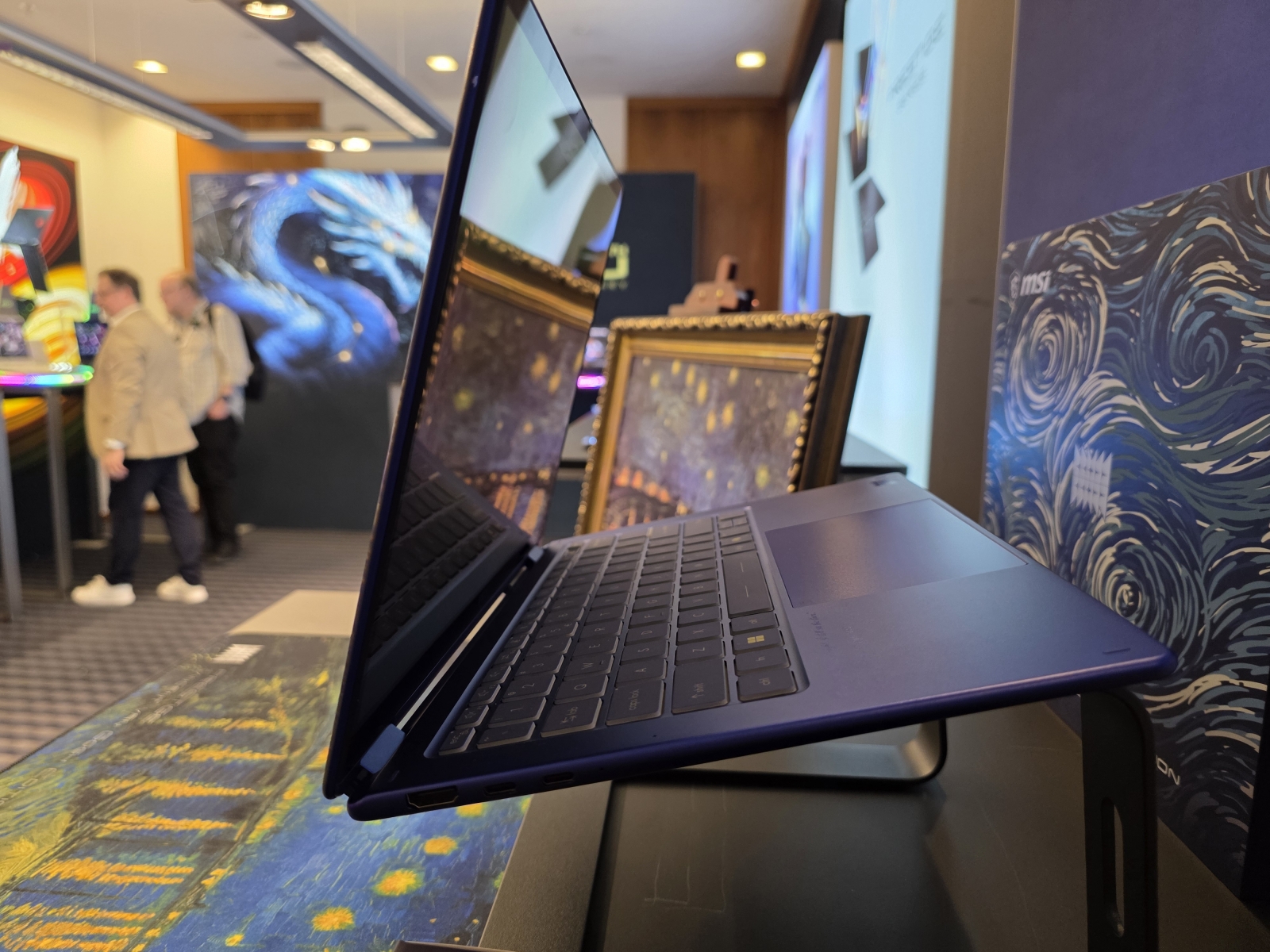
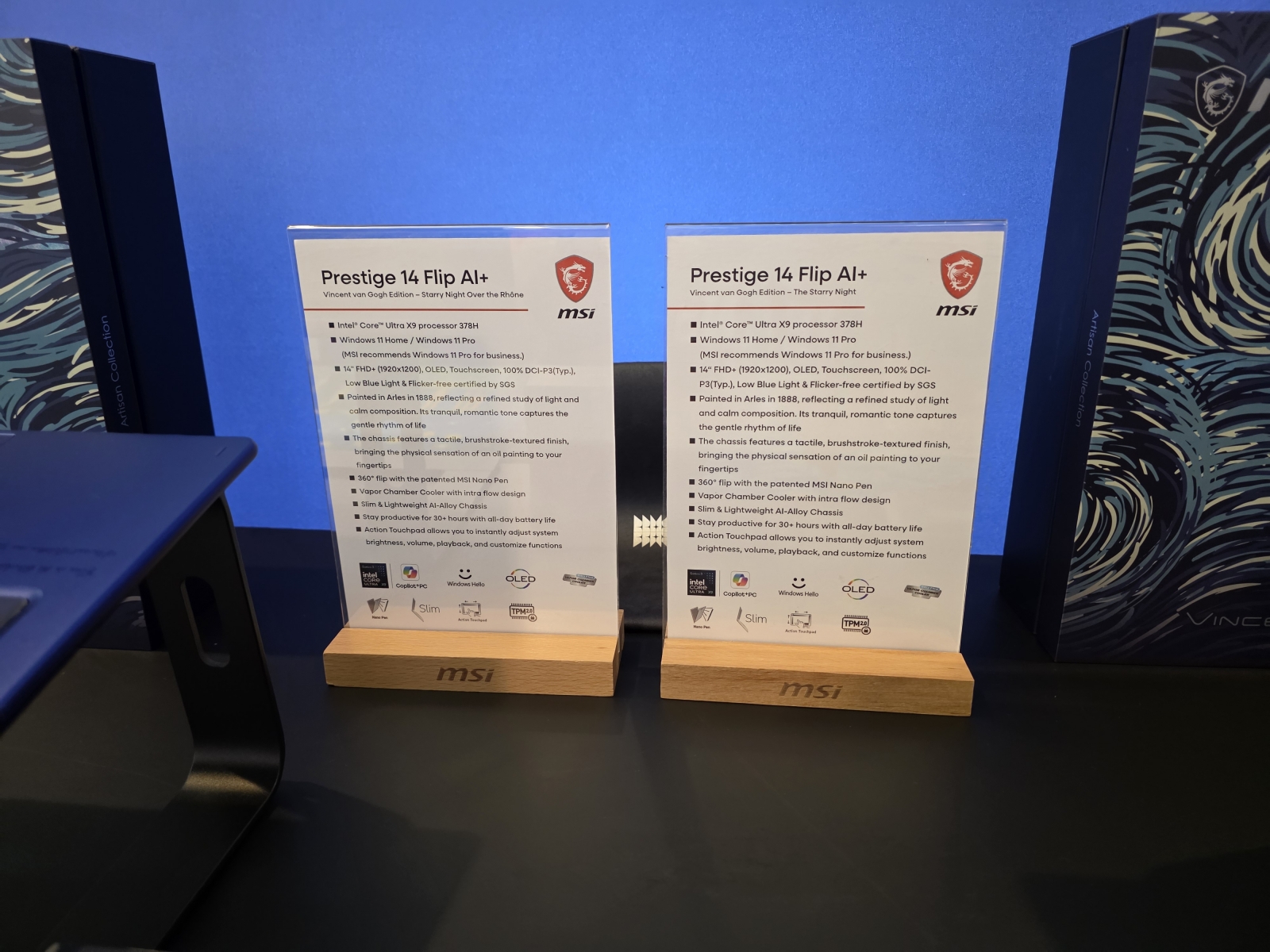
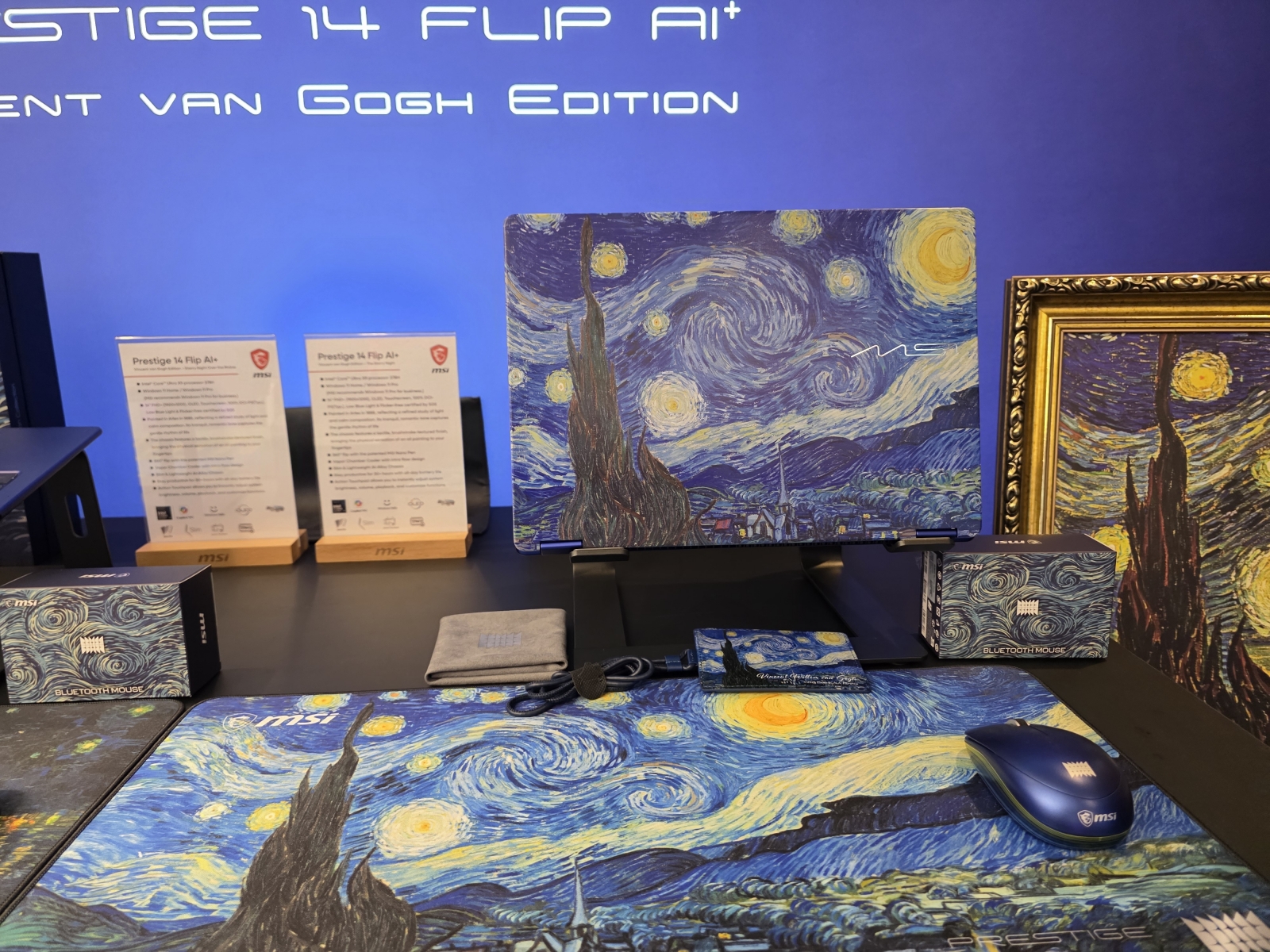
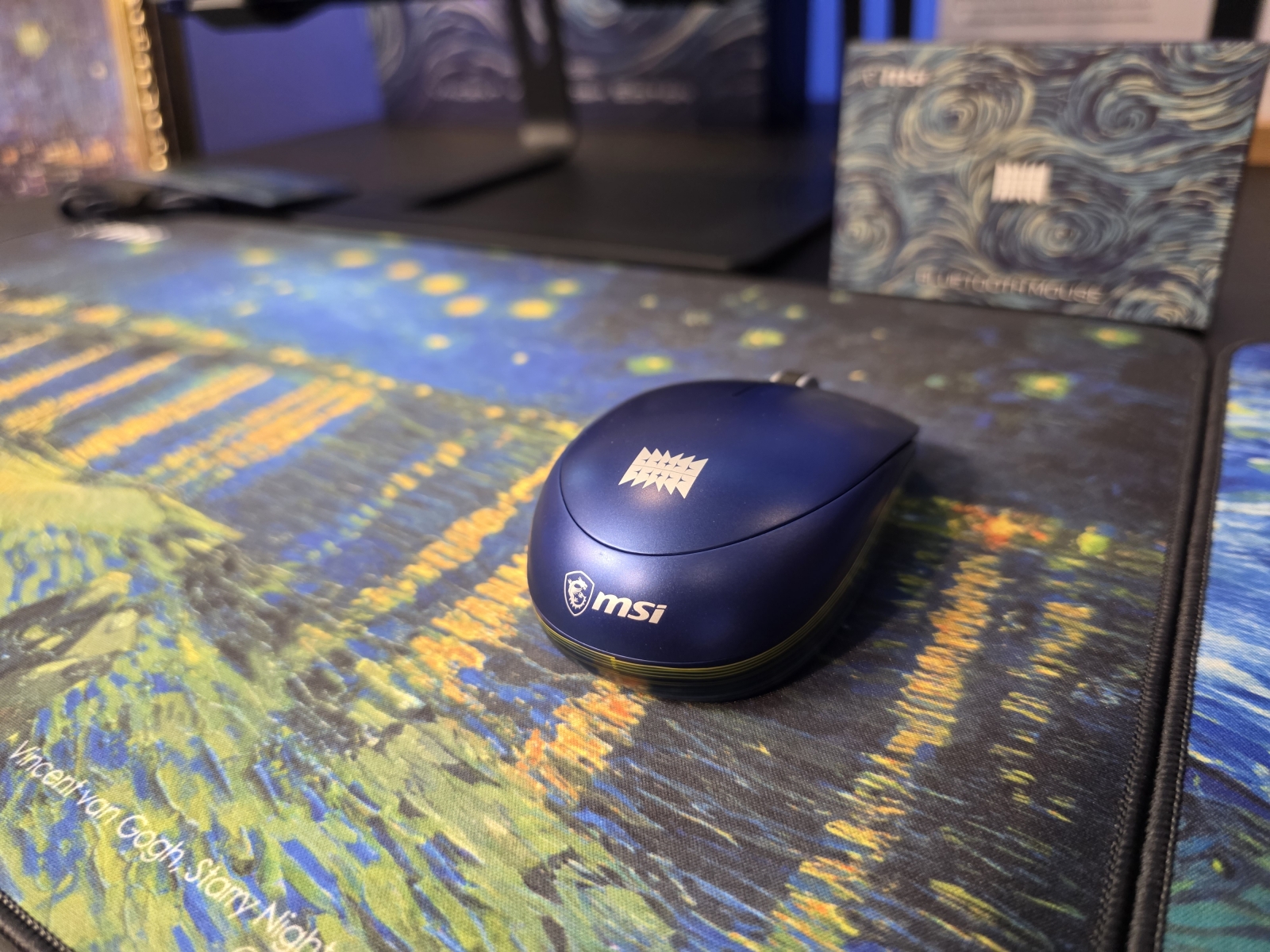
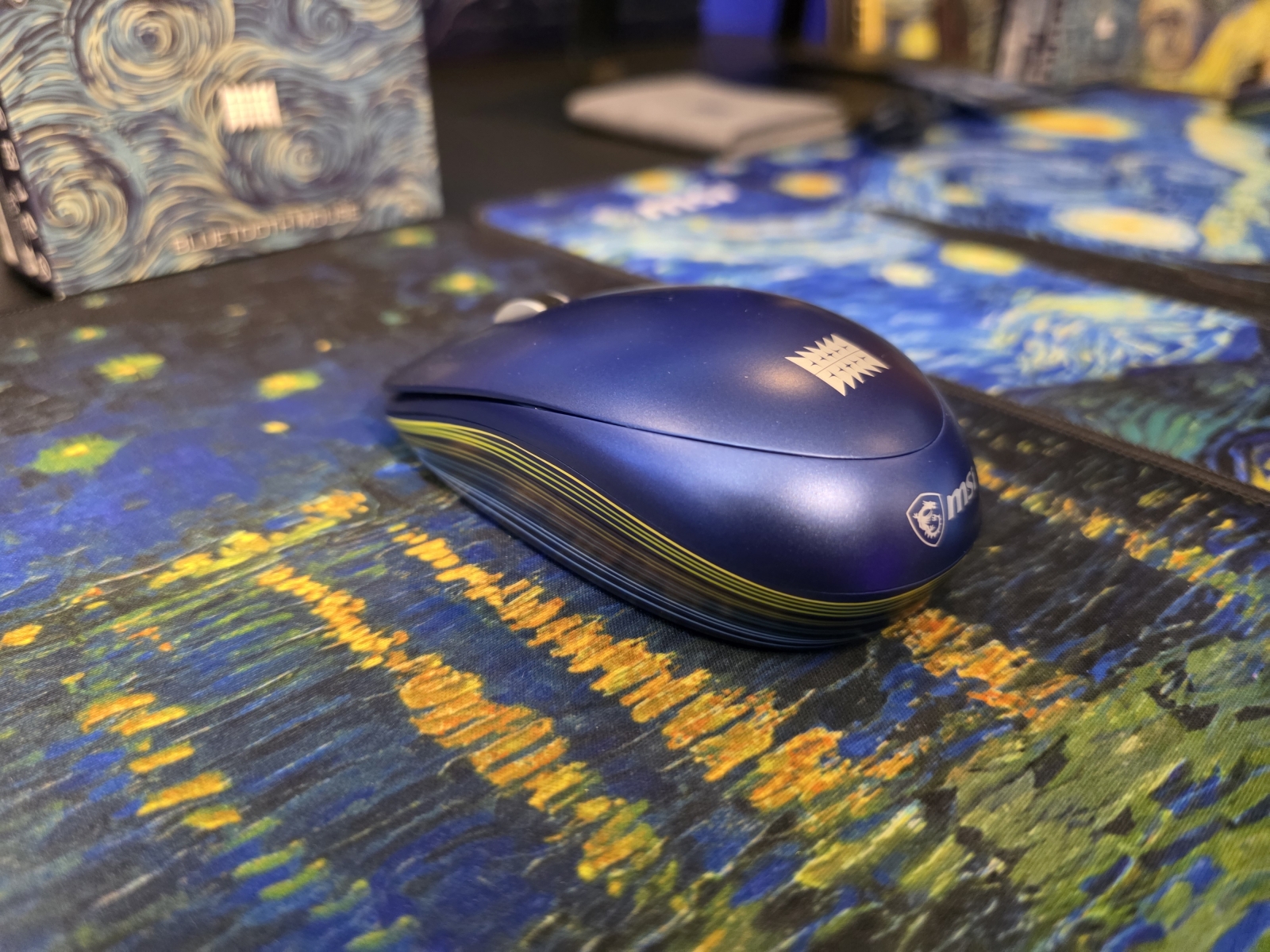
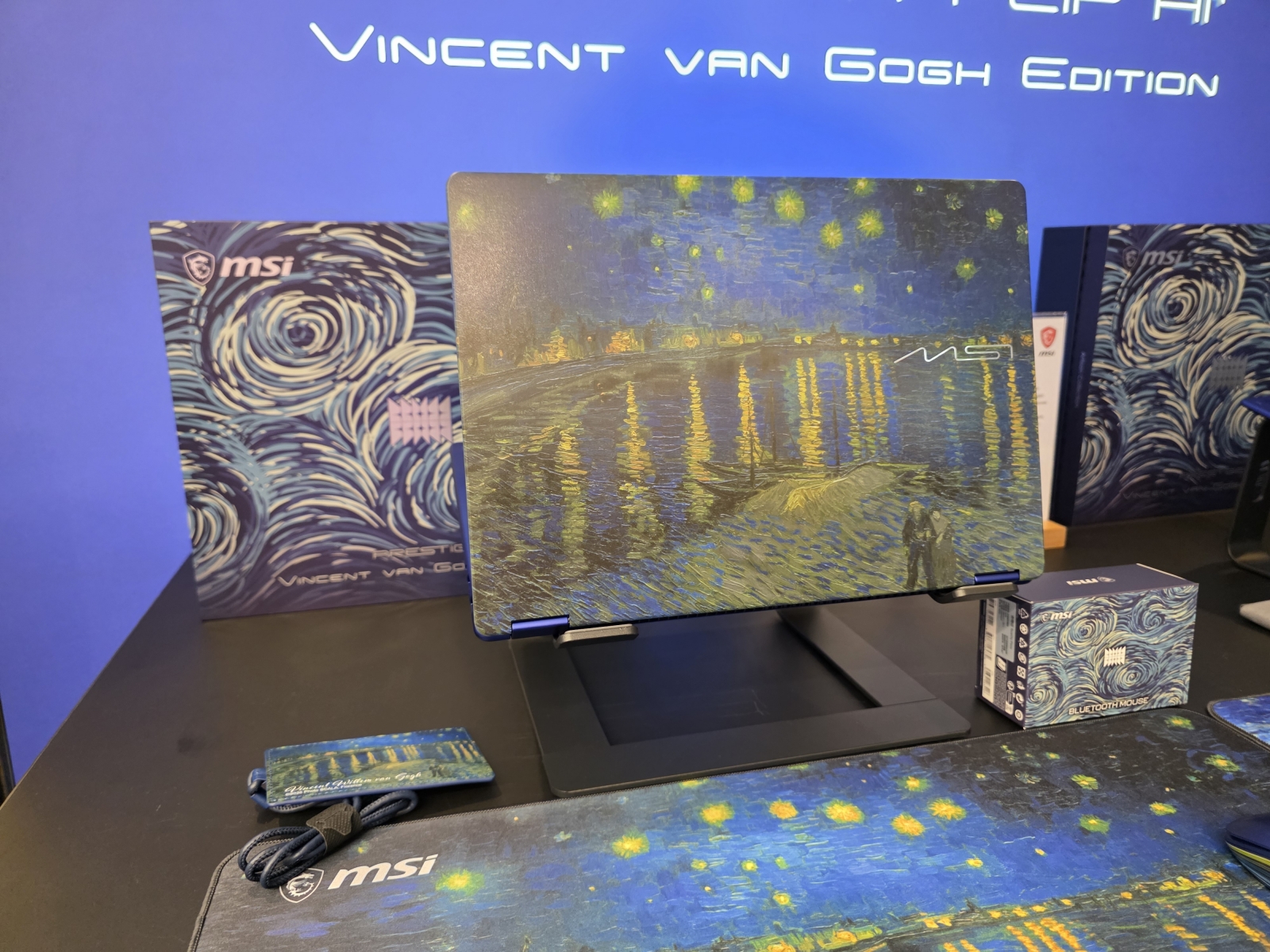
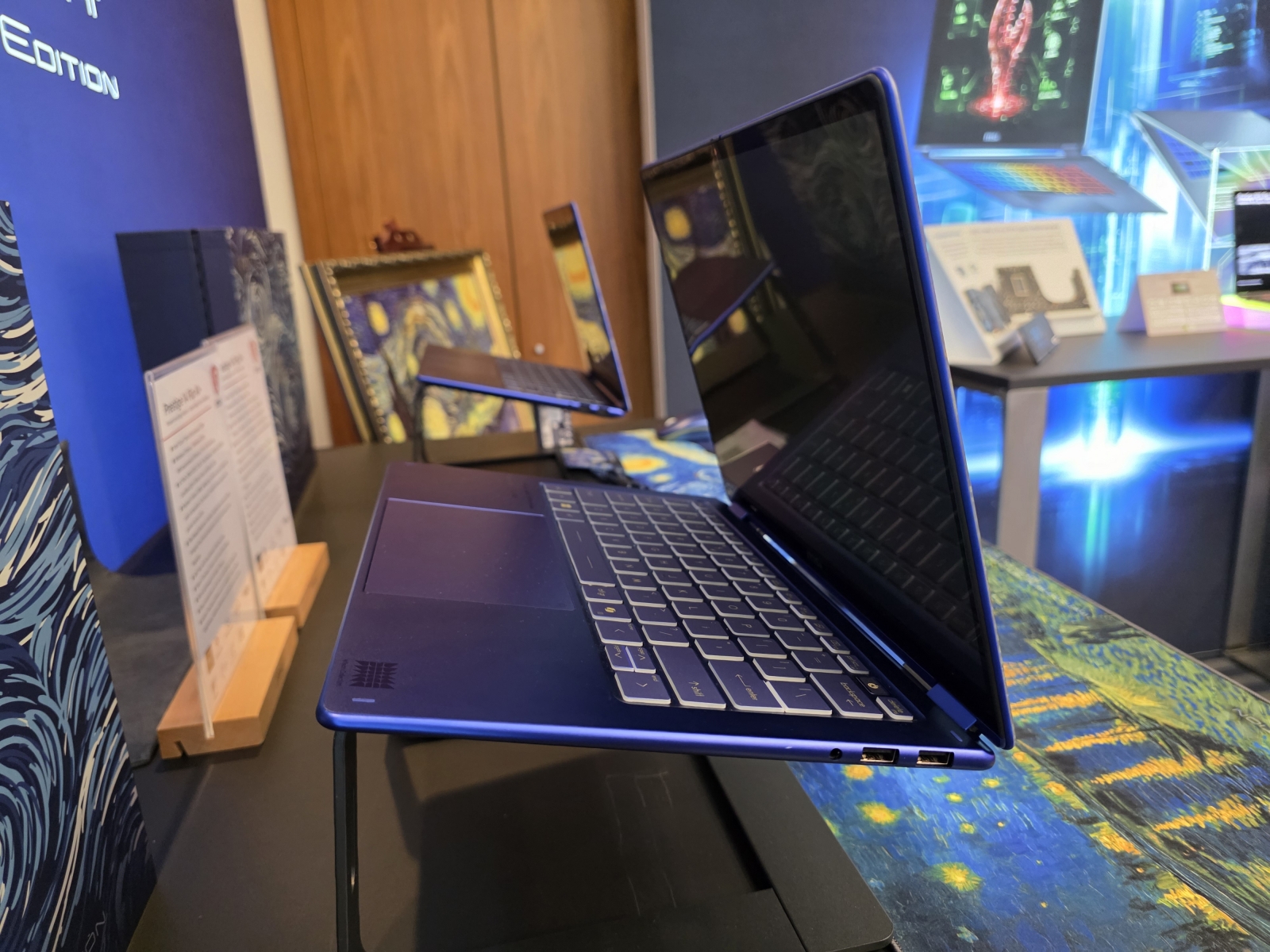
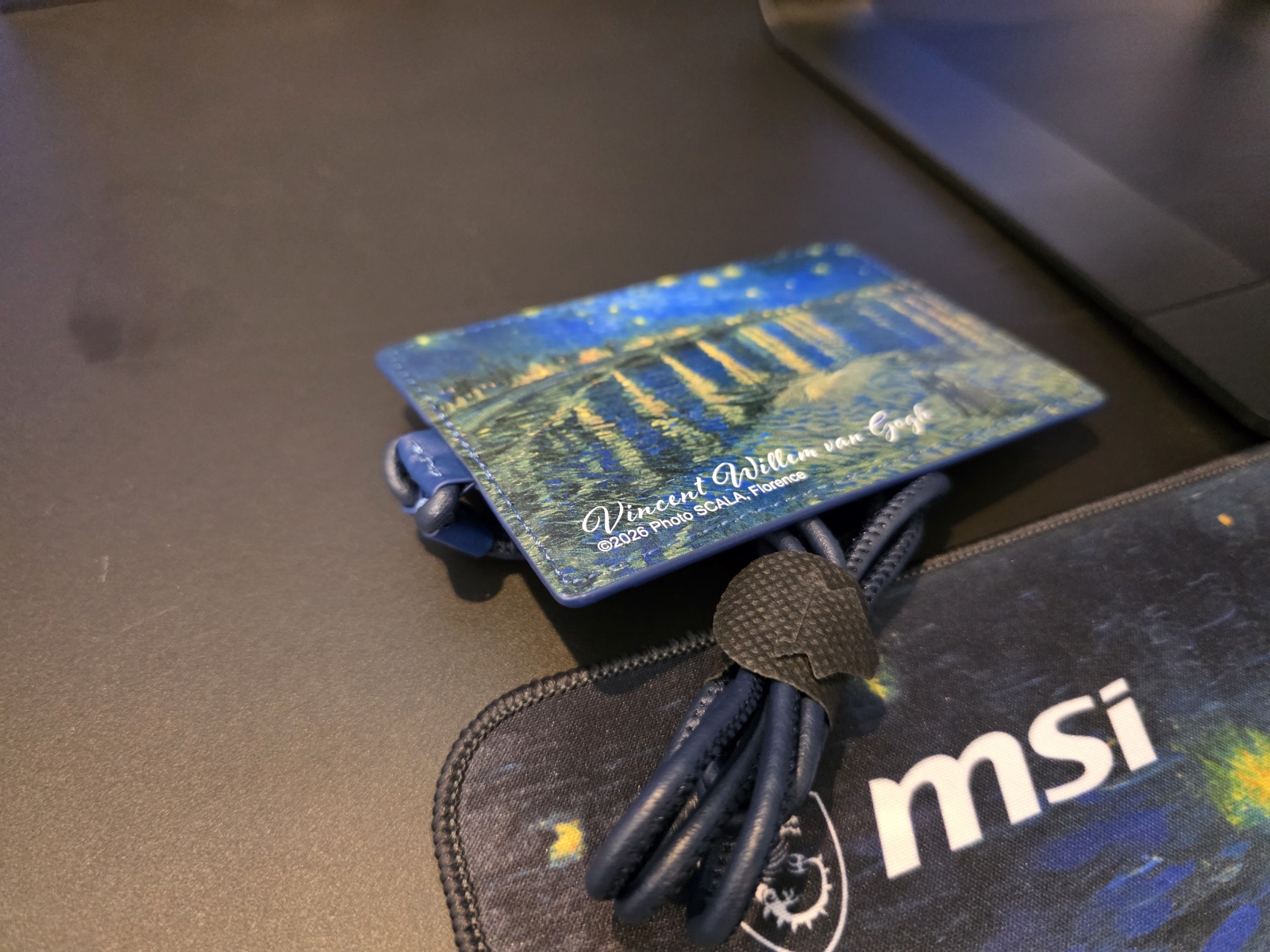
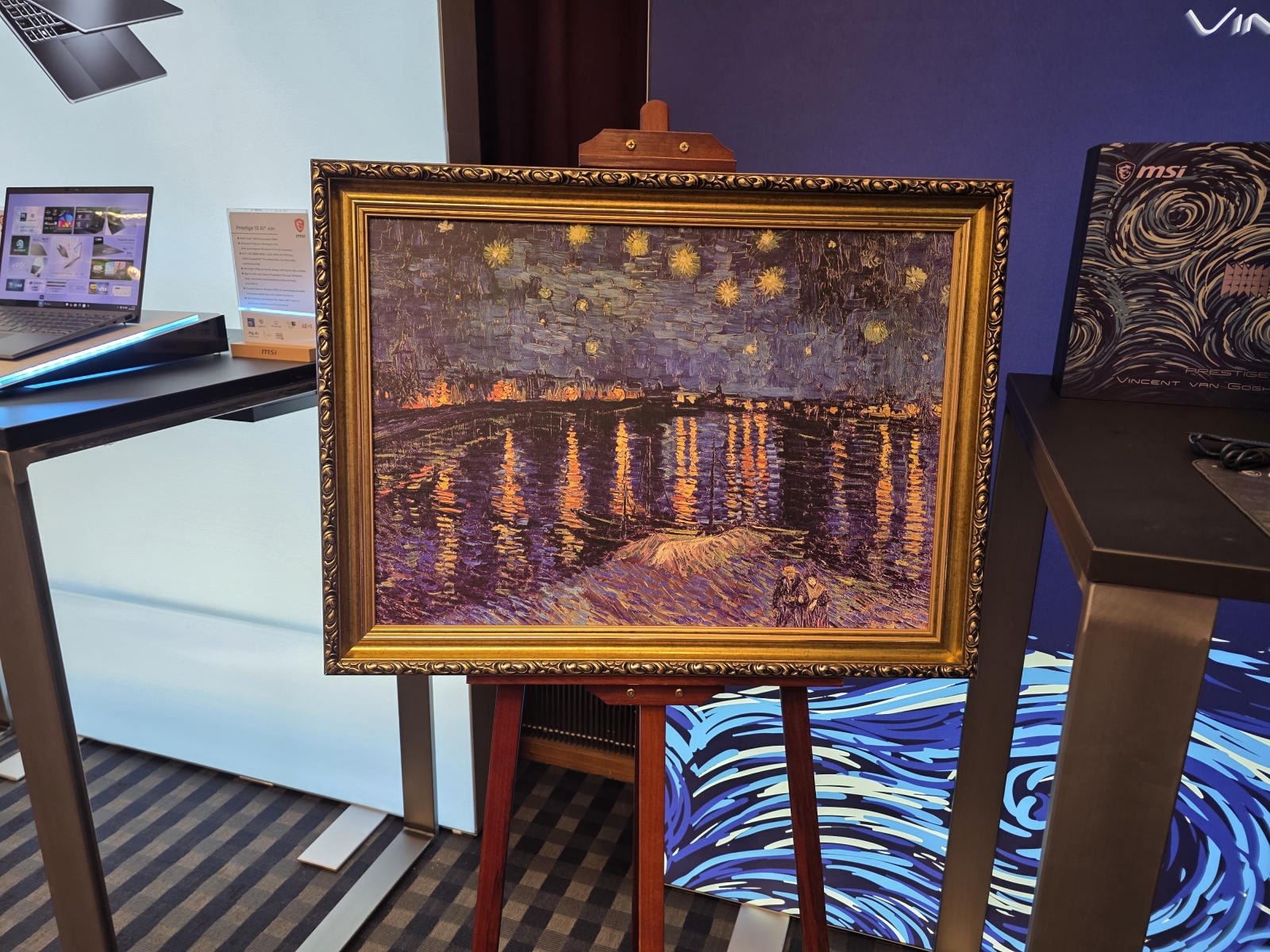
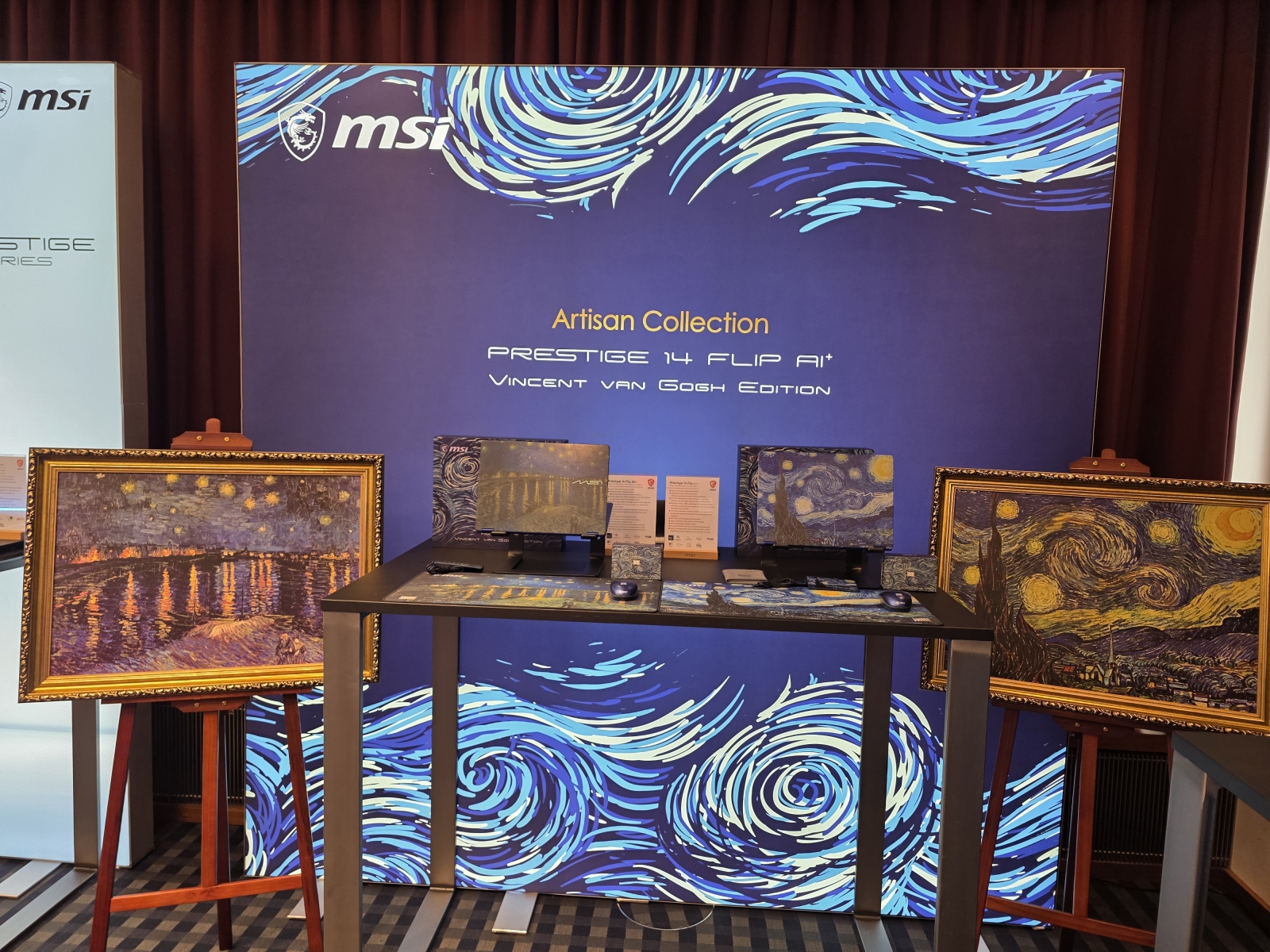
MSI also showed lighter machines for everyday mobile work. The Prestige 14 Flip AI+ Vincent van Gogh Edition is a 14-inch OLED touchscreen convertible available in designs based on “The Starry Night” and “Starry Night Over the Rhône.” It supports the MSI Nano Pen, offers up to 64GB of LPDDR5X memory, weighs 1.37kg, and is rated for up to 30 hours of video playback under MSI’s test conditions. Matching accessories include a mouse, mousepad, sleeve, and badge.
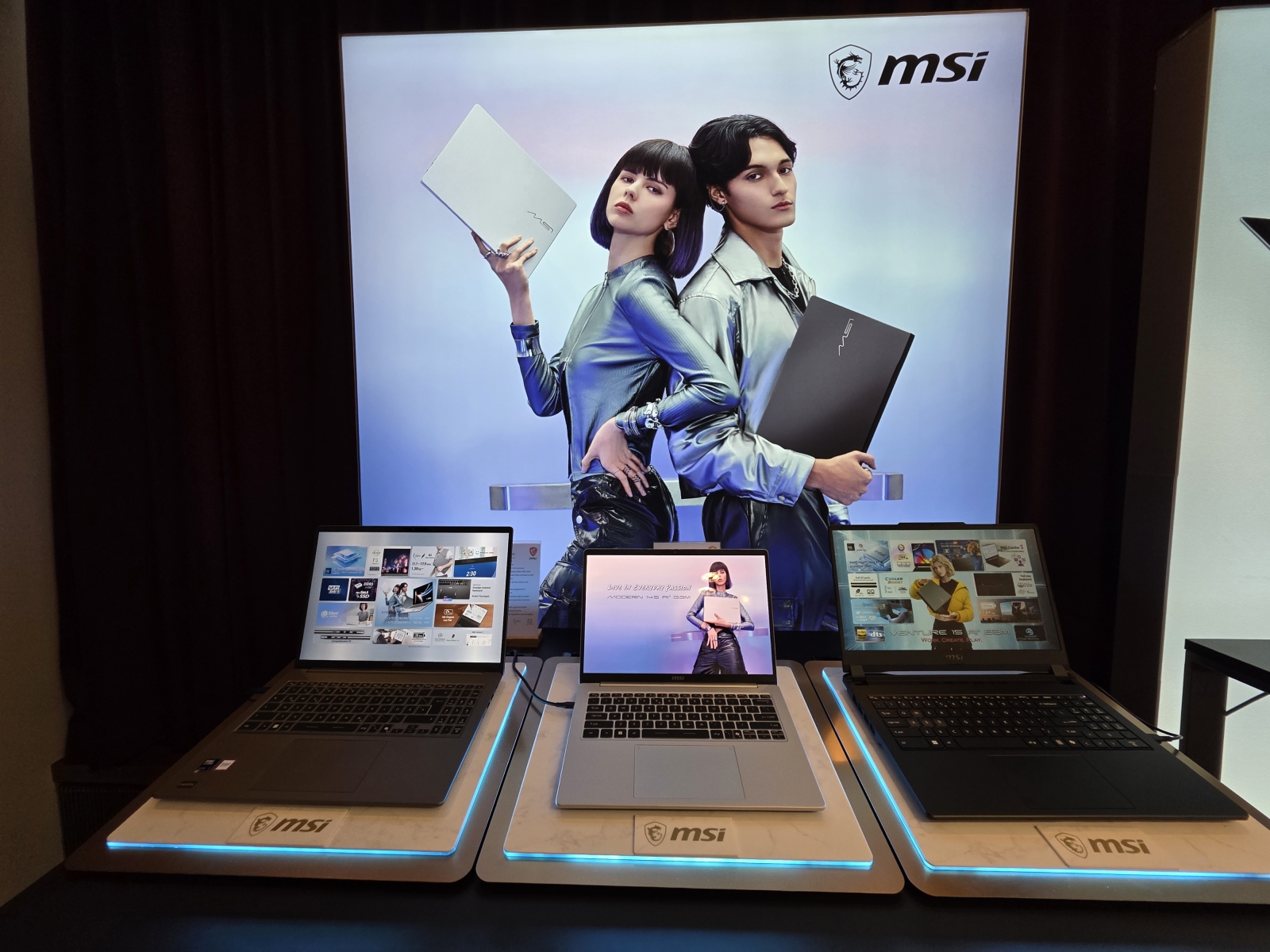
The Prestige 13 AI+ pushes further toward travel-friendly computing at 899 grams. It retains a magnesium-aluminum alloy chassis, a 13.3-inch 2.8K OLED display, up to 64GB of RAM, and two Thunderbolt 4 ports. MSI’s broader Modern and Venture families fill out the conventional productivity side, with some Venture models moving ports to the rear and using cooling designed for longer workloads.
The lineup’s clearest message is that MSI is treating portable computing as a set of distinct jobs rather than one race for the highest specification. The Claw 8 EX AI+ looks most relevant to PC players who prioritize handheld ergonomics, while the Prestige N16 Flip AI+ targets professionals who need unusually large local memory for AI work. U.S. pricing and availability for these new systems remain unconfirmed.
Post Footer automatically generated by Add Post Footer Plugin for wordpress.