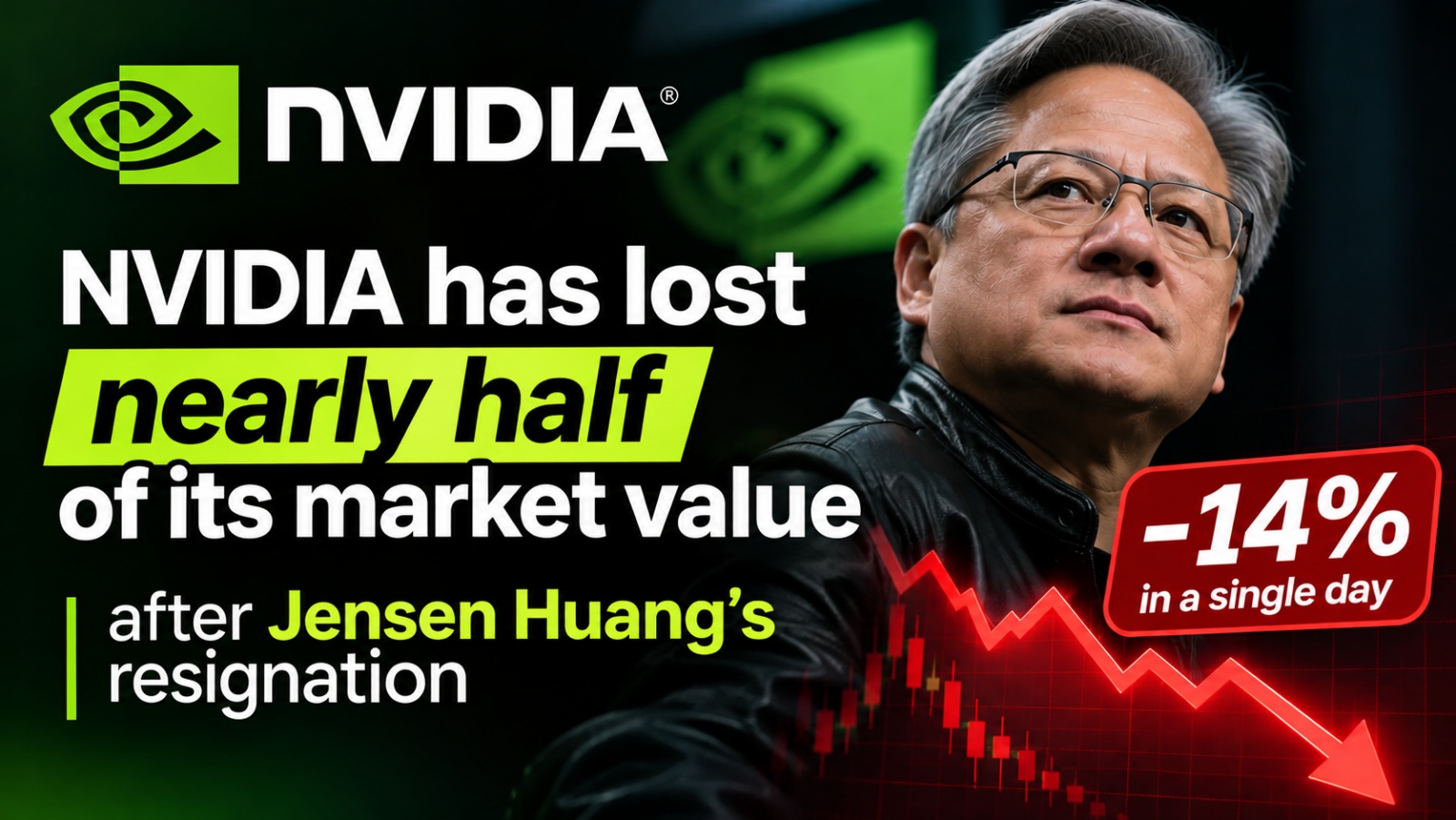
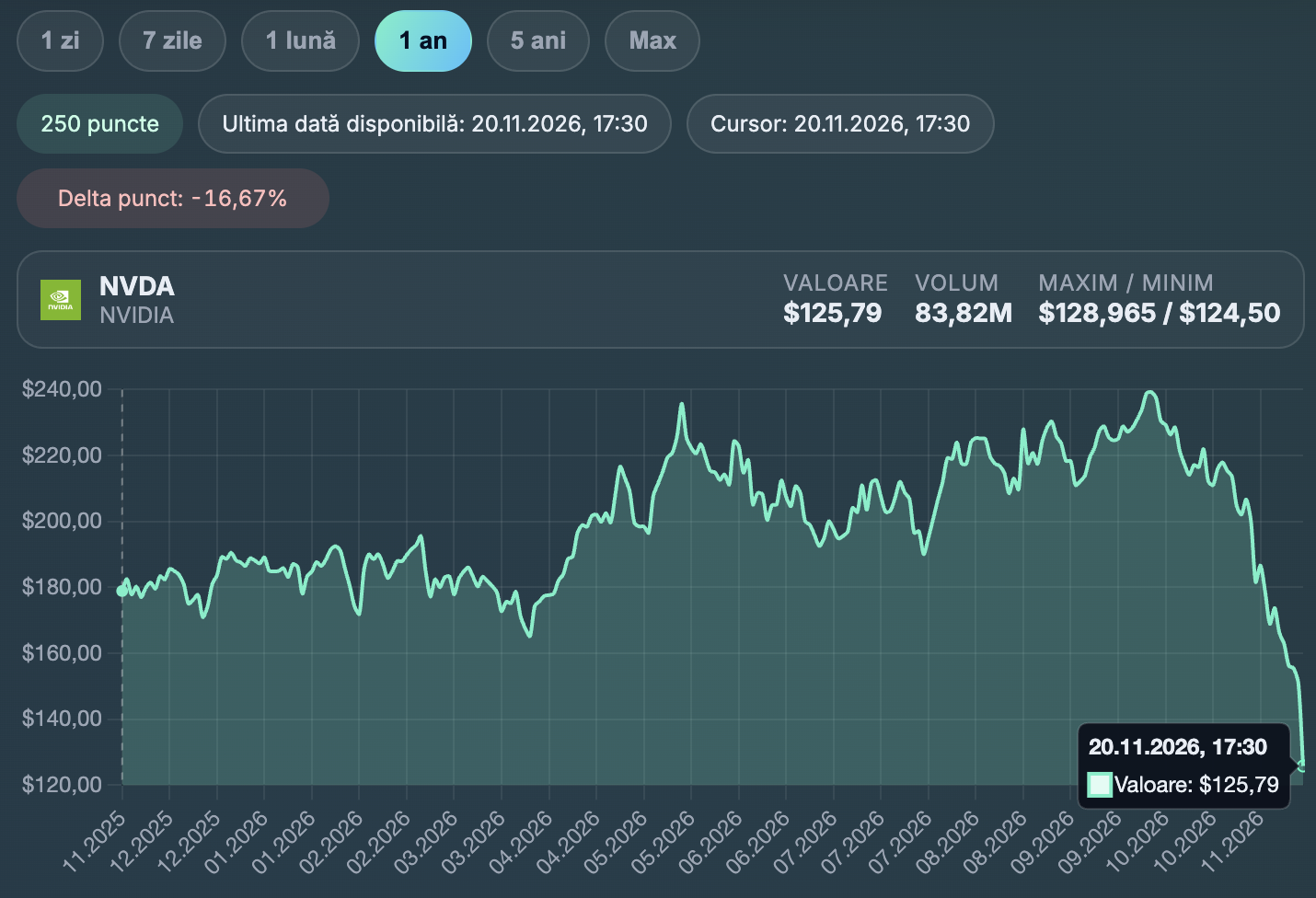
Nvidia’s valuation has swung sharply as investors reassess the price they are willing to pay for future AI growth. Using closing figures, the chipmaker’s market capitalization fell from about $5.777 trillion on October 6 to $3.034 trillion on November 20—a decline of roughly 47.5% in 45 days.
| Metric | October 6, 2026 | November 20, 2026 |
|---|---|---|
| Nvidia closing share price | $239.24 | $125.79 |
| Market capitalization | $5.777 trillion | $3.034 trillion |
| Change from October 6 | — | −47.5% |
The November 20 close included a 14% one-day drop. The Kobeissi Letter calculated a larger decline of about $2.88 trillion by using Nvidia’s higher intraday October peak rather than closing values. On a closing-value basis, the reduction is approximately $2.743 trillion. Those figures describe the changing market value of outstanding shares, not cash that Nvidia itself has spent or lost.
An AI infrastructure reset could reach beyond Nvidia
The sell-off matters well beyond one stock because Nvidia has been a central supplier of AI accelerators for the data centers powering cloud services and the generative-AI features increasingly used across consumer devices. Investors are now pressing for clearer evidence that enormous outlays on chips, servers, data centers, and power infrastructure will translate into sustained profits.
Google, Microsoft, Amazon, and Meta have all committed heavily to that buildout. Nvidia remains a key beneficiary of the spending cycle, but concern over returns has put pressure on the broader semiconductor group. AMD, Micron, and Broadcom were also hit during the market decline.
The wider market moved lower as well: the S&P 500 fell 3.7% on November 20, placing it more than 10% below its October high, while the Nasdaq dropped 5.3% for the session and moved into negative territory for the year. Nvidia shares were down about 23% across five trading sessions, according to the reporting dossier.
Regulatory and leadership questions add uncertainty
The sharp decline also followed a Reuters report that the Securities and Exchange Commission is examining potential accounting issues at Nvidia, including how certain revenue is reported and business relationships in the AI infrastructure industry. An SEC investigation does not establish that any violation occurred.
Leadership uncertainty has compounded the market’s concerns. Jensen Huang stepped down as Nvidia’s leader on November 12 after 33 years at the company he co-founded, according to the dossier. Former chief financial officer Colette Kress is serving as interim leader.
Nvidia continues to be a major hardware supplier to the AI sector, and the slide does not by itself indicate that demand for AI processors has disappeared. Instead, it signals a much lower investor appetite for paying in advance for projected growth. The consequential question for the wider computing supply chain is whether major technology companies slow their data-center orders—a decision that could affect memory, server, networking, and accelerator vendors alike.
Post Footer automatically generated by Add Post Footer Plugin for wordpress.