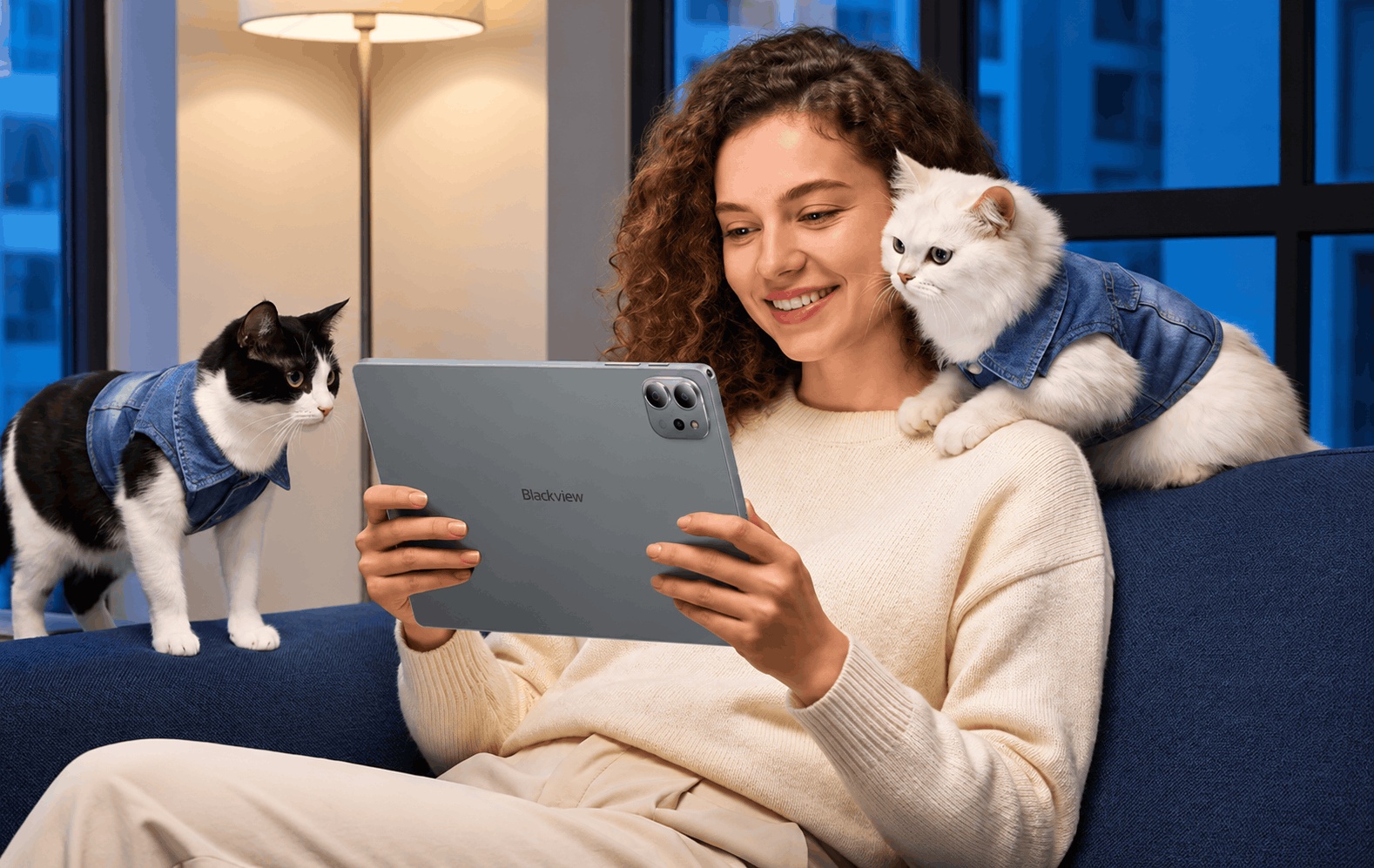
A 120Hz refresh rate is an unusual feature in Blackview’s new Zeno 3, but it comes with a major compromise for a 10.1-inch tablet: a 1280 × 800 IPS display. That works out to roughly 149 pixels per inch, so scrolling may look smoother than on a typical budget panel while fine text and detailed imagery are likely to be less sharp than on Full HD alternatives.
The Zeno 3 moves the series away from the compact Zeno 2, which had an 8.68-inch screen and a 5,000mAh battery. Its successor grows to 10.1 inches and 7,000mAh, though the added capacity and larger chassis also raise the weight from 332 grams to 504 grams. Blackview has not announced a price, release date, or U.S. availability.
A tablet built around basic connectivity and expandable storage
At its core is a Unisoc Tiger T7250 processor, a 12nm octa-core chip with two Cortex-A75 cores clocked at 1.8GHz and six Cortex-A55 cores at 1.6GHz. Blackview cites an AnTuTu score of about 383,000, although independent benchmarks for the tablet are not yet available. The hardware should be aimed at web browsing, video, documents, and lighter games rather than demanding gaming or sustained multitasking.
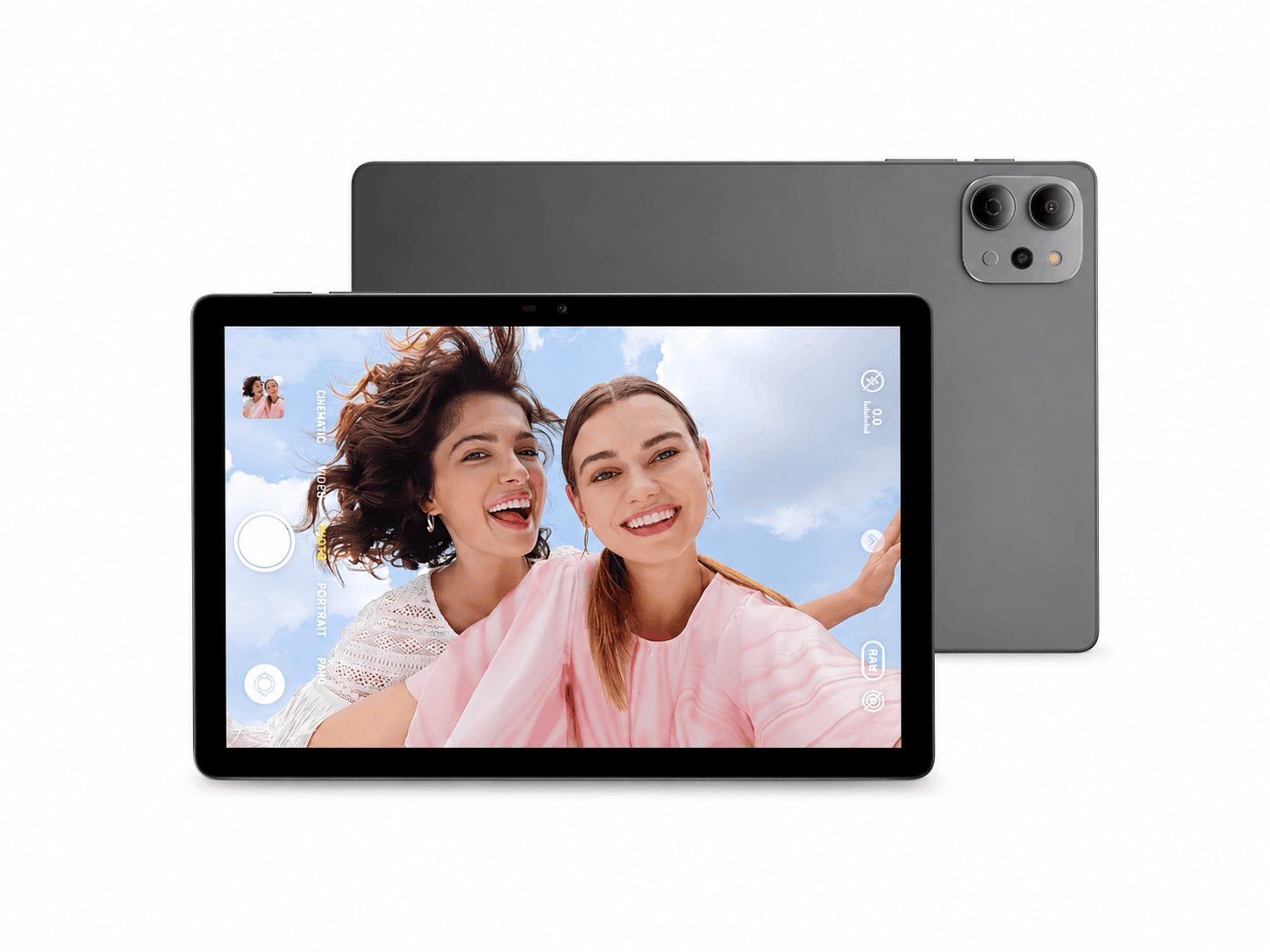
- Display: 10.1-inch IPS LCD, 1280 × 800 resolution, 120Hz refresh rate, and TÜV SÜD low-blue-light certification
- Memory and storage: 8GB of physical RAM, 128GB of storage, and microSD expansion up to 2TB
- Cameras: 13MP rear camera and 5MP front camera
- Connectivity: 4G LTE, hybrid dual-SIM support, Wi-Fi 5, Bluetooth 5.0, GPS, GLONASS, Galileo, and BeiDou
- Audio and software: dual stereo box speakers; Android 17 with DokeOS_P 5.4
- Size and colors: 239 × 157.4 × 7.85mm; 504 grams; Graphite Black, Horizon Blue, and Aurora Green
Blackview advertises up to 32GB of RAM, but only 8GB is physical memory. The remaining up to 24GB is virtual RAM drawn from storage, which should not be treated as equivalent to additional physical RAM. The tablet also carries Widevine L1 support for 1080p streaming eligibility, although the display itself can only show content at its native 1280 × 800 resolution.
Desktop-style software, with modest battery claims
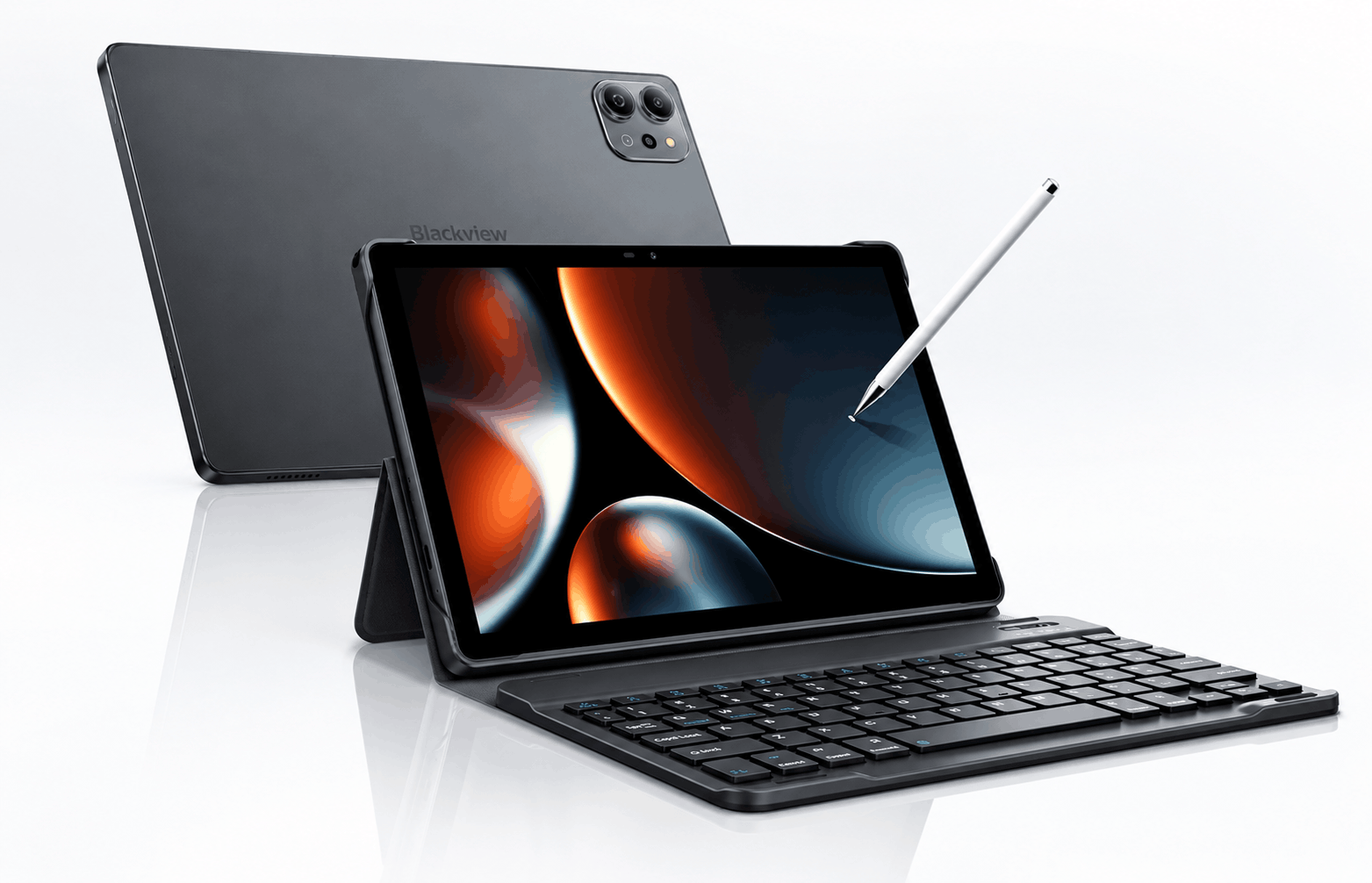
For users hoping to turn the Zeno 3 into a lightweight work device, DokeOS_P 5.4 includes PC Mode 3.0 with floating, resizable windows, plus Split Screen 2.0 and preinstalled WPS Office. Blackview also includes Doke AI 2.0, which integrates Gemini, DeepSeek, Suno, and Doubao for text, image, and music-related tasks. The company shows the tablet with a case, tempered-glass screen protector, stylus, wireless keyboard, mouse, and wired earphones.
Blackview’s stated endurance figures are laboratory claims rather than independent test results. In particular, the quoted 5.5 hours of video playback is relatively modest on paper for a tablet with a 7,000mAh battery, an HD panel, and an entry-level processor. The 120Hz mode and the platform’s efficiency could affect real-world results, but their respective impact is not yet known.
The Zeno 3 appears positioned for basic streaming, schoolwork, occasional document editing, and cellular-connected use rather than as a display-first entertainment tablet. Its ultimate value will depend heavily on its price: the combination of 4G LTE, expandable storage, a 120Hz panel, and productivity software could be appealing at the low end, but the 1280 × 800 screen will be harder to overlook if it approaches the cost of Full HD or 2K models.
Post Footer automatically generated by Add Post Footer Plugin for wordpress.