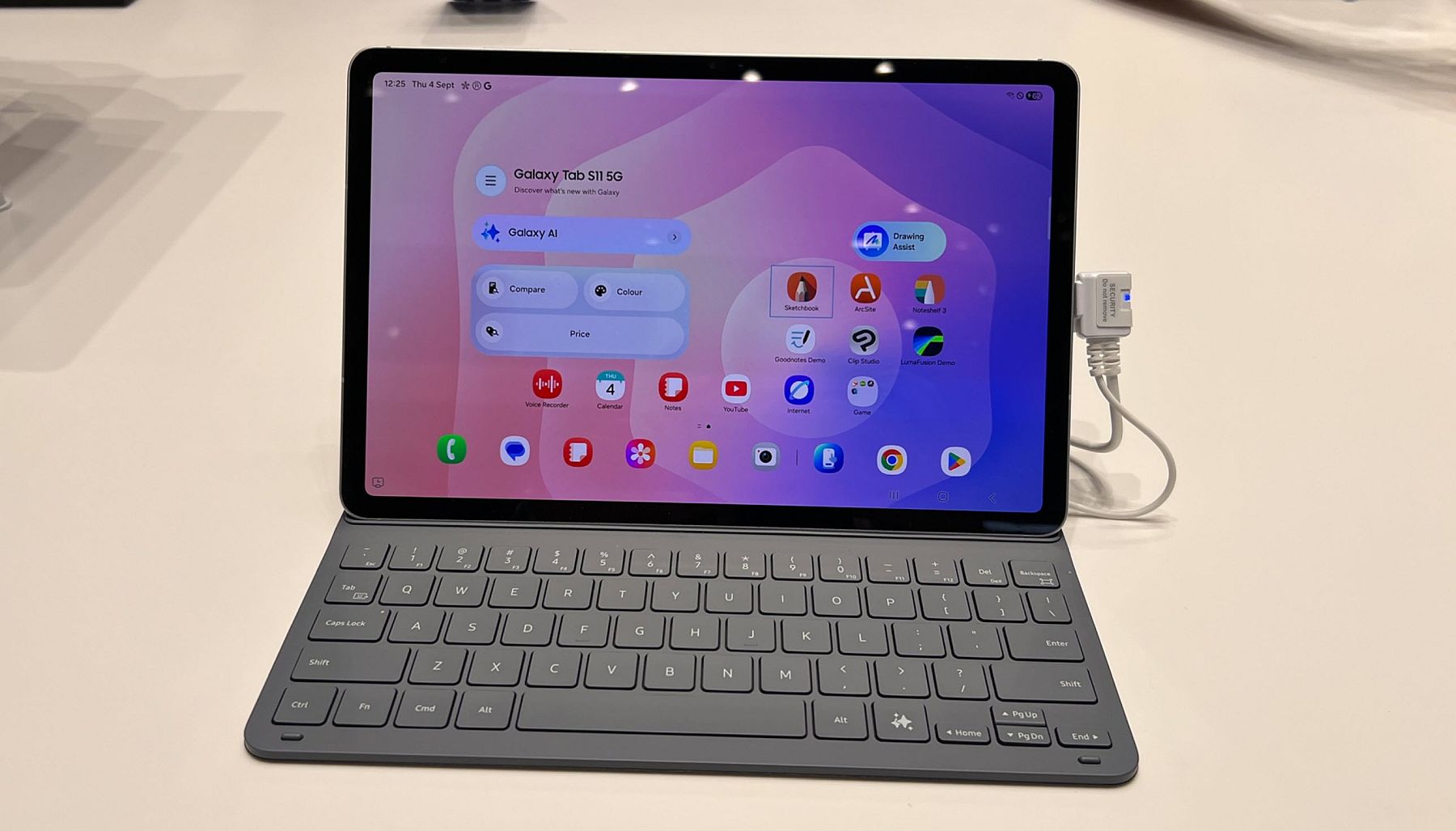
Samsung’s next wave of premium tablets is starting to leak, and the latest details around the Samsung Galaxy Tab S12+ point to a modest but practical upgrade compared to previous generations.
According to a report from a famous leakster, the upcoming tablet will use batteries identified by the model numbers EB-BX846AAE and EB-BX846AAY. Each battery is rated at 10,392 mAh, which means the marketed “typical” capacity will likely be slightly higher, somewhere around 10,500–10,600 mAh. That would represent roughly a 4–5% increase over the battery found in the Samsung Galaxy Tab S10+.
Samsung’s previous lineup skipped the Plus model entirely. The Samsung Galaxy Tab S11 Ultra was the only large-screen tablet released in that generation, pairing its massive 14.6-inch display with an 11,600 mAh battery. With the Tab S12 generation, Samsung appears ready to bring back the familiar mid-large Plus format.
The Galaxy Tab S12+ is expected to retain the established 12.4-inch design, featuring an OLED panel, QHD+ resolution, and a 120 Hz refresh rate. This combination has proven popular across previous Plus models and remains one of Samsung’s key strengths in the tablet segment.
On the performance side, early leaks point to the MediaTek Dimensity 9500+ chipset. If confirmed, the processor should deliver a balance between raw performance and power efficiency, especially in multitasking and productivity scenarios. The base configuration is expected to start at 12 GB of RAM and 256 GB of storage, with microSD expansion likely remaining part of the package.
Other features appear consistent with Samsung’s flagship tablet formula. The device is rumored to include a quad-speaker system tuned with Dolby Atmos, IP68 dust and water resistance, and a bundled S Pen, which is also expected to maintain water resistance. Fast charging should reach up to 45 W, matching the charging speeds of recent Galaxy Tab S models.
As for launch timing, the Galaxy Tab S12 series, including the Plus and the larger Ultra model, is rumored to debut in Q3 2026. That timeline would align with Samsung’s typical release cycle for its premium tablets. While the upgrades may look incremental on paper, a slightly larger battery combined with a newer chipset could still translate into improved real-world endurance and smoother performance.
Post Footer automatically generated by Add Post Footer Plugin for wordpress.