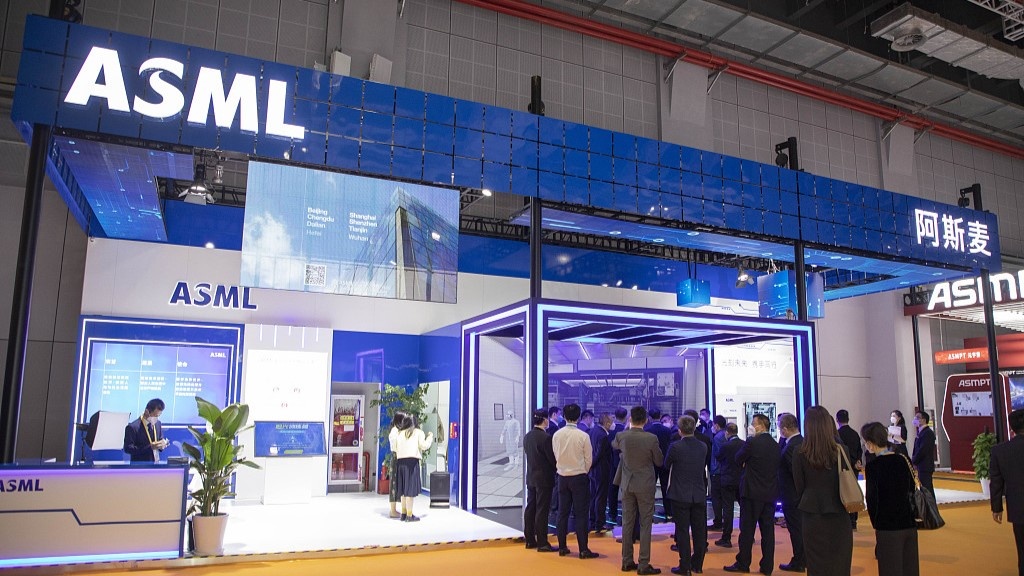
The fight over China’s access to semiconductor-making tools could extend beyond new machine sales. A proposed U.S. bill, the MATCH Act, would seek to align allied export controls on advanced chip-production equipment while potentially restricting maintenance and technical support for ASML systems already operating in China.
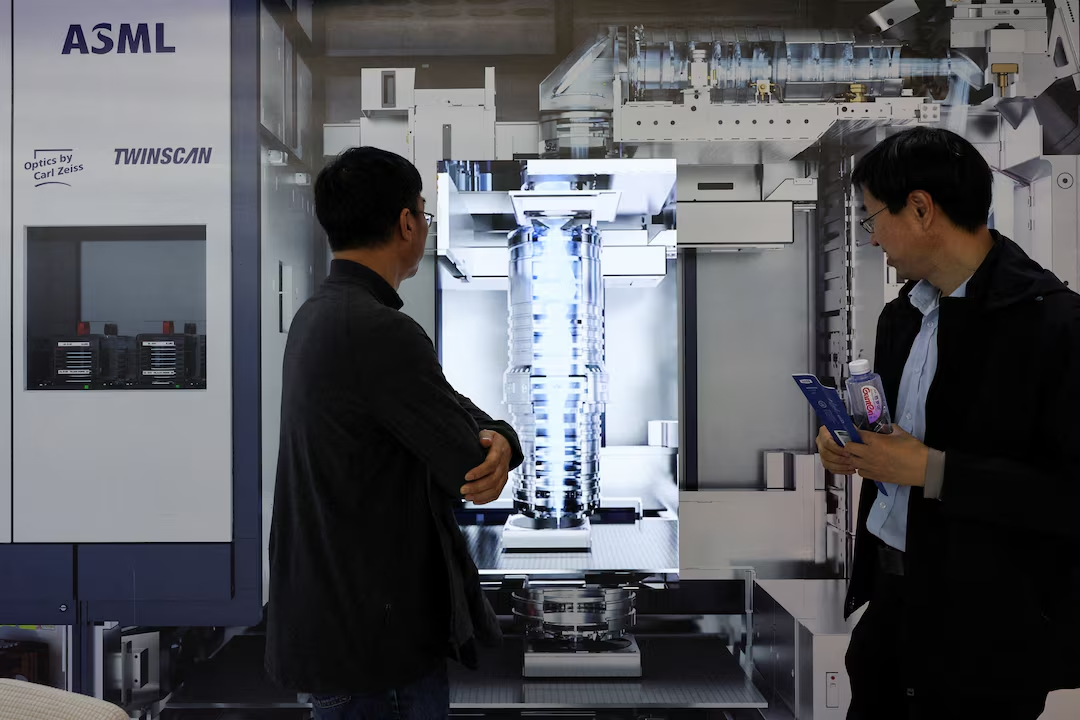
That matters because ASML’s deep-ultraviolet, or DUV, tools remain a critical route for Chinese chipmakers that do not have official access to the company’s EUV lithography systems. DUV can be used with multiple patterning to produce finer circuitry, so limits on equipment support could affect fab productivity as well as future expansion.
The United States is not the boss of Veldhoven.
Sjoerd Sjoerdsma, Dutch trade minister, according to Bloomberg
Veldhoven is home to ASML’s headquarters. The Dutch government is working with Germany, France, and the European Commission to oppose the restrictions in their proposed form, arguing that Washington should not unilaterally dictate trade rules for European companies.
What the bill would cover
The bipartisan MATCH Act is intended to address what its sponsors describe as a competitive imbalance: U.S. suppliers face tougher controls than some overseas rivals. Its outlined measures include the following:
- Restrict exports of advanced immersion DUV lithography equipment.
- Limit maintenance services and technical assistance.
- Expand restrictions to factories operated by Huawei.
- Expand restrictions to factories operated by SMIC.
- Expand restrictions to factories operated by CXMT.
- Expand restrictions to factories operated by YMTC.
- Expand restrictions to factories operated by Hua Hong.
- Allow unilateral U.S. restrictions on foreign equipment that uses U.S. technology if negotiations with allies do not make progress within 150 days.
The Netherlands already controls exports of advanced semiconductor-manufacturing equipment. Those rules were introduced in September 2023 and most recently expanded in April 2025, but Dutch authorities review license applications individually and retain the final decision. The central disagreement is whether the U.S. approach should go further and reach servicing of previously shipped systems.
A meaningful revenue and supply-chain issue
ASML’s latest reported results underscore the commercial stakes. The company has been benefiting from AI-driven semiconductor investment, and China is expected to account for about 20% of its 2026 revenue—nearly €9 billion based on full-year estimates. That does not mean the entire amount would automatically be affected by any new controls.
| Metric | Q2 2026 | Q3 2026 |
|---|---|---|
| Revenue | €9.33 billion | €11.66 billion |
| Net income | €2.92 billion | €4.96 billion |
| Service and upgrade revenue | €2.76 billion | €3.29 billion |
| Gross margin | 54% | 57.5% |
ASML CEO Christophe Fouquet warned last week that tougher limits could produce the opposite of Washington’s intended outcome by speeding development of competing Chinese technology. China is already investing heavily in domestic lithography capabilities, including an EUV equipment effort involving former ASML engineers.
Dutch Prime Minister Rob Jetten said he would raise the issue directly with Donald Trump at the G20 summit in Miami, scheduled for December 14–15. A motion backed by representatives of several parties in the Dutch parliament also calls on Congress not to adopt the MATCH Act as currently written.
For U.S. buyers of phones, tablets, and PCs, the dispute is another reminder that the supply chain behind mobile chips depends on a small number of highly specialized equipment makers. Whether the bill advances, how broadly service restrictions would apply, and whether allies agree on a common rule set remain unresolved.
Post Footer automatically generated by Add Post Footer Plugin for wordpress.