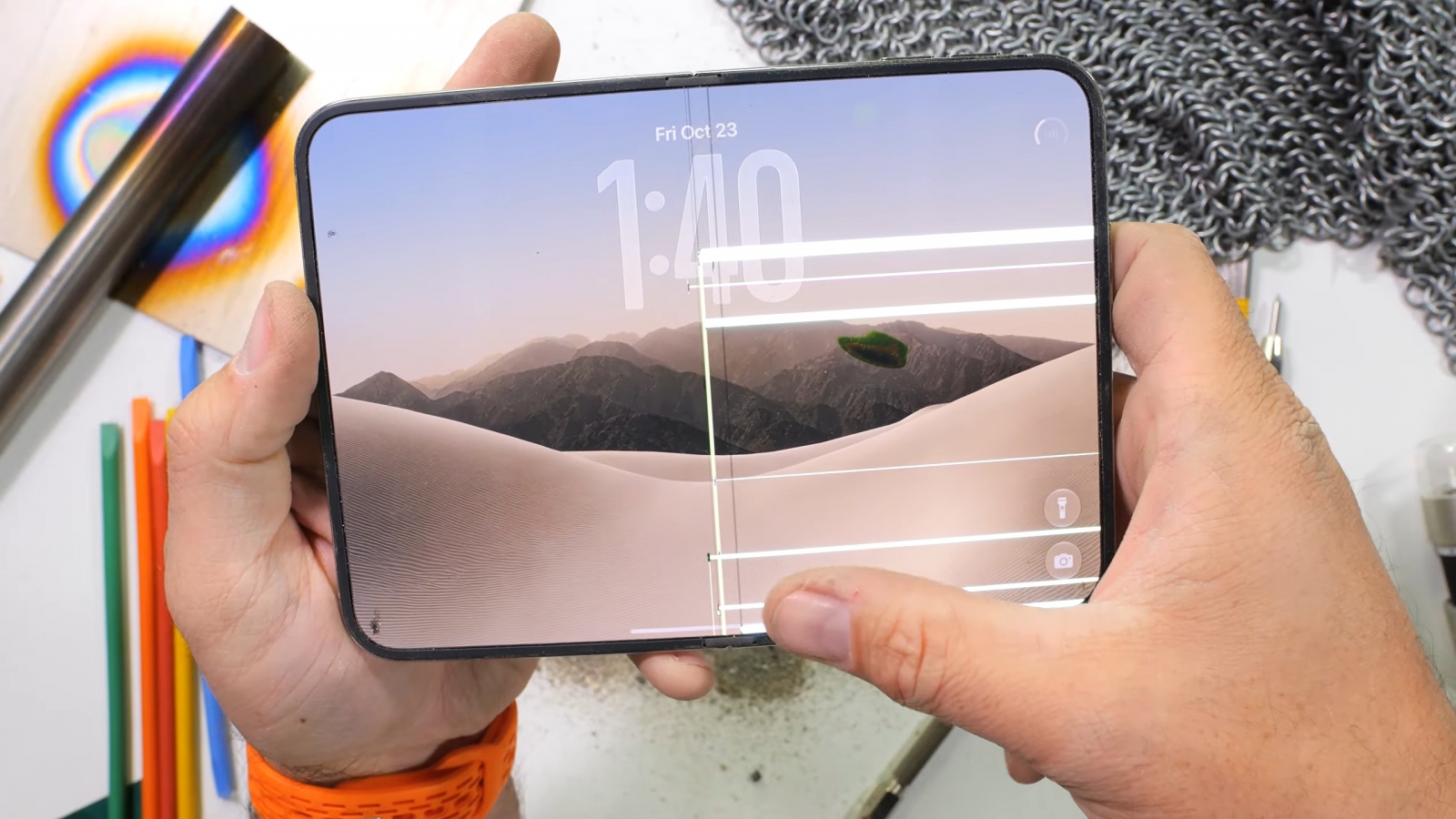
A foldable phone’s hinge and flexible screen are the parts users depend on every time they open the device for a larger workspace. In Zack Nelson’s JerryRigEverything durability test, those components became the iPhone Duo’s weak points: dust reportedly stopped the titanium hinge from closing fully, and subsequent bend testing ended with the inner screen no longer working.
The result comes from an extreme stress test rather than normal daily use, so it does not establish how an iPhone Duo will hold up over years of ownership. Still, it offers a useful look at the practical compromises in a book-style foldable—particularly for buyers who expect to move between phone-sized tasks and a tablet-like inner display.
Different levels of protection for the two screens
Nelson found a major difference between the Duo’s exterior and interior panels. The cover screen showed only light marks beginning at level 7 on the Mohs hardness scale. The 7.6-inch folding display, by contrast, reportedly scratched at level 2; even a fingernail could leave a lasting mark. That level of sensitivity is typical of flexible foldable display layers, though it remains a meaningful ownership consideration.
The device’s matte nano-texture treatment was said to make scratches and the central crease less conspicuous while the display was on. On a second unit, removing the protective layer produced a glossier image with more vivid color, but also substantially stronger reflections.
- Cover display: light marks appeared at Mohs level 7.
- 7.6-inch inner folding display: scratches appeared at Mohs level 2.
- Matte nano-texture: helped conceal marks and the crease with the screen active, according to the test.
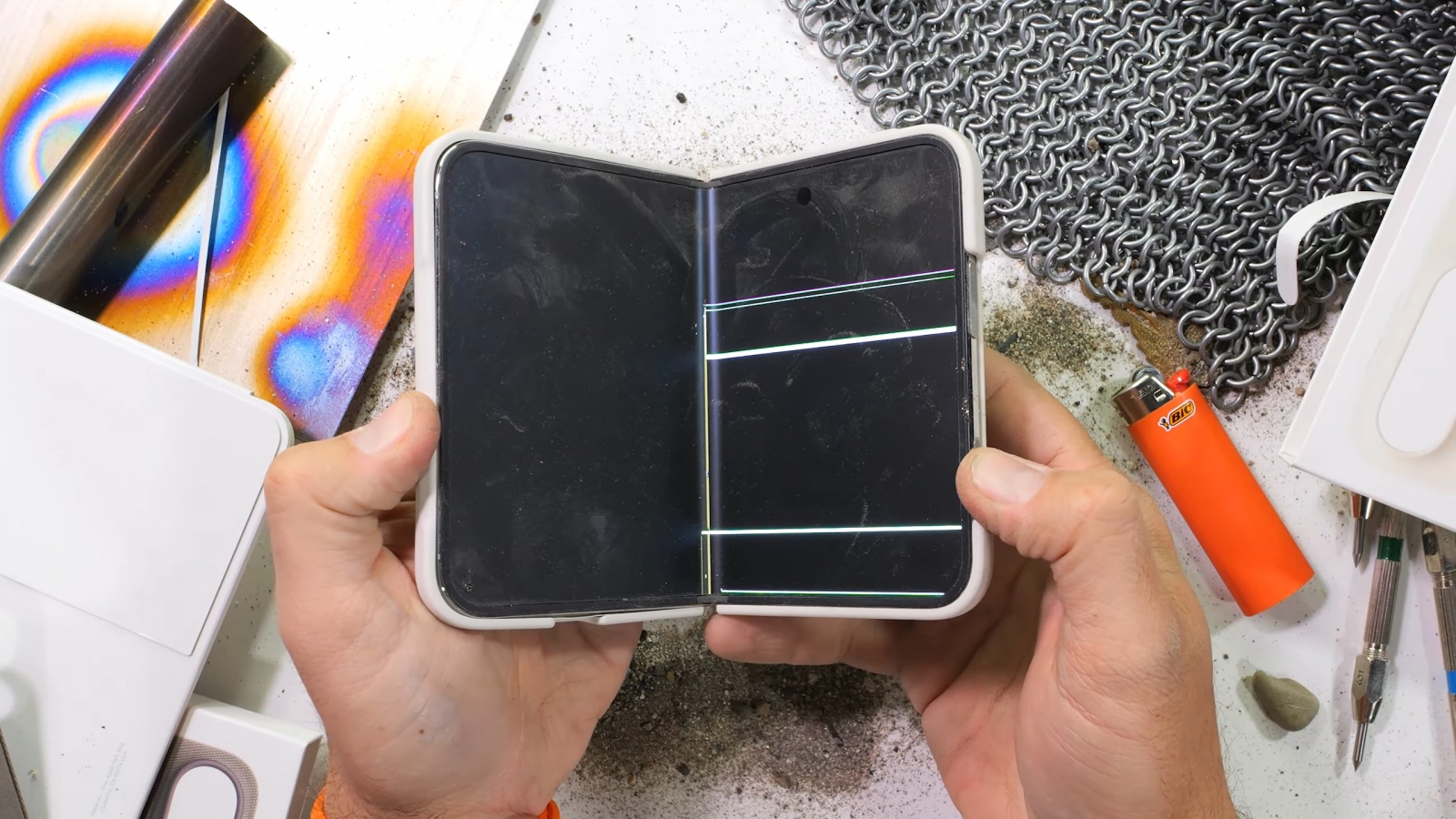
Dust exposure preceded hinge and screen failure
The most concerning portion of the video was the dust test. Although Apple promotes an IP68 rating for the phone, particles reportedly entered the folding mechanism. The titanium hinge then became stuck, leaving the iPhone Duo partially open and unable to close completely.
During later bend testing, the frame initially held up, but a permanent green line appeared on the inner panel. More lines emerged after another attempt, and the folding display eventually stopped functioning. Nelson did not identify a definitive cause, suggesting that dust left in the mechanism or insufficient hinge rigidity could have contributed.
Nelson also put the potential repair cost at about $1,000 for an inner-screen replacement and $49 for a replacement outer protective layer. Those figures should be treated as estimates reported in the video rather than confirmed U.S. repair pricing from Apple.
The test notes that Samsung’s Galaxy Z Fold8 performed better in comparable durability trials, but it does not settle how either device fares in everyday use. For prospective iPhone Duo owners, the clearest takeaway is that the large foldable canvas may demand more care than a conventional phone—especially around the flexible screen and hinge.
Post Footer automatically generated by Add Post Footer Plugin for wordpress.