
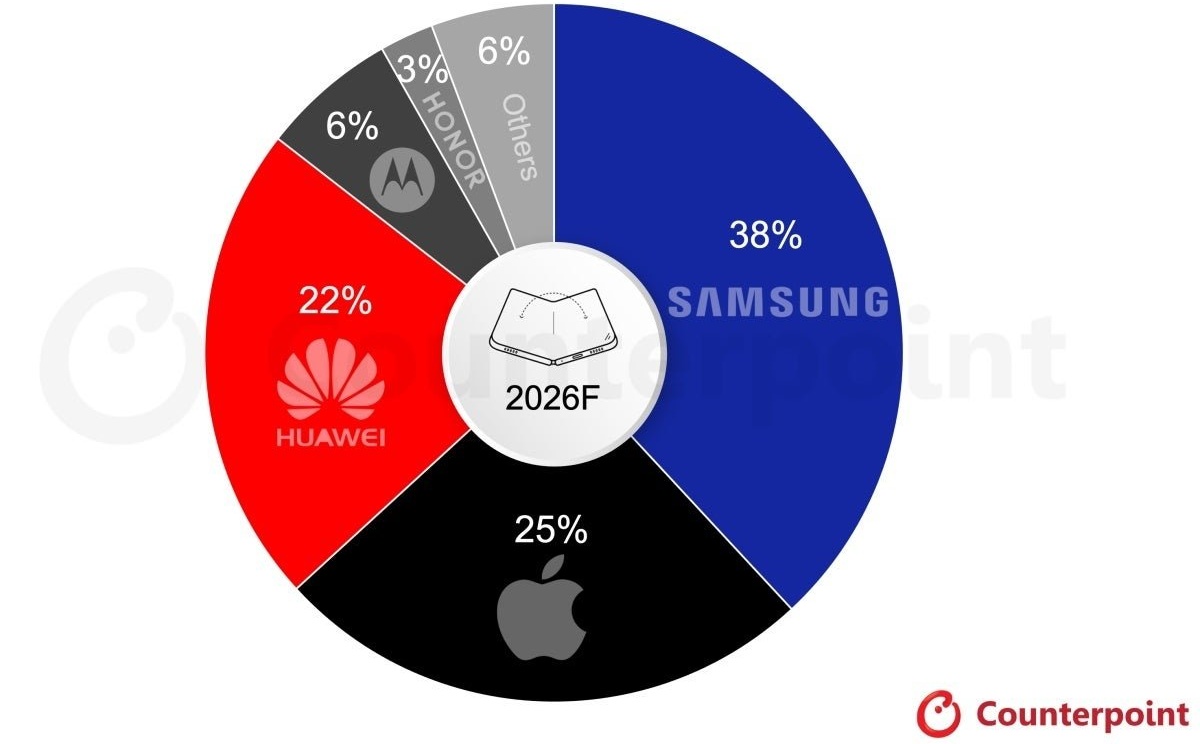
Foldable phones could be headed for a much bigger role in mobile computing, and Counterpoint Research believes Apple’s long-rumored first model could be a major catalyst. The research firm forecasts that Apple could capture about 25% of worldwide foldable shipments in its first year, despite reports pointing to production constraints and limited initial availability.
A sizeable debut in a still-small category
In unit terms, Counterpoint’s outlook implies shipments of a little more than 6 million Apple foldables across approximately three and a half months of availability. The device has been widely referred to in reports as the iPhone Ultra, though Apple has not announced a foldable iPhone or confirmed that name.
That forecast comes as the overall category is projected to reach just over 24 million units in 2026, up from roughly 19.6 million in 2025. Cumulative foldable-phone shipments since the original Samsung Galaxy Fold arrived in 2019 are also expected to pass 100 million units by the end of 2026.
Samsung would remain ahead, for now
Samsung is forecast to retain the global lead with a 38% share in 2026, down slightly from 40% in 2025. Apple’s estimated 25% would place it ahead of Huawei, which is projected to fall from about 30% of the market in 2025 to 22% in 2026.
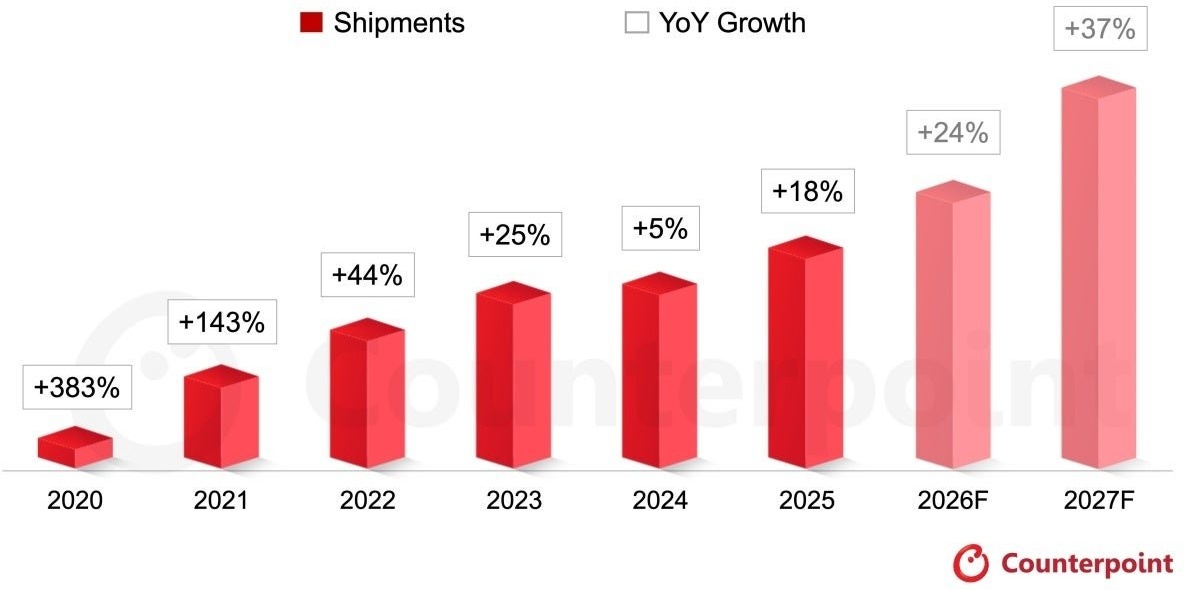
The longer-term outlook is even more aggressive. Counterpoint expects foldable shipments to surpass 33 million in 2027, a year-over-year increase of about 37%. Apple could reach roughly 40% share that year. The report does not explicitly predict Apple will become the market leader, but that level of share would put significant pressure on Samsung’s top position.
The biggest unanswered questions are the product’s final design, launch timing, supply, and price. Rumors have suggested that a top-tier configuration could cost more than $3,000. If the projections hold, Apple’s entry would give buyers looking for a phone that can expand into a larger workspace a high-profile new option—but likely one positioned at the premium end of an already expensive category.
Post Footer automatically generated by Add Post Footer Plugin for wordpress.