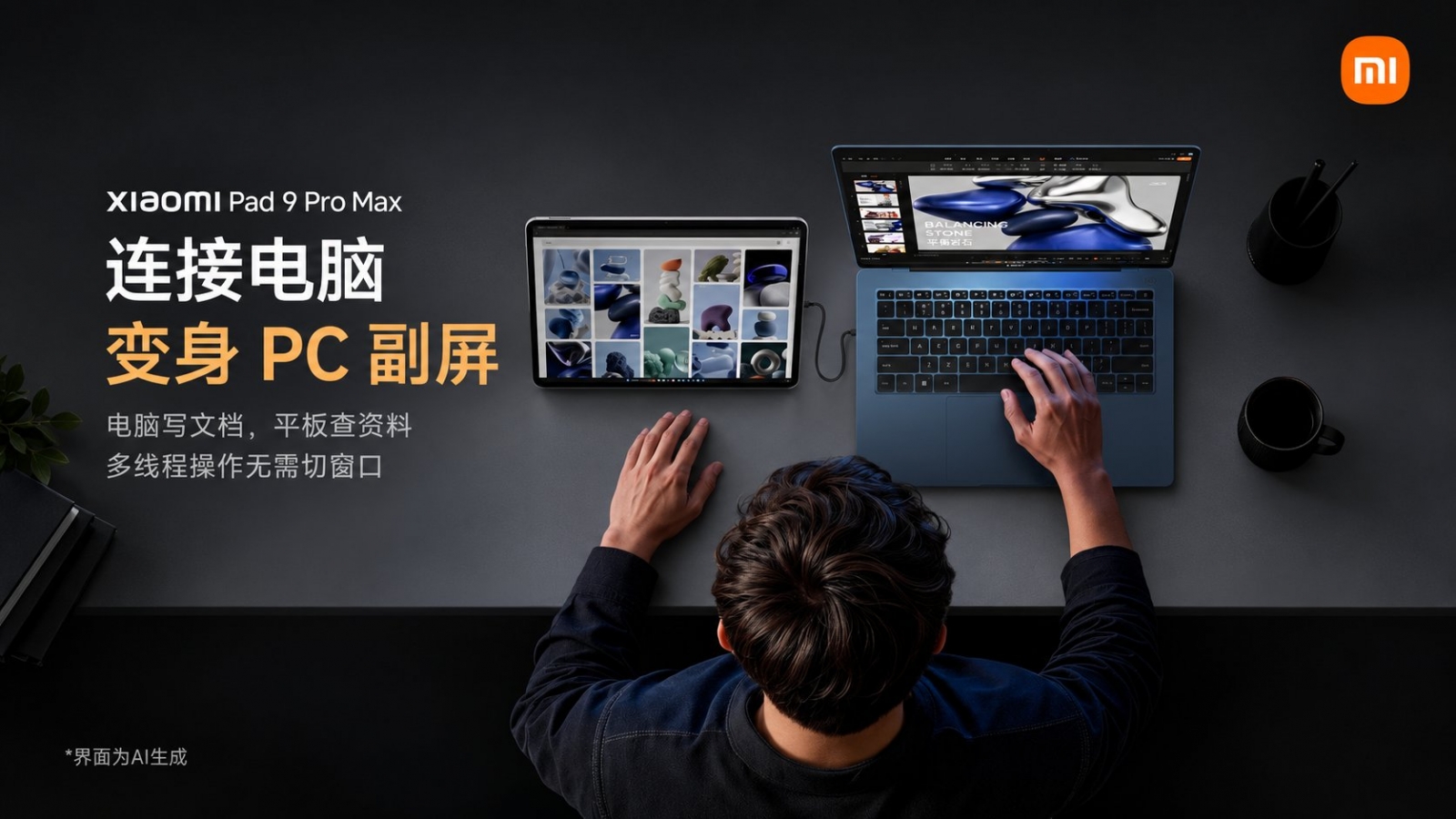
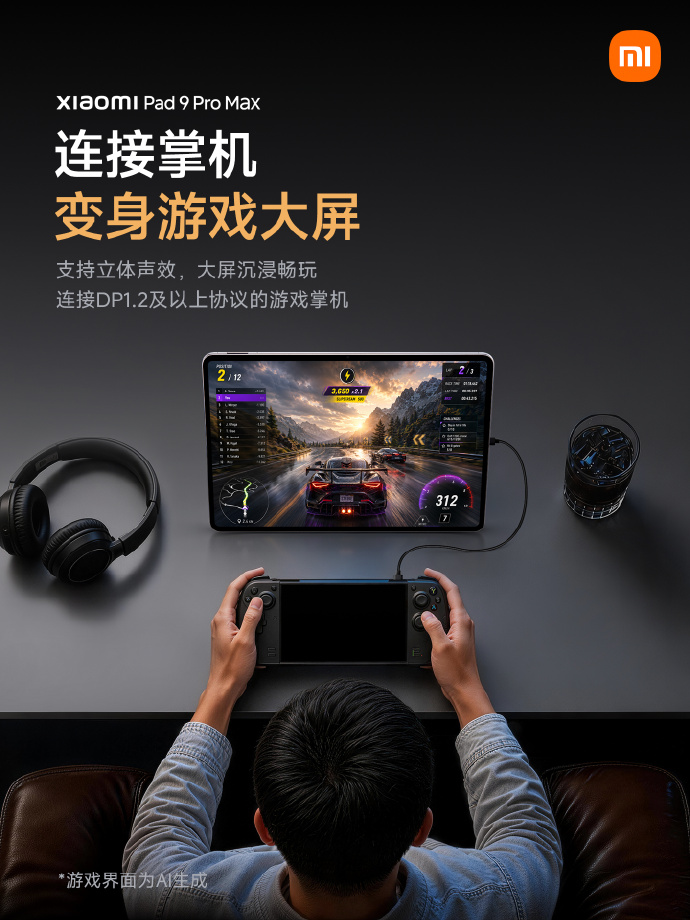
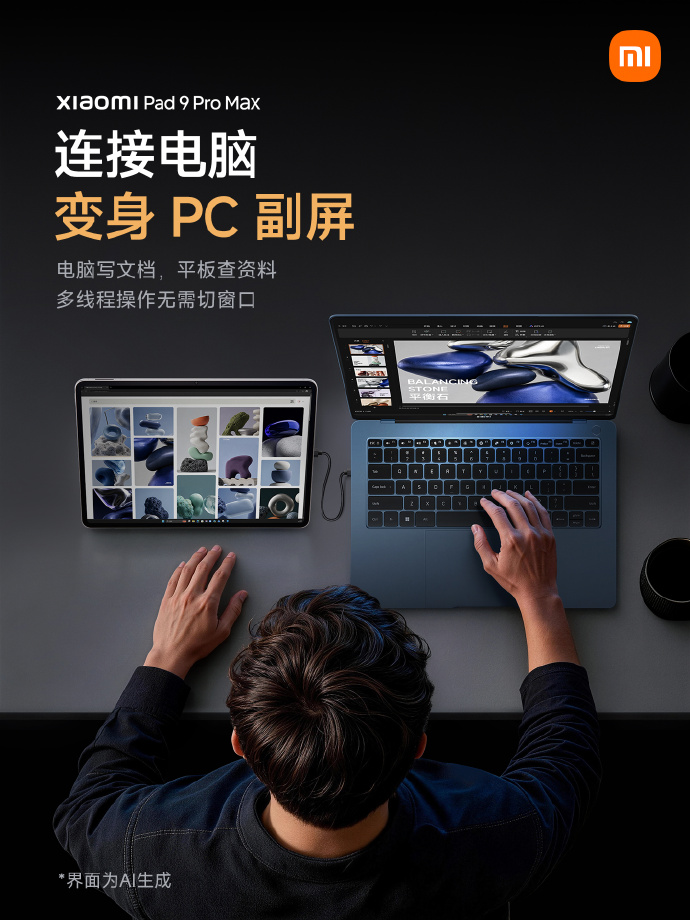
Xiaomi is positioning the Pad 9 Pro Max less as a conventional large Android tablet and more as a portable workspace that can also extend a computer or handheld console. The company says its new 13.3-inch model can accept a wired video connection over USB-C, allowing it to work as a secondary display for a PC or a larger screen for a compatible handheld gaming device.
A larger canvas for work, media, and external devices
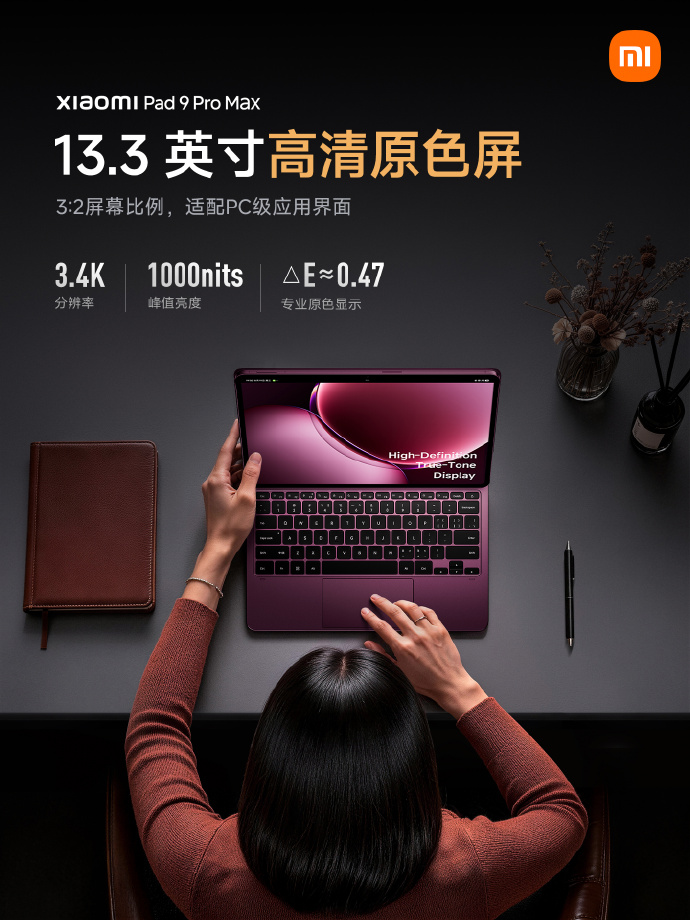
The Pad 9 Pro Max has a 3.4K display with a 3:2 aspect ratio, a layout that provides more vertical workspace than the wider screens commonly used for video. Xiaomi rates peak brightness at 1,000 nits and claims an approximately 0.47 Delta E color deviation. Those figures remain manufacturer claims until independent testing is available.
Its USB-C port supports DisplayPort 1.2 or later, according to Xiaomi. That means the tablet could be useful beyond its own apps: plugged into a computer, it can serve as a second monitor; connected to a portable console, it can provide a 13.3-inch display. Exact supported devices, input behavior, and latency have not yet been detailed.
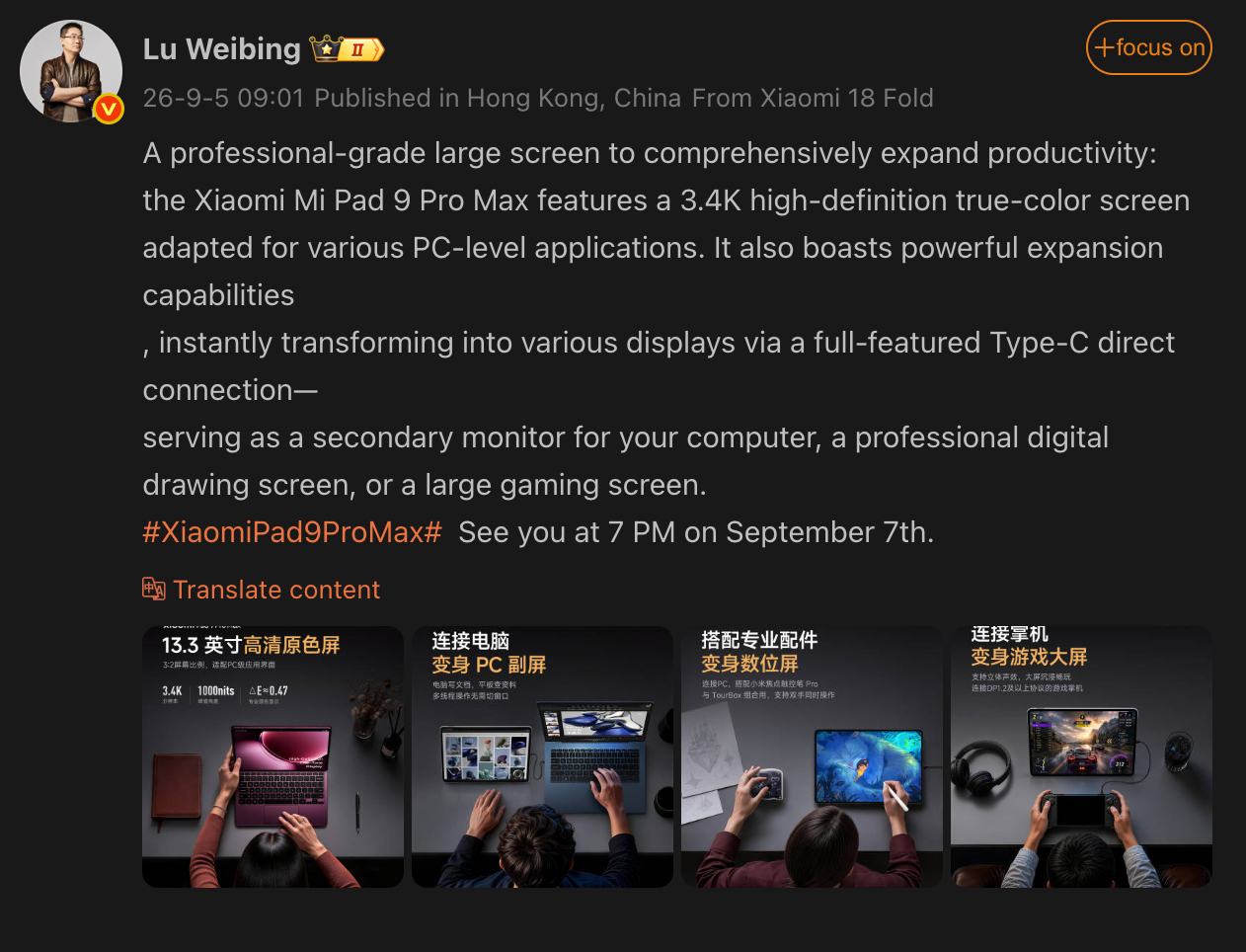
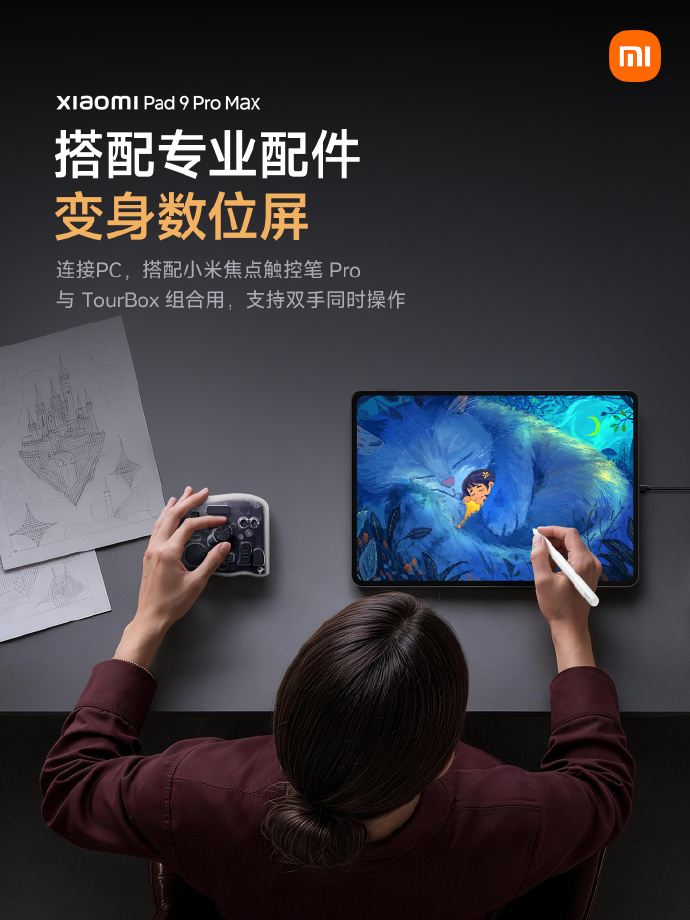
Xiaomi also plans a matching floating keyboard, while the metal-bodied tablet will be offered in finishes including Rich Wine Red. For creative workflows, it supports the Focus Stylus Pro and TourBox controller at the same time, a combination intended for two-handed control in creative software.
HyperOS 4 brings more desktop-like tools
The Pad 9 Pro Max will launch with HyperOS 4, which adds features aimed at larger-screen productivity. Xiaomi says the file manager can track a file’s origin, while the document reader supports handwritten annotations and font imports. The browser adds vertical tabs, tab groups, web translation, and support for third-party AI plug-ins.
Multitasking layouts can show two, three, or up to six apps at once. Xiaomi also says it has optimized the browser for the 500 most-visited websites, though whether that delivers a convincing laptop-style browsing experience will require hands-on testing.
Xiaomi’s XRING O3 chip enters the tablet
The tablet is powered by Xiaomi’s in-house XRING O3 processor and uses LPDDR6 memory. Xiaomi claims the memory offers 48% greater bandwidth and says the chip exceeds 5.25 million points in AnTuTu V11. It also compares the XRING O3’s multicore CPU and GPU performance with Apple M5-powered tablets. These are company-provided figures and comparisons, not independent benchmarks.
Xiaomi will unveil the Pad 9 Pro Max in China on September 7. Pricing, configurations, and international availability—including any plans for the United States—have not been announced. On paper, the device is aimed at users who want a large Android slate that can move between creative work, multi-app productivity, and use as a wired external screen; its software execution and real-world performance will determine how close it gets to that laptop-adjacent role.
Post Footer automatically generated by Add Post Footer Plugin for wordpress.